
KFC puts fried chicken on MediaMarkt's 4K TVs for Black Friday
KFC and MediaMarkt connect Spanish shopping trips with daily app offers, a co-branded meal and 15,000 vouchers during Black Friday week.


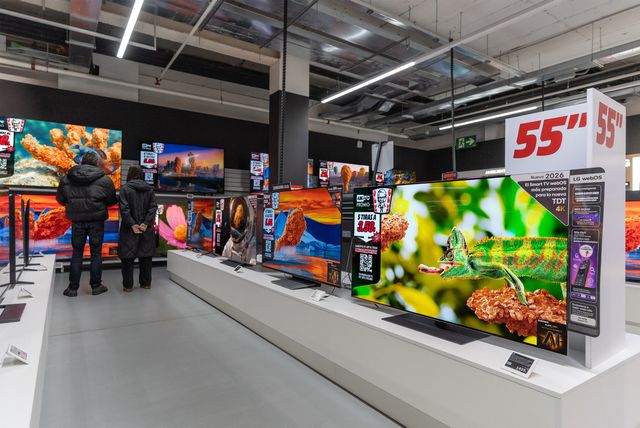
Black Friday shoppers know the scene: rows of televisions displaying the same impossible-looking landscapes, shimmering water and wildlife footage. In Spain this year, some of those familiar images have an extra detail. A piece of fried chicken rises out of the ocean like a whale.
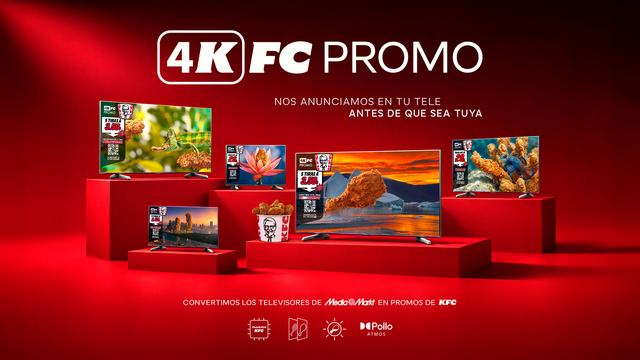
KFC and MediaMarkt are swapping promotional space during Black Friday week, turning electronics shopping into an unexpected invitation to lunch. The fast-food chain is inserting its chicken into television demonstration footage, while the electronics retailer is advertising its deals on restaurant screens. MediaMarkt outlined the reciprocal offers on its campaign page.
Table of contents
Jump to each section:
- How chicken took over the television aisle
- Why the two retailers are trading audiences
- A meal that sends shoppers back to the electronics store
- What marketers can learn from the Black Friday stunt
How chicken took over the television aisle
A television demo normally has a clear purpose: make the picture look so good that a shopper wants to upgrade their screen. KFC's creative agency Jungle PS21 kept that format and changed the subject. In the edited films, a chicken strip emerges from the water, replaces a branch beneath a lizard and towers above a city skyline.
The joke works precisely because the clips retain the familiar grammar of premium television demonstrations. The chicken is not a conventional interruption between programmes. It is inside the demonstration itself, where it looks just plausible enough to make the viewer look twice.
Little Black Book's November 27 creative coverage credits Jungle PS21 and media agency Arena Media. Iñigo de Luis, strategy director at Arena Media, explained the rationale: “Two brands that share not only a location, but also an audience and a desire to interact with them in a different way.”
The collaboration gives KFC a reason to appear in a shopping environment that is not normally associated with food. MediaMarkt, meanwhile, gets demonstration content that still draws attention to the screens rather than asking shoppers to ignore the products on display.

Why the two retailers are trading audiences
The relationship between the stores matters as much as the visual gag. MediaMarkt says 90 of its Spanish stores sit within 200 metres of a KFC. A shopper who has just spent time comparing appliances can therefore be close to a restaurant without needing to make a separate journey.
90 MediaMarkt stores are situated less than 200 metres from a KFC, according to MediaMarkt's campaign page.
The retailer says the advertising exchange runs from November 23 to 29. Its televisions show a changing KFC offer, with a discount code shoppers can use via the restaurant chain's app. KFC restaurants also display MediaMarkt's Black Friday offers. The campaign's logic is reciprocal rather than an advertiser simply buying screen time from a retailer.
It is worth distinguishing this from a conventional sponsored product placement. A brand appearing on a retailer's website is usually trying to sell something stocked by that retailer. Here, the product on the screen is available somewhere else, but the two businesses are trying to connect visits that can happen on the same shopping trip.
The brands have substantial local footprints. KFC announced its 300th Spanish restaurant in June 2026. The collaboration is not presented as a nationwide conversion result, however, and the reported proximity figures should not be mistaken for evidence that shoppers actually moved between stores.
A meal that sends shoppers back to the electronics store
The second part of the campaign moves the promotion from television screens to the lunch counter. Between November 24 and 30, a specially named MediaMarkt meal comes with a voucher and QR code. Customers enter their email address, purchase receipt number and voucher code on a registration page to find out whether they have won a MediaMarkt gift card.
15,000 vouchers and €65,000 (approximately US$71,000) in gift cards are available in the promotion, according to MediaMarkt. Not every voucher is a winner.
The potential prize is an extra reason to choose the co-branded meal, but it is not a guaranteed discount on electronics. The distinction matters: shoppers who buy the meal get an opportunity to win, and the registration process connects that opportunity to a specific purchase.
That makes the offer more concrete than a logo on a bucket. The electronics retailer gets a second opportunity to reach someone after the initial store visit. KFC gets a meal proposition that belongs to the Black Friday shopping occasion, rather than relying on an unrelated percentage-off advertisement.
Neither company has disclosed how many vouchers have been redeemed or how much incremental revenue the partnership has generated. Its commercial effectiveness remains a question, not an established result.
What marketers can learn from the Black Friday stunt
The most interesting part of the campaign is how it uses a shopping habit that already exists. People visit electronics stores to look at screens; people also need to eat. The collaboration uses a playful interruption to connect those activities.
- Start with the journey, not the media inventory. The physical distance between locations makes the exchange useful. A partnership with a retailer whose stores are far away would have a weaker reason for customers to act on the offer.
- Make the format part of the joke. The television footage is recognizable even before the fried chicken appears. Brands can learn from the way the creative borrows the conventions of the medium rather than pasting an ordinary commercial onto a new screen.
- Give both partners a meaningful return path. The restaurant app codes and gift card mechanic offer different reasons to move in each direction. Teams can assess each route separately using redemptions and incremental purchases rather than combining all interactions into a single engagement total.
- Treat campaign reach and commercial results separately. A funny screen can attract attention without generating a restaurant visit. A redemption may also come from someone who would have bought lunch anyway. Measuring incremental transactions against comparable stores would be more informative than counting the number of screens carrying the creative.
Black Friday is an unusually noisy environment for a restaurant brand that is not selling the electronics people originally came to buy. KFC's answer is to become part of that shopping experience rather than compete with it from a distance.
The idea is especially relevant to retailers with overlapping locations and complementary purchase occasions. It shows how an existing screen, a familiar shopping ritual and a practical reward can form a coherent campaign without requiring a new entertainment property.
The bigger test is whether shoppers remember the joke and act on it. That is where an amusing piece of creative has to become a measurable customer journey.
