
KPop Demon Hunters’ merch boom shows how fandom turns IP into lifestyle
Netflix-backed licensing spans toys, beauty, food, and music, turning KPop Demon Hunters into a repeatable fandom commerce play beyond streaming.

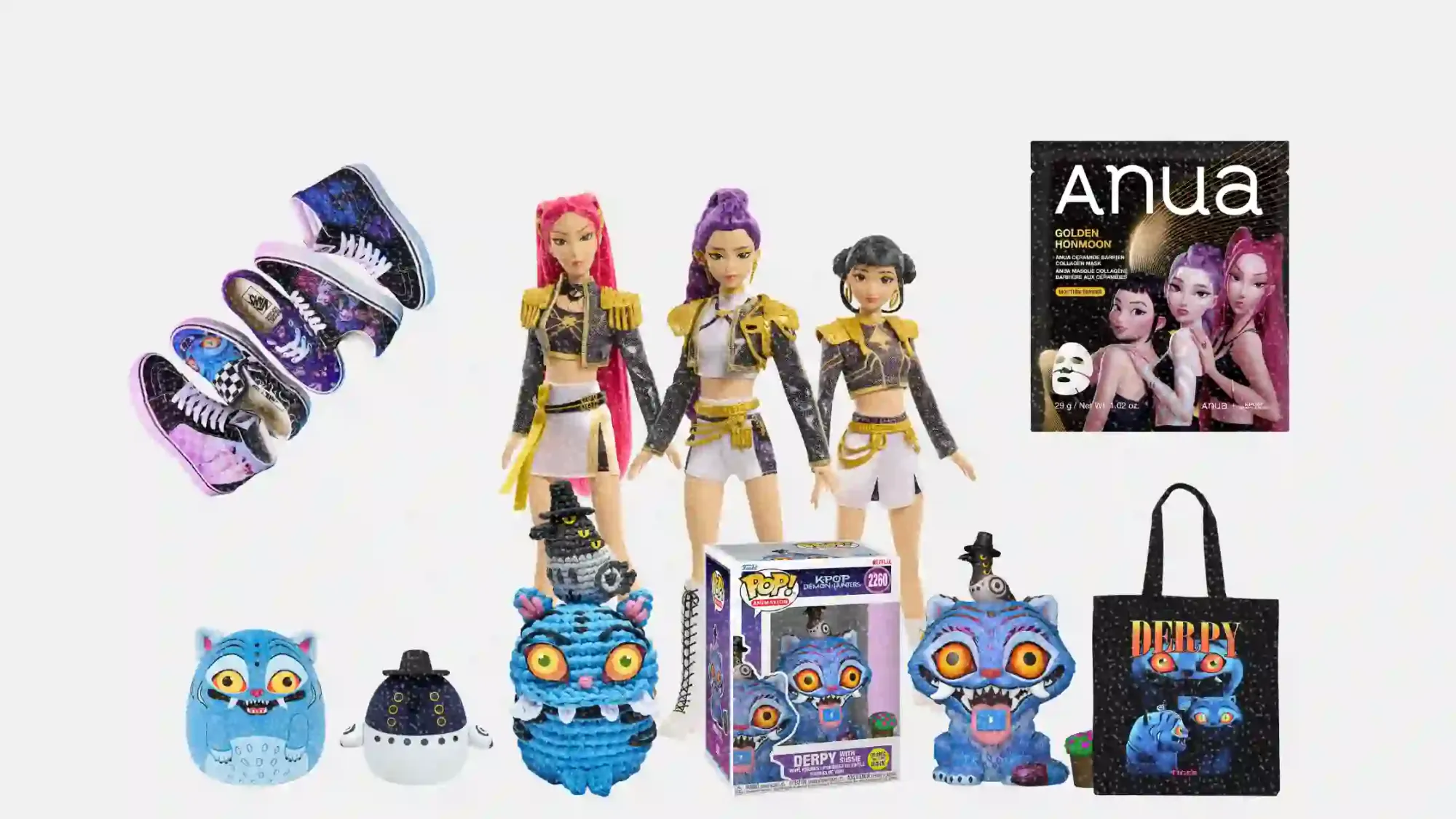
KPop Demon Hunters has that rare kind of staying power where a movie stops being a “watch” and starts becoming a shared reference point. A year after release, fans are still streaming it at scale, quoting it, and treating its characters like a cast you can carry into real life through collectibles, clothes, and collabs.
Netflix says KPop Demon Hunters has passed 325 million views and 541 million hours streamed, positioning it as its most popular film to date. The company also laid out the latest wave of officially licensed products in an official products guide, spanning toys, apparel, beauty, publishing, food, and music.
 Patrecia Meliana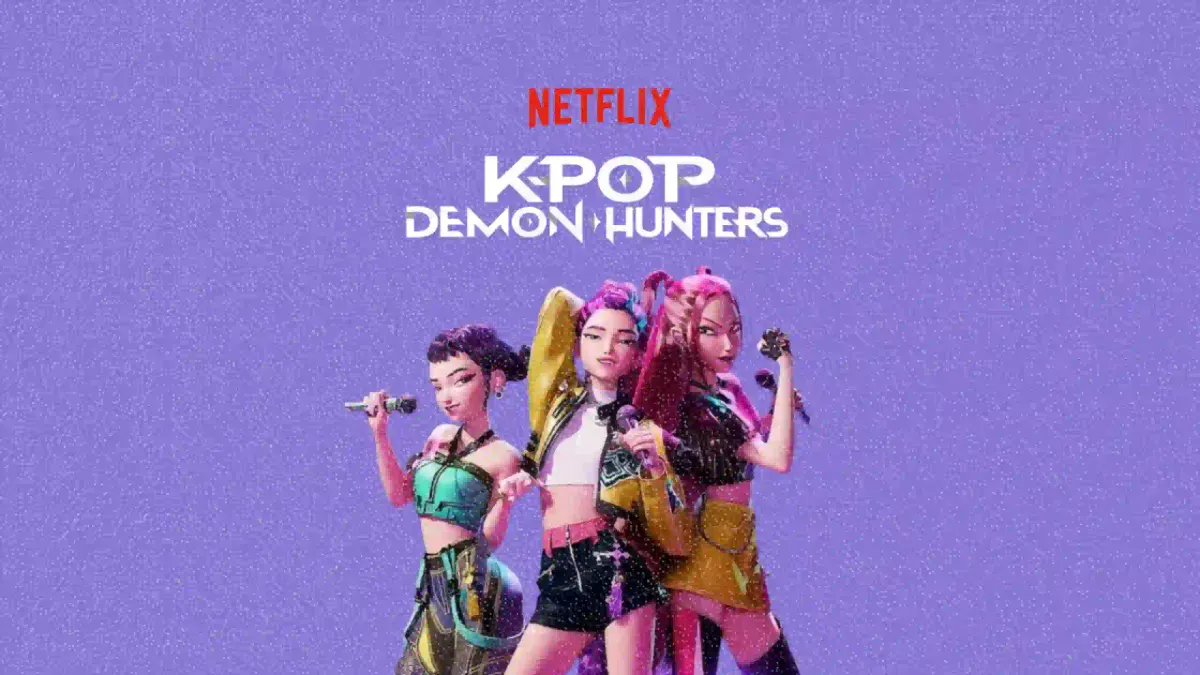
Table of contents
Jump to each section:
- Why KPop Demon Hunters merch feels like fandom identity, not just shopping
- What the licensing lineup says about Netflix’s consumer products strategy
- Beauty, food, and music: where the IP crosses into everyday routines
- What this means for marketers
 Patrecia Meliana
Why KPop Demon Hunters merch feels like fandom identity, not just shopping
For fans, merch is rarely about “owning a product.” It is about signalling taste, finding your people, and keeping a story close when the screen goes dark. KPop Demon Hunters is especially set up for this because it blends pop performance energy with characters that map cleanly onto collectability and personal aesthetics.
That is why the product mix is so broad. It is not only figurines and toys, but also apparel across mainstream retailers (Gap kids, Old Navy, Target) and fashion collabs (like Vans and Bershka), plus collectibles that fit fan display culture (Funko figures and Squishmallows plush).
The character-driven angle matters too. When product options include multiple core characters (Rumi, Mira, Zoey, and Jinu) and even niche picks like glow-in-the-dark variants, it creates the same dynamic as photocard collecting: completion goals, favourites, and brag-worthy finds.
 ContentGrip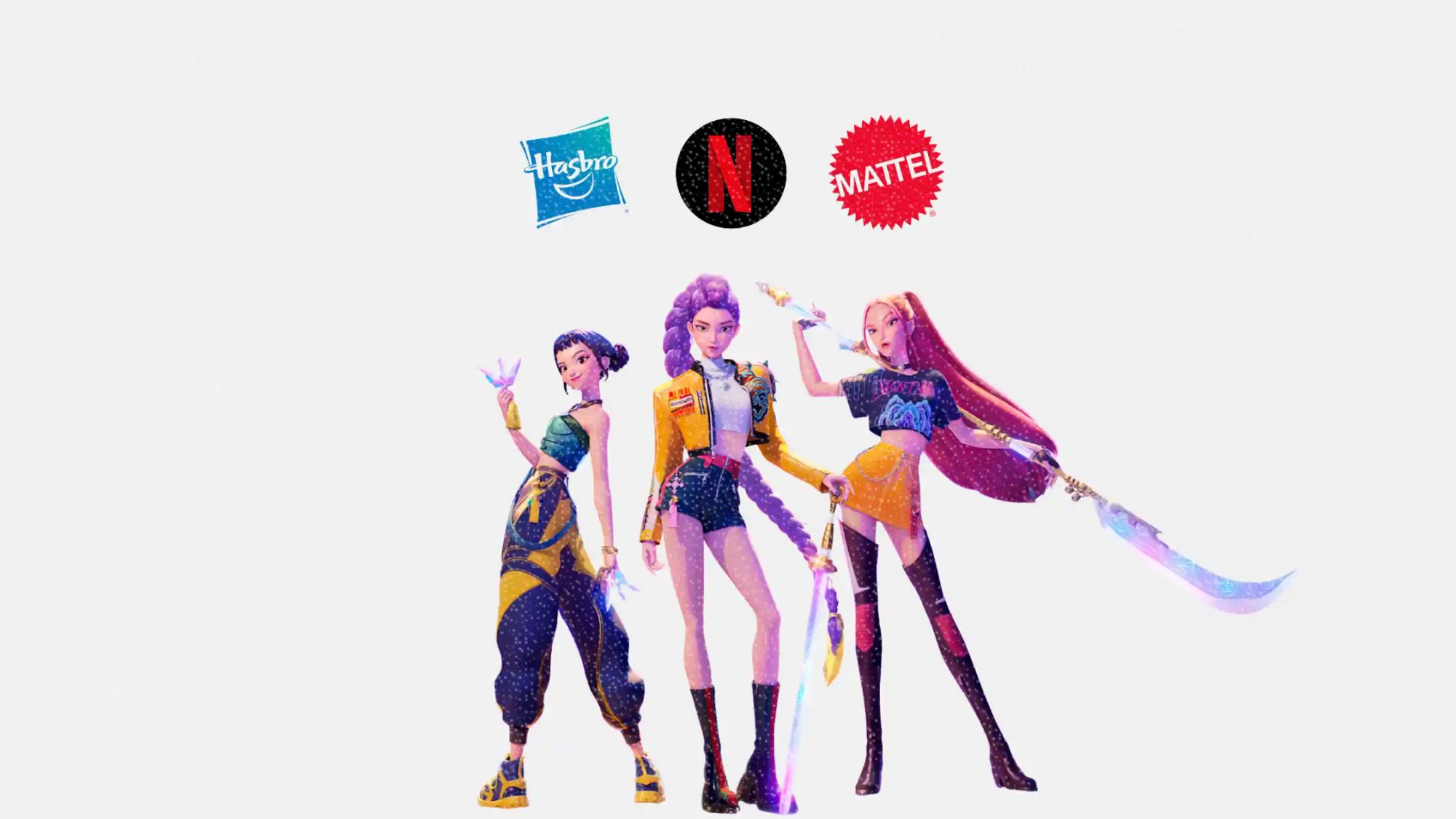
What the licensing lineup says about Netflix’s consumer products strategy
Instead of treating KPop Demon Hunters as a single “merch drop,” the licensing approach reads like a long-tail ecosystem. The list includes evergreen staples (apparel, toys), premium collector items (Mattel collector dolls, Loungefly accessories), and hobby-forward extensions (Woobles crochet bundle, books and art editions).
Some partnerships also hint at pacing and planning. The LEGO collaboration is described as newly announced, with one product slated for reveal and pre-order in spring, and additional sets to come in 2027. That kind of roadmap is less about quick monetisation and more about keeping the IP present across multiple moments, seasons, and shopping cycles.
It also spreads the fandom across different retail contexts. Seeing KPop Demon Hunters appear in costume form (Disguise, Inc. and Spirit Halloween), mainstream shopping (Amazon), and specialty fan retail (Hot Topic) widens how people can “enter” the fandom through what they already buy.
 Zoe Park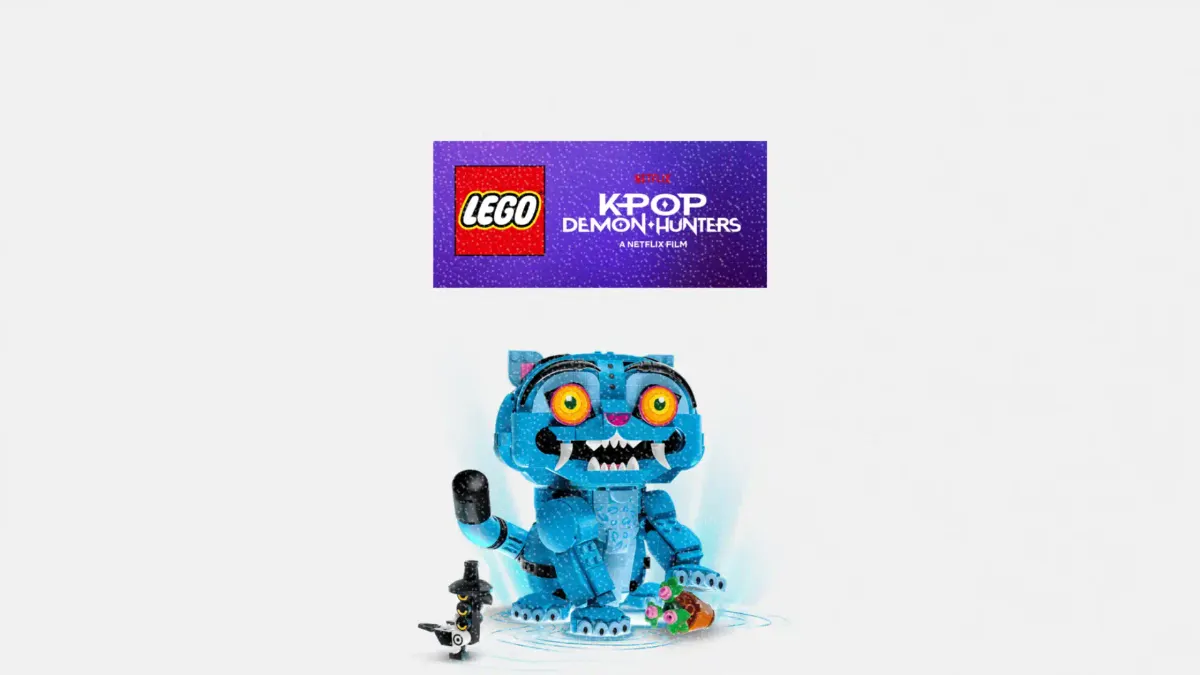
Beauty, food, and music: where the IP crosses into everyday routines
The most interesting licensing plays are the ones that blend into daily habits, because they keep the IP alive in the mundane parts of life. Netflix highlights the first beauty partnership with Korean skincare brand Anua, including masks, sun protection, and spot cover patches, with availability through online retailers and Ulta stores from Feb. 15.
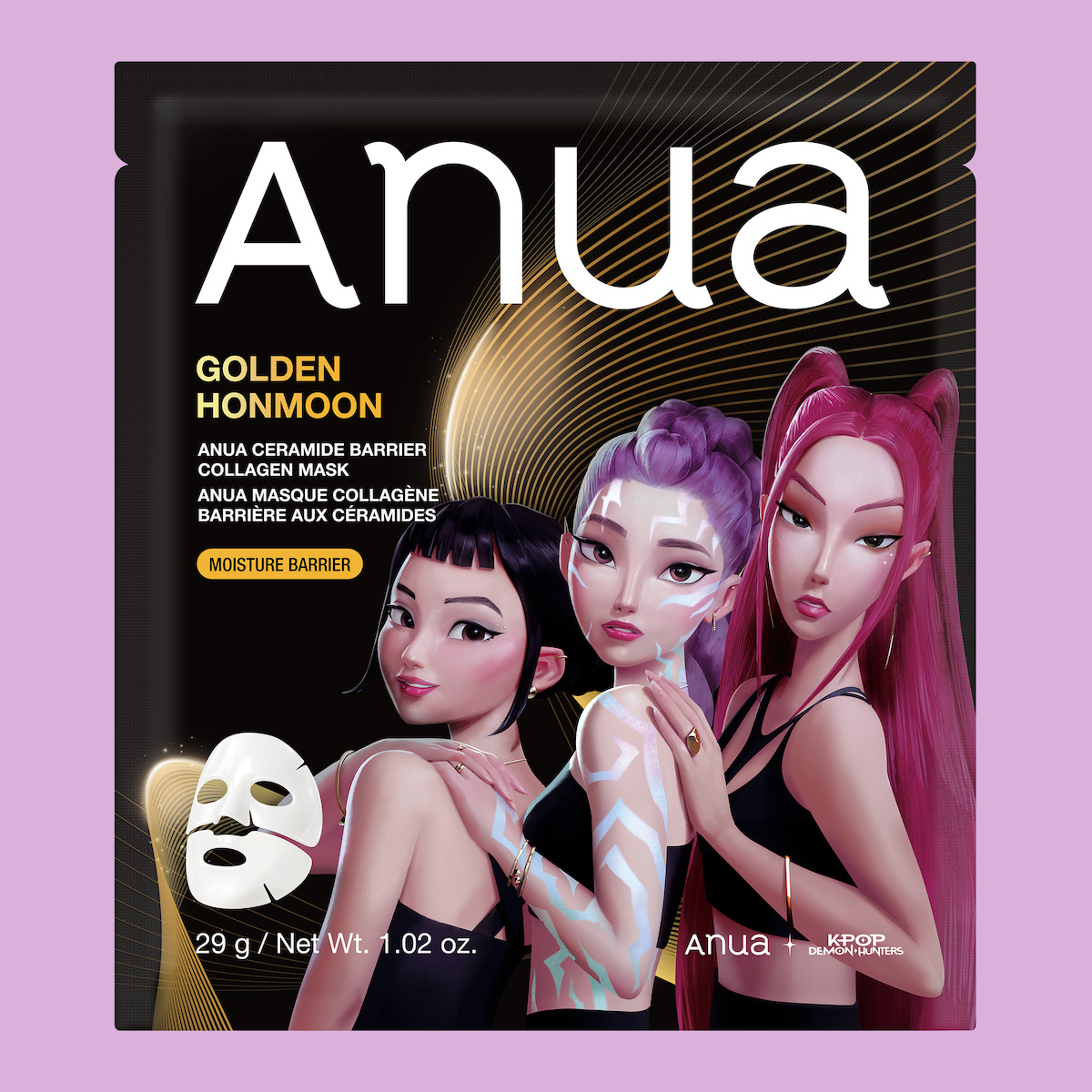
The Anua page also ties the collab to a campaign song and music video (“Gonna Be Glowin’”) featuring HUNTR/X, which turns the beauty partnership into something fans can watch and replay, not just buy.
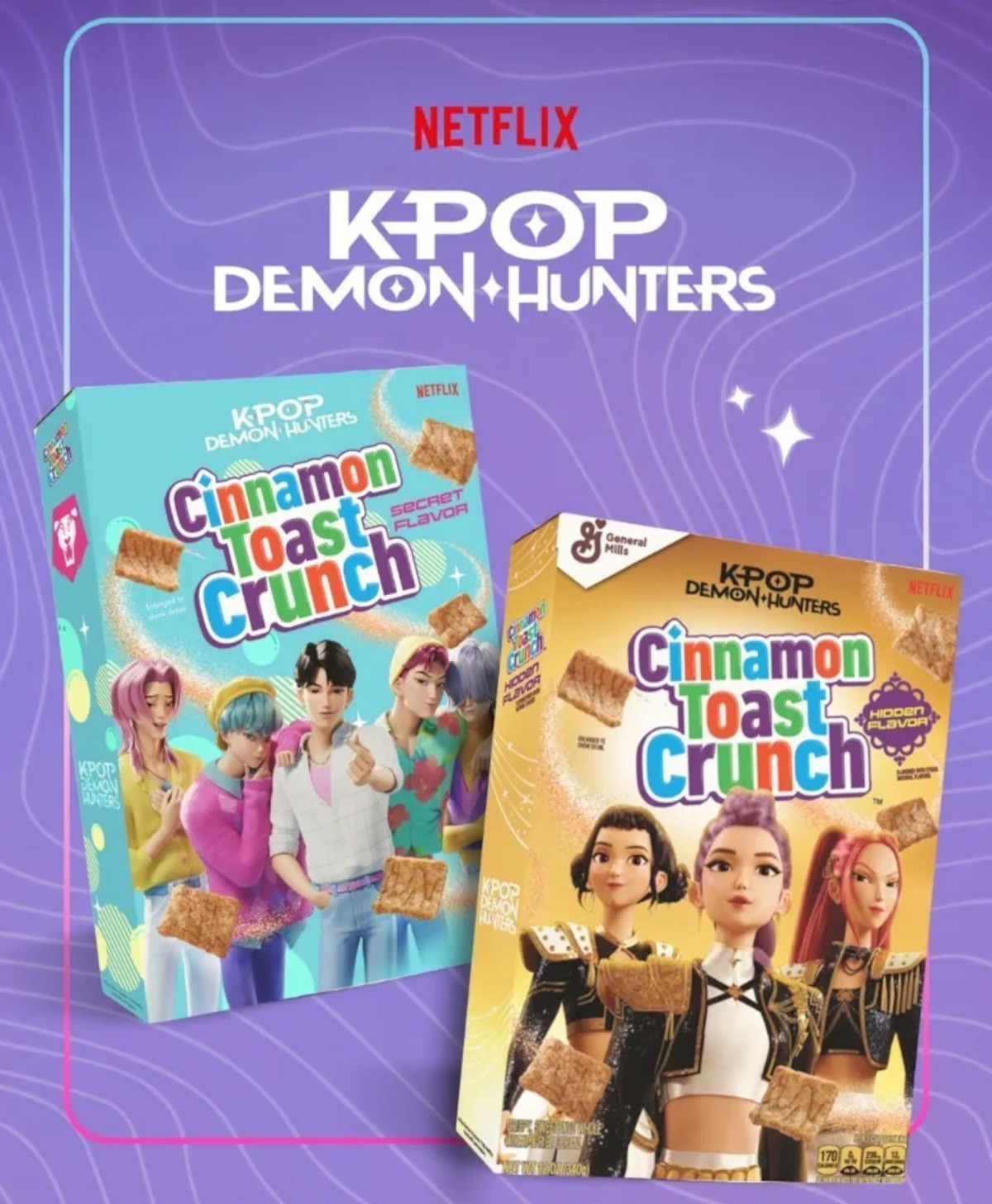
On the food side, the Cinnamon Toast Crunch collaboration introduces two limited-edition mystery-flavoured cereals inspired by HUNTR/X and Saja Boys, while Nongshimgh adds special edition food items like ramyun and shrimp crackers. These are the kinds of items that naturally show up in group chats and grocery hauls, because they are low-commitment and easy to share.
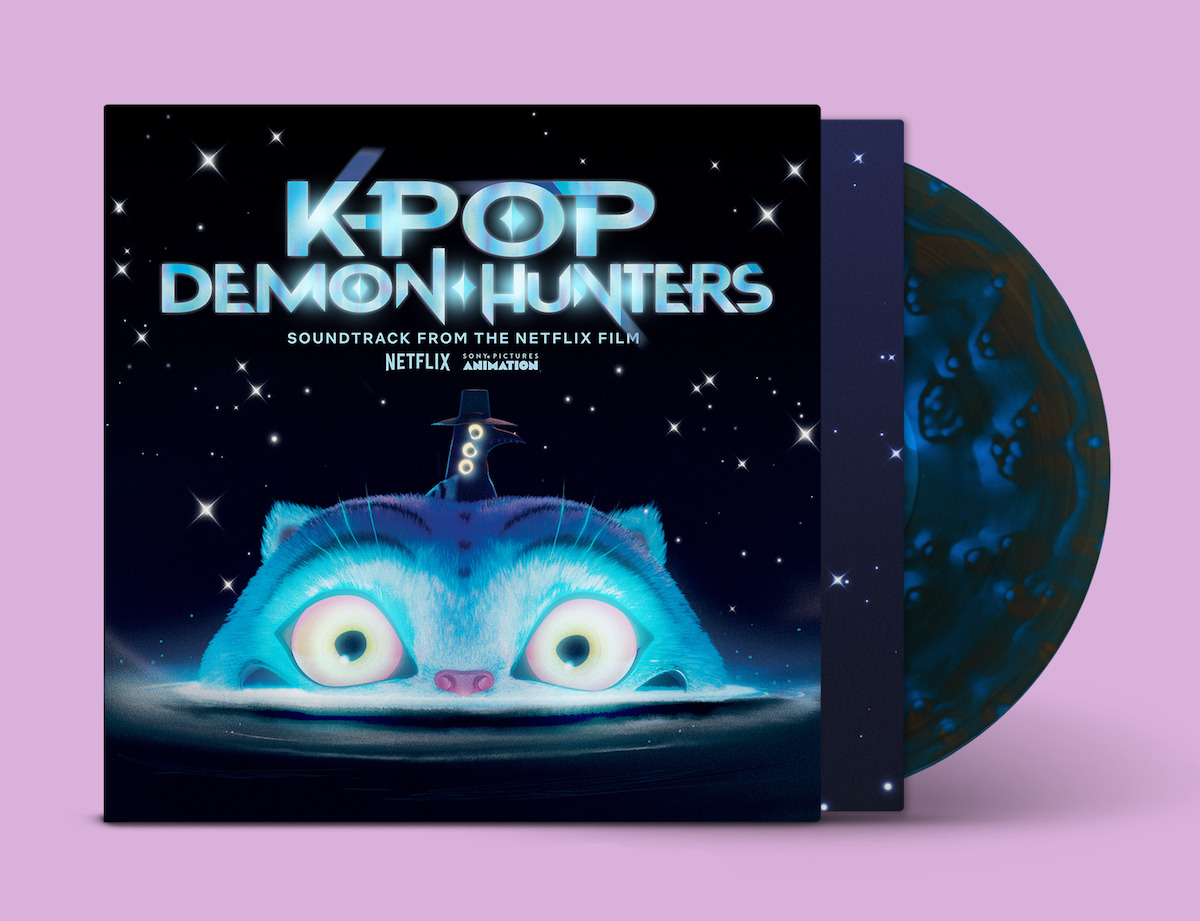
Music is its own flywheel here too. Republic Records is tied to an anniversary edition of the soundtrack, which is a reminder that for musical animation, replay value is not only about plot. It is about tracks people loop while doing everything else.
 Patrecia Meliana
What this means for marketers
KPop Demon Hunters’ product spread is a useful case study in how fandom turns entertainment IP into something closer to a lifestyle brand.
- Treat merch as identity language, not inventory
Collectibles, apparel, and accessories work best when they help fans express “which part of the story is me.” Character variety and collector-friendly variants make that expression easier.
- Aim for routines, not just special occasions
Beauty and food collabs matter because they show up weekly, not yearly. When an IP enters skincare shelves or snack aisles, it becomes part of everyday life, which is a different kind of retention than social buzz.
- Build a calendar of moments instead of one big drop
The LEGO roadmap signals long-term planning. Staggered reveals and future sets create recurring reasons for fans to pay attention, even when the content release cycle is quiet.
- Use media (music, video) to make product partnerships feel like canon
Tying a beauty partnership to a campaign song and video makes the collab feel like an extension of the world, not a bolt-on sponsorship.
- Meet fans where they already shop, then give them upgrades
Mass retail availability (Amazon, Gap kids, Target) lowers the barrier to entry, while collector lines (Mattel, Loungefly) give the most invested fans a way to go deeper.
The bigger cultural signal is that entertainment fandom increasingly behaves like a multi-category commerce engine. People do not only want to watch the story. They want to wear it, snack it, display it, and gift it.
For marketing teams, that shifts the question from “How do we promote the title?” to “What are the everyday touchpoints where fans keep the title alive for each other?” When the product strategy aligns with how communities actually express belonging, the marketing starts to look less like persuasion and more like giving the fandom new ways to participate.