
LADOR brings BTS’s Jimin to a Korean culture fest booth, and fans showed up ready to smell-test
LADOR’s Osaka booth featured BTS’s Jimin visuals and scent trials, with new hair oils and mists selling out day one.


K-pop fandom doesn’t just “support” an idol. It shows up, queues up, and turns everyday products into part of the ritual, especially when there’s a familiar face tied to the brand world. That’s the energy LADOR leaned into at a Korean culture event in Osaka, where visitors weren’t only browsing, they were actively trying scents and comparing textures in real time.
LADOR exhibited at “Weekend KOREA Happle FES in Osaka,” a two-day Korean culture event held at Grand Green Osaka on July 4 and 5, 2026, linked to a TV program called “Weekend KOREA.” The brand set up visuals featuring BTS’s Jimin as its global ambassador and built an experiential space where attendees could test fragrance and feel before buying.
Table of contents
Jump to each section:
- What happened at LADOR’s Osaka event booth
- Why “try before you buy” matters for fragrance-led hair care
- How stage moments turned into product discovery
- What this means for beauty marketers building fandom adjacency
What happened at LADOR’s Osaka event booth
LADOR joined roughly 20 brands at the Weekend KOREA-linked festival, spanning Korean beauty, lifestyle goods, and food. At its booth, the brand prominently featured visuals of BTS’s Jimin and leaned into sampling: visitors could test fragrances and product feel, then choose based on personal preference.
The booth saw strong traffic across both days, and multiple products sold out on day one. Two new items were highlighted as selling out quickly: “Perfume Hair Oil Angel Muguet” and “Keratin Layered Oil Mist (Fig Tea).”
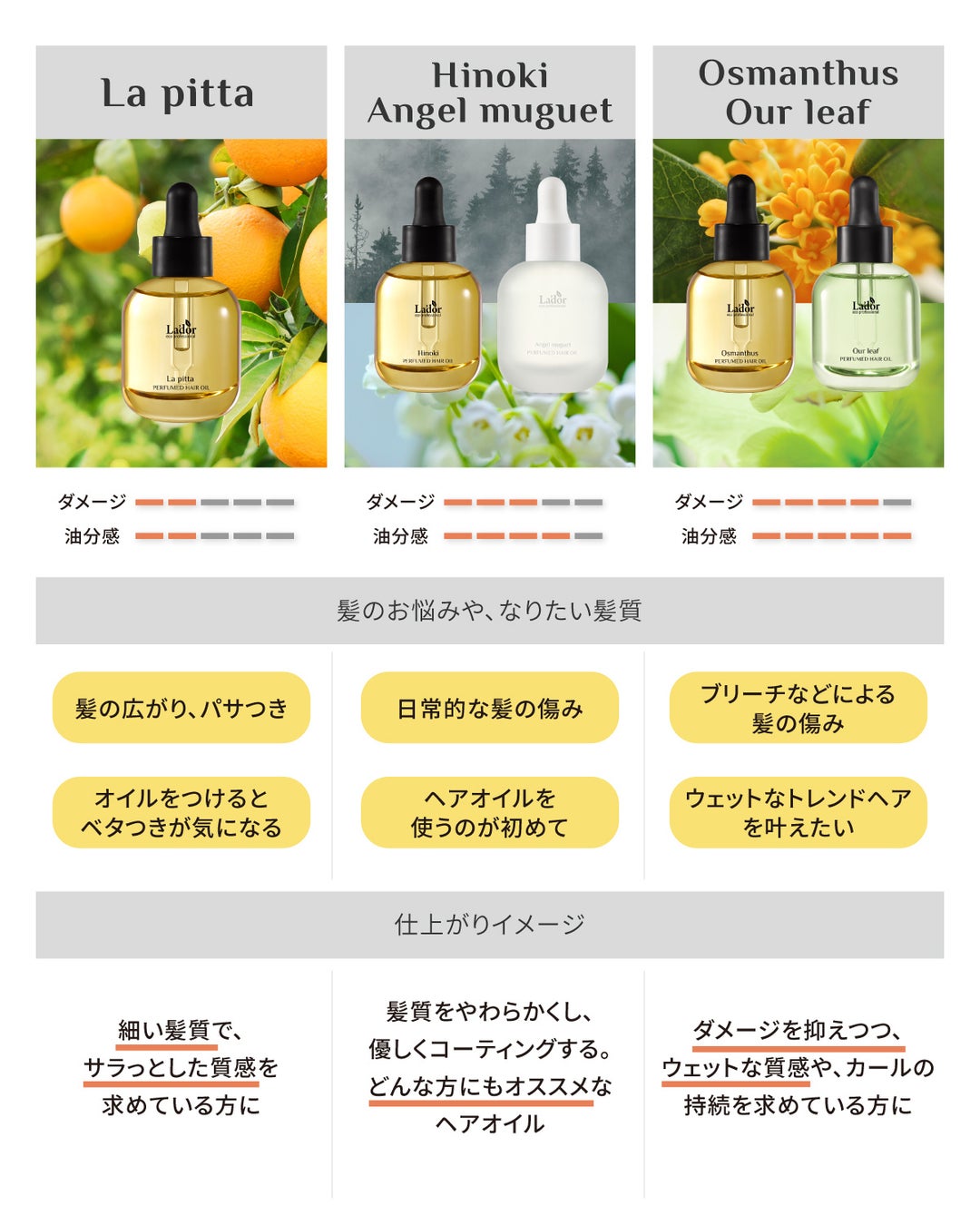
The brand framed the moment as proof of demand for in-person experiences where customers can compare scents and textures, especially for products whose appeal is hard to communicate online.
 undefined
Why “try before you buy” matters for fragrance-led hair care
Hair care is increasingly behaving like fragrance and beauty combined: the “right” product is not only about function, it’s about how it fits someone’s identity and daily routine. LADOR’s booth design matched that behavior by giving people the chance to smell, touch, and decide in a social environment.
The sell-outs point to something simple: sampling removes uncertainty. “Angel Muguet” was positioned as an “angel-like scent” with a clean, soft fragrance and a non-greasy feel, while the “Fig Tea” oil mist was described as having a refined fig-tea fragrance in an easy mist format. Those are sensory claims that land better when people can try them immediately.
Pricing shared for its perfume hair oils included 30 mL / 80 mL sizes at 2,200 yen / 3,700 yen (about $15 / $25) tax included.
How stage moments turned into product discovery
LADOR also benefited from being part of a wider entertainment-style program at the venue. On the event’s special stage, two items were introduced during segments featuring comedian Naoto Ikeda (Rainbow) and Etsuko Maruoka:
- “Perfume Hair Oil Osmanthus” 30 mL
- “Perfume Hair Oil Our Leaf” 30 mL
After those stage mentions, interest in both products rose at the booth, with attendees picking them up and comparing multiple scents.
This is a useful reminder for brand teams: in a live setting, “media” and “retail” blur. The stage creates a shared moment; the booth converts that moment into hands-on exploration, which is especially powerful when the product choice is personal (scent, texture, hair type, desired finish).
What this means for beauty marketers building fandom adjacency
When a beauty brand borrows cultural gravity, it only works if the on-the-ground experience feels worth the trip. LADOR’s Osaka booth suggests it understood the core mechanic: fandom may get people to look, but sensory discovery is what gets people to choose.
- Treat fandom as a doorway, not the whole plan
Featuring a global ambassador like BTS’s Jimin can pull attention, but the booth still needs a reason to stay. Here, the reason was testing scents and textures, which fits hair care that competes on “feel.” - Build for comparison behavior, not single-product selling
The booth environment encouraged trying multiple scents before deciding. That matches how people shop fragrance and beauty in real life: they narrow choices through side-by-side testing, not spec sheets. - Use live moments to create immediate product intent
The stage mentions functioned like a real-time trigger. The key is proximity: the product being talked about has to be easy to find and try right after the moment happens. - Make new-product launches experiential when the promise is sensory
Fast sell-outs for “Angel Muguet” and “Fig Tea” underline that newness matters, but sampling turns newness into confidence. If the claim is “clean, soft fragrance” or “refined fig-tea scent,” let people verify it instantly. - Offline matters when online cannot fully communicate the product
LADOR explicitly positioned the event as a chance to experience what can’t be conveyed online. For categories driven by scent and texture, real-world touchpoints can do what content often struggles to do: reduce doubt without overexplaining.
Zooming out, this is what “culture-first” beauty marketing looks like when it’s done responsibly: the brand shows up where people already want to be, ties attention to a real community magnet, then earns conversion by making the product experience genuinely satisfying. It’s less about shouting a message and more about designing a moment people can physically feel.