
Legal essentials for content teams: copyright, usage rights, and AI-generated media
Copyright, usage rights, and AI rules every content team needs to stay protected and compliant.

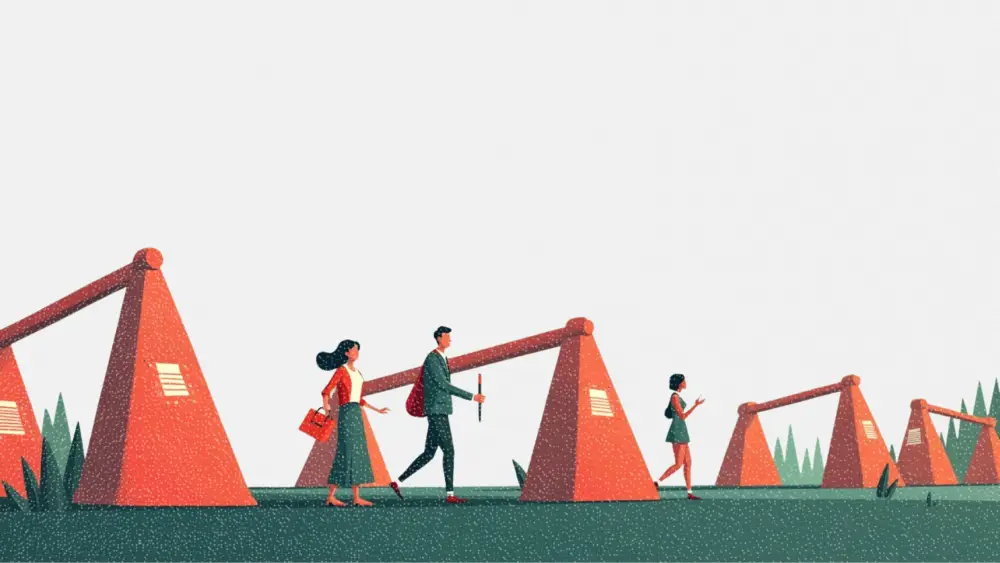
Content teams today move at lightning speed–publishing, creating, remixing, and shipping new ideas across multiple platforms in a single afternoon. But while creativity is sprinting, the legal landscape is… not. Copyright rules, licensing requirements, and AI-generated content policies are evolving in unpredictable, sometimes contradictory ways. It’s enough to make even the most confident marketer want to scream.
And the stakes keep getting higher. One wrong image, one misused clip, or one AI-generated asset with unclear rights can trigger real consequences, including takedowns, penalties, or even legal disputes. Add cross-platform distribution and global audiences, and suddenly the creative process feels more like walking through a legal obstacle course.
This guide aims to simplify all of that. We’ll break down the best practices content teams need to stay protected without slowing down their momentum. And it all starts earlier than most teams realize–back at the organizational level, with choices about business structure, documentation, and operational setup that determine how ready you are for the legal challenges ahead.
Understanding copyright basics
Copyright law is built to protect original expression. That includes writing, images, videos, audio, graphics, illustrations, and countless other creative outputs your team produces daily. What it does not protect are ideas themselves–only the way they’re expressed. This distinction shapes everything from your creative briefs to how your team approaches brainstorming.
What copyright protects:
- Written content
- Photos and illustrations
- Videos and animations
- Designs, layouts, and visuals
This matters because planning content means charting ownership and usage, long before the asset ever goes live.
Ownership is another area where teams often get tripped up. Employees typically produce work that legally belongs to the company, but contractors do not–unless your contract explicitly says so. Many teams assume “we paid for it, so we own it,” but that’s not how copyright works.
Common misconceptions include:
- Believing payment equals ownership
- Assuming freelancers automatically transfer rights
- Thinking edits to third-party assets create new ownership
Clear contracts prevent messy surprises later.
Usage rights & licensing
Licensing can feel like a maze, but understanding the basics saves content teams from costly mistakes. Not all licenses are created equal, and each one dictates exactly how you can use an asset, including where, when, and for what purpose.
Common license types include:
- Royalty-free: Pay once, use within defined limits
- Rights-managed: Pricing and usage vary by duration, location, and audience size
- Creative Commons: Ranges from completely free (CC0) to strict attribution or share-alike rules
- Editorial vs. commercial use: Editorial is for news or commentary; commercial requires broader permissions
Despite good intentions, licensing mistakes happen all the time. Teams often grab images from search results, assume all Creative Commons licenses work for commercial posts, or overlook the need for model and property releases. Duration, geography, and exclusivity also get ignored, but they matter more than most realize.
To avoid trouble:
- Always verify the source of the asset
- Read the full license terms, not just the summary
- Maintain a shared rights database so the whole team knows what’s safe to use
A little diligence here prevents major headaches later.
AI-generated media and copyright challenges
AI-generated content brings incredible creative power, but also legal uncertainty. The biggest question is whether AI-generated work is even copyrightable. Current regulations don’t fully agree on who counts as the “author,” especially when a tool, not a human, is driving the creation. Human-assisted outputs may qualify for protection, while fully automated ones often do not. That’s why content teams need clear internal policies outlining when and how AI is allowed in the creative process.
Another challenge lies in the training models behind the AI tools. Many use datasets containing copyrighted material, which raises concerns about producing content that’s unintentionally derivative. Even if your team didn’t copy anything directly, you could still create something too similar to an existing protected work.
Key training-related risks include:
- Copyrighted images or text in training sets
- Outputs resembling protected material
- Lack of transparency in how models are built
To reduce risk, teams should:
- Review AI platform terms of service carefully
- Use controlled prompts and internal style guidelines
- Run downstream rights checks on AI-generated assets
AI can accelerate creativity. However, it must be used responsibly.
Avoiding legal pitfalls in content production
Legal trouble in content production often stems from one issue. And that is using materials your team doesn’t actually have the rights to. Sourcing content safely starts with licensed stock platforms and verified permissions. Anytime you work with influencers, freelancers, or partners, make sure their usage rights are clear and documented. Internal approval workflows help catch mistakes before anything goes live.
When you’re managing third-party submissions like guest posts, user-generated content, or community contributions, the rules get even stricter. You’ll need release forms, clear copyright transfers, and a way to track permissions so nothing slips through the cracks.
Content teams also need to protect their own work. Copyright registration can be valuable for major assets, while digital watermarking and monitoring tools help track unauthorized reuse. And if someone does copy your content, DMCA takedown procedures offer a fast, effective way to address infringement.
Business structure & legal readiness
Your business structure shapes how well your team can handle legal challenges around content. Forming a Limited Liability Company (LLC) provides liability protection when disputes arise and helps clarify who owns your creative assets. And because there is more legal red tape in the Golden State, the requirements to form an LLC in California aren’t the same as a locale like Delaware, which is relatively easy. As such, it’s a good reminder that compliance starts with thoughtful organizational choices, not just smart content decisions.
An Employer Identification Number (EIN), which is issued for free by the IRS, also strengthens your legal footing. It separates business and personal finances and makes it easier to manage payments for:
- Freelancers and creators
- Voice actors
- Stock platforms
- Licensing vendors
A registered agent adds another layer of protection by receiving critical legal notices. This individual or business will be in charge of handling:
- Copyright or usage disputes
- DMCA complaints
- Infringement claims
Timely communication prevents penalties and escalation, confirming your content operations stay protected and responsive.
Building internal systems for compliance
Strong compliance starts with organized documentation. Content teams need reliable ways to track rights, maintain version control, and store contracts and licenses in one accessible place. A simple rights-tracking spreadsheet can prevent major headaches, and centralized storage certifies no one has to dig through old emails to verify usage permissions.
Workflow design is just as important. A clear path, from intake to creation, approval, distribution, and finally archival, keeps everyone harmonized. Defined roles for legal, creative, and marketing teams help avoid gaps, while automated reminders ensure expiring licenses don’t slip through unnoticed.
Training closes the loop. Most content creators never received formal legal education, so regular workshops on copyright basics are essential. Standardized onboarding materials help new team members start off on the right foot, reducing risk from day one.
Global considerations for content teams
When your content reaches global audiences, the legal landscape becomes far more complex. Copyright laws vary significantly across major jurisdictions like the U.S., European Union, United Kingdom, and Canada. Territorial rights determine where your content can legally be used, and international publishing often requires separate permissions, licenses, or disclosures. What’s legal in one country may be restricted or prohibited in another.
Localization adds another layer of responsibility. Content that works in one region may be inappropriate or even offensive elsewhere. Teams must consider cultural norms, language nuances, and visual expectations when adapting assets.
Key localization checks include:
- Using visuals that fit regional norms and sensitivities
- Avoiding symbols, gestures, or messaging that carry different meanings abroad
- Verifying whether certain regions restrict AI-generated media
Adopting a global mindset keeps your content both relevant and legally safe.
Social media, influencer work, and real-time content
Each platform has its own copyright rules, and enforcement can be strict. Instagram, TikTok, YouTube, and X all flag or remove content that violates music or media rights. Even short-form videos like Reels or TikTok posts come with music usage restrictions that change frequently.
Influencer partnerships bring their own legal considerations.
Teams must clarify:
- Who owns the collaborative content
- Required FTC disclosures
- Whether influencer content can be reused across campaigns
Real-time publishing adds risk because fast posting often leads to accidental infringement. “Pre-flight” content checks help prevent last-minute mistakes, and templated workflows keep teams from improvising under pressure.
Legal preparedness for AI-heavy content teams
As AI becomes a bigger part of content creation, having clear internal policies is essential. Teams need guidelines that outline what’s allowed, what’s restricted, and how AI should be used ethically. Disclosure rules help maintain transparency, and limits on inputs or prompts prevent the accidental use of protected or sensitive material.
Strong recordkeeping supports compliance.
Teams should track:
- Prompt histories
- Model versions and datasets
- Approvals for AI-generated assets
This documentation becomes invaluable during disputes, audits, or internal reviews.
Contracts also need an upgrade in an AI-driven workflow. Agreements with freelancers, partners, or agencies should include AI-specific clauses that clarify ownership, usage rights, and modification permissions. Teams must also establish liability protections to cover scenarios where AI outputs unintentionally resemble copyrighted works.
Bold in creation & wise in protection
Legal awareness shouldn’t stand to stifle creativity; rather, it should strengthen it. When content teams understand copyright, usage rights, and the nuances of AI-generated media, they create with confidence instead of caution.
Pair that knowledge with the right business foundation and your team can innovate freely while staying fully protected in a fast-moving digital world.