Marriott Bonvoy repositions loyalty as effortless in new APAC campaign
Marriott Bonvoy’s latest regional campaign reframes loyalty as simple, accessible, and everyday

Loyalty programs have long carried a reputation: complicated tiers, fine print, and perks that only show up after your tenth business trip. Marriott International is betting that it’s time to break that perception.
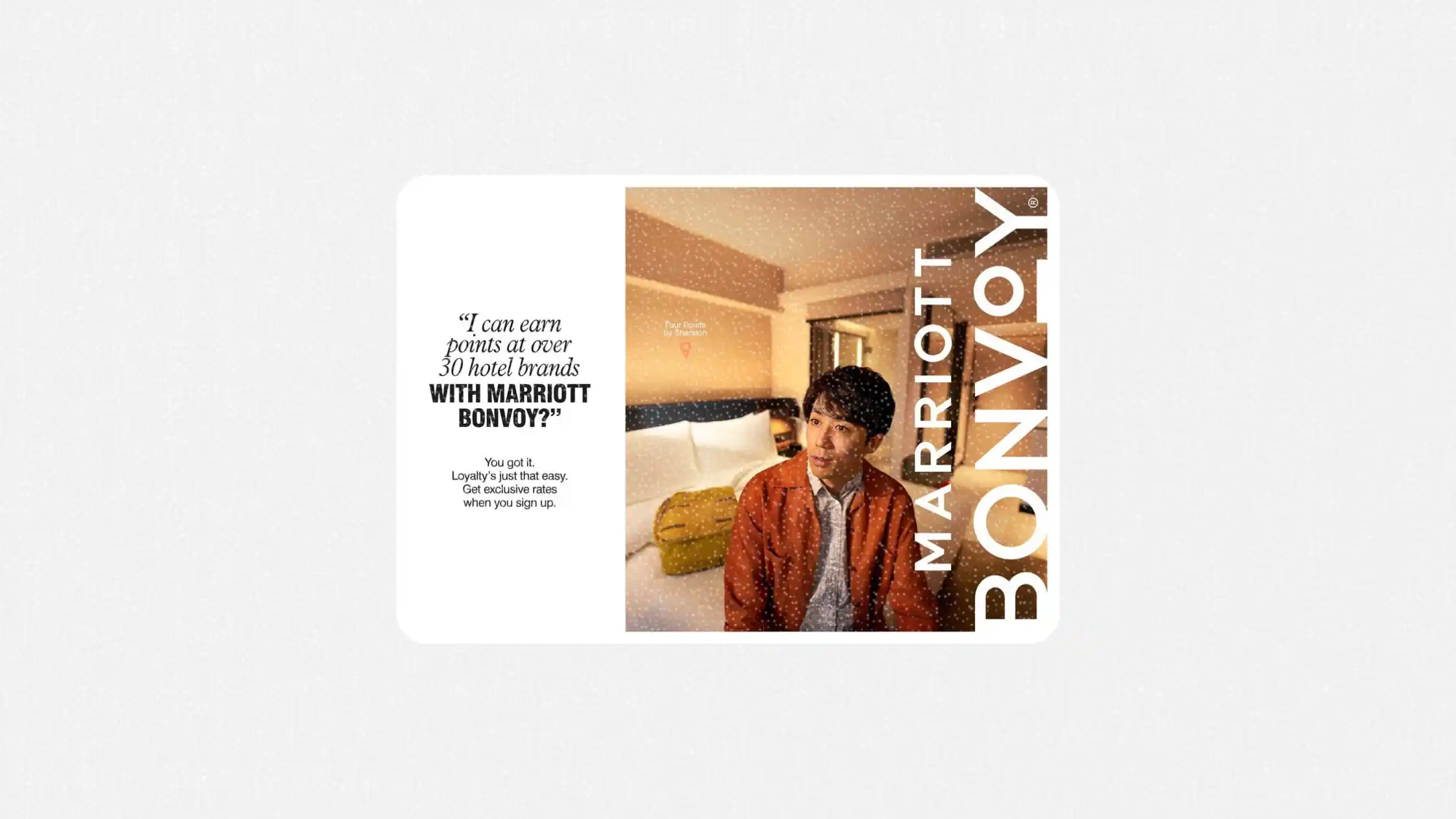
With help from BBH Singapore, the brand has launched “Loyalty’s just that easy,” a new regional campaign positioning Marriott Bonvoy as accessible and rewarding, even for casual or infrequent travelers. The effort targets Asia Pacific markets, aiming to broaden the appeal of Marriott’s loyalty program by showcasing how even small, everyday moments like grabbing lunch at a hotel restaurant can earn points.
This article explores how Marriott is simplifying the loyalty message, why the strategy reflects a shift in travel behavior, and what marketers can learn about positioning loyalty in a cluttered market.
Short on time?
Here is a table of content for quick access:
- What’s new in Marriott’s regional loyalty play?
- Context: Why reposition loyalty now?
- What marketers should know
 Falencia Naoenz
What's new in Marriott's regional loyalty play?
At the center of the campaign is a hero film directed by Emmy winner Rhys Thomas and produced by Stink London. It follows an everyday traveler who gradually realizes that even low-effort hotel experiences like dining, spa time, or weekend stays can generate loyalty rewards.
BBH Singapore crafted three local adaptations of the hero spot, each led by a protagonist from India, Japan, and Korea. This regional nuance helps reflect the campaign’s broader aim: loyalty doesn’t just belong to corporate road warriors.
The campaign started rolling out on January 5 across markets including India, Japan, Korea, and Indonesia. Shorter 30- and 15-second edits will hit social and digital, while a mix of out-of-home placements and other activations will continue throughout H1 2026.
Context: Why reposition loyalty now?
Marriott Bonvoy isn’t new, but its repositioning reflects broader shifts in travel culture. While business travel has rebounded unevenly, leisure and “bleisure” travel have surged, especially across Asia Pacific. That means a growing cohort of travelers aren’t booking out of routine. They are seeking comfort, convenience, and flexibility.
BBH Singapore’s campaign acknowledges this. “What if loyalty didn’t feel like effort at all?” said Khairul Mondzi, Executive Creative Director at BBH Singapore. “That idea became the foundation of this campaign.”
The move also signals a continued deepening of the Marriott-BBH partnership. Just last year, the agency led Fairfield by Marriott’s “Come back to calm” campaign, which leaned into minimalist branding to position Fairfield as a sanctuary from the chaos of travel.
 Patrecia Meliana
What marketers should know
For brands running loyalty programs or trying to build audience retention in fragmented markets, this campaign has a few takeaways:
1. Rethink who loyalty is for
Most loyalty messaging is still skewed toward heavy users. Marriott flips that on its head by spotlighting casual earners. There’s value in meeting customers where they are, not where brands wish they were.
2. Localized storytelling builds trust
By tailoring the campaign to India, Japan, and Korea, Marriott signals regional sensitivity while keeping a unified brand narrative. For marketers running multi-market campaigns, this is a reminder that local faces build broader resonance.
3. Simplicity is the strategy
“Loyalty’s just that easy” is more than a slogan. It’s a challenge to the complexity that often alienates consumers. The campaign turns a potential pain point into a feature. Less friction means more participation.
4. Everyday behaviors are underleveraged touchpoints
Marriott isn’t just promoting room nights. It’s turning spa visits and meals into earning moments. For brands with loyalty mechanics, this is a prompt to map smaller actions into your ecosystem, not just the big-ticket items.
Marriott’s latest push feels like a useful case study in accessibility marketing, the art of showing that your product fits seamlessly into real life. For B2B marketers especially, this raises a key question: Are you designing loyalty programs around your business needs or around your customer’s lifestyle?
By lowering the barrier to entry and putting ease at the center, Marriott isn’t just selling hotel stays. It’s selling the idea that even a little engagement is worth something, and that loyalty doesn’t have to be earned the hard way.