Marketers brace for AI disruption and orchestration gaps in 2026
Mediaocean’s latest report reveals marketers are doubling down on digital video, AI ads, and system unification

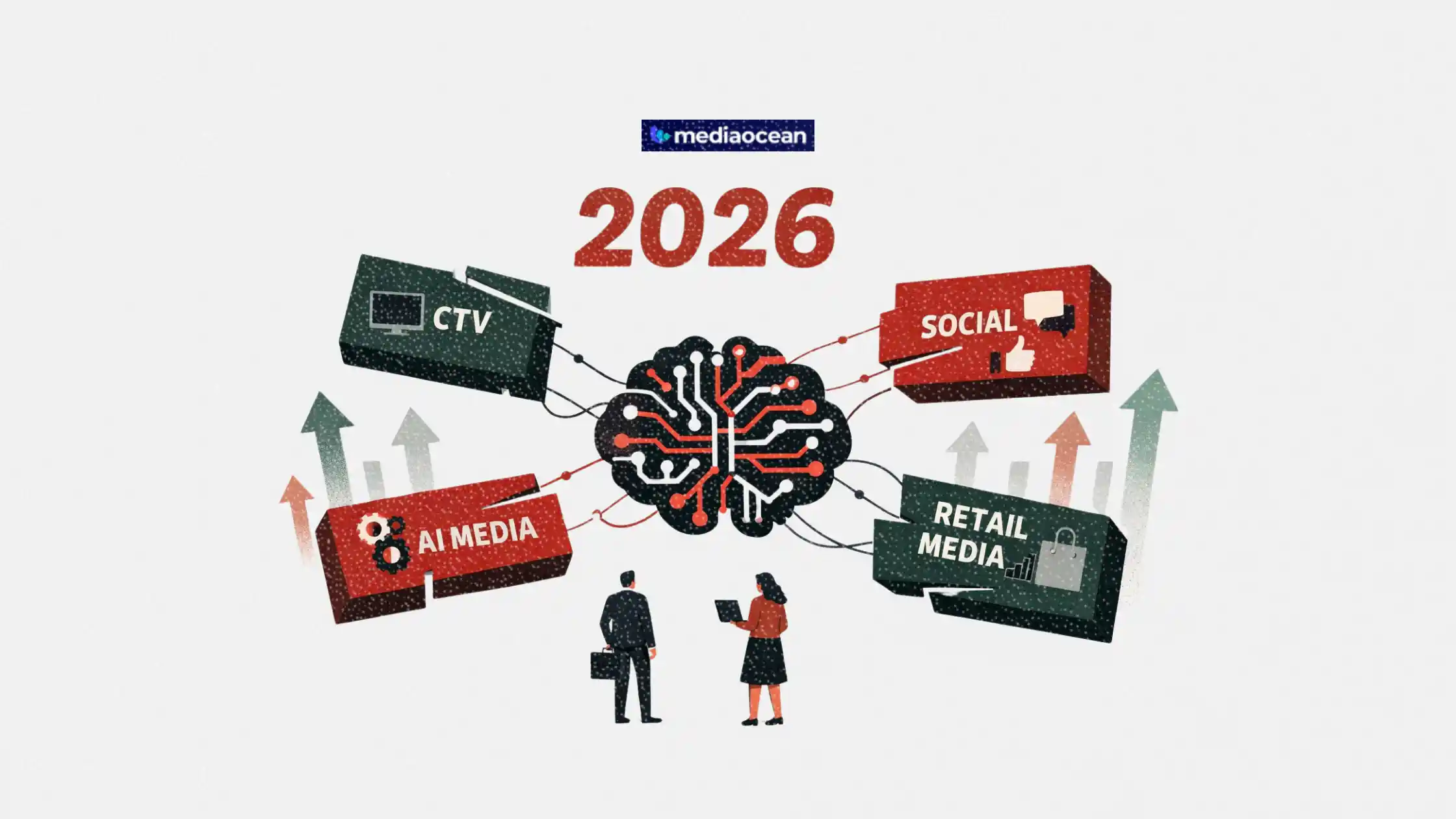
Marketers are heading into 2026 with renewed budgets, bigger digital bets, and a growing headache: orchestration. According to Mediaocean’s latest 2026 Advertising Outlook Report, based on surveys of 320 marketing pros, nearly every digital channel is seeing increased spend, but the systems running them are not keeping up.
This article explores the most pressing trends uncovered in the report: rising AI media investments, mounting orchestration gaps, and what marketers need to prioritize as disruption and maturity collide in the year ahead.
Short on time?
Here’s a table of contents for quick access:
- Budget rebound: where the dollars are going
- AI media outpaces search
- Orchestration enters the spotlight
- Why adoption of AI tools is still lagging
- What marketers should do next
 Patrecia Meliana
Budget rebound: where the dollars are going
Marketers aren’t just cautiously optimistic. They’re ready to spend. Every major digital channel saw a net positive in planned investment for 2026, with CTV and digital display/video tied at the top. Sixty-three percent of respondents plan to increase spend on both. Social platforms followed closely at 61%.
Two fast-moving categories are catching up quickly: AI media (ads on AI agents like ChatGPT or Google AI Overviews) and influencer/creator marketing have overtaken search in terms of expected budget increases. AI media in particular reflects a broader behavioral shift, as users increasingly engage through conversational interfaces and algorithmic discovery.
Traditional media channels, on the other hand, continue to decline. Print and national TV show the steepest cuts.
AI media outpaces search
One of the biggest surprises? AI media is projected to grow faster than search advertising. That includes placements on emerging platforms such as ChatGPT or Google’s AI Overviews, which are still in their infancy. The report notes that more marketers plan to increase spend on these formats than on paid search. That is a clear signal that budgets are following user behavior.
This shift could reshape how marketers approach discovery and top-funnel engagement, especially as AI interfaces compress content, search, and commerce into a single touchpoint.
Orchestration enters the spotlight
While budgets grow, the complexity of managing them is becoming a strategic pain point. Only 10% of marketers say their ad tech systems are fully unified across channels, and the majority report significant fragmentation. Yet 86% say orchestration is important, with over half calling it “extremely important”.
This disconnect is feeding issues in measurement, creative redundancy, and campaign optimization, especially across high-growth environments like CTV, social, and retail media. Orchestration is no longer a nice-to-have. It is now seen as the key to unlocking cross-channel performance.
Why adoption of AI tools is still lagging
Despite all the buzz, actual usage of generative AI remains limited. Fewer than half of marketers say they use Gen AI for data analysis or market research. Creative development (33%), campaign optimization (31%), and SEO (10%) lag even further behind.
What’s holding them back? The top barriers include:
- Data quality and access issues (42%)
- Difficulty integrating AI insights across systems (41%)
- Brand safety concerns (40%)
- Tech stack integration challenges (39%)
These are the same challenges marketers have faced before, now repackaged for the AI era. The irony? These roadblocks are also the areas where AI could deliver the most value.
What marketers should do next
1. Rethink your AI media strategy
AI platforms are becoming ad channels in their own right. Start testing campaigns on emerging AI interfaces, even if formats are still experimental. The early learning will pay off.
2. Audit your orchestration maturity
If your teams are still toggling between siloed platforms, you’re leaving performance on the table. A tech audit, and potentially an overhaul, is due.
3. Focus on connective systems, not just shiny tools
Marketers are shifting from channel-level optimization to unified decision-making. Orchestration isn’t just technical. It’s operational. Make sure your internal workflows reflect that.
4. Push for better data hygiene
AI is only as good as the data it runs on. Investing in clean, structured, privacy-compliant data will determine how far AI can actually take your campaigns.
Mediaocean’s report signals a clear pivot. 2026 will reward marketers who can integrate, orchestrate, and adapt fast. While ad budgets are growing, the gap between tech stack aspiration and reality is where performance will be won or lost.
The playbook is changing. Now it’s about systems that connect, not just tools that optimize.