
OpenAI quietly turns ChatGPT free users into an ad-targeting engine
OpenAI’s latest move turns free ChatGPT usage into a conversion engine powered by behavioral data


OpenAI has quietly shifted its monetization strategy and, as first reported by Wired, the change is more significant than it initially appears.
A recent privacy policy update reveals that marketing cookies are now enabled by default for free ChatGPT users, marking a clear move toward ad-driven growth and conversion optimization.
This article explores what actually changed, why it matters for marketers, and how it signals a broader shift in AI business models. More importantly, it breaks down how B2B marketers and PR professionals should think about data, targeting, and platform risk as AI tools start behaving more like ad networks.
Table of contents
Jump to each section:
- What changed in OpenAI’s privacy policy?
- Why OpenAI is pushing harder on monetization
- What this means for user data and ad targeting
- What marketers should know about this shift
- The bigger picture for AI platforms and privacy
 Patrecia Meliana
What changed in OpenAI's privacy policy?
OpenAI has enabled marketing cookies by default for users on ChatGPT’s free tier. Previously, this kind of tracking required user opt-in. Now, it is automatic unless users actively disable it in settings.
The update also formalizes something bigger. OpenAI is:
- Tracking behavioral data such as usage frequency, feature interaction, and session patterns
- Sharing certain user data with marketing partners
- Receiving purchase data from advertisers to measure campaign effectiveness
- Using this data to promote its own products across the web
Importantly, OpenAI states that chat content itself is not shared with advertisers. However, the metadata around usage is now clearly part of a marketing pipeline designed to drive conversions.
Patrecia Meliana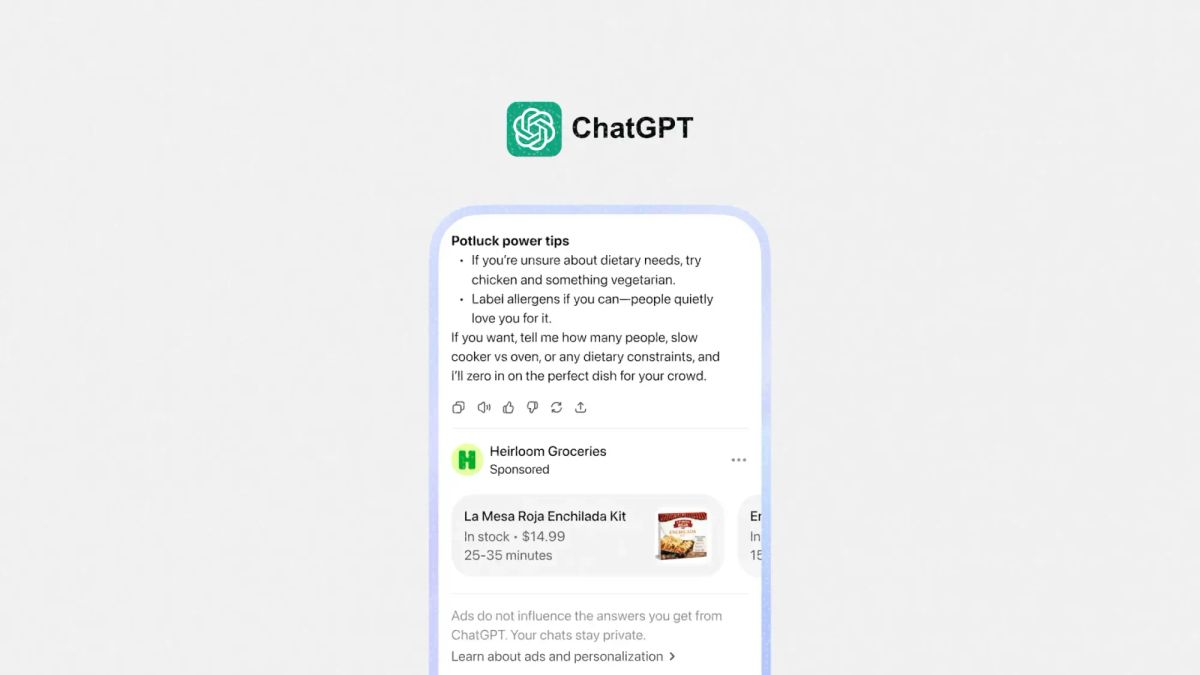
Why OpenAI is pushing harder on monetization
This move is less about privacy policy wording and more about economics.
Running large-scale AI systems is expensive. Infrastructure, GPUs, and model training costs run into billions. Free users are not just a growth lever. They are a cost center.
Marketing cookies solve a specific problem: how to convert massive free usage into predictable revenue.
By enabling tracking by default, OpenAI can:
- Build behavioral profiles at scale
- Identify high-intent users
- Optimize upgrade prompts to ChatGPT Plus at US$20 per month
- Measure which campaigns actually drive paid conversions
This is a classic SaaS growth strategy, now applied to AI products at global scale.
Patrecia Meliana
What this means for user data and ad targeting
The key shift is not that OpenAI collects data. Most platforms do. The shift is how systematically that data is now tied to advertising and conversion funnels.
Free users effectively become part of an optimization loop:
- Their usage patterns inform targeting models
- Those models determine when and how they see upgrade prompts
- External ads can reinforce those nudges across other platforms
Even without accessing chat content, metadata can be powerful. Frequency of use, time of day, feature preferences, and session depth all contribute to a detailed behavioral profile.
Another notable implication is the emergence of a two-tier privacy model:
- Paid users get reduced exposure to marketing tracking
- Free users trade data for access
For marketers, this is familiar territory. For AI platforms, it is relatively new and signals a maturing business model.
What marketers should know about this shift
This is where things get practical.
1. AI platforms are becoming ad platforms
OpenAI is no longer just a tool provider. It is building the infrastructure of an advertising ecosystem.
Marketers should expect:
- More AI-driven audience segmentation
- Cross-platform targeting tied to AI usage signals
- New ad formats or integrations tied to AI workflows
2. First-party behavioral data is getting more valuable
The type of data OpenAI is collecting is high-intent and context-rich. It reflects actual problem-solving behavior, not passive browsing.
This raises the bar for:
- Personalization strategies
- Conversion timing
- Lifecycle marketing
3. Conversion optimization is becoming AI-native
Instead of static funnels, expect dynamic, model-driven conversion paths:
- Personalized upgrade prompts
- Feature gating based on usage patterns
- Predictive churn and upsell triggers
This is the same logic marketers apply in CRM and marketing automation, now embedded directly into AI products.
4. Privacy positioning becomes a brand decision
The split between free and paid privacy experiences creates a messaging opportunity and a risk.
Brands need to decide:
- Do they align with data-heavy growth models?
- Do they emphasize privacy as a differentiator?
- How transparent are they about tracking and targeting?
5. Platform dependency risk is increasing
As AI tools become embedded in workflows, changes like this have outsized impact.
Marketers should:
- Avoid over-reliance on a single AI platform
- Diversify tools and data sources
- Monitor policy changes as closely as feature updates
The bigger picture for AI platforms and privacy
OpenAI’s move reflects a broader tension in the AI industry.
On one side, there is the push for accessibility. Free tools drive adoption, market share, and ecosystem growth.
On the other, there is the need for sustainable revenue. AI is not cheap to run, and ad-driven models are a proven path.
What is changing now is the default setting. Data collection is no longer something users opt into. It is something they must actively opt out of.
For marketers, this signals a familiar future:
- AI platforms will behave more like media platforms
- User data will increasingly fuel targeting and optimization
- Privacy will become a competitive differentiator, not just a compliance checkbox
OpenAI enabling marketing cookies by default is not just a policy tweak. It is a clear signal that AI platforms are entering their monetization phase.
For the millions using ChatGPT’s free tier, the trade-off is now explicit. Access comes with data tracking designed to drive conversion. For paid users, privacy becomes part of the product.
For marketers, this is a shift worth watching closely. The platforms shaping how people search, create, and make decisions are also becoming the platforms that target, influence, and convert them.
The question is no longer whether AI will integrate with advertising. It already is.