OpenAI makes ChatGPT ads more visual and measurable
OpenAI adds visual ChatGPT ads, broader measurement integrations and brand-suitability pilots as it courts larger media budgets.


OpenAI is giving ChatGPT Ads a more visual format while building out the measurement and suitability tools advertisers expect from established media platforms.
In its latest advertising update, the company said it will begin testing image-led ads during ChatGPT image generation later this month in the US. The same release expands conversion-data integrations, attribution partners, incrementality work and independent brand-suitability evaluation.
The visual format is the visible change. The more important development is underneath it: OpenAI is trying to make ChatGPT easier to buy, measure and govern as a media channel.
Table of contents
Jump to each section:
- ChatGPT ads move beyond text
- Measurement is becoming the real product
- Brand suitability is part of media readiness
- What marketers should know about ChatGPT Ads
ChatGPT ads move beyond text
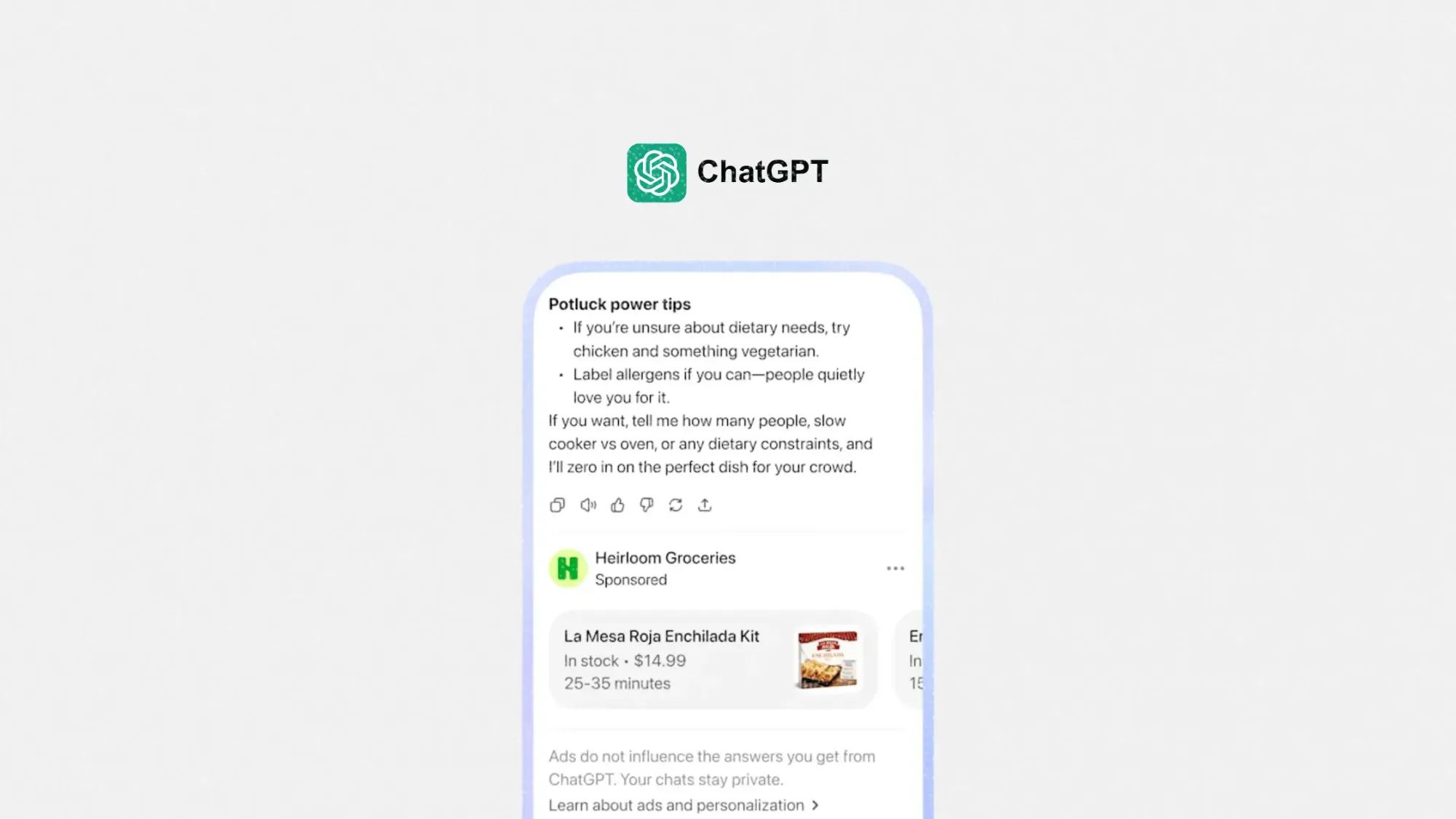
The new ad format is designed for moments when users are already creating images in ChatGPT. OpenAI says advertisers will be able to show product inspiration, usage or experiences through images while keeping paid content clearly labeled and separate from the image being generated.

That placement matters because it gives advertisers a role inside a task rather than beside a feed. A user generating an image is already expressing intent through prompts and iterative choices. The ad opportunity is therefore less about interrupting attention and more about appearing during an active decision process.
The common assumption is that new media channels become valuable when they add more formats. The reality is that format innovation matters only when marketers can connect it to buying, measurement and control. That is why the visual ad itself may be less consequential than the infrastructure arriving around it.
One useful way to read this update is as a sign of platform maturation. ChatGPT Ads is becoming less like a novelty placement and more like something media teams could eventually evaluate alongside search, social and retail media.
1.2 billion weekly users is the audience scale OpenAI says ChatGPT now reaches, according to OpenAI.
Scale creates inventory. It does not create budget confidence on its own.
Measurement is becoming the real product
OpenAI is expanding the systems advertisers can use to send conversion data into ChatGPT Ads, including integrations with Hightouch, Tealium and LiveRamp. It is also supporting attribution and reporting partners such as AppsFlyer, Triple Whale, Adjust, DV Rockerbox, Northbeam and Branch.
The deeper shift is that AI advertising is starting to inherit the same measurement expectations as mature performance channels. Marketers do not just want to know whether an ad was seen or clicked. They want to know whether it changed customer behavior.
OpenAI is also working with Haus, Measured and WorkMagic on geo-based incrementality experiments. Its ads team said this work remains early, which is an important distinction. The platform is presenting evidence of potential performance while still building the methods needed to separate correlation from causation.
15.3% lower attributed CPA was reported for WeightWatchers on ChatGPT Ads versus its blended paid-search benchmark, according to DV Rockerbox via OpenAI.
OpenAI also cited WorkMagic research estimating that Dose generated 2.3 times more incremental orders than last-click attribution captured. Triple Whale, meanwhile, reported that 93% of Portland Leather visitors from ChatGPT Ads were new.
Those figures are still early and partner-reported. Their strategic value is not that they prove ChatGPT Ads outperforms established channels. It is that they show OpenAI understands the burden of proof advertisers will apply before reallocating meaningful budget.
The media product is no longer just the placement. It is the evidence system around the placement.
Brand suitability is part of media readiness
Advertising inside an AI conversation creates a different suitability problem from advertising next to a webpage or video. The surrounding context can change from one turn to the next, and the user may be discussing topics brands would not want associated with a paid placement.
OpenAI says it uses placement guardrails, automated review, human oversight and ongoing monitoring to keep ads away from unsuitable conversations. It is also making Negative Phrases available to qualifying advertisers for narrower brand-specific restrictions.
The company is developing evaluation pilots with DoubleVerify and Integral Ad Science so independent partners can assess how those safeguards work without accessing private user conversations.
DoubleVerify CEO Mark Zagorski described ChatGPT as "a fundamentally different advertising environment" because the context is defined by the conversation itself.
That distinction matters because brand suitability is not a side issue for AI-native media. It is part of whether large advertisers can operationalize the channel at all.
A new format can attract experimentation. Independent measurement and suitability checks are what help experimentation survive procurement, governance and annual planning.
What marketers should know about ChatGPT Ads
The latest update gives marketers more reasons to test ChatGPT Ads, but it also raises the standard for how those tests should be evaluated.
Treat the visual format as a behavior test. The new unit appears during image generation, so the useful question is not simply whether image ads get attention. It is whether the placement adds value during a task without disrupting the user's reason for being there.
Separate attribution from incrementality. OpenAI is explicitly investing in both. Marketers should resist reading early attributed conversions as proof of causal lift when the platform itself says incrementality work is still developing.
Watch the measurement stack, not just the creative. Integrations with customer-data, attribution and experimentation partners make ChatGPT easier to fit into existing marketing operations. That compatibility may matter more for adoption than another ad shape.
Make suitability part of the channel test. AI conversations produce context dynamically. Brands should evaluate how placement rules, independent verification and their own exclusion requirements work together before scaling spend.
The broader shift is that AI platforms are becoming media environments with the same institutional demands as older channels. Reach gets attention, but repeatable budgets depend on measurement, control and trust.
For marketers, the more interesting question is no longer whether ads can exist inside ChatGPT. It is whether ChatGPT can become predictable enough to earn a stable place in the media plan.