Opendate raises US$14M to become the OS for indie live events
As Ticketmaster tightens its grip, Opendate is building tools for independents to win.

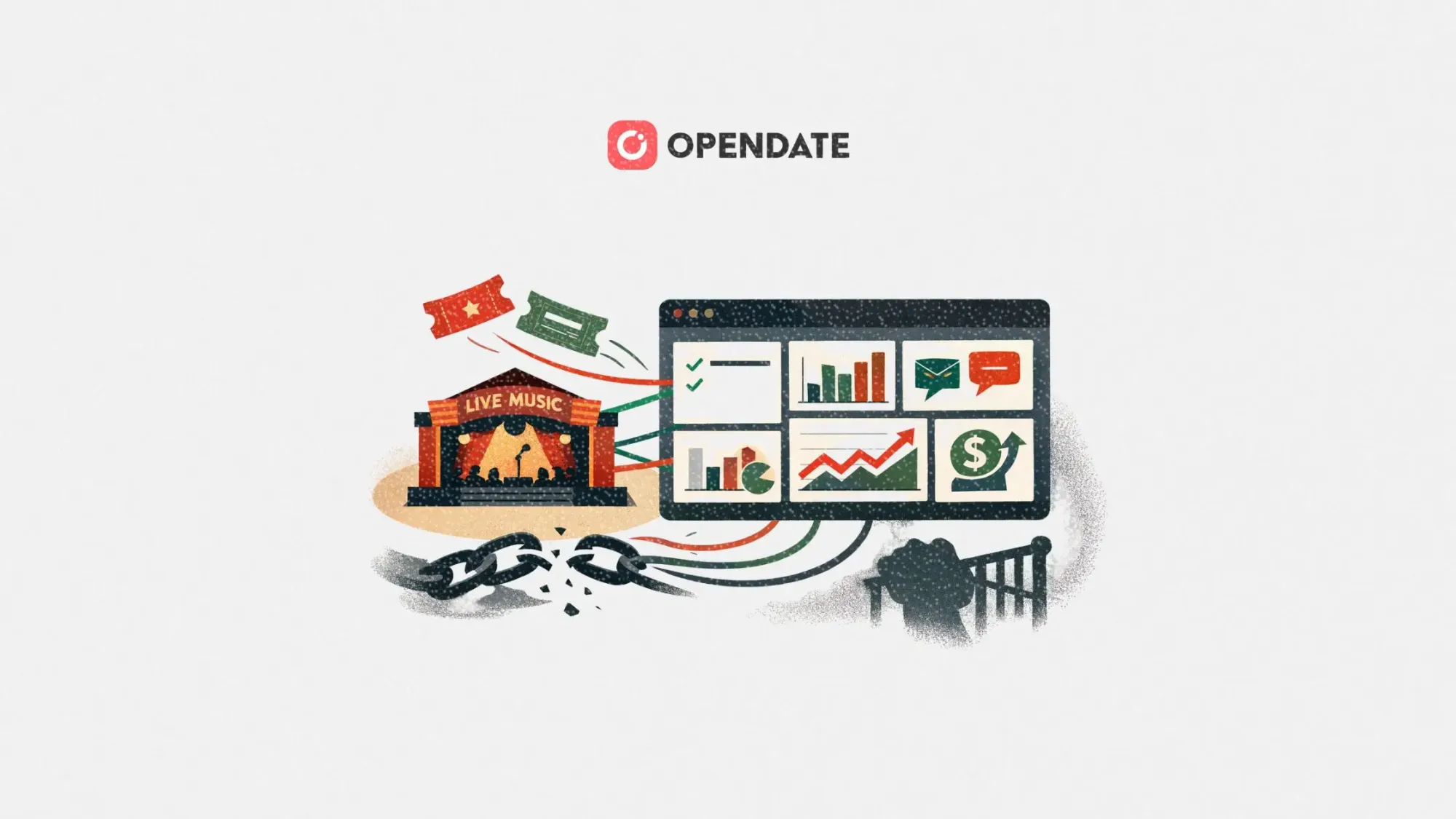
Independent event operators are getting a much-needed boost in their fight for survival. Opendate, a platform purpose-built for live events, has raised a US$14 million Series A led by venture studio High Alpha to double down on its mission: building an operating system that helps small and midsize venues move faster, market smarter, and own their customer data.
Opendate’s pitch is simple but timely. While major incumbents like Ticketmaster continue to consolidate ticketing, data, and fan access into closed ecosystems, independent venues are left stitching together spreadsheets, legacy software, and manual workarounds. The result? Slower booking cycles, lost revenue opportunities, and opaque marketing performance.
We dig into what this funding means for marketers working in live entertainment, what Opendate actually does differently, and how independent venues are already using it to punch above their weight.
Short on time?
Here’s a table of contents for quick access:
- What happened: Opendate’s Series A and what it unlocks
- The bigger picture: consolidation vs independence
- How it works: what Opendate actually offers
- Why marketers should care: tools, benchmarks, and takeaways
What happened: Opendate’s Series A and what it unlocks
Opendate has secured US$14 million in Series A funding, with High Alpha leading the round and participation from existing backers. The company says the funding will be used to:
- Expand product capabilities across booking, ticketing, and marketing
- Grow its team in engineering, data, and go-to-market functions
- Support a growing customer base of venues, promoters, festivals, and attractions looking for modern alternatives to incumbents
The Indianapolis-based startup has reportedly more than doubled its customer base in the past year and now serves over 200 independent event operators. The platform integrates offer management, ticketing, marketing, and analytics into one system—streamlining workflows and surfacing actionable insights.
 Patrecia Meliana
The bigger picture: consolidation vs independence
The funding comes as live events face mounting pressure. Operators are juggling rising costs, shrinking margins, and growing consolidation from platform giants. Most notably, Ticketmaster has continued to bundle ticketing with fan data and promotional control—often locking operators into ecosystems that limit visibility and flexibility.
Opendate positions itself as a counterforce. CEO Eric Tobias, a former venue operator himself, says the company is “rebuilding the tools around how live events actually work,” with workflows and data access designed for the pace and complexity of independent operators.
In the words of High Alpha’s Mike Fitzgerald, the goal is to create “the modern operating system the industry is starving for”—not just another ticketing tool.
How it works: what Opendate actually offers
Unlike legacy tools that treat booking, ticketing, and marketing as disconnected silos, Opendate combines all three functions into a shared system of record. Key features include:
- Booking tools to speed up the offer-to-confirmation cycle
- Integrated ticketing that supports flexible pricing and real-time reporting
- Built-in marketing automation, including email and SMS campaigns with 10%+ conversion rates
- Conductor, a new AI-powered workspace that keeps teams aligned on bookings, marketing plans, and ticket performance
Opendate customers have reported tangible results, including:
- 20–40% revenue increases through earlier and more coordinated on-sales
- Over US$1M in added annual revenue via upsell features built into the platform
- 10x growth in premium upgrade revenue
- 30% faster offer velocity, supporting 100+ shows booked per month
- 34% year-over-year growth for the country’s largest single-day arts festival
Why marketers should care: tools, benchmarks, and takeaways
For marketers working with live events, Opendate’s traction signals a broader shift: independent venues are becoming more data-driven, and they’re demanding tools that support both speed and strategy.
Here’s why it matters:
- First-party data access is back on the table
Opendate gives operators control over their ticketing and marketing data—crucial for retargeting, fan segmentation, and real-time campaign decisions. - Marketing automation isn’t just for big players
Smaller teams are using Opendate’s built-in email and SMS tools to drive double-digit conversion rates without relying on external CRMs or fragmented lists. - Time is the new margin
From booking to on-sale coordination, speed matters. Opendate helps teams avoid the usual scramble by centralizing decisions and automating comms. - Insights beat instincts
The platform’s integrated analytics help marketers understand pacing, demand signals, and marketing effectiveness—without waiting on clunky exports or third-party reports.
Whether you're managing a 300-cap club or a regional festival, the takeaway is clear: indie venues don’t have to play small. Tools like Opendate are narrowing the tech gap and giving marketers new levers to grow their audience and revenue.