Performance-based influencer marketing: affiliate models, bonus pools, and hybrid pay
How to pay influencers for results: affiliate commissions, hybrid deals, and bonus pools explained

The era of paying a flat fee and hoping for the best is over for performance-focused brands. As influencer marketing has matured into a measurable growth channel, the compensation models behind it have evolved to match. The question in 2026 is no longer whether to tie influencer pay to results. It is which structure fits your campaign goals, your sales cycle, and the creator you are trying to attract.
This guide breaks down the three dominant performance pay models, explains how to design bonus pools that motivate without blowing your budget, and walks through the B2B-specific adjustments that make or break these deals when the sales cycle stretches three to nine months.
Table of contents
Jump to each section:
- Why the flat-fee era is ending
- The affiliate model: pure commission and revenue share
- Hybrid pay: base fee, commission, and tiered bonuses
- Bonus pools: rewarding overperformance
- Why B2B needs its own performance pay playbook
- Deal structures from B2B SaaS programs
- Tracking tools for performance-based creator programs
Why the flat-fee era is ending
Flat-fee influencer deals made sense when attribution was impossible. You paid for a post, measured impressions, and accepted that proving business impact was a stretch. That contract no longer holds up under budget scrutiny.
According to Later's 2025 Influencer Marketing Report, 80% of brands either maintained or increased their influencer marketing budgets in 2025, with 61% having elevated the channel to strategic infrastructure status. That reclassification changes what brands can demand from their creator partners. When influencer marketing was experimental, flat fees were acceptable because nobody expected a guaranteed return. When it is a strategic budget line, payment terms change accordingly.
The results data is catching up to the investment levels. TopRank Marketing's 2025 B2B Influencer Marketing Report found that 43% of marketers now report outstanding results from their influencer programs, an increase of nearly 10 percentage points from the prior year, with 53% reporting their dedicated influencer budget is growing. Those performance signals are what make performance-based compensation commercially logical: if the content consistently converts, tying pay to conversion aligns incentives rather than creating friction.
The affiliate model: pure commission and revenue share
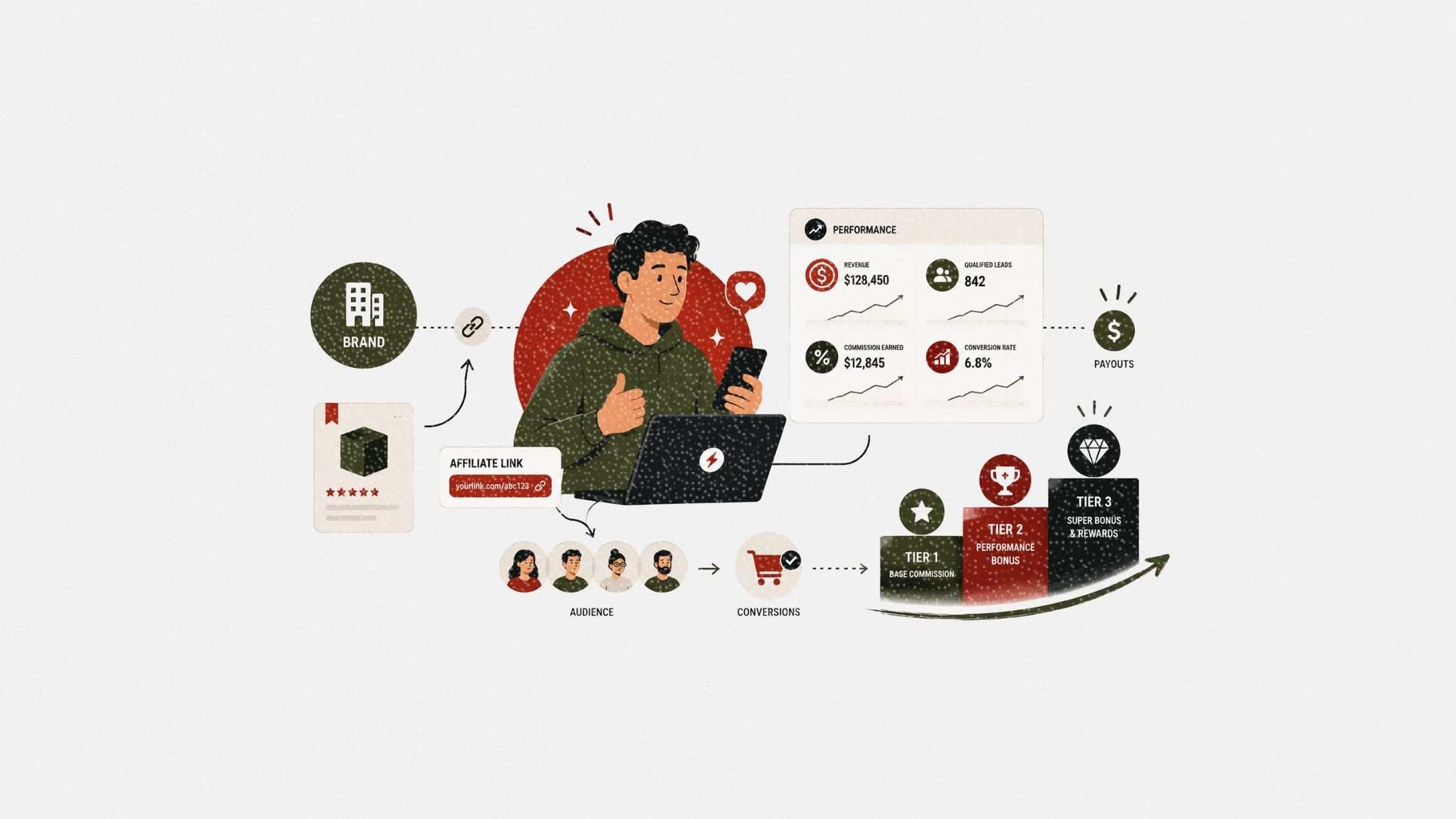
In a pure affiliate model, the creator earns a percentage of every sale they generate. No base fee, no guaranteed minimum. Compensation is entirely contingent on conversion.
This structure works best when attribution is clean (a trackable link, a promo code, a shoppable product tag) and when the creator already has an established audience with demonstrated purchase intent. It is also well suited to long-term ambassador relationships where the creator is motivated to keep producing content because the channel keeps paying.
The mechanics depend on the product economics. Consumer goods typically run commission rates in the 10 to 25% range. SaaS products with recurring revenue models can offer percentage-of-subscription deals that pay out monthly for as long as the referred customer stays active. That ongoing structure changes the incentive calculus significantly for creators: it rewards retention content and tutorials rather than just initial awareness posts.
The risk for brands is that pure affiliate deals attract creators who will only post when they expect high conversions, meaning your organic content cadence is unpredictable. The risk for creators is that conversion can depend heavily on factors outside their control, such as landing page quality, offer pricing, and competitor activity. Neither party fully controls the outcome, which is why pure affiliate is most sustainable in mature, long-term partnerships rather than first campaigns with new creators.
Hybrid pay: base fee, commission, and tiered bonuses
The hybrid model has become the default structure for brands that want predictable content output without abandoning performance accountability. According to impact.com's 2026 influencer marketing research, the recommended structure pairs a base fee with a 10 to 15% commission, plus tiered bonuses that creators unlock as they hit sales or conversion milestones.
A practical example: an influencer with a relevant audience and strong engagement history negotiates a US$2,000 base fee for a LinkedIn carousel and a dedicated video. On top of that, they earn 12% commission on all attributed sales within a 30-day window, with a US$500 bonus if total attributed revenue exceeds US$10,000 and an additional US$1,000 if it exceeds US$25,000.
The base fee solves the creator's biggest objection to pure performance deals. It covers time, content production, and the reality that influencer impact rarely resolves within a short attribution window. The commission and bonuses align their upside with yours. The tiered structure rewards over-performance without requiring you to write a blank check upfront.
For brands new to performance models, a useful negotiation anchor is to set the base fee at 40 to 60% of what a flat-fee deal with the same creator would have cost, then build performance upside on top. This protects the creator against attribution gaps while giving the brand meaningful room to gain if the content converts.
 Ariana Sorensen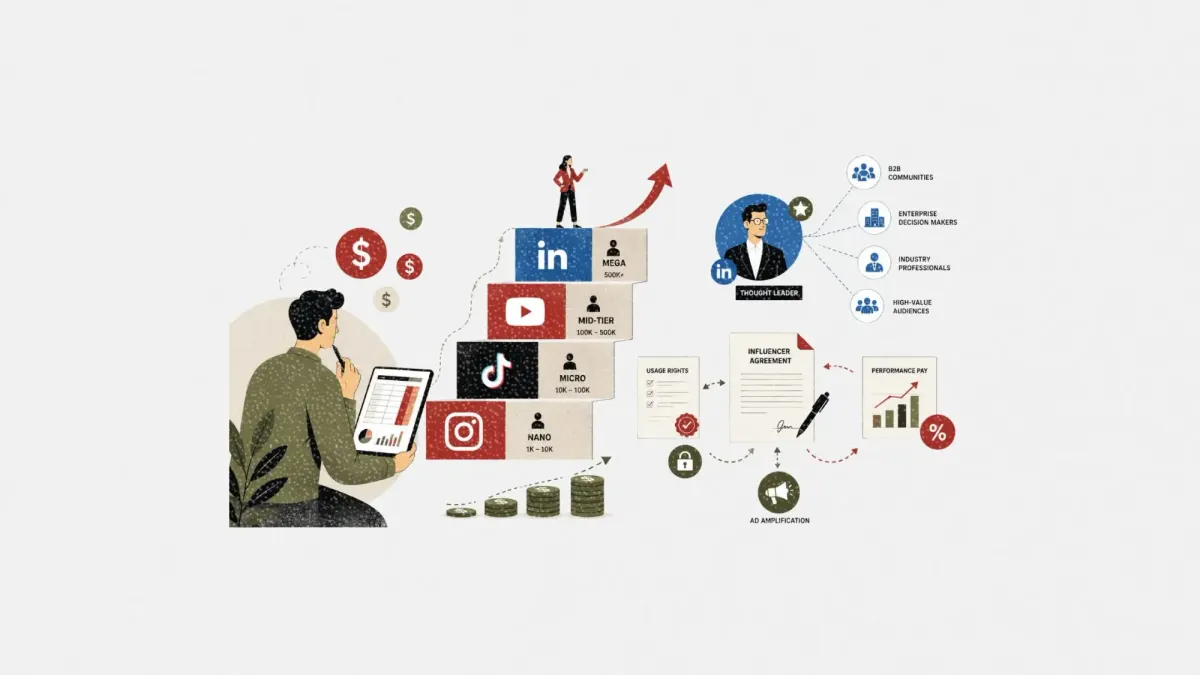
Bonus pools: rewarding overperformance
A bonus pool is a defined budget set aside to reward creators who exceed performance targets, distributed at the end of a campaign period rather than per post. It functions differently from tiered bonuses built into individual contracts because it creates a competitive dynamic across your creator roster.
The mechanics work like this: you define a pool (say, US$15,000 for a quarter), establish two or three performance tiers based on metrics like attributed revenue, MQL volume, or engagement-to-conversion rate, then distribute the pool proportionally among creators who hit threshold. Top performers take a larger share.
This structure is particularly useful when running programs with five or more creators simultaneously. It lets you cap total performance spend while still motivating creators to go beyond their contracted minimums. It also gives you a natural upsell conversation: creators who land in the top tier are the ones worth investing in with expanded campaigns.
From a contract perspective, bonus pools require clear documentation of the metrics, the measurement window, the threshold levels, and the distribution method.
 Ariana Sorensen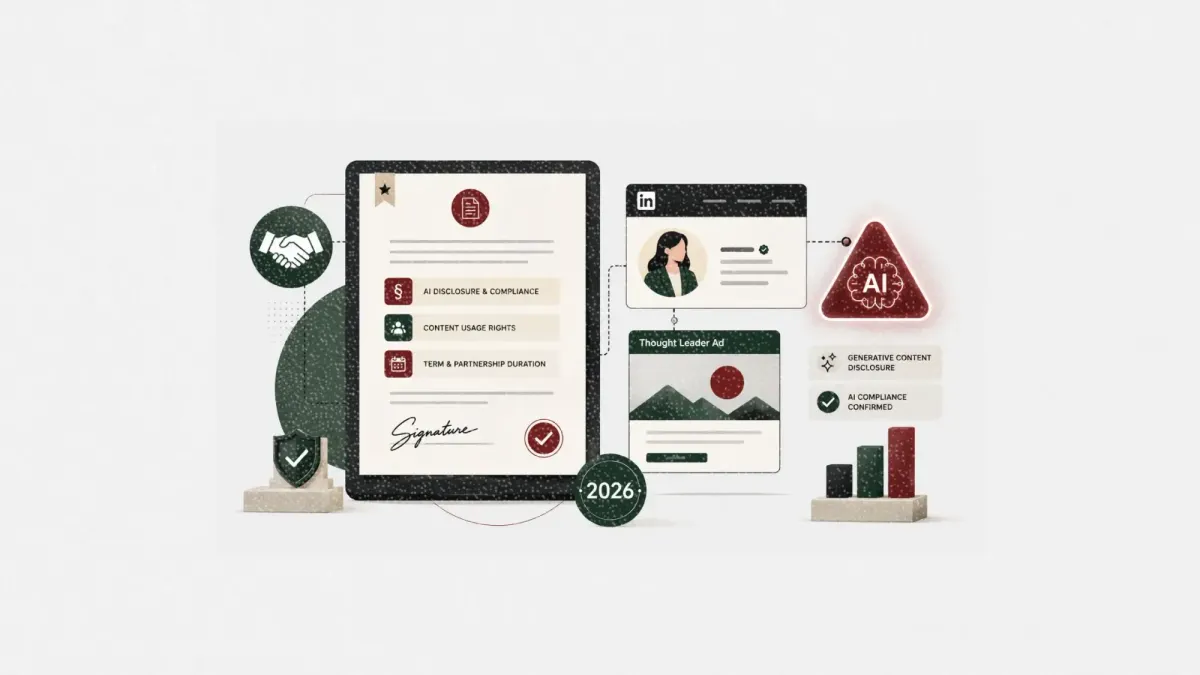
Why B2B needs its own performance pay playbook
The standard performance pay models described above were largely designed around B2C ecommerce: short purchase cycles, clean last-click attribution, and products that convert within days of a post going live. B2B SaaS operates on a fundamentally different timeline, which means the model needs adjustment before it will work.
The average B2B purchase path spans multiple touchpoints across several months. A creator who introduces your product in a LinkedIn post in March may not appear anywhere in the CRM data when the deal closes in August. Pure commission deals that measure sales within a 30-day attribution window will consistently undercount B2B influencer impact and, in turn, underpay creators for work that genuinely moved pipeline.
Dinda Anandita, Account Director at Content Collision, puts it directly: "In B2B influencer programs, pure commission deals rarely work because the creator has no control over whether a six-figure SaaS deal closes. What we see actually performing is a hybrid structure where the flat fee covers the creator's time and content quality, and then a CPL or MQL bonus rewards them for the pipeline they genuinely influenced. That keeps the relationship sustainable on both sides."
The metrics need to shift accordingly. Rather than tracking sales within a short window, B2B performance pay should be structured around cost per lead (CPL), cost per marketing-qualified lead (MQL), demo requests, or pipeline value generated, measured with longer attribution windows of 60 to 90 days minimum. For enterprise sales cycles, some brands extend attribution windows to six months.
According to the LinkedIn-Ipsos 2025 B2B Marketing Benchmark cited by Moburst, brands running B2B influencer programs outperform non-users by up to 39% on customer engagement and brand awareness, and by 30% on revenue growth and lead generation. That uplift is the commercial argument for continuing B2B performance programs even when last-click attribution looks thin.
Deal structures from B2B SaaS programs
Several B2B SaaS brands have built performance-based creator programs that show what the deal structures actually look like in practice.
ActiveCampaign runs a commission-based affiliate program offering 20 to 30% recurring commission on referred subscriptions. Because the commission is tied to subscription revenue rather than a one-time sale, affiliates continue earning as long as their referred customers remain active. The average affiliate earns US$1,350 per referral. That recurring structure makes it economically rational for creators to produce ongoing tutorials, use-case posts, and integrations content rather than a single awareness post.
Zapier took a different approach to B2B influencer content. Rather than running a traditional affiliate program, the Zapier team recruited LinkedIn practitioners with modest but relevant followings and built an editorial contributor section where creators wrote productivity and automation content with a soft product reference. Most contributors then shared their published work through their own networks, generating organic distribution.
The model blended content value for the creator (a credible published byline) with performance value for the brand (relevant distribution to a buyer-profile audience). According to PartnerStack's B2B influencer marketing guide, this kind of hybrid approach, combining content placement value with commission or CPL incentives, maps well to B2B sales realities where the influencer is not closing deals but is influencing the evaluation stage.
HubSpot's affiliate program pays up to US$1,000 per qualified sale on a tiered basis, with the tier determined by the plan the referred customer purchases. For creators who write to a founder or marketing-director audience, a single high-value referral can generate a meaningful payout. The tiered structure also means creators have an incentive to qualify their audience, pointing readers toward the plans that match their use case rather than optimizing purely for signup volume.
 Ariana Sorensen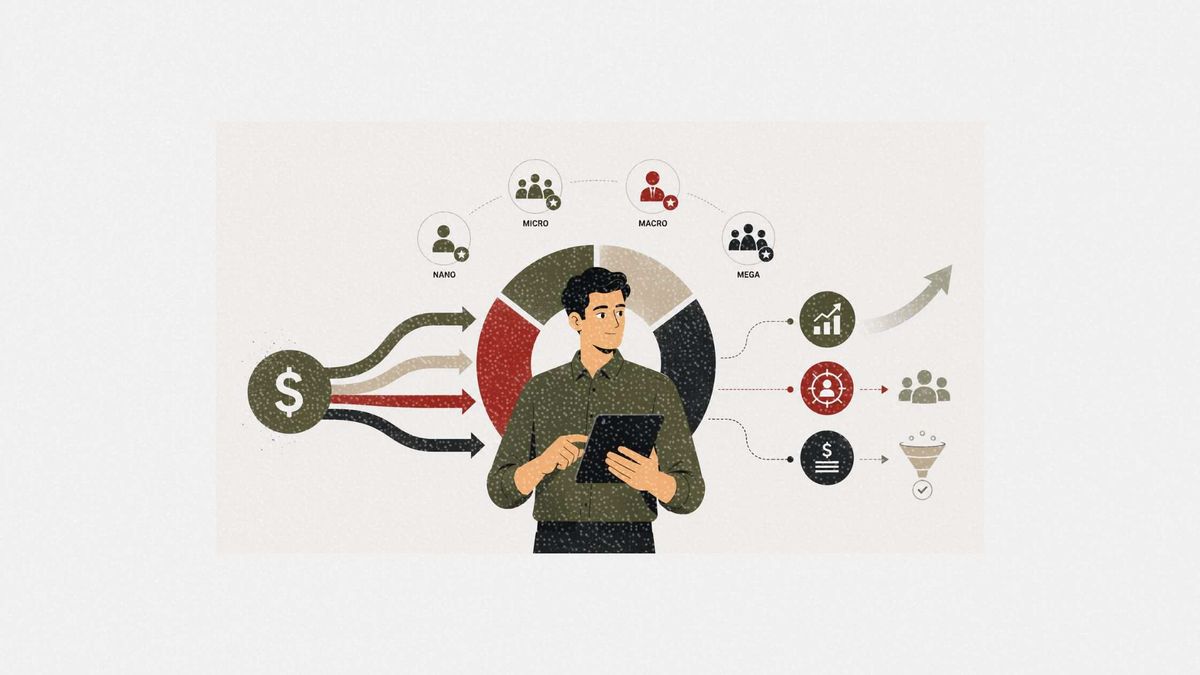
Tracking tools for performance-based creator programs
Performance pay only works if you can attribute results accurately. The tools you need depend on whether you are running B2C ecommerce, B2B lead generation, or a mix.
For ecommerce attribution, platforms like impact.com, Aspire, and Shopify Collabs handle affiliate link generation, commission calculation, and payout processing natively. They integrate with Shopify and other ecommerce stacks and provide dashboards showing sales by creator, commission accrued, and ROAS.
For B2B programs where the conversion is a demo request, a form fill, or a pipeline opportunity rather than a transaction, PartnerStack is the dominant platform. It is built for long B2B sales cycles, lets you reward partners for demos and trials rather than just closed deals, and syncs with Salesforce and HubSpot so every partner-sourced lead is tracked from first touch through to conversion. Over 600 companies, including monday.com and Unbounce, use it to manage B2B affiliate and influencer programs.
For brands running performance programs on LinkedIn specifically, UTM parameters and campaign-specific landing pages remain the practical attribution foundation. Each creator gets a unique UTM-tagged URL and a dedicated landing page variant so you can isolate their traffic, track form fills, and connect those leads to pipeline in the CRM.
Regardless of the platform, the measurement framework needs to be agreed before the campaign launches and documented in the contract. The variables to define upfront include the attribution window length, which actions trigger commission or bonus payouts, how attribution disputes are resolved when a lead appears through multiple creator touchpoints, and how long after a campaign ends the tracking window stays open.
 Ariana Sorensen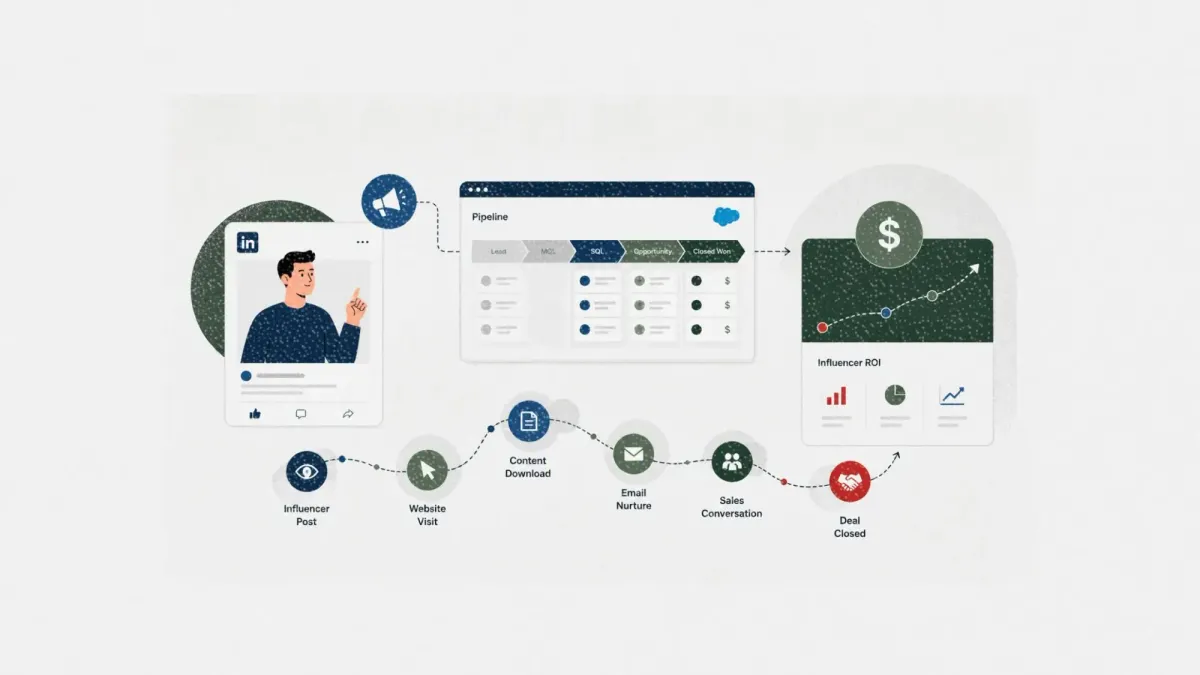
Flat fees are a blunt instrument. Performance pay is a partnership.
The shift from flat-fee deals to performance-based structures is not just a budget optimization move. It changes the nature of the relationship between brand and creator. When a creator has a commission stake in the outcome, they have a reason to care about the quality of the audience they send you, the clarity of the call to action, and what happens after someone clicks. That alignment is hard to engineer with a flat fee and a brief.
The deal structure you choose should reflect your sales cycle, your attribution capabilities, and the maturity of your relationship with a given creator. For new creators, hybrid deals with a meaningful base reduce risk on both sides. For established partners who understand your product, pure commission or revenue-share models can become genuine growth channels. For B2B programs, CPL and MQL-based bonuses with extended attribution windows are the structures most likely to reflect actual creator impact.
The infrastructure to run these programs well, tracking, contracts, and platform tooling, is no longer the barrier it was two years ago. The question now is whether your team is set up to design and manage them.