
PR strategy examples: how to plan campaigns that earn coverage
A PR strategy is not a tactic list. See how Dwolla, Gong, and Resource Guru built campaigns that earned real coverage, with a framework you can apply.


Most PR plans start with a list of tactics. Someone picks a press release, a podcast pitch, and a few journalist outreach emails, then calls it a strategy. That is not a strategy. That is a to-do list with a PR label on it.
The distinction matters because tactics without a strategy are random. You might secure coverage, but it will not build toward anything measurable. A real PR strategy is a deliberate plan that connects your audience, your message, your proof points, your channels, and your timing into a campaign that earns predictable outcomes.
According to a 2025 measurement report by Britopian, 75% of PR professionals now track their efforts regularly, up from 69% the year prior. But tracking activity is not the same as measuring strategy. Coverage volume, impressions, and ad value equivalents tell you what happened. They do not tell you whether your audience's perception shifted in the direction you planned for.
This guide covers what a PR strategy actually is, how it differs from PR tactics, and three worked examples you can adapt for your own campaigns.
Table of contents
Jump to each section:
- What is a PR strategy?
- PR strategy vs PR tactics
- PR strategy example for a startup launch
- PR strategy example for thought leadership
- PR strategy example for a data-led campaign
- How to measure whether the strategy worked
What is a PR strategy?
A PR strategy is a plan for managing how your organization is perceived by a specific audience, using a defined approach to move them from one belief or behavior to another. It is not a description of what you plan to do. It is a description of why those actions will work.
A working PR strategy has five components.
The first is audience: not "the public" but a specific group whose perception you need to shift. A B2B SaaS company does not need to influence everyone. It needs to influence the procurement decision-makers in its target segment.
The second is goal: the perception shift you are trying to create, or the behavior you want to change. "Increase brand awareness" is not a goal. "Position our CEO as the most cited voice on supply chain compliance in logistics trade media" is a goal.
The third is insight: the observation about your audience that makes your approach credible. A strong PR strategy is built on something true about how your audience thinks, what they fear, what they read, or what they already believe.
The fourth is channels: the specific outlets, platforms, and formats where your audience actually pays attention. This is derived from audience research, not personal preference.
The fifth is message: the core idea your audience should walk away with. Not a tagline, but a position you want to own in their minds.
Without all five, you have fragments of a plan, not a strategy.
Understanding what makes a story newsworthy is a prerequisite for putting any of the examples below into practice. If your campaign material does not contain a genuine hook for journalists or editors, no amount of strategic framing will compensate for it.
PR strategy vs PR tactics
PR strategy answers "why this will work." PR tactics answer "what we are doing."
Tactics include media pitching, press releases, bylined articles, podcast appearances, event speaking, executive LinkedIn activity, and media roundtables. These are tools. They do not become a strategy just because you list them together.
The confusion is common. Most PR plans read as tactic lists with a goal pasted at the top. They describe what the team will produce, not what will change in how the audience sees the brand, or why the chosen approach will produce that change.
Here is a practical test: if someone asked you to explain your PR strategy in two sentences without mentioning a single tactic, could you do it? If not, you have a tactic list.
A strategy sounds like this: "We are positioning [company] as the go-to resource for [audience] who face [specific challenge], by owning the conversation around [insight-driven topic] in [publication tier] over the next two quarters."
From that framing, the tactics follow naturally. The strategy makes the tactical choices logical rather than arbitrary. Each of the examples below follows this sequence: audience, goal, insight, strategy, then tactics derived from those choices.
PR strategy example for a startup launch
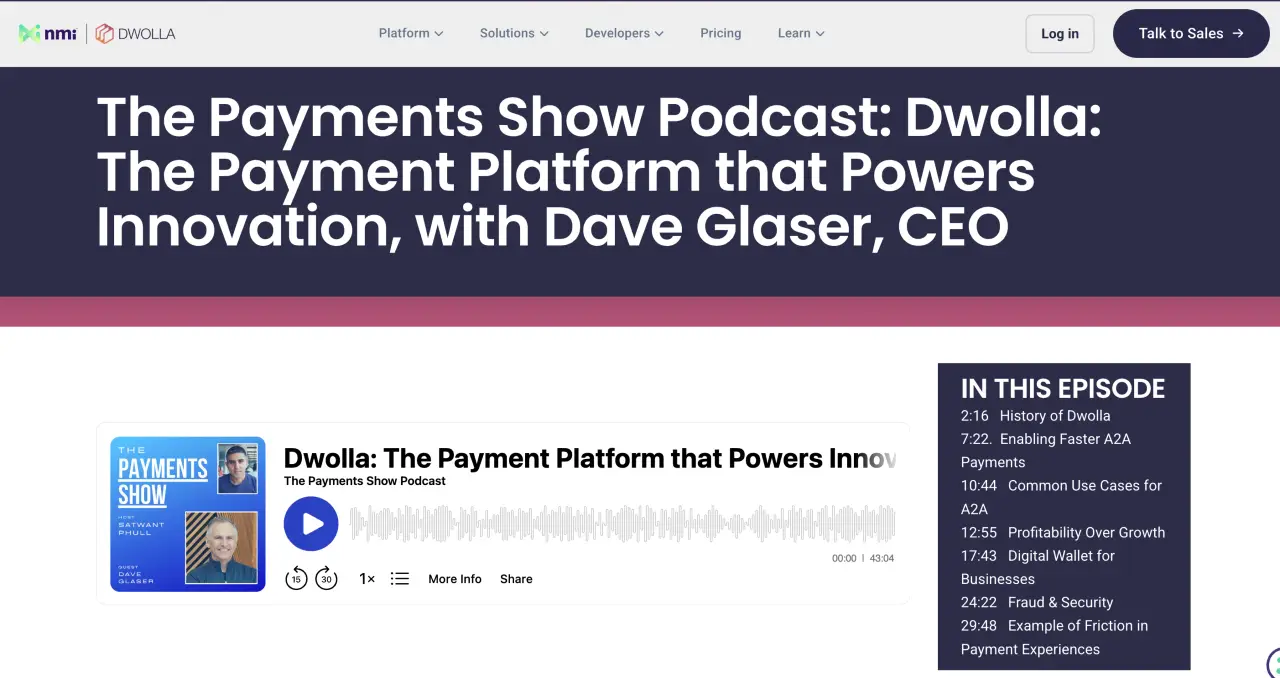
Company: Dwolla, a B2B fintech platform that enables account-to-account payment infrastructure for businesses. Despite strong product-market fit, Dwolla struggled to generate consistent media attention because its value proposition, payment infrastructure, does not make for obvious headlines.
Audience: fintech developers, enterprise technology buyers, and financial services journalists who shape category narratives.
Goal: generate sustained media coverage that raises Dwolla's profile as a category voice in modern payments, without relying on a product launch or funding round as the hook.
Insight: most fintech PR defaults to announcement-driven pitching: funding, partnerships, features. Journalists covering payments are looking for someone with a clear, quotable perspective on where the category is going, and almost no infrastructure-layer company was filling that role.
Strategy: reframe Dwolla from a "payment infrastructure company" to "the backbone of the future of money movement." This narrative repositioning opened coverage opportunities in both trade publications and mainstream business press by giving journalists a broader fintech story, not a vendor announcement.
Tactics derived from the strategy:
- Develop an executive positioning playbook that equipped Dwolla's leadership to comment on industry-level payments trends, not just Dwolla products.
- Build a proactive podcast pitching program targeting fintech and B2B technology shows to extend executive visibility beyond written press.
- Develop speaking opportunity submissions that aligned with the repositioned narrative, placing Dwolla leadership in conference contexts that reinforced category authority.
- Run outreach to over 100 media outlets across fintech trade, business press, and mainstream technology publications, targeting sustained coverage across a defined 90-day window.
Building media relationships before you need a headline, rather than scrambling for one during a product sprint, was central to making the narrative land consistently across 90 days rather than spiking and fading after a single news hook.
Results: in 90 days, the campaign generated 170+ earned media placements across 100+ outlets and 250+ social engagements. Dwolla's inbound leads tripled during the campaign window, per the Zen Media case study.
What makes this a strategy rather than a tactic list: Dwolla had no product launch, no funding announcement, and no partnership news to use as a hook. The coverage volume came entirely from narrative repositioning. The insight, that journalists need a category voice more than they need a vendor press release, dictated every tactical choice.
PR strategy example for thought leadership
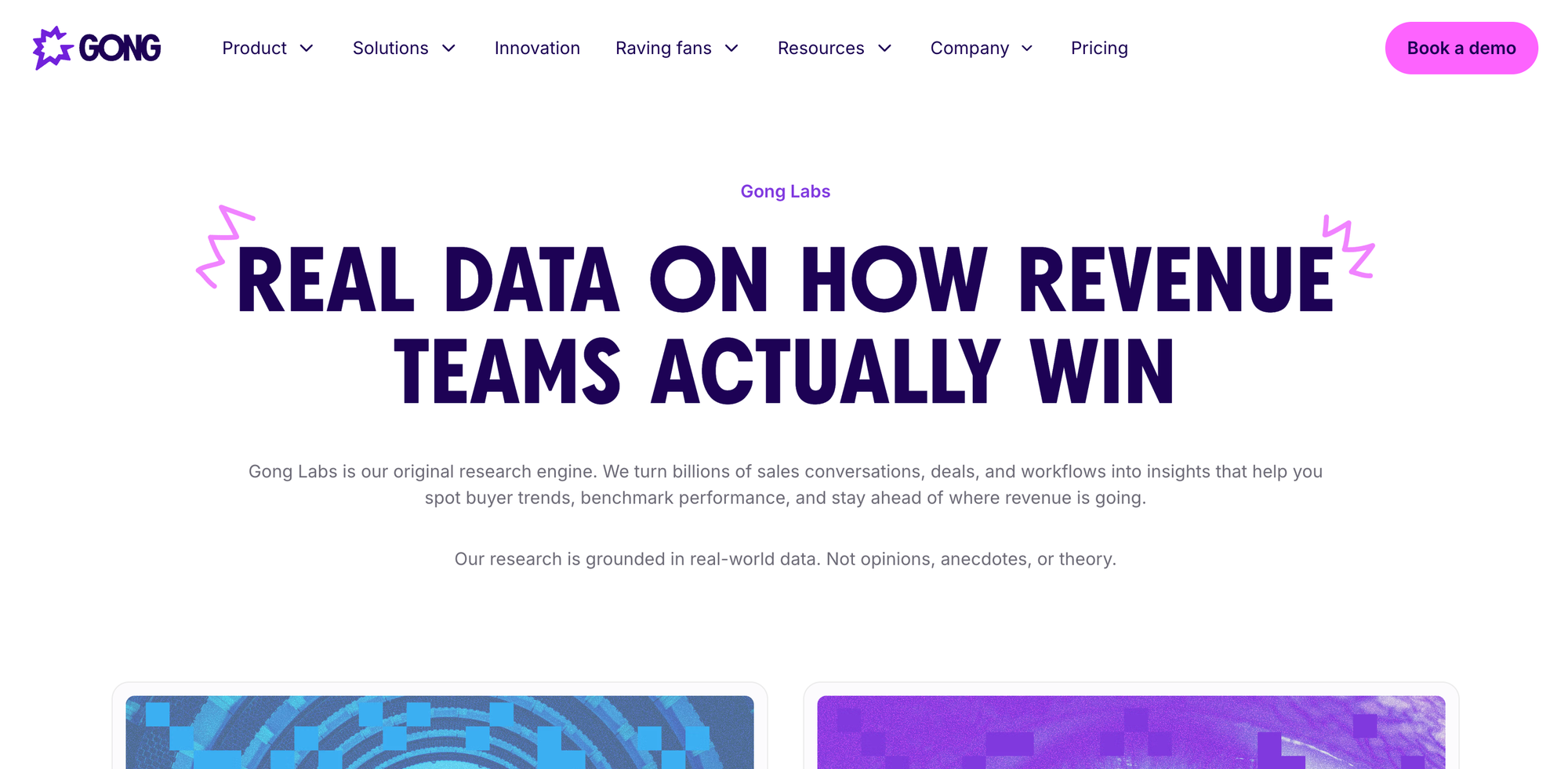
Company: Gong, a revenue intelligence platform for B2B sales teams. When Gong began building its brand in 2019 to 2022, the "Revenue Intelligence" category it was trying to own did not yet exist in buyers' minds. The company needed journalists and practitioners to adopt a new frame, not just recognize a product.
Audience: sales leaders, RevOps professionals, and B2B technology journalists. Secondary audience: enterprise procurement teams evaluating sales technology.
Goal: dominate the "Revenue Intelligence" category narrative on LinkedIn and in trade media, making Gong the definitive voice in a category it was simultaneously defining.
Insight: sales leaders do not trust content that reads like a vendor pitch. They trust data and practitioners. Gong had proprietary access to millions of real sales call recordings, a dataset no competitor could replicate, and used it to publish findings that gave salespeople genuinely useful, counterintuitive insights.
Strategy: build executive thought leadership simultaneously from the top down (CEO Amit Bendov and CMO Udi Ledergor posting regularly on LinkedIn) and from the bottom up (mobilizing the entire company to post during coordinated "LinkedIn takeover" moments), while anchoring everything to original research published through a dedicated hub called Gong Labs.
This is the model described in detail in ContentGrip's guide to founder-led PR and thought leadership: authority comes from consistent, insight-driven content that educates rather than promotes. According to a 2025 research by Momentum ITSMA, 99% of executives say thought leadership is important when evaluating companies, and 75% say it has directly led them to research a product they were not previously considering.
Tactics derived from the strategy:
- Launch Gong Labs as a dedicated blog section publishing original research derived from analyzed sales calls. Topics included talk-to-listen ratios, pricing conversation timing, and cold email response patterns. Every finding was data-backed and usable without buying Gong.
- CEO and CMO committed to a consistent personal LinkedIn cadence sharing data-backed opinions on sales effectiveness, not company news.
- Coordinate company-wide LinkedIn "takeover" moments timed to product launches, funding rounds, and events. New hires were encouraged to share first-week posts on the same day, creating coordinated momentum in the algorithm.
- Launch the "Reveal: The Revenue Intelligence Podcast," giving Gong a long-form channel to build credibility with senior sales leaders through peer-to-peer conversation rather than branded content.
- Gate only premium content; make foundational research freely accessible to maximize organic reach and media citation.
Results: Gong's LinkedIn strategy helped it dominate the Revenue Intelligence category before most competitors understood the category existed. CMO Udi Ledergor told Demandbase that the Super Bowl regional ad Gong later ran, targeting sales professionals in the Bay Area, Chicago, and Boston, produced a dramatic increase in web traffic and conversions because the brand was already deeply familiar to the audience who saw it. The channel became the message because the positioning had already been established through thought leadership.
What makes this a strategy: the no-product-mention rule on Gong Labs was a strategic constraint, not a content preference. Research that mentions Gong's own product becomes marketing. Research that helps salespeople become better at their jobs, regardless of what tools they use, earns trust and press coverage. The tactic list alone would not have produced that outcome. The constraint did.
PR strategy example for a data-led campaign
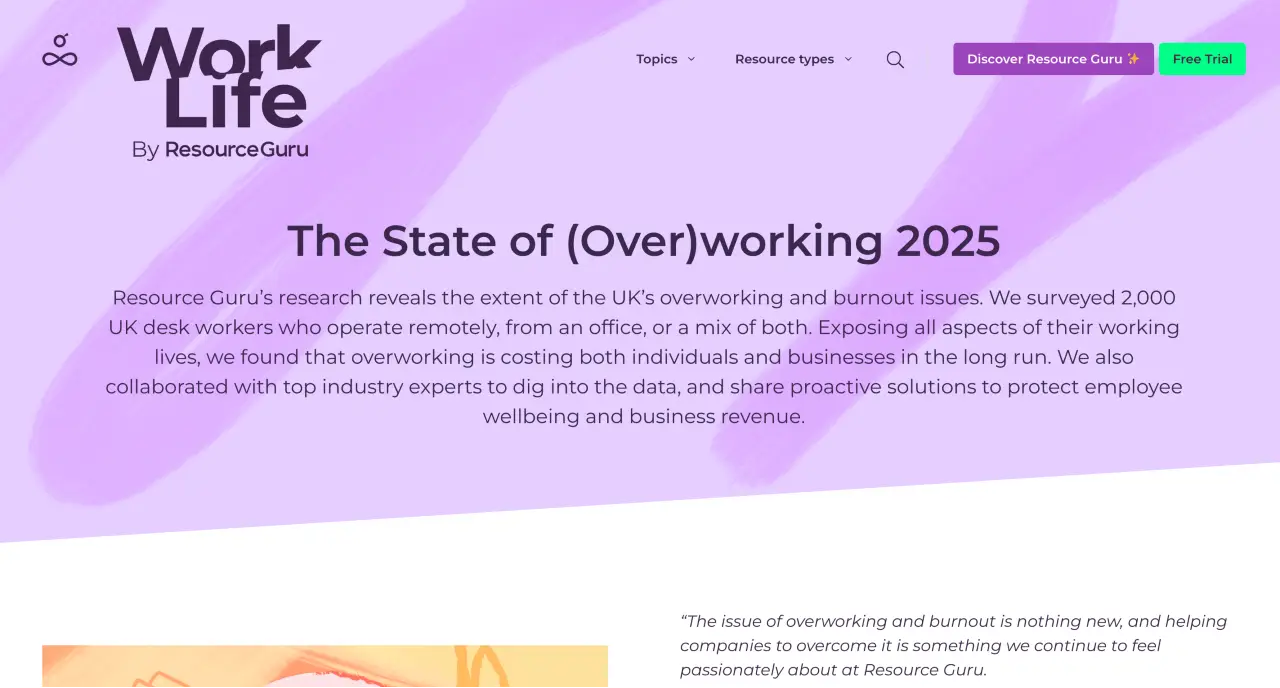
Company: Resource Guru, a project management and resource scheduling SaaS for agencies. Resource Guru had solid product-market fit in its niche but limited media presence outside its existing customer base. Rather than pitch product features, the team chose to generate coverage through original research.
Audience: agency owners, project managers, and operations leaders. Secondary audience: HR and management publications that cover workplace trends.
Goal: earn high-authority backlinks, increase brand visibility among target buyers, and position Resource Guru as a credible source of data on how agencies actually work, not just another project management tool.
Insight: the agency overwork and burnout conversation was already happening in trade media and management press. No project management vendor had published original data on the topic. A well-executed report could fill that gap and earn coverage that any product-feature announcement would never generate.
Strategy: commission original research surveying 2,000 UK desk workers on overworking and burnout, publish it as a standalone media asset, and distribute it to publications where agency decision-makers and HR leaders read. The connection back to Resource Guru's product would be implicit, not stated.
Tactics derived from the strategy:
- Partner with research firm OnePoll to survey 2,000 desk workers, ensuring the methodology was credible enough for tier-one business and HR publications to cite.
- Recruit named external experts including agency consultants and physiotherapists to provide commentary, giving journalists credible sources beyond the company itself.
- Design the report as a standalone publication first: executive summary, key data findings, expert commentary, and practical recommendations.
- Distribute to relevant publications with a focus on HR, agency management, and business media. Include Forbes as a primary target given its reach among business decision-makers.
Understanding how PR and SEO interact was central to the campaign's long-term value. Each editorial backlink from a high-domain publication compounds over time, building authority that product pages cannot generate on their own.
Results: the campaign generated 50+ backlinks in three months, with a combined page view count of over 3 million, including coverage in Forbes, per Position Digital's agency case study.
Tommy Prayoga, Head of Agency at digital PR service provider Content Collision, frames the logic clearly: "The campaigns that consistently earn coverage are the ones where the brand has something to say the industry doesn't already know. A data report or an original finding gives a journalist a reason to write a story that isn't about your product. That's a fundamentally different thing from sending a press release."
What makes this a strategy: Resource Guru did not publish research about project management software. It published research about a problem its buyers live with every day. The product becomes the logical solution to a problem the report has just documented with credible data. The coverage earns itself because the story is genuinely useful to journalists and their readers.
How to measure whether the strategy worked
Most PR measurement falls into one of two traps. The first is measuring only outputs: number of pitches sent, press releases distributed, articles published. The second is measuring only a vanity proxy: total impressions or ad value equivalent. Neither connects media activity to the audience perception shift that was the actual strategic goal.
A practical framework ties each metric to the stated objective.
Coverage quality over volume: track placements by publication tier and audience match. Five articles in outlets your target audience actually reads outperform fifty articles in irrelevant publications every time.
Share of voice: measure how frequently your brand or executives are cited relative to named competitors in target publications. This is the closest proxy for category positioning and the metric that best reflects whether your strategy is shifting perception over time.
Inbound signals: journalist inbound requests are a lagging indicator that your strategy is working. When reporters start calling you rather than the reverse, the positioning is taking hold.
Audience behavior: branded search volume, direct website traffic, and LinkedIn follower quality measured by job title match are indicators that media activity is creating real awareness, not only impressions.
Pipeline contribution: for B2B campaigns, the most useful measure is whether contacts who engaged with earned media later entered a sales conversation. This requires CRM tagging and UTM tracking from media placements, but it closes the loop between coverage and commercial outcome.
Calculating earned media value is one part of this picture, but treat it as an estimate of exposure rather than proof of business impact. The metrics above tell the fuller story.
The most reliable sign that a PR strategy worked is not the coverage itself. It is whether your target audience's perception of the brand changed in the direction you planned for when you made the first strategic choices.