
Supermetrics buys Relay42 to add real-time CDP activation to its data stack
Supermetrics acquired Relay42 to pair marketing data integration with real-time audience activation, reflecting rising demand for first-party workflows.

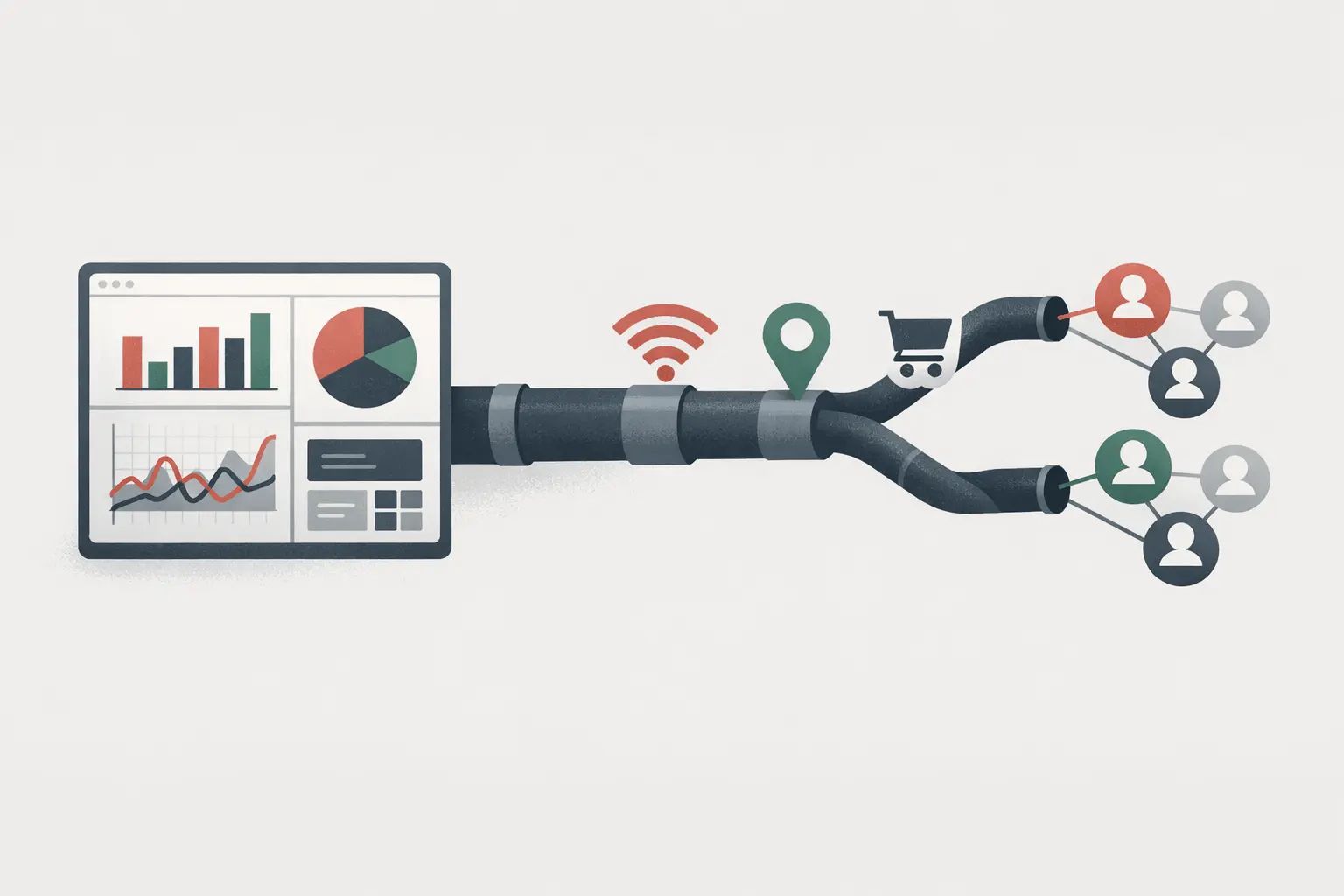
Supermetrics has acquired Relay42, expanding from marketing data integration and reporting into real-time customer data activation. The combination is aimed at teams that want performance reporting and first-party customer activation to sit closer together, rather than being managed in separate systems.
Relay42 brings a real-time customer data platform focused on unifying customer data and enabling personalization across channels such as email, web, apps, and programmatic advertising. Supermetrics says it serves more than 200,000 businesses globally, which could turn the acquisition into a distribution move as much as a product expansion.
Short on time?
Here’s a quick look at what’s inside:
- What the Supermetrics and Relay42 deal changes in product scope
- Why “intelligence plus activation” is the new positioning battle
- How the combined stack competes with Funnel, Adverity, and Bloomreach
- What marketers should watch during integration
What the Supermetrics and Relay42 deal changes in product scope
Historically, Supermetrics has been strongest as the “pipes” that move marketing and sales data into spreadsheets, BI tools, and warehouses, making cross-channel reporting easier. Relay42 adds a CDP capability that centers on identity, audience building, and orchestrating personalized journeys based on unified first-party data.
That is a meaningful scope change. Reporting and analytics help you understand what happened; CDP activation is about deciding what to do next and executing it in-channel. Bringing these capabilities under one roof suggests Supermetrics wants to compete beyond data extraction and dashboards, moving toward a workflow where measurement and activation are connected more tightly.
For enterprise teams, the appeal is clear: fewer handoffs between analytics and activation teams, and faster loops from insight to audience updates to live experiences.
 Patrecia Meliana
Why “intelligence plus activation” is the new positioning battle
This acquisition fits two macro shifts: first-party data infrastructure and the push toward composable martech stacks. As third-party data becomes less dependable, marketers are investing in systems that can unify consented data and use it across touchpoints. At the same time, many organizations still prefer a modular stack, but they want cleaner interoperability and fewer brittle integrations.
In Europe especially, it is common to see separate vendors for marketing reporting and customer data activation. An “end-to-end” narrative can reduce tool sprawl for some teams, but it also raises expectations: once a vendor claims it supports both intelligence and activation, buyers will judge it on activation depth (identity resolution, real-time decisioning, latency, and orchestration controls), not just connector breadth.
How the combined stack competes with Funnel, Adverity, and Bloomreach
In marketing intelligence and data integration, Supermetrics competes with vendors like Funnel and Adverity, which also focus on aggregating and normalizing cross-channel performance data. The Relay42 addition could differentiate Supermetrics if it enables closed-loop workflows where audience activation is informed by performance signals and customer behavior in near real time.
On the other side, Relay42’s CDP capability pushes the combined offering nearer to experience and personalization platforms such as Bloomreach, which ties customer data to commerce and content experiences. The difference is that Bloomreach is often anchored in digital experience and commerce personalization, whereas Supermetrics’ heritage is analytics and data movement. Whether Supermetrics can credibly compete in CDP-led buying cycles will depend on how deeply Relay42’s functionality is integrated and how marketer-friendly the activation workflow becomes.
The category landscape here is competitive and crowded, and many vendors will claim “unification.” Buyers should expect clearer packaging, pricing, and product boundaries to emerge post-acquisition.
What marketers should watch during integration
Acquisitions like this often succeed or fail on operational details. A few practical questions for marketing and data leaders:
- Data model alignment: How are identities and events represented, and how easily can teams map warehouse or CRM entities into the CDP layer?
- Activation coverage: Which destinations are supported for real-time activation, and what is the latency for updates that drive personalization or suppression?
- Governance and privacy: First-party activation requires consent management, role-based access, and auditability across regions and business units.
- Packaging impact: Will the CDP be an add-on for existing Supermetrics users, or a new suite with a different buying center?
If Supermetrics can make activation feel like a natural extension of reporting, it can expand beyond analytics budgets into growth, lifecycle, and personalization budgets. If the pieces remain loosely coupled, the market may continue to treat it as two products sold together.