
Teleflora turns Hunger Games fandom into a floral photo stop
Teleflora pairs a Hunger Games floral installation in Los Angeles with Let Hope Bloom bouquets and keepsake containers.


A movie world becomes easier to share when there is somewhere to stand inside it. For fans heading toward the next Hunger Games film, Teleflora is offering a stop among the flowers before they reach the cinema.
The florist-delivery brand has paired an installation at Los Angeles' Westfield Century City with its Let Hope Bloom collection, connecting a fan photo opportunity to arrangements people can send or display at home. Teleflora's November announcement puts the collaboration alongside Lionsgate's promotion of The Hunger Games: Sunrise on the Reaping.
The appeal is the chance to encounter a familiar fictional world through something other than a screen or a piece of clothing. Flowers make the partnership a particularly visible example of how a movie's atmosphere can travel into an everyday retail category.
Table of contents
Jump to each section:
- A floral stop on the way to the cinema
- Let Hope Bloom carries the idea home
- A movie world becomes a retail material
- What marketers can learn from the floral crossover
A floral stop on the way to the cinema

The installation sits near AMC Theatres within Lionsgate's Cornucopia Immersive Experience. Teleflora says the display will remain at Westfield Century City through November 22, with the film due in theaters on November 20.
Instead of treating flowers as a small decorative addition to a movie event, the campaign makes them part of the destination. The published photograph shows a dense floral foreground beneath the experience's large sculptural elements, with the surrounding shopping center still visible.
That setting matters. A visitor can encounter the display while moving through an ordinary shopping trip, while someone following the film has a reason to make a more deliberate stop. The photograph and the place work together: the installation is recognizable enough to connect with the release, but it remains a real location people can visit.
John Ludwig, Teleflora's vice president of marketing and e-commerce, described the intended role of the medium in the campaign coverage: “Flowers have a unique ability to tell stories, evoke emotion and create lasting memories.”
That is a statement of creative intent, rather than evidence of attendance or sales. Neither the installation's audience size nor its commercial effect has been disclosed in the sources reviewed.
Let Hope Bloom carries the idea home
The retail collection extends the partnership beyond people who can visit Los Angeles. Teleflora says local florists will handcraft and deliver the arrangements, which come with containers intended to be kept after the flowers are gone. Availability runs through December 31.
The collection draws on nature, remembrance and hope rather than simply placing a character image on an unrelated product. Its Basket Of Joy, for example, combines flowering kalanchoe and ivy in a woven basket. The visual connection depends on plants and color, which are already part of the florist's business.
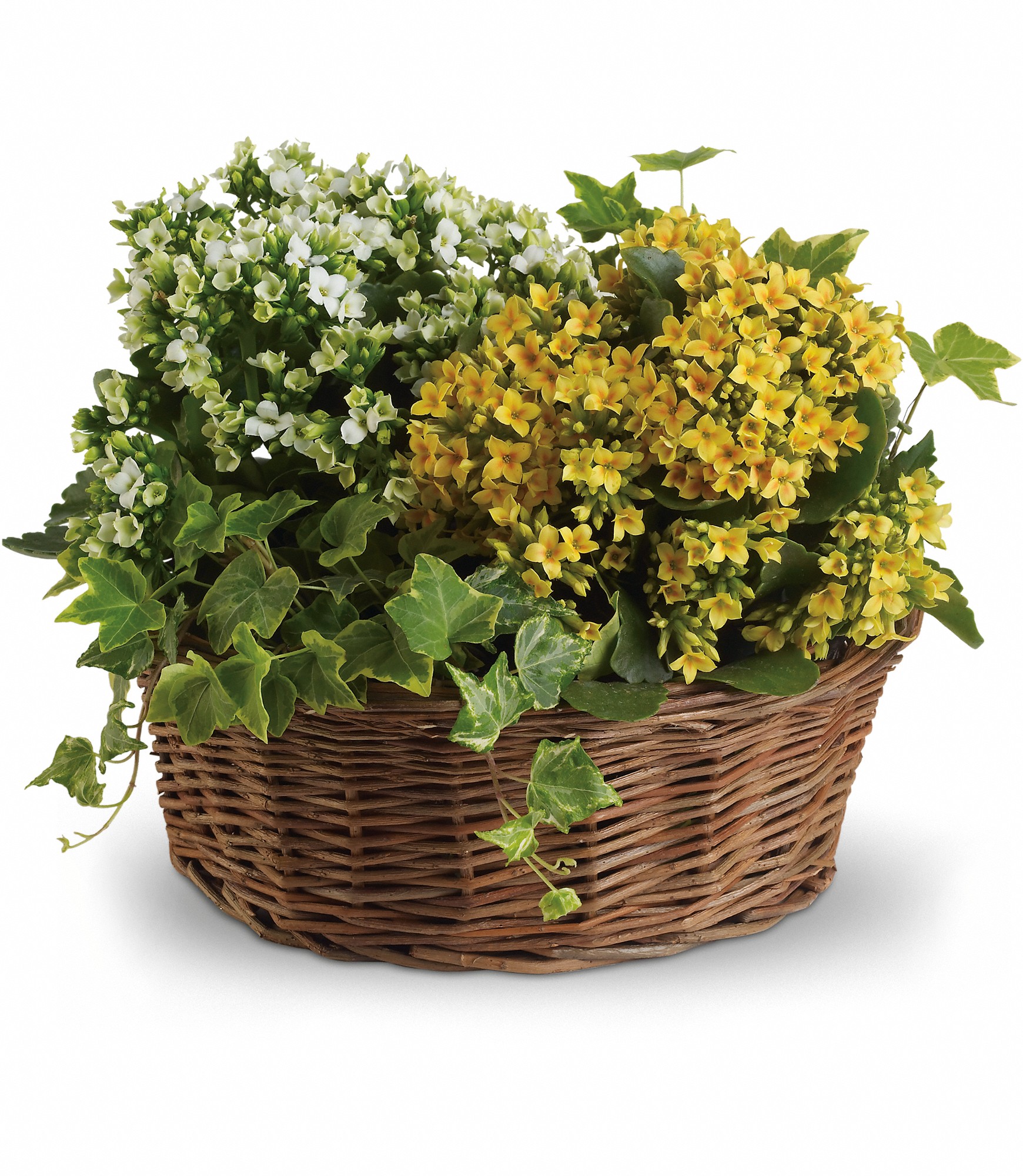
For a customer, that leaves room for more than one reason to buy. The arrangement can function as a gift while also carrying a connection to the film. The container adds a longer-lived object to a category whose central product is temporary.
It would be premature to call that a successful conversion strategy. The collection is available, and the campaign connects the physical display with a purchase opportunity, but the announcement does not establish how many visitors become buyers or whether the licensed theme changes order value.
A movie world becomes a retail material
Sunrise on the Reaping revisits the fictional world of Panem. The collaboration therefore has more to work with than a title or a recognizable face: its setting and visual language provide material a partner can interpret.
ContentGrip's earlier coverage of the franchise's Pantone partnership explored how production design could become a story outside the film itself. Teleflora brings that wider idea into a different kind of encounter, with living arrangements and a shopping-center display.
The distinction is useful for brand teams. An entertainment partnership does not have to imitate the original medium. A florist can draw on color and natural forms while continuing to offer something its customers understand how to use.
The harder question comes after the photograph. A display may attract attention without changing purchase behavior, and a themed product can sell without generating much public conversation. Those outcomes should be measured separately rather than folded into a single claim about fandom.
What marketers can learn from the floral crossover
The partnership offers a concrete way to think about moving from a fictional world into a physical category. Its value lies in how the experience and product relate, with the commercial result still to be established.
- Find a connection the product can carry. Flowers, color and keepsake containers provide a category-specific interpretation. The partner has something to contribute beyond promotional space.
- Give different audiences different entry points. The Los Angeles display serves visitors, while delivery lets people elsewhere participate through a gift or a home arrangement. Those are different experiences within the same creative idea.
- Separate the photo moment from the sales test. Visits, shared images and orders would each answer a different question. None should be inferred from the existence of the installation.
For marketers considering a similar partnership, the useful starting point is the audience's everyday behavior. Here, visiting a shopping center and giving flowers provide familiar actions around which the film connection can sit.
The campaign's promise is tangible: a place to visit and a product to take home. Whether that promise creates lasting brand value will depend on evidence beyond the announcement.
