
Treasure Data becomes Treasure AI with an agentic experience platform
Treasure AI’s Studio aims to turn briefs into segments and journeys with governed approvals, reflecting a push to bundle first-party data with AI orchestration.

Treasure AI has rebranded from Treasure Data and introduced what it calls an “agentic experience platform,” aimed at helping marketing and data teams move from analysis to execution through a conversational workspace called Treasure AI Studio.
The company is positioning the update as a shift from software that teams operate to outcomes that governed AI agents execute, with human review before activation.
Short on time?
Here’s a quick look at what’s inside:
- What changed: from Treasure Data to Treasure AI and Treasure AI Studio
- How the agentic workflow maps to real CDP activation
- Competitive context in the CDP market: Segment, mParticle, ActionIQ, Tealium
- Macro context: first-party data plus AI orchestration is becoming the bundle
- Practical implications for marketing ops, governance, and cost control
 ContentGrip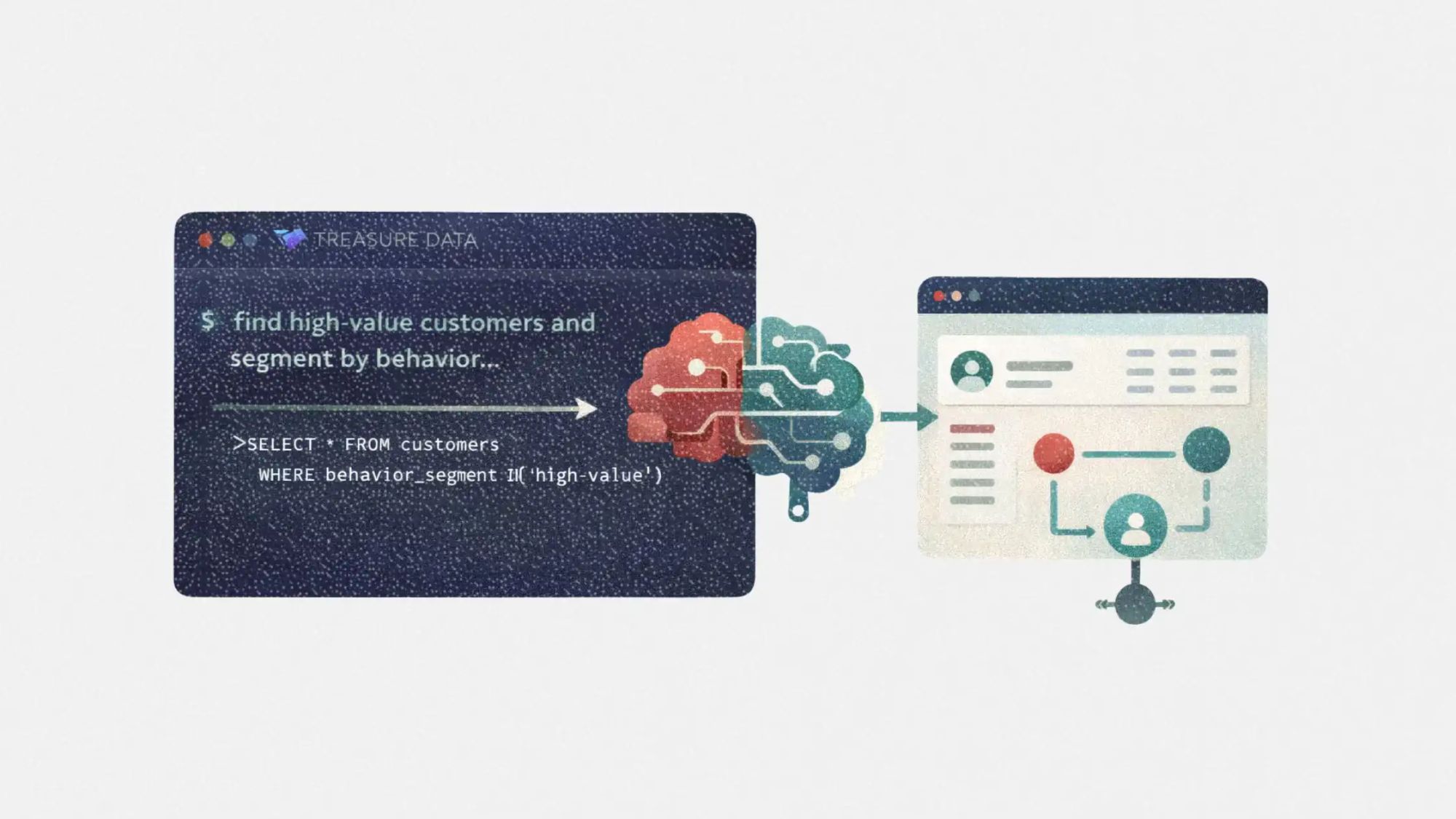
What changed: from Treasure Data to Treasure AI and Treasure AI Studio
The announcement has two parts: a brand shift to Treasure AI and a platform shift toward agentic execution. The centerpiece is Treasure AI Studio, described as a conversational workspace available across web, mobile, desktop, and command-line interfaces.
The workflow concept is “intent to action.” Users can upload a brief or ask questions in natural language, and Studio translates that into concrete outputs such as:
- building audience segments from unified customer profiles
- orchestrating journeys and campaigns across channels
- generating visible, reviewable output before activation
Treasure AI also says Studio includes 50+ pre-built “skills” spanning areas like SQL, segments, journeys, integrations, governance, and analytics. Pricing is framed around usage-based AI Credits, with the company stating that one AI Credit unlocks 600 Studio conversations.
How the agentic workflow maps to real CDP activation
Most CDPs already unify identity and customer attributes, but teams often struggle with the last mile: turning insight into shipped campaigns quickly, repeatedly, and with fewer handoffs.
Agentic tooling is meant to compress that last mile by making the CDP not just a data store, but an execution interface. If implemented well, the practical improvements for marketing and data teams can include:
- Faster iteration: segment creation and journey changes become quicker to draft, review, and deploy.
- Reduced operational drag: fewer manual steps across “CDP → BI → ticket → build → QA → launch.”
- More consistent governance: if the system enforces approval steps and logs decisions, it can reduce the risks that come with self-serve activation.
The make-or-break detail is control: Treasure AI emphasizes reviewable output and lifecycle governance, including evaluation, hallucination prevention, and compliance. That governance angle is important because “always-on” marketing is operationally attractive, but it increases the risk surface if automation can change targeting, messaging, or channel routing without traceability.
Competitive context in the CDP market: Segment, mParticle, ActionIQ, Tealium
Treasure AI is operating in a mature enterprise CDP market where differentiation increasingly sits above core unification, because most vendors can plausibly claim identity resolution and activation.
Typical enterprise comparisons include:
- Twilio Segment: strong ecosystem integrations and developer-friendly pipelines, often used as a central event and profile layer.
- mParticle: real-time customer data infrastructure with governance features, often favored in complex mobile and app-centric environments.
- ActionIQ: positioned around enterprise CDP and orchestration, often focused on marketer-friendly activation on top of enterprise data.
- Tealium: well known for tag management heritage and real-time CDP capabilities, with emphasis on data governance and activation.
Treasure AI’s stated angle is bundling CDP foundation with governed agentic execution, effectively trying to become the interface where work happens, not only the repository where data lives. In a competitive evaluation, buyers will likely test whether Studio genuinely reduces time-to-activation and whether its “skills” are deep enough to match their existing processes and security expectations.
Macro context: first-party data plus AI orchestration is becoming the bundle
Two trends are converging:
1. First-party data infrastructure is no longer optional for personalization and measurement, especially for large brands managing many channels and identities.
2. AI-native interfaces are shifting how teams expect to operate tools, moving from dashboards to conversational, task-oriented workflows.
This creates a new bundle expectation: not just “collect and unify data,” but “make it easy to decide and act continuously.” Vendors are responding by adding agentic layers that sit closer to campaign execution, creative production, and audience operations.
The strategic implication is that CDPs may be evaluated less as standalone data products and more as operating systems for lifecycle marketing, where governance and cross-channel orchestration are as important as identity graphs.
Practical implications for marketing ops, governance, and cost control
For marketing leaders, agentic execution raises practical questions that matter more than the headline claims:
- Who approves what: how Studio enforces human-in-the-loop approvals for segments, journeys, and messaging changes.
- Auditability: whether every AI decision is logged, reproducible, and explainable for compliance and internal review.
- Experiment discipline: how to prevent “always-on” changes from turning into uncontrolled variation across channels.
- Cost management: usage-based AI Credits can be a good fit for variable workloads, but it requires monitoring to avoid surprise spend, especially if many teams adopt the conversational workflow at once.
Treasure AI says it serves 400+ enterprise customers, which suggests the shift is aimed at existing enterprise CDP buyers who want faster operational throughput without giving up governance.