
Visa backs BTS ARIRANG tour to turn fandom into a global payments engine
How Visa is embedding payments into fandom, travel, and live entertainment

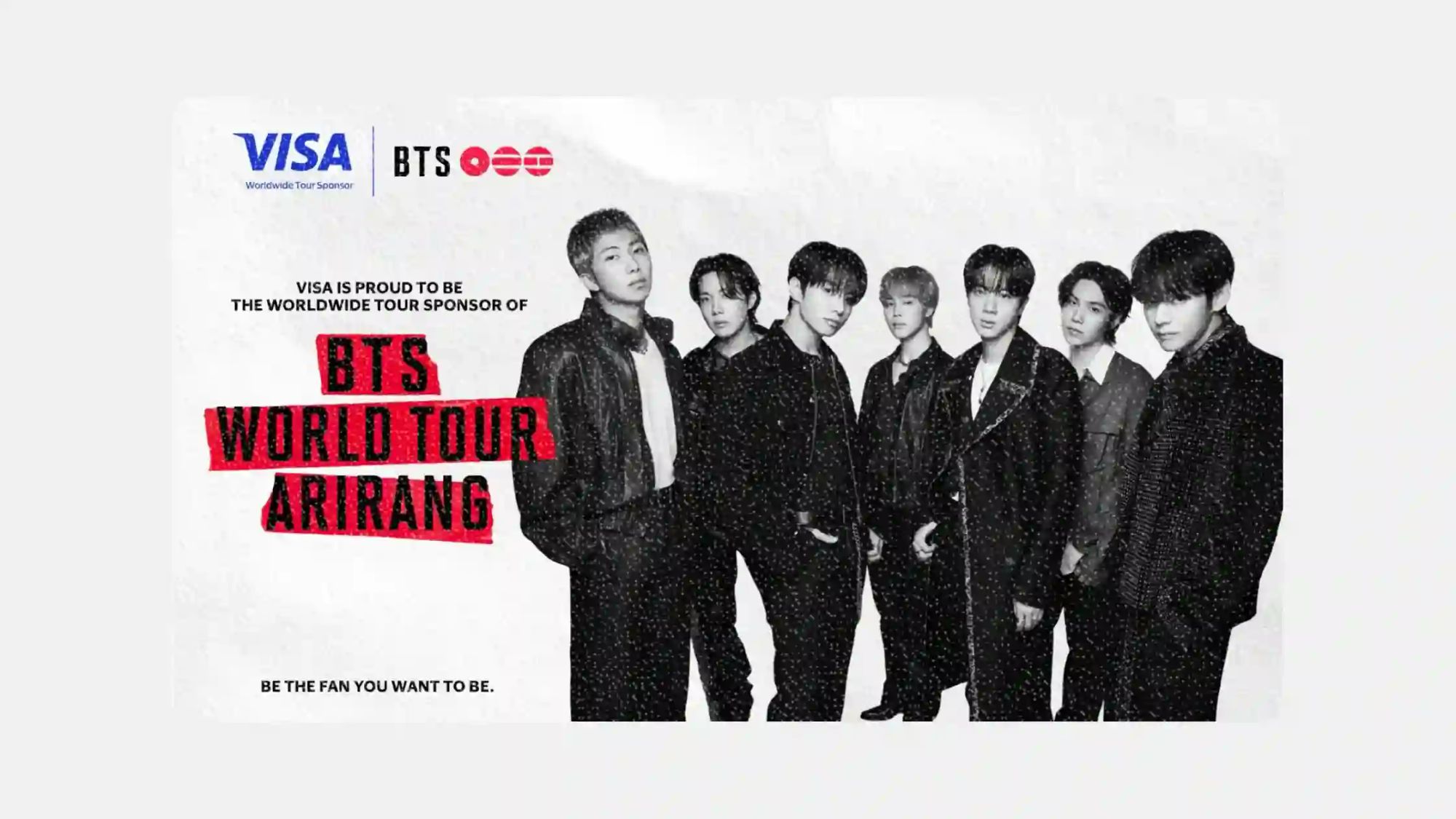
Visa is doubling down on its “fan-first” strategy by stepping in as the worldwide tour sponsor for BTS World Tour ARIRANG.
The move blends entertainment, travel, and commerce into one integrated experience, with payments infrastructure quietly powering it all.
This article explores what this partnership signals for marketers, especially those looking to tap into fandom-driven demand, cross-border commerce, and experiential campaigns that go beyond traditional sponsorships.
Short on time?
Here’s a table of contents for quick access:
- What happened with Visa and BTS World Tour ARIRANG
- Why this partnership is bigger than music sponsorship
- What marketers should know about fandom-driven commerce
- How brands are competing for relevance in the ARIRANG ecosystem
 Patrecia Meliana
What happened with Visa and BTS World Tour ARIRANG
Visa has been named the worldwide tour sponsor for BTS World Tour ARIRANG, reinforcing its push into entertainment-led brand experiences.
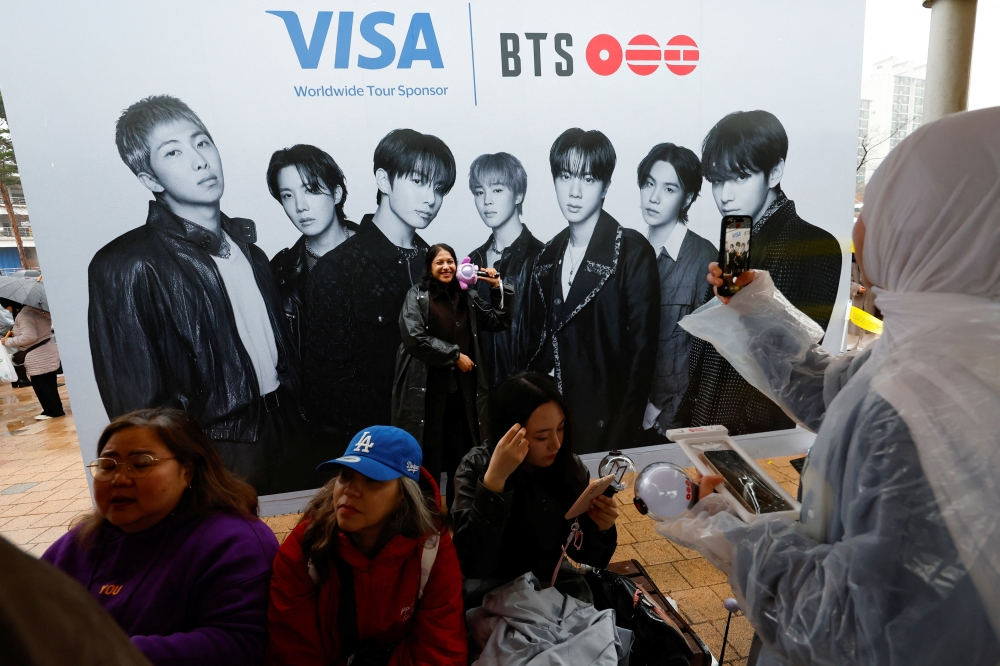
The tour is масштабed for global impact, with 82 shows across 34 regions and early momentum already visible. A comeback livestream from Seoul attracted 18.4 million viewers, signaling massive pent-up demand.
In Asia Pacific alone, the tour will hit major cities including Jakarta, Singapore, Bangkok, and Sydney. Visa cardholders in these markets will gain access to perks like complimentary ticket opportunities and on-ground brand experiences at venues.
Beyond visibility, Visa is positioning its core product as part of the experience, enabling seamless and secure payments tied to ticketing, merchandise, and cross-border fan spending.
Patrecia Meliana
Why this partnership is bigger than music sponsorship
This is not just a logo-on-stage deal. It is a full-stack commerce play wrapped in entertainment.
Visa is aligning its payments infrastructure with moments of high emotional engagement. BTS is not just a music act but a global economic driver. Data from the concert period shows a 25% surge in foreign travel to South Korea and a 20% increase in travel spending.
That kind of demand spike turns a concert into a commerce ecosystem. Flights, hotels, merchandise, dining, and local experiences all become monetizable touchpoints.
For Visa, the strategy is clear:
- Capture transaction volume across the entire fan journey
- Strengthen brand affinity through exclusive access
- Position payments as invisible but essential infrastructure
This reflects a broader shift where financial brands are embedding themselves into cultural moments rather than advertising around them.
Patrecia Meliana
What marketers should know about fandom-driven commerce
Fandom is becoming one of the most predictable and scalable growth engines in global marketing. But it requires a different playbook.
Here are a few takeaways:
1. Experience beats exposure
Fans do not just want to see a brand. They want access, perks, and participation. Visa’s ticket giveaways and on-site activations are designed around this principle.
2. Commerce follows emotion
When emotional engagement peaks, spending follows. BTS concerts are a clear example, driving travel and retail spikes across markets.
3. Infrastructure matters more than messaging
Visa is not selling a campaign. It is enabling transactions at scale. For fintech and martech players, owning the backend layer can be more valuable than front-end branding.
4. Cross-border is the real opportunity
Global fandom means global spending. Brands that can handle payments, logistics, and personalization across markets will win disproportionately.
Patrecia Meliana
How brands are competing for relevance in the ARIRANG ecosystem
Visa is not alone in trying to plug into BTS’ global influence.
Samsung has also joined as a global partner, positioning its Galaxy devices as tools for connection and self-expression within the fan community.
This creates a layered brand ecosystem around the tour:
- Payments from Visa
- Devices and content capture from Samsung
- Entertainment from BTS
For marketers, this highlights a growing trend. Major cultural moments are becoming multi-brand platforms, where each partner owns a specific layer of the experience.
The competition is no longer about sponsorship alone. It is about relevance within the fan journey:
- Who owns discovery
- Who owns engagement
- Who owns transaction
- Who owns memory
Brands that can integrate across these stages will extract the most value.
Patrecia Meliana
Visa’s partnership with BTS World Tour ARIRANG shows how brands are evolving from sponsors to ecosystem enablers.
For marketers, the takeaway is straightforward. Cultural moments like global tours are no longer just awareness plays. They are full-funnel opportunities spanning engagement, commerce, and long-term loyalty.
The challenge now is not whether to participate in these moments, but how deeply your brand can integrate into them.