
Vodafone turns buses into giant TV remotes across 6 UK cities
Connected outdoor displays and a Waterloo installation turn the entertainment hub's promise of simpler viewing into a public experience.


There is a particular kind of frustration in sitting down to watch something and spending the next few minutes scrolling through different apps instead. The television remote, once the simplest object in the room, has become a symbol of how complicated choosing entertainment can feel. Vodafone TV is taking that familiar object outside the home.
From November 23 to 28, London Waterloo station is hosting a giant knight's hand holding a remote, surrounded by a public experience that invites commuters to explore the service. Across six UK cities, Vodafone-branded buses are also interacting with roadside screens. The installations extend the brand's Welcome to Smarter TV campaign, which began earlier in November. The newly opened Waterloo experience is the latest physical expression of that idea.
Table of contents
Jump to each section:
- How the buses switch city screens
- Why Waterloo becomes a living room
- How a slipper throw connects the campaign
- What marketers should know about product stunts
How the buses switch city screens
Across London, Cardiff, Edinburgh, Birmingham, Manchester and Liverpool, the wrapped buses are designed to make the surrounding outdoor advertising behave like a television. As a bus passes a designated screen, location-tracking technology triggers a change in the advertising creative. Vodafone's official campaign announcement describes a two-minute window during which the screen displays one of four campaign executions before reverting to its usual rotation.
The bus is therefore not just another piece of outdoor inventory. It becomes the visible cause of something happening elsewhere in the street. Instead of asking passersby to imagine what a remote does, the campaign turns the relationship between a remote and a television into a public visual gag.
Importantly, the screens respond to the vehicle rather than a passenger pressing a button. The attraction is the illusion of control, not a public remote-control interface. This distinction matters because the creative promise is simplicity: viewers should be able to understand the interaction without learning how the technology works.
The agency Carat leads the media strategy, while Leo UK developed the creative platform and assets. The two agencies have effectively made the placement part of the idea itself. A static billboard can show a remote. A moving bus and an independently changing screen can demonstrate its function.
Why Waterloo becomes a living room
The latest part of the campaign is taking place at Waterloo, where Vodafone has installed an oversized armored hand holding its remote. The six-day experience includes demonstrations, competitions and opportunities for visitors to interact with the entertainment service. The November 24 announcement from Carat describes the hand as pointing toward the station's digital advertising screens.
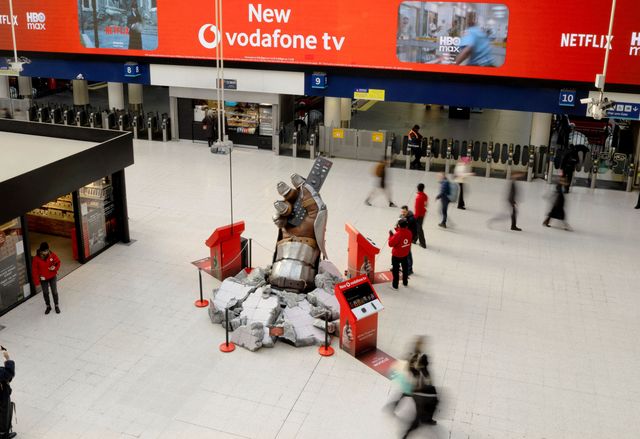
A railway station is an interesting place to make a case for staying in. Commuters are in transit, not necessarily shopping for television packages, so the installation needs to communicate something quickly before asking for more attention. The exaggerated hand establishes the entertainment theme at a glance, while a live demonstration gives anyone interested a chance to see what the box actually does.
The installation is also designed to live beyond its physical location. Vodafone and Carat are working with Global Radio on promotional activity and live reads across Heart and Capital FM. Talent involved in those shows is expected to produce social material and interact with members of the public. No attendance, reach or engagement figures for the activation have been released in the sources reviewed.
Maria Koutsoudakis, chief brand officer at VodafoneThree, summarized the product philosophy: “It’s about making the experience simpler and giving people more for their money.” The physical experience gives that positioning a tangible form.
How a slipper throw connects the campaign
The visual language comes from a film starring British television broadcaster Roman Kemp. In the original 30-second spot, he has settled in for a night of television but the room light is still on. His solution is an absurdly dramatic slipper throw, staged like a sequence from a Hollywood action movie. Once the light goes out, the room becomes a gateway to entertainment.
The campaign's outdoor characters include a knight, an astronaut and an alien. Each is a way of alluding to a familiar entertainment genre without needing a long list of titles on every billboard. The Waterloo hand carries that same visual idea into a physical space.
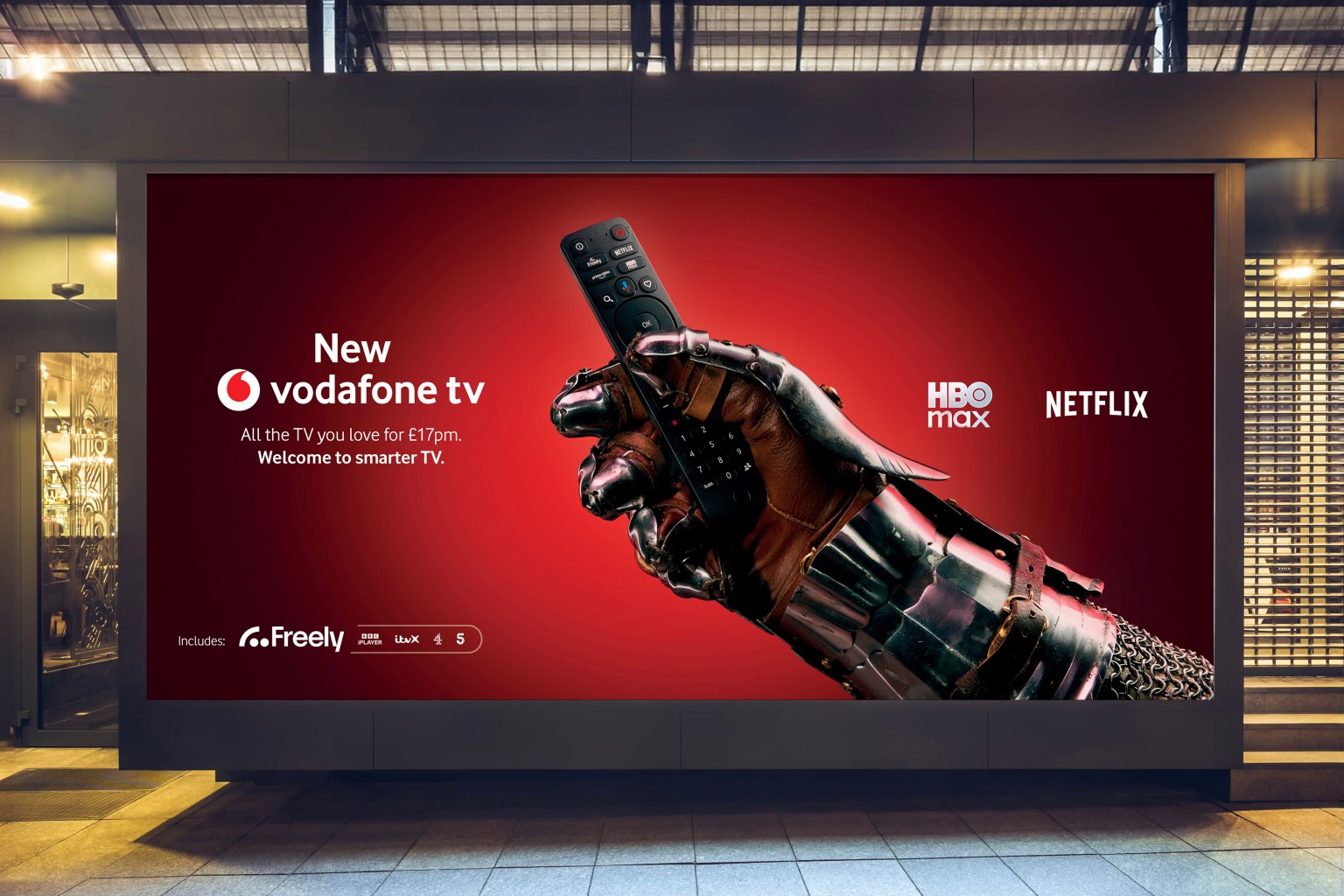
The product beneath the spectacle is a television hub that combines live broadcasts, streaming, games and downloadable apps. Vodafone's October product announcement explains how the service combines Freely with streaming options including Netflix and HBO Max for eligible customers.
That is a different competitive proposition from selling an exclusive television show. Vodafone is competing for the interface through which households discover other companies' entertainment. The film and outdoor work draw on the enjoyment of watching stories rather than asking people to become excited about a set-top box in isolation.
The campaign is planned to run into January 2027. The November station experience is a concentrated moment within that wider plan, not the beginning of the product launch.
What marketers should know about product stunts
A large object can get noticed, but the more useful question is what someone understands once they have seen it. The Vodafone work offers a practical example of how public entertainment can be connected to a product that normally operates quietly in a living room.
- Make the product behavior visible. The bus changes a screen the way a remote changes a television. A visual connection that requires little explanation can communicate more than another oversized product photograph.
- Give each channel a reason to exist. The film dramatizes a recognizable night-in ritual; the buses make the remote metaphor move; the station adds the possibility of a demonstration. They are related experiences rather than exact copies of the same advertisement.
- Keep participation optional. A commuter with only a few seconds can recognize the giant hand. Someone with time to spare can explore the installation. Designing for different amounts of attention is particularly useful in a transit environment.
- Measure understanding as well as reach. The natural measures would include whether visitors recognize Vodafone TV, understand its role as an entertainment hub and subsequently explore the service. Those are suggested metrics, not reported campaign results.
The bigger lesson is that a familiar object can bridge entertainment and a relatively technical product. Most people do not need an explanation of why a remote belongs in a living room. Moving it into a station gives that object an unexpected scale without changing its meaning.
Vodafone's campaign is ultimately about making the choice of what to watch feel less laborious. The public spectacle has a job beyond attracting a photograph: it gives the promise of a simpler television experience something concrete to attach to. Whether that translates into subscriptions remains to be seen.
