Fractl highlights why audience affinity can beat traffic in earned media
Fractl’s SparkToro-based research argues low-traffic niche outlets can outperform major publishers on audience affinity, reshaping earned media strategy.

Fractl argues that modern earned media programs should be planned around audience affinity rather than site traffic, especially as brands try to build “entity authority” signals across search engines and AI systems.
The company laid out its findings and an interactive resource in an official announcement focused on “hidden gem” outlets, including niche websites, podcasts, YouTube channels, and subreddits that over-index with specific decision-maker audiences.
Table of contents
Jump to each section:
- What Fractl is claiming has changed in earned media
- The “hidden gem” publisher thesis, explained
- Why YouTube and subreddits show up as high-affinity channels
- What marketers should know about building entity authority
What Fractl is claiming has changed in earned media
Fractl’s core point is that earned media outcomes should not be evaluated primarily by “how big was the site?” or “how much referral traffic did we get?” Instead, the company positions cross-channel visibility and repeated brand co-occurrence across trusted nodes as the signal that matters more in 2026-era discovery.
That framing ties earned media to how Google, AI assistants, and recommendation feeds infer credibility. In Fractl’s model, “entity authority” accumulates when a brand is repeatedly associated with credible sources across channels, not just when it earns a high-authority link.
A practical implication is measurement: if traffic is a weak proxy for influence, then teams need different reporting artifacts than the traditional “placements and visits” dashboard. Fractl’s study emphasizes affinity, role-based alignment (CMOs, founders, HR leaders), and channel diversity (sites plus podcasts, video, and communities).
 ContentGrip
The “hidden gem” publisher thesis, explained
Fractl describes “hidden gem publishers” as under-the-radar outlets that can be disproportionately influential with the audiences a brand actually needs. In its findings, these publishers can deliver 1.7x higher audience affinity than major publishers while receiving 130x less traffic.
This is a meaningful reframing for PR and content strategy because it flips the targeting order:
- Traditional approach: start with “authoritative” publications, then work down the list.
- Fractl’s approach: start with niche audiences and identify where those audiences concentrate attention.
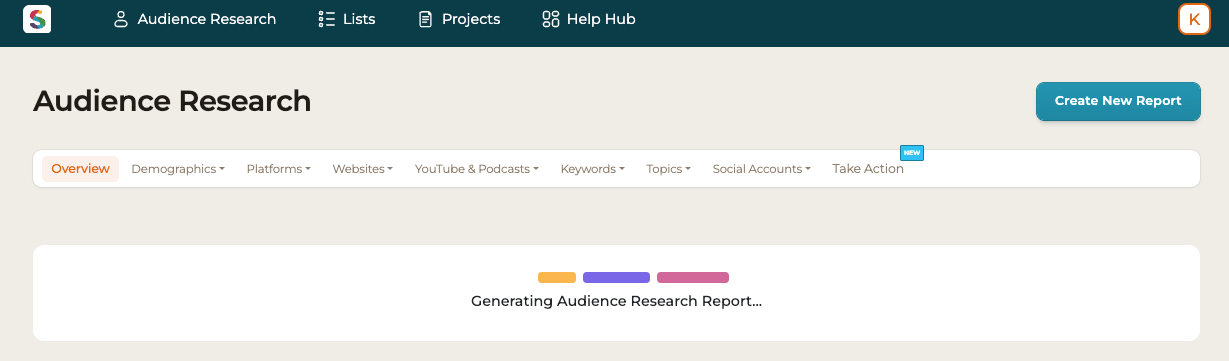
The company says it used SparkToro’s audience research, including a Custom Audience workflow, to surface niche outlets across industries and roles, then rank those outlets by affinity rather than traffic.
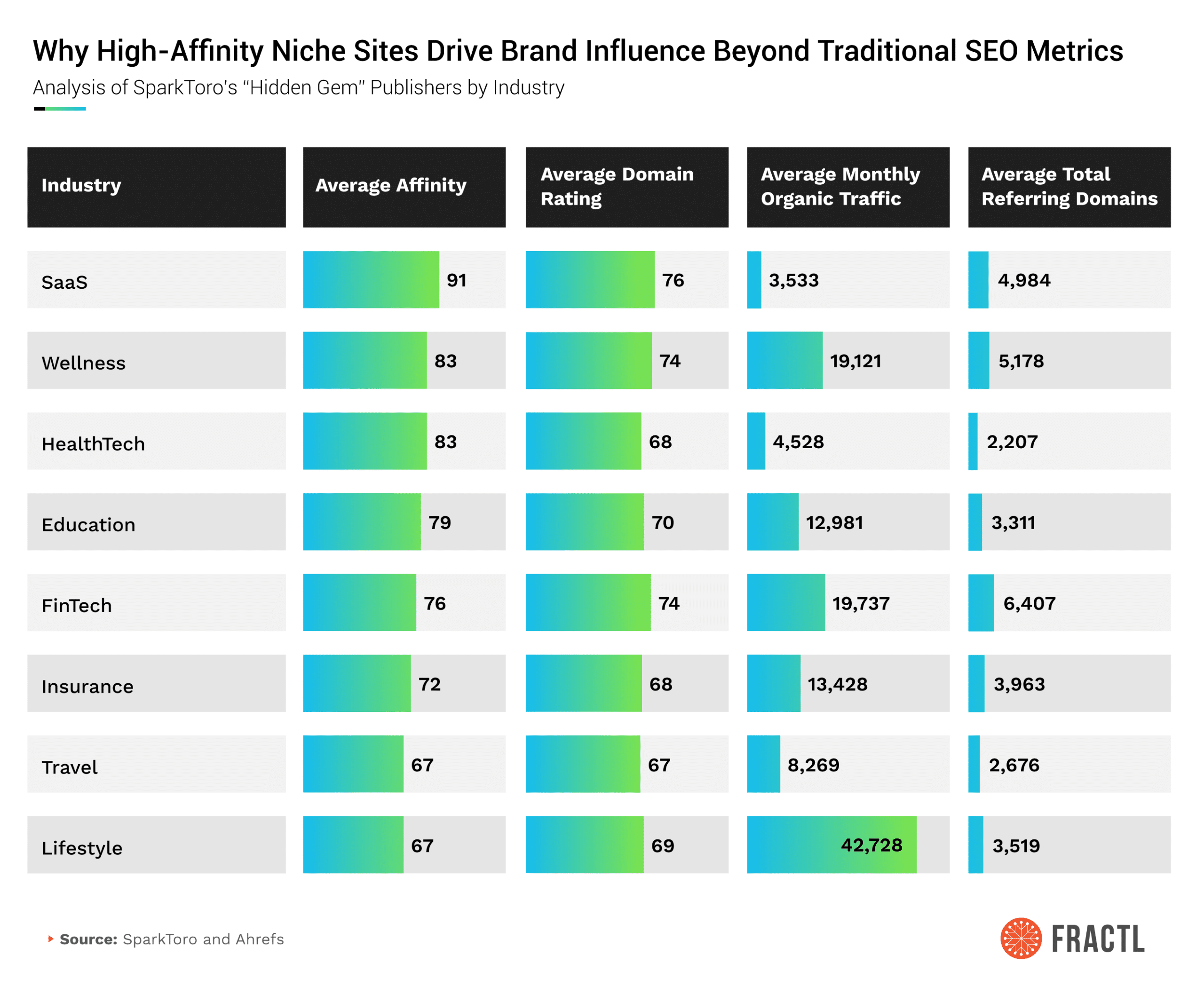
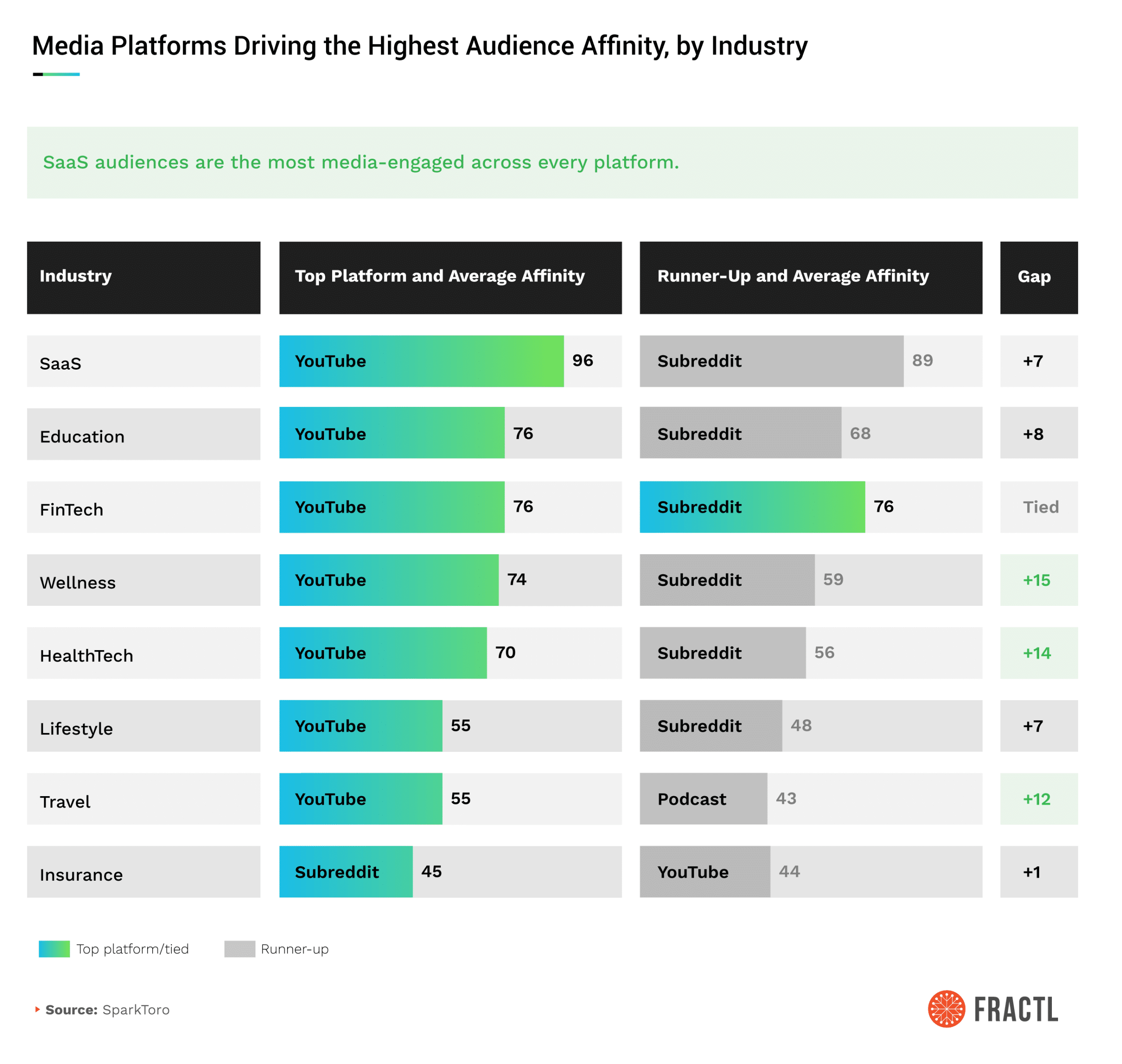
The study also claims the “best media strategy is role- and industry-specific,” noting that no single media mix works across all verticals. In the dataset Fractl referenced, SaaS had the highest average affinity score (91) among the top 50 highest-affinity sites per industry, while Lifestyle and Travel had higher organic traffic but lower average affinity (67).
Why YouTube and subreddits show up as high-affinity channels
A second major takeaway is channel format. Fractl’s results put YouTube in the top affinity position in 7 of 8 industries analyzed, with subreddits as a consistent runner-up. Insurance is presented as the exception where subreddits narrowly outrank YouTube.
For marketers, the point is less “go do YouTube” and more “stop treating article placements as the full stack.” If affinity concentrates in video and communities, then earned media and thought leadership programs that only target web publishers may systematically miss where decision-makers spend attention.
Fractl’s framing suggests a blended earned media program should include:
- A handful of top-tier publishers for broad visibility and perceived authority
- A larger volume of mid-tier and niche outlets for relevance and repetition
- Cross-format exposure across articles, podcasts, YouTube, and communities
What marketers should know about building entity authority
Fractl’s message is that discovery systems do not evaluate brands in isolation, they evaluate associations. That puts earned media into a broader “entity building” lane that overlaps PR, content, social proof, and community strategy.
If a niche site has modest traffic but high audience affinity with your target buyers, Fractl argues it can still be strategically valuable because it strengthens how humans and machines answer: “What kind of brand is this, and who trusts it?”
- Recalibrate earned media KPIs away from traffic-only reporting
Fractl explicitly calls traffic a weak proxy for influence. If teams keep optimizing for big-traffic placements, they risk building reports that look good but do not align with decision-maker attention. - Plan placements from the audience outward, not from a static media list
The study’s workflow starts with role and industry cohorts (CMOs, founders, HR leaders, ecommerce operators) and then identifies the outlets those cohorts actually follow. This is closer to buyer research than classic PR list-building. - Treat channel diversity as part of authority building, not a bonus
Fractl positions cross-channel brand presence as “critical,” especially when authority is inferred from repeated references across trusted platforms. That makes podcasts, YouTube, and communities part of the earned media surface area. - Use niche repetition strategically, not just “one big hit”
The model described favors a mix: some top-tier visibility plus ongoing niche placements that compound relevance signals. For categories like eCommerce, Fractl argues repeated mentions across trusted niche sources can strengthen how systems associate a brand with its category. - Accept that the “best outlets” differ by industry and role
The study emphasizes role- and vertical-specific media mixes, including examples where platform rankings shift (like Insurance). That implies teams should avoid copying a competitor’s media list without validating audience alignment.
Stepping back, the practical shift is that earned media becomes less about chasing a single authoritative logo and more about systematically earning presence where buyers already pay attention. If marketers accept the premise that AI and search discovery reward repeated, credible co-occurrence, then audience affinity becomes a planning input, not just a research curiosity.
This also puts pressure on internal alignment: PR, SEO, and brand marketing need shared definitions for “influence” and “authority,” otherwise teams will keep optimizing to different scoreboards. Fractl’s argument is effectively a request to modernize the scoreboard.