
Harry Potter’s “Back to Hogwarts” returns with global cinema week and live events
Back to Hogwarts 2026 includes a global cinema week, live events, and YouTube/TikTok programming, showing how IP marketing builds repeatable rituals.


There are a few fandom rituals that feel like a yearly holiday, even if you are not in the fandom. For Harry Potter fans, 1 September is one of them: “Back to Hogwarts,” the day the story’s students head back to school, has turned into a real-world tradition people plan around.
Warner Bros. Discovery is leaning into that ritual for 2026 with a week-long global cinema run, live events across multiple regions, and platform-first programming that treats the moment like a shared calendar event, not a one-off promo. The company outlined the plan in an official announcement.
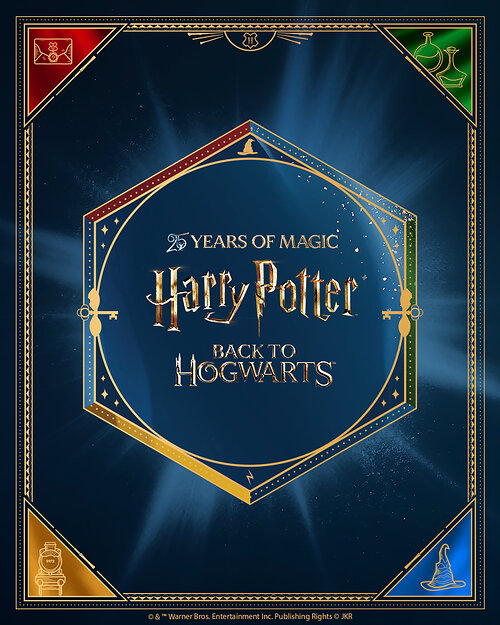
Table of contents
Jump to each section:
- Why “Back to Hogwarts” keeps working as a fandom ritual
- What Warner Bros. Discovery is doing for Back to Hogwarts 2026
- How the campaign blends theatrical, retail, parks, and games
- What this means for marketers watching entertainment IP in 2026
 Patrecia Meliana
Why “Back to Hogwarts” keeps working as a fandom ritual
“Back to Hogwarts” works because it is not asking fans to learn a new behaviour. It is a date that already exists in the story, and over time it has become a real habit: people rewatch, post house pride, share nostalgia, and coordinate plans with friends.
This year has extra emotional weight because it marks 25 years since the first film, Harry Potter and the Sorcerer’s Stone / Philosopher’s Stone, hit cinemas. That kind of anniversary does something fandoms love: it makes participation feel like showing up for a milestone, not just consuming content.
It also arrives while anticipation builds for the forthcoming HBO Original series, which gives the franchise a “past and future” tension to play with. The ritual becomes a bridge between rewatch culture and what comes next.
 Zoe Park
What Warner Bros. Discovery is doing for Back to Hogwarts 2026
The centrepiece is a one-week global theatrical re-release of Sorcerer’s Stone / Philosopher’s Stone, with 12 minutes of behind-the-scenes content shown on the big screen. From 27 Aug through 3 Sept, all eight Harry Potter films will also be available in theatres worldwide for a limited time, with tickets going on sale 31 July.
On the live-events side, HBO Max is set to lead a London fan celebration on 1 September tied to the new series, with interactive moments and giveaways. The company also explicitly told fans there will be no official event or countdown at King’s Cross Station that day, and advised people not to travel there.
Beyond London, the plan includes official live celebrations across markets including France, Italy, Spain, Germany, China, Australia, and Japan. Examples mentioned include a mass wand lesson at the Château de Versailles’ Orangerie Gardens in Paris led by choreographer Paul Harris, a celebratory screening in Venice, fan-focused festivities in Madrid and Sydney, a special event in Berlin, and anniversary activity in China featuring themed activations and an “Owl Messenger” decorative installation.
 ContentGrip
How the campaign blends theatrical, retail, parks, and games
What stands out is the “everywhere at once” design. This is not positioned as a single platform moment, but as a week where the same story world is reachable through multiple modes of participation, depending on how a fan prefers to show up.
Universal parks are part of the calendar: Universal Orlando Resort (1 Aug to 1 Sept) is set to run 25th anniversary experiences, including a limited-edition Butterbeer Mug, special food and beverage offerings, and the return of the Hogwarts Always castle projection show.
Games and immersive venues round it out. The announcement calls out Harry Potter: Hogwarts Mystery and Harry Potter: Puzzles & Spells running themed events and rewards, and COSM immersive venues screening the film in “Shared Reality” inside LED domes in cities including Los Angeles, Dallas, Atlanta, with Detroit opening in September.
What this means for marketers watching entertainment IP in 2026
This is a Tier 1 signal, but a useful one: it shows how modern entertainment marketing is increasingly about maintaining rituals that fans already practise, then giving them more than one way to participate.
- Treat the calendar like product design
“Back to Hogwarts” is essentially a recurring appointment that the fandom co-owns. The strategy is less about persuading attention and more about organising it, so the audience feels like they are returning to something familiar. - Anniversaries are a permission slip for re-entry
A 25th anniversary reframes rewatching as “showing up.” Adding 12 minutes of behind-the-scenes footage gives even lapsed fans a reason to buy a ticket, because it is not identical to what they have already seen. - Build participation tiers, not one “main” experience
The campaign offers many entry points: cinema, parks, Studio Tours, shops, mobile games, and livestreamed programming. That matters because fandom participation is not one behaviour, it is a spectrum from casual rewatch to collector to park pilgrim. - Use clarity to prevent fan disappointment
The explicit note about no official King’s Cross Station event is a small operational detail with a big community impact. It sets expectations early and reduces the chance of confusion becoming the story. - Social programming works best when it feels like a “broadcast event”
The annual Back to Hogwarts Showcase on YouTube and TikTok is positioned as the culmination. For marketers, the lesson is that livestreams are stronger when they are treated as tentpole moments in a wider ritual, not isolated content drops.
The bigger cultural signal is that fandoms increasingly behave like communities with traditions, not just audiences with preferences. When a brand or rights holder respects that, the marketing stops feeling like interruption and starts feeling like stewardship.
In practical terms, Warner Bros. Discovery is packaging one date into a global network of experiences, then letting fans choose their own level of involvement. That approach translates beyond entertainment: the strongest campaigns in 2026 will often be the ones that understand how people already gather, celebrate, and make meaning, then design around those behaviours instead of trying to manufacture them.