
Big Issue makes a 10-second Christmas ad out of a familiar carol
Big Issue and Havas London use a 10-second Sophie Winkleman film, familiar carol and pantomimes to encourage Christmas magazine purchases.


The familiar sight of a shopper struggling with Christmas bags is the starting point for Big Issue's festive appeal this year. It is a scene that many people recognize: gifts have been bought, the journey home is about to begin, and there is always something else that could be added to the shopping list.
In a November 27 campaign announcement, the UK street magazine revealed a short film starring Sophie Winkleman, an actor known for playing Big Suze in the British sitcom Peep Show. The longstanding Big Issue ambassador is not asking people to abandon Christmas shopping. She is asking them to make room for a magazine alongside the things they were already going to buy.
Table of contents
Jump to each section:
- A Christmas carol with one extra purchase
- From shopping bags to pantomime stages
- A magazine sale rather than a donation
- What marketers can learn from the festive shortcut
A Christmas carol with one extra purchase
In the film, Winkleman arrives at a taxi with her hands full of shopping bags. She delivers a sung reminder that she has bought a Big Issue, using the melody of a familiar Christmas carol. As the vehicle departs, viewers see longtime vendor Kelvin Gregory selling the magazine.
The joke depends on how recognizable the tune is, not on viewers being familiar with the campaign. Agency Havas London uses a festive musical reference to give the request a rhythm that can work even when the audience has very little time. Production company MindsEye made the film.
A longer film might have explained the history of the magazine or introduced several people who sell it. Instead, this version uses a small everyday purchase as its narrative climax. Gregory's appearance matters because the person who benefits from the transaction is visible, rather than being left outside the story.
There is also continuity between Winkleman's appearance and her previous work with the magazine, which included meeting vendors in London. Her role in the film has a connection to the organization beyond a seasonal celebrity appearance.

From shopping bags to pantomime stages
The short film is only one part of the campaign. Havas London's creative also takes the message into outdoor advertising, digital and social media, with shopping bags and stickers among the physical formats. Some pantomimes in the UK are set to include a reference to the magazine in their shows, with vendors selling copies outside after performances.
The Christmas edition carries wrapping paper featuring the campaign phrase, giving the purchase a connection to another holiday activity. It is a way to let the same idea travel from an advertisement to the item itself without requiring an elaborate new explanation.
The pantomime element is particularly relevant to a British Christmas. Families can encounter the request during a theatrical outing and potentially act on it when they leave. The context is different from a taxi or a shopping trip, but the suggested behavior is the same.
That gives the campaign a practical distinction from a festive commercial that depends on repeated video exposure alone. A street vendor needs an actual customer, so the places where people hear the message matter as much as the places where they see the film. The planned formats do not establish how many vendors or venues will participate, or how many purchases will follow.
A magazine sale rather than a donation
Big Issue operates differently from a conventional charity collection. People selling its magazine buy copies and retain the difference between their purchase cost and the cover price. Winkleman made that distinction in the announcement: “It’s good to remember that vendor has also bought that Big Issue, as a product to sell”.
64% rise in the number of magazine vendors since the start of September 2026, according to Big Issue.
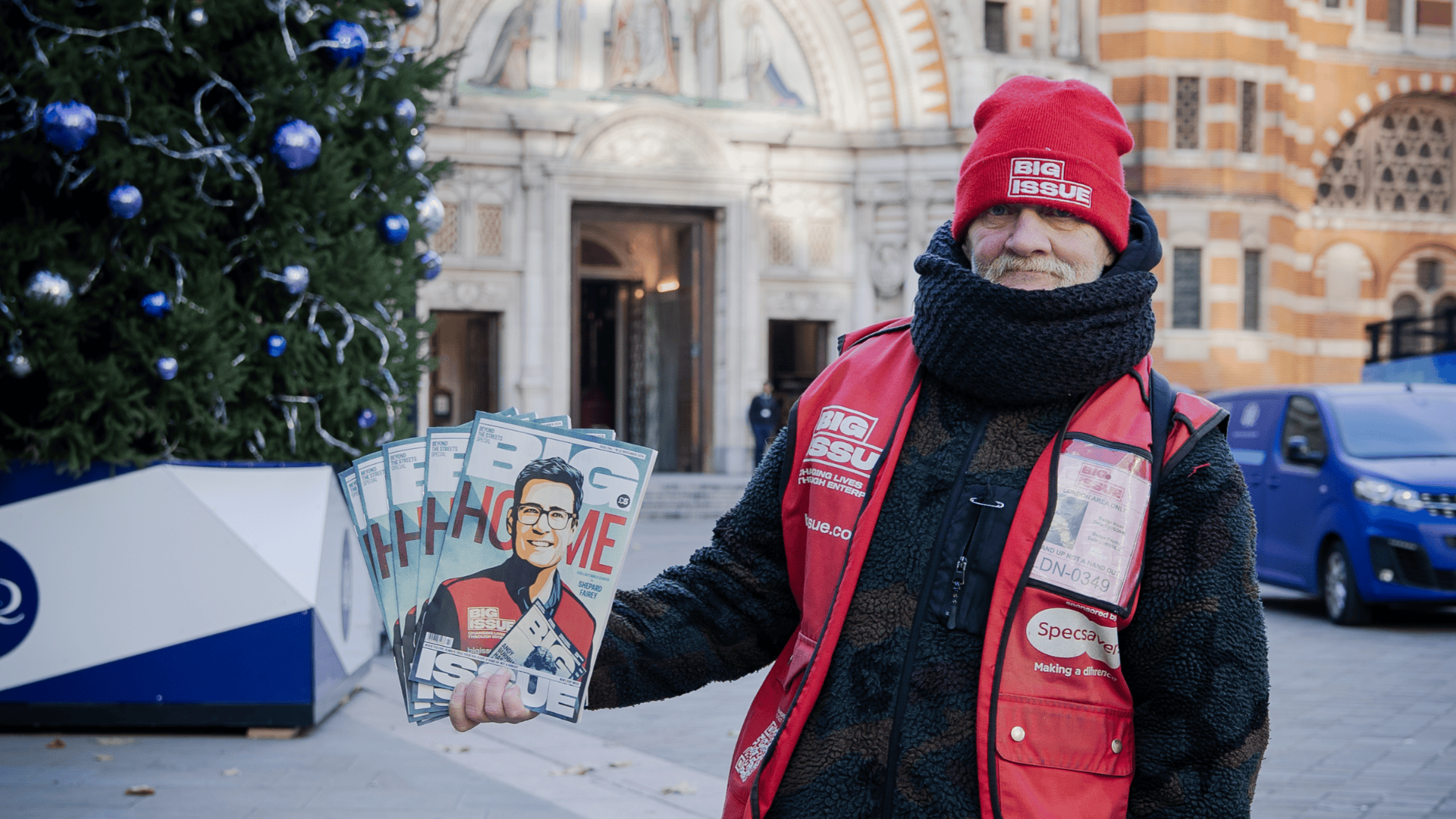
More than 390,000 magazines were sold by vendors during the previous Christmas season, according to Big Issue.
That is useful historical context for the importance of this period, not evidence that the new campaign has already increased sales.
The distinction also shapes the tone of the commercial. Rather than treating its audience as spectators of someone's hardship, the film depicts the purchase as something a shopper can fit into an existing routine. It puts the magazine alongside other goods instead of presenting it solely as a charitable gesture.
Other festive appeals also reinterpret shopping rituals. Oxfam's recent Christmas film, The List, builds its emotional reveal around a child's wish list and then invites audiences to create alternative lists online. Big Issue chooses an almost opposite creative format: a direct, brief reminder and a physical point of sale. Both connect generosity to a recognizable holiday habit, but the action each organization wants is different.
Whether the new Big Issue appeal succeeds will depend on actual purchases and income for vendors. Neither the announcement nor the launch coverage offers post-campaign results.
What marketers can learn from the festive shortcut
Big Issue's creative is a useful example of how a seasonal message can be designed around an existing behavior, rather than trying to invent a new one during a crowded advertising period.
- Borrow a recognizable cultural cue. The carol provides a familiar structure for an otherwise unfamiliar advertising phrase. Marketers using music or a seasonal convention should choose a reference that genuinely supports the action being requested.
- Use the celebrity to demonstrate the behavior. Winkleman plays a shopper who has already made the purchase. The creative would be less specific if it merely showed a famous face telling people to be generous. Her existing relationship with Big Issue adds further context.
- Connect entertainment to the point of action. The pantomime plan and physical placements create opportunities for the message to be encountered near the transaction. A short film can explain the idea; distribution determines whether the audience has an opportunity to act.
- Define impact around the beneficiary. A view count or a remembered jingle cannot establish whether vendors are earning more. Sales per participating vendor, repeat customers and incremental seasonal income would offer a more meaningful test of the approach.
The Christmas advertising market often rewards elaborate storytelling, celebrity casting and emotional reveals. The Big Issue campaign chooses not to compete on the length or scale of its film. Its central creative device is an extra item in a familiar shopping scene.
That is a modest request with a concrete purpose. For marketers, the lesson is not that shorter Christmas commercials are necessarily better, but that a campaign can be more coherent when its cultural reference, message and desired action all fit together.
