Canva’s “chronically online” mode turns interface language into a vibe
Canva’s English (chronically online) setting shifts interface tone, search curation, and AI voice. It shows how “vibe” can drive sharing.

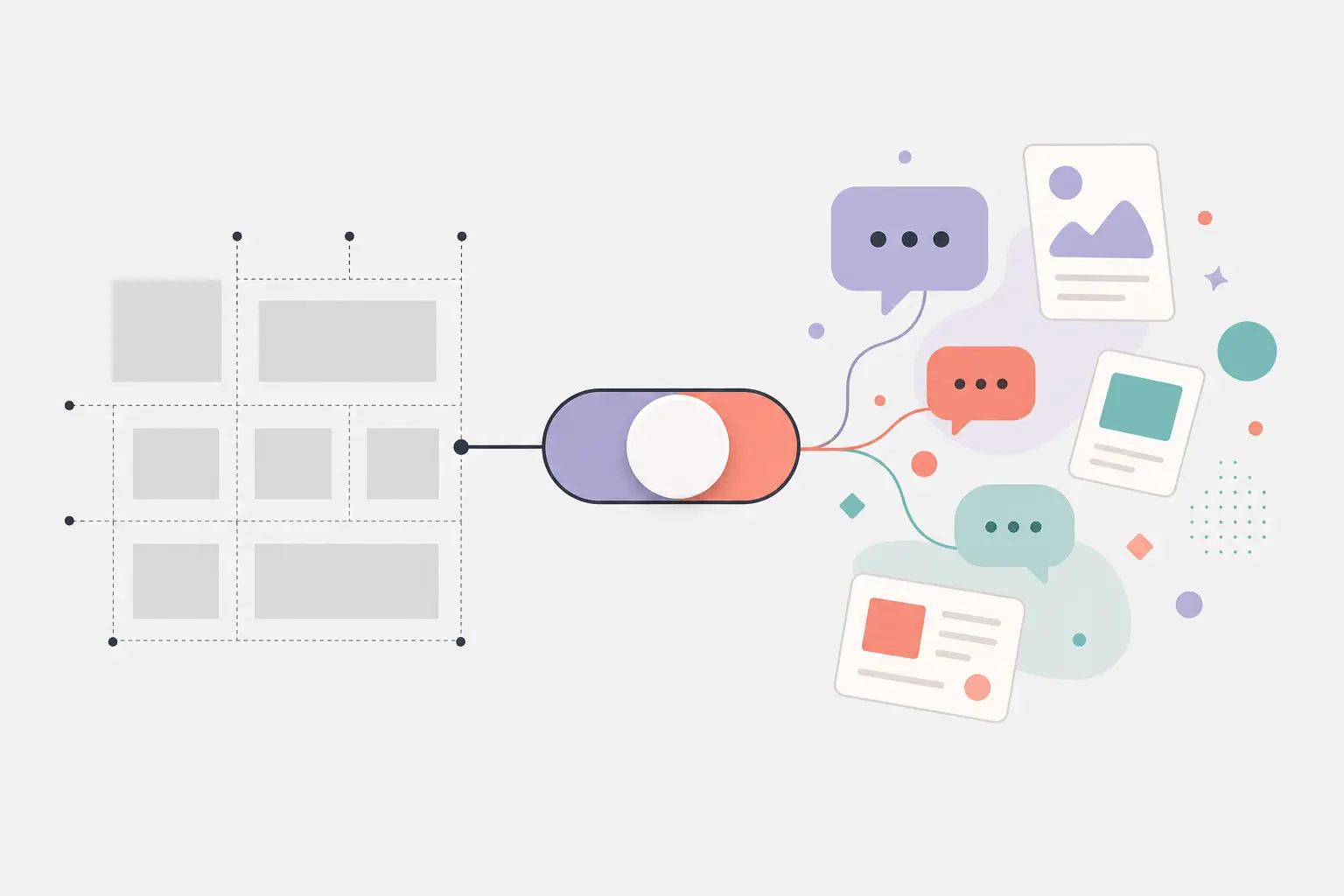
There is a specific kind of delight Gen Z has when a mainstream tool suddenly speaks fluent internet. Not in a cringey “how do you do, fellow kids” way, but in a way that feels like the product team actually lives on the same feeds you do.
Canva is getting attention for a hidden language setting called English (chronically online) that reshapes the product’s tone, search experience, and even how its AI assistant responds. The details are outlined in Canva’s Help Center explainer, and the feature has also been circulating through short-form discovery via an Instagram Reel.

Table of contents
Jump to each section:
- Why “Gen Z mode” is resonating right now
- What English (chronically online) changes inside Canva
- The subtle product strategy behind a “vibe” setting
- What this means for marketers
 Patrecia Meliana
Why “Gen Z mode” is resonating right now
People are not just sharing a setting. They are sharing the feeling of “wait, this product gets it.”
Calling it “English (chronically online)” works because it names a real internet identity: someone whose default language is shaped by memes, slang, and comment-section humour. When a tool acknowledges that identity, it stops feeling like software and starts feeling like a space you want to hang out in.
That matters because Canva is not niche creator software anymore. It sits in everyday workflows for students, creators, small businesses, and marketing teams. A tone shift that feels playful can travel fast through friend-to-friend sharing, especially when the “how to turn it on” steps are simple and the payoff is immediate.
 ContentGrip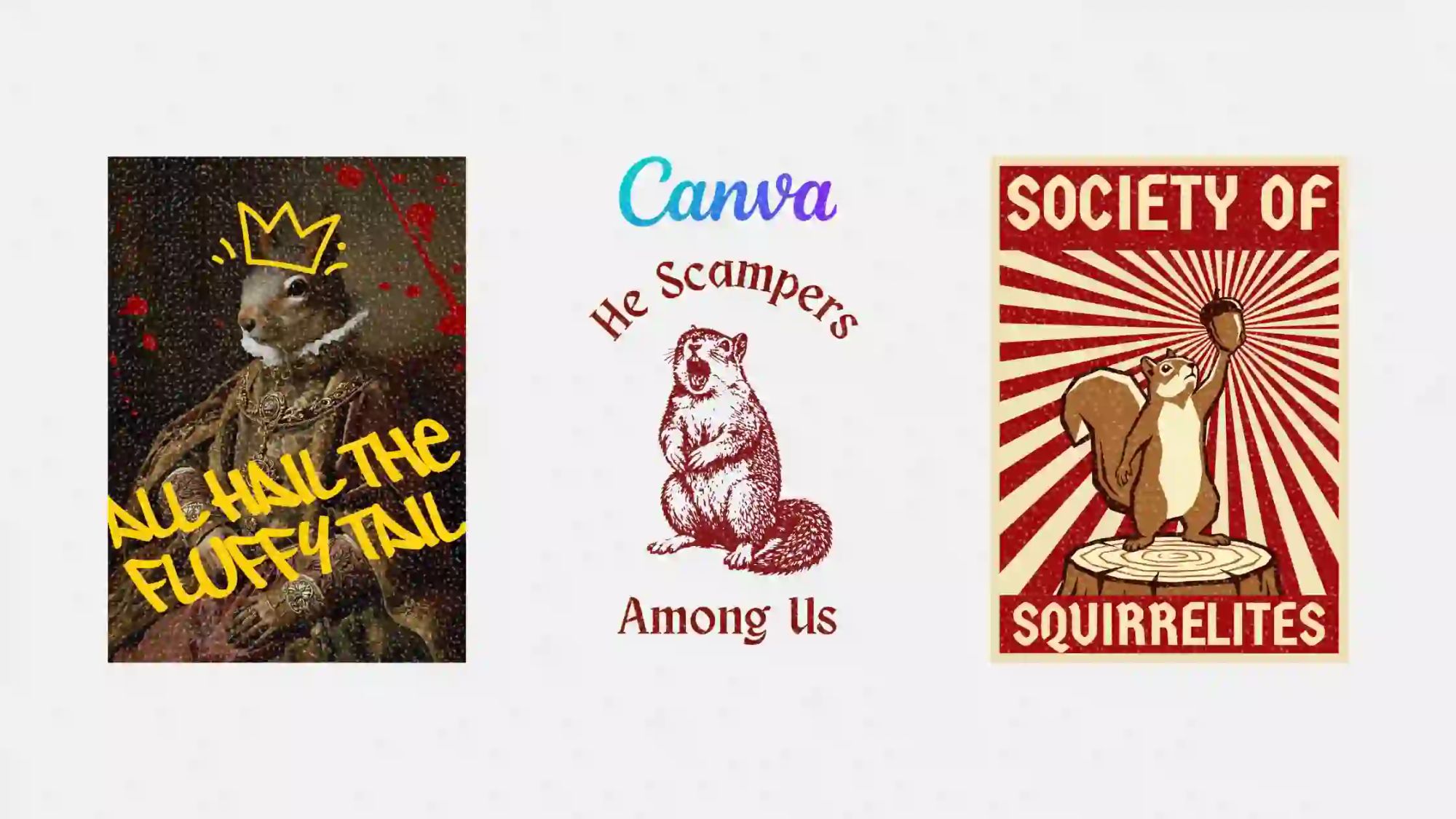
What English (chronically online) changes inside Canva
Canva frames the setting as a vibe change rather than a functional one: it does not change how Canva works, but “how it feels.”
Based on Canva’s own description, switching to English (chronically online) includes:
- A more slang-heavy interface, with internet-y phrasing, puns, and emoji-style energy.
- Templates and elements that “pass the vibe check,” with search results and the template library surfacing dedicated content tied to the setting.
- A dedicated Search section that curates templates, elements, and content for the “chronically online” tone.
- Canva AI responses that sound more casual and Gen Z-coded, while still handling brainstorming, writing, and design support.
It is also intentionally easy to enable. The Reel describes the path as: profile → Your account → Language → select English (chronically online).
The subtle product strategy behind a “vibe” setting
This is not just a joke setting. It is a way to make personalisation feel social.
A lot of product personalisation is invisible: recommendations, ranking tweaks, background AI optimisation. Canva’s approach makes personalisation obvious. You flip the switch and the whole product “refreshes” into a different tone, plus you get curated templates and a distinct search experience. That is inherently screenshot-able, and it gives people something to show friends.
It also nudges Canva’s AI assistant into a clearer “persona.” Instead of generic helpfulness, the assistant becomes witty and casual (as described by Canva), which can make AI feel less like a tool you are testing and more like something you can actually use day-to-day.
For a design platform, that matters: people are often choosing templates and elements based on taste, identity, and in-group humour. Turning “language” into a cultural filter is a lightweight way to make discovery feel like a feed rather than a catalogue.
 Patrecia Meliana
What this means for marketers
A tone shift can look small, but it can change how people experience a product and how they talk about it.
1. Personalisation that is visible becomes shareable
When the change is obvious (interface copy, search sections, AI tone), users can immediately show it to someone else. That is the kind of “proof” that spreads in DMs and group chats.
2. “Voice” is becoming a product feature, not just a brand guideline
Canva is treating language as an interface layer. Marketing teams should notice the implication: copy, UI microtext, and AI responses are part of the experience people evaluate, not just the ads they see.
3. Curated discovery can be framed as culture, not commerce
Calling it “basically the For You Page, but for Canva templates” reframes recommendations in a way people already understand. That is a useful lesson for any product with a library, marketplace, or template ecosystem.
4. AI adoption can increase when AI feels socially fluent
If the assistant can brainstorm and write while matching a casual tone, it may feel less stiff to use. For marketers, this is a reminder that AI UX is not only about capability. It is also about whether the output feels like it belongs in the spaces your audience actually talks.
The bigger signal here is not “Gen Z likes slang.” It is that audiences increasingly expect products to recognise context and identity, even in small interface moments. When brands treat those moments as part of the experience, they are not just adding flavour. They are giving people new reasons to feel like the product belongs to them, and to share it like a find.