Digital PR: how B2B brands earn authority in search, media, and AI answers
Learn how digital PR helps B2B brands earn media coverage, backlinks, AI citations, and buyer trust through useful proof and credible stories.


Digital PR is the work of earning online visibility through credible third-party coverage, useful data, expert commentary, and assets that people want to cite. For B2B teams, it sits between public relations, SEO, content marketing, and brand strategy: the goal is not just to get mentioned, but to become part of the evidence buyers, journalists, search engines, and AI tools trust.
That matters because discovery is no longer happening only on your website or in a Google result. Buyers ask AI tools for vendor shortlists, journalists search for credible sources, analysts look for proof points, and prospects compare brands long before they book a demo. Digital PR gives your brand more chances to show up in those moments with proof that did not come only from your own marketing team.
Table of contents
Jump to each section:
- What digital PR means in practice
- Where digital PR creates value
- How to build a digital PR campaign
- Real-world examples worth borrowing
- How to measure digital PR without fooling yourself
- Common mistakes that weaken digital PR
- When digital PR is worth the investment
What digital PR means in practice
Digital PR is not a prettier name for link building. Links can be one outcome, but the better definition is this: digital PR earns references to your brand across online media, newsletters, podcasts, search results, communities, and AI-answer surfaces by giving those sources something useful to cite.
A traditional PR campaign may focus on a launch announcement, a funding round, or executive visibility. A digital PR campaign usually adds a more search-aware layer: what questions are buyers asking, what topics are journalists covering, what terms already have weak or repetitive answers, and what evidence can the brand contribute that others do not have?
In practice, digital PR often includes:
- Publishing proprietary data that journalists and industry writers can cite
- Pitching expert commentary tied to current market questions
- Creating research reports, calculators, benchmarks, or explainers
- Turning company data into media-friendly story angles
- Earning brand mentions and backlinks from relevant publications
- Improving how the brand appears in search results and AI-generated answers
- Supporting sales with credible third-party proof
The important word is earning. Digital PR works best when the story has independent value. A journalist does not owe you coverage because your company launched a feature. A trade publication might care if your data reveals a real market shift, your executive can explain a confusing policy change, or your product usage data shows how a category is changing.
 Enricko Lukman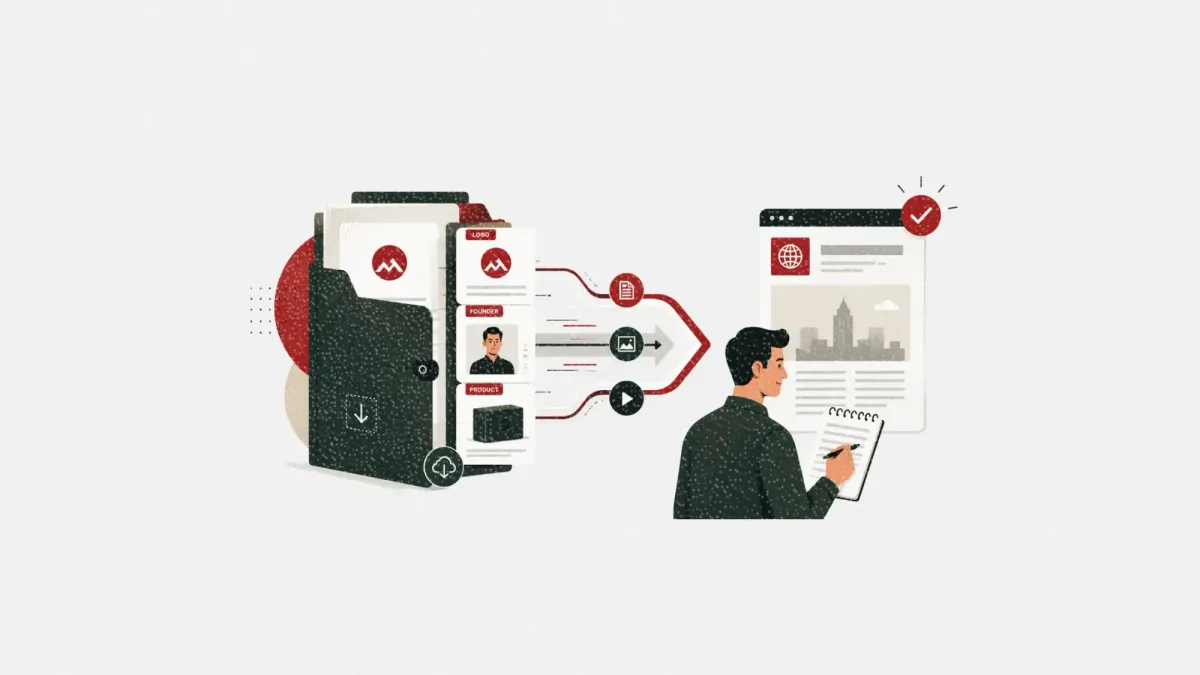
Where digital PR creates value
The most obvious value is media coverage, but the more durable value is authority. A strong digital PR program helps a B2B brand become more visible in the places buyers use to decide who to trust.
The first place is search. Earned coverage can create backlinks, branded search demand, entity signals, and third-party pages that rank for category queries. This matters because many buyers do not search only for your brand. They search for the problem, the category, the comparison, or the trend behind the budget request.
The second place is AI search. Muck Rack's May 2026 edition of What Is AI Reading? analyzed more than 25 million links from ChatGPT, Claude, and Gemini responses across 17 industries. It found that earned media accounted for 84% of AI citations, while paid and advertorial content accounted for 0.3%. For PR teams, that is a practical signal: credible third-party coverage can influence not only readers, but also the sources AI systems choose to cite.
The third place is sales enablement. A prospect may ignore a brand claim on a landing page, then pay attention when the same point appears in a respected industry publication or independent report. Digital PR gives sales teams outside validation they can use in follow-ups, board decks, procurement conversations, and partner discussions.
How to build a digital PR campaign
Start with the audience, not the asset. A useful digital PR campaign begins by answering four questions:
- Who needs to believe something different about the category?
- What do they already read, search, cite, or ask AI tools?
- What proof can we provide that would be useful beyond our own sales cycle?
- What would make a journalist, analyst, newsletter writer, or industry operator care?
From there, choose the campaign format. For B2B brands, the strongest formats usually come from genuine expertise or proprietary data. A benchmark report can work if the data is clean and the finding is surprising. A founder commentary campaign can work if the spokesperson has a clear point of view and can explain what others are missing.
ContentGrip's PR strategy examples guide is a useful companion here because digital PR still needs a strategy before it needs tactics. A campaign built around "we want backlinks" tends to produce thin ideas. A campaign built around "CFOs are underestimating this software cost risk, and our usage data proves it" has a sharper reason to exist.
A basic digital PR workflow looks like this:
- Pick the business goal: authority, category education, analyst attention, search visibility, AI visibility, lead support, or launch credibility.
- Define the audience: buyers, investors, journalists, partners, policymakers, or a specific professional community.
- Map the proof: internal data, customer patterns, expert commentary, original survey results, product usage trends, or a strong contrarian explanation.
- Build the asset: report, data story, landing page, interactive tool, executive byline, press release, media kit, or pitch package.
- Package the angle: one primary story, two or three supporting angles, and a short explanation of why it matters now.
- Pitch selectively: prioritize relevant publications and writers over broad distribution.
- Track outcomes: coverage quality, referral traffic, assisted pipeline, brand search, backlinks, AI citations, and message pull-through.
The campaign does not need to be huge. A focused expert commentary sprint around a regulatory change can outperform a beautiful report if it reaches the right trade press at the right moment. The quality test is simple: would this still be useful if the brand name were removed? If the answer is no, it is probably marketing copy, not digital PR.
 Raya Tan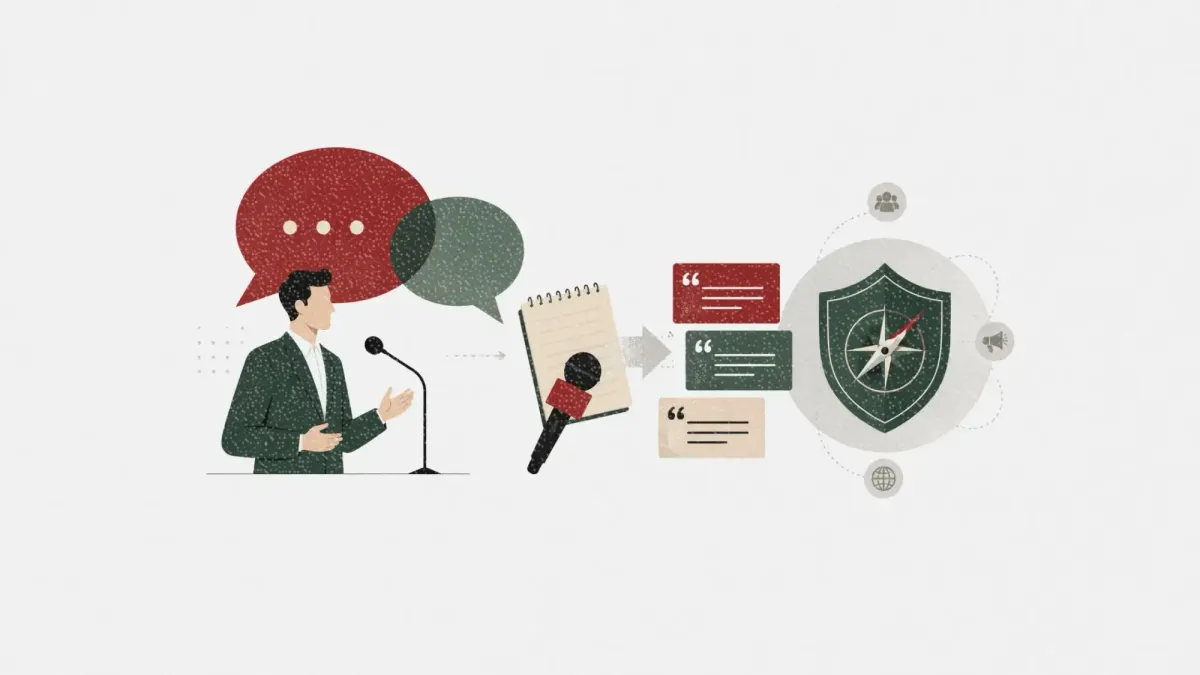
Real-world examples worth borrowing
Good digital PR often turns a company's existing knowledge into a public asset. The best examples are not stunts. They are useful pieces of evidence that give other people something to quote, explain, embed, or challenge.
Canva's 2025 Visual Communication Report is a clear example of research-led digital PR. The page packages a broad business issue, visual communication at work, into quotable findings, including that 84% say poor visual communication causes delays and confusion. Canva sells a visual communication platform, but the report is not just a product pitch. It gives journalists, marketers, and business leaders a data-backed reason to discuss the category.
Cloudflare does something similar with its 2025 Radar Year in Review. The company turns network observability into public analysis across traffic, AI, connectivity, security, and email security. Journalists get data, analysts get context, and buyers see a company with visibility into internet-scale patterns.
HubSpot's 2026 State of Marketing Report shows another version of the same playbook. It frames AI, brand point of view, and human-led marketing as practical challenges for marketing teams. The report supports HubSpot's broader category position, but it also gives marketers language they can use in planning conversations.
These examples work because the companies are not asking the market to care about a feature announcement. They are offering a useful view of the market. For B2B brands with smaller budgets, the lesson is not "publish a giant annual report." The lesson is to look for credible proof only your team can provide.
Tommy Prayoga, Head of Agency at digital PR service provider Content Collision: "The best digital PR campaigns start with a real editorial reason to exist. If the only interesting thing about the story is that your company wants attention, journalists will feel that immediately. But if you can show a market pattern, explain why it matters, and make the evidence easy to verify, coverage becomes a byproduct of being useful."
How to measure digital PR without fooling yourself
Digital PR measurement gets messy when teams treat every mention as equal. A homepage link from a huge publication can look impressive in a dashboard but do little for the buyer audience. A niche trade publication with lower traffic may influence the exact committee your sales team cares about.
Start by separating activity metrics from outcome metrics. Activity metrics show whether the campaign moved: pitches sent, replies, placements, links earned, mentions, social shares, and referral visits. Outcome metrics show whether the campaign mattered: qualified referral traffic, assisted opportunities, branded search lift, share of voice in target topics, message pull-through, and inclusion in AI-generated answers.
For AI visibility, do not rely on one prompt and call it research. Test a consistent set of buyer questions across tools, then track whether your brand appears, how it is described, and which sources are cited. Google's AI features guidance is a useful reminder that site owners should think about how content is eligible to appear in AI-powered search experiences, but PR teams also need to care about third-party sources those systems may reference.
For SEO impact, measure quality before volume. A relevant link from a trusted industry publication is more useful than a bundle of low-quality links from sites nobody in your market reads. Google's guidance on qualifying outbound links also matters here: paid or sponsored links should be labeled appropriately, so buying placements and treating them as earned authority is a risky way to report success.
A practical reporting dashboard should include:
- Coverage quality: publication relevance, audience fit, article depth, and whether the brand was central or incidental
- Authority signals: backlinks, unlinked mentions, citation context, and referring domain quality
- Message pull-through: whether the coverage repeated the intended point accurately
- Search movement: branded search, ranking movement for target topics, and referral traffic
- AI visibility: brand inclusion, description accuracy, and cited sources across repeated prompts
- Sales usefulness: whether sales, partnerships, or investor relations teams used the coverage
The goal is not to prove that one article caused one deal. The goal is to show whether digital PR is improving the credibility and discoverability of the brand in places that influence demand.
Common mistakes that weaken digital PR
The first mistake is confusing a company update with a story. "We launched a feature" is rarely enough. "Our data shows finance teams are changing approval workflows because of AI procurement risk" has a better chance because it points to a market problem.
If the story angle is weak, use ContentGrip's guide to what makes a story newsworthy before writing the pitch. Digital PR still depends on the basics: relevance, timing, impact, conflict, novelty, and evidence.
The second mistake is chasing links at the expense of trust. This usually leads to paid placements, generic guest posts, or thin syndication. Those tactics can create a spreadsheet full of URLs, but they rarely create the kind of authority that helps a brand show up in serious buying or media research.
The third mistake is publishing data without a point of view. A chart is not a story by itself. The team needs to explain what changed, who is affected, why now, and what decision the reader should make differently.
The fourth mistake is over-optimizing for journalists and under-serving the page itself. If your report page is slow, gated too aggressively, missing methodology, or unclear about the source of the data, you make it harder for writers and AI systems to use confidently. Google's helpful content guidance is written for search, but the practical advice applies here too: create content for people first, make it reliable, and avoid material built mainly to manipulate rankings.
When digital PR is worth the investment
Digital PR is worth serious investment when your brand needs credibility outside its own channels. That is usually true for B2B companies entering a crowded category, selling a complex product, expanding into a new market, preparing for fundraising, recruiting senior talent, or trying to own a specific industry conversation.
It is less useful when the company has no clear point of view, no credible proof, and no willingness to speak plainly. In that case, the first job is not outreach. It is sharpening the story until someone outside the company could explain why it matters.
Before launching a campaign, run this quick readiness check:
- Do we have a specific audience and not just "everyone in the industry"?
- Do we have evidence, data, access, or expertise that others do not already have?
- Can we explain the story in one sentence without jargon?
- Is there a timely reason this matters now?
- Do we have a live page journalists can cite and readers can understand?
- Are we ready to measure quality, not just volume?
If most answers are yes, digital PR can compound. One useful report can become media coverage, backlinks, sales proof, newsletter mentions, conference talking points, and AI-cited context. One strong executive point of view can become bylines, podcast invitations, analyst conversations, and a clearer category position.
The practical way to think about digital PR is simple: make your brand easier to trust, easier to cite, and easier to find. The teams that win are not always the loudest. They are the ones that give the market better evidence, then make that evidence travel.