Fashion influencer marketing: how brands turn style creators into a sales engine
A practical fashion influencer marketing playbook for choosing creators, structuring content, building long-term partnerships, and measuring product demand.


Fashion influencer marketing looks simple from the outside: send clothes to people with an audience, get them to post, and hope attention turns into sales. In practice, fashion is one of the categories where a weak creator match becomes obvious fastest. The product is worn on camera, styling choices are visible, and audiences already have a sense of what a creator would or would not choose for themselves.
That makes creator fit a commercial decision, not just a casting decision. The strongest fashion programs connect three things that teams often manage separately: who genuinely fits the product, what kind of content makes the product desirable, and how the brand can track whether that attention moves shoppers toward a purchase. The result should feel less like a one-off sponsored post and more like a repeatable system for turning taste into demand.
Table of contents
Jump to each section:
- What makes fashion influencer marketing different?
- Start with style fit, not follower count
- Build a creator mix around the buying journey
- Give creators a product story they can actually wear
- Turn a campaign moment into an always-on sales system
- Measure what moves product, not what fills a report
- What fashion brands should do next
What makes fashion influencer marketing different?
Fashion content asks the creator to do more than repeat a message. They have to make a product look believable inside an existing personal style. A blazer, sneaker, bag, or pair of jeans can technically fit the brief and still look completely wrong for the person wearing it. When that happens, the audience does not need campaign data to detect the mismatch.
This is why follower count alone is a weak first filter. A smaller creator who already wears the category, talks about similar products, and attracts the right shopper can be more useful than a much larger account whose style has little overlap with the brand. The question is not only who can create reach, but who can make the product feel like a natural choice.
Fashion also gives brands more content routes than many categories. A creator can style one item several ways, compare fits, build a capsule wardrobe, show a try-on, document an event look, explain fabric or construction, or connect a product to a cultural moment. Each format does a different job, so the creator mix should be designed around the buying journey rather than treated as a single pool of interchangeable posts.

Start with style fit, not follower count
A practical creator shortlist should begin with what is already visible in the feed. Look at the silhouettes they repeat, the labels they buy without sponsorship, their usual price range, how much of their content is styling-led, and whether followers ask purchase-oriented questions. A creator who naturally talks about fit, sizing, fabric, or where an item came from is already showing the behavior a fashion brand wants to activate.
Then move into audience and performance data. Check geography, age, engagement quality, average video views, comment relevance, and whether branded content performs reasonably close to organic content. The goal is not to find a creator with perfect metrics. It is to find someone whose taste, audience, and content behavior point in the same direction.
Dinda Anandita, Account Director at content-led comms agency Content Collision: “Fashion is one of the easiest categories to make a creator partnership look right on paper and wrong on camera. The follower profile can match perfectly, but if the creator would never choose that silhouette, styling language, or price point without a brief, the audience notices. Start with how they already dress, then check the numbers.”
Teams should also vet for the reasons a creator might become risky after selection. Look for sudden engagement spikes, repetitive comments, undisclosed partnerships, frequent competitor work, and a pattern of accepting products that have no connection to their usual content. Consistency is an authenticity signal. If almost every sponsorship could have come from any brand, the partnership has less chance of feeling distinctive.

Build a creator mix around the buying journey
One creator does not need to do every job. Fashion programs work better when the roster reflects different stages of consideration. A high-reach creator can make a collection culturally visible, while smaller creators can show how pieces fit real wardrobes, answer practical questions, and keep the product appearing after the launch spike fades.
A useful mix can include:
- Reach creators who can introduce a collection, collaboration, or seasonal idea to a broad audience.
- Style authorities whose point of view helps shoppers understand how a piece fits into a trend or wardrobe.
- Community creators with smaller but highly relevant audiences that ask questions, save looks, and follow recommendations closely.
- Commerce creators who are comfortable with affiliate links, product tags, live shopping, or conversion-led formats.
The mix should change with the product. A limited collaboration may justify concentrating spend around a few names with cultural reach. A permanent denim line or basics range may benefit more from dozens of repeat creators showing different body types, styling preferences, and use cases over time. The creator architecture should follow the commercial problem.
This also changes how compensation should work. A hero creator may need a fixed fee that reflects production and reach, while a wider layer of creators can combine product, commission, performance bonuses, or paid amplification rights. Treating every creator with the same compensation structure usually means the brand is not distinguishing between awareness, content production, and sales contribution.
Give creators a product story they can actually wear
The brief matters, but fashion brands often over-brief the very thing they hired the creator to provide: taste. A useful brief should protect the non-negotiables while leaving room for styling decisions, language, setting, and format. If every creator is required to use the same talking points, poses, and sequence, the campaign can quickly look like a media buy wearing creator clothing.
Instead, give creators a product story with enough substance to interpret. That might be a specific fit innovation, a new fabric, a signature silhouette, a styling challenge, or a cultural idea behind the collection. Then define what must be accurate, what must be disclosed, and what cannot be changed. Control the facts and the guardrails, not every creative choice.
Gap's August 2025 launch announcement for its “Better in Denim” campaign with KATSEYE is a useful example of product and talent being built around the same idea. Gap tied the campaign to the members' individual style, specific denim looks, choreography, and a broader self-expression message, then extended it across social, digital, email, stores, its website, influencer partnerships, and Times Square. The campaign did not ask the talent to stand beside denim; the denim was part of the performance and styling language.
The lesson is not that every fashion brand needs a global pop group. It is that the product needs a role in the creator's story. If the content would work almost identically with another jacket, shoe, or bag swapped in, the brand has bought visibility without building much product meaning.
Turn a campaign moment into an always-on sales system
The most useful fashion creator programs do not end when the hero post peaks. They use the launch moment to identify what audiences respond to, then turn that learning into a broader system of repeat creators, affiliates, paid amplification, and new content. The campaign creates attention, while the program keeps converting that attention into product discovery over time.
Gap followed that pattern publicly. In an October 2025 company update, Gap Inc. said “Better in Denim” had generated more than 600 million views and more than 8 billion impressions in one month, and it announced a creator affiliate and advocacy platform spanning Old Navy, Gap, Banana Republic, and Athleta. Creators could earn commission while the company built a more structured route from creator content to trackable commerce.
That sequence is more interesting than the headline numbers. A cultural campaign can make a product visible, but an affiliate and advocacy layer gives the brand a mechanism for continuing the relationship with a much wider creator base. The operating model moves from campaign casting to creator portfolio management.
For fashion teams, this means keeping a record of which creators repeatedly produce strong content, which products they sell or generate high-intent traffic for, and which audiences respond to them. High performers should not be rediscovered from scratch every quarter. Move them into longer relationships, give them earlier product access, and let them build familiarity with the brand over multiple drops.
Measure what moves product, not what fills a report
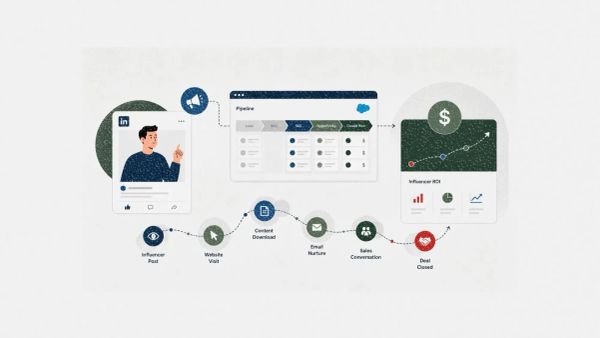
Fashion teams have plenty of easy metrics available: views, likes, comments, earned media value, follower growth, and total content volume. Those numbers can describe activity, but they do not all answer the same business question. A strong reporting model separates what created attention from what showed purchase intent and what actually moved product.
At minimum, track metrics in three layers:
- Attention: qualified reach, video views, watch time, saves, shares, and branded search lift where available.
- Intent: product-page visits, link clicks, product-tag taps, add-to-cart behavior, code usage, and direct questions about sizing, price, or availability.
- Commercial outcome: attributed sales, affiliate revenue, conversion rate, cost per acquisition, repeat purchase, and revenue by creator or content asset where tracking allows it.
Do not force every creator to win on the same metric. A large fashion creator may be valuable because they establish a collection as culturally relevant, even if last-click sales are modest. A smaller affiliate creator may produce less reach but far more measurable revenue. The mistake is judging an awareness creator by conversion alone, or calling a conversion creator successful because a video got views.
The same principle applies to creative testing. Track which silhouettes, colors, hooks, styling formats, creator archetypes, and calls to action repeatedly correlate with stronger intent. Over time, this turns influencer reporting from a post-campaign scorecard into a source of merchandising and content insight.
What fashion brands should do next
Start smaller than the final ambition. Pick one product line, define the commercial job, and recruit a creator mix that reflects how people actually discover and evaluate that product. Give creators a brief with strong facts and loose creative control, then track both content quality and downstream behavior.
After the first wave, keep the creators who genuinely fit and perform. Build longer relationships with them, use affiliate or performance incentives where appropriate, and reuse strong creator content through paid channels when rights allow. The goal is not to produce more sponsored posts. It is to build a fashion influencer marketing system where creator taste, audience trust, and commerce reinforce one another.