
The future of AI in marketing 2026: trends, tools and strategies
Discover AI marketing's future in 2026 with predictions on automation, personalization, decision-making, emerging tech, and ethical challenges.



Marketing is no longer just changing. It is being rebuilt from the ground up.
Global AI marketing revenue is projected to exceed US$107.5 billion by 2028, and according to Salesforce's State of Marketing 2026 — a survey of nearly 4,500 marketers worldwide — 75% of marketers now use at least one form of AI, whether predictive, generative, or agentic. In APAC, 84% of leaders express confidence in using AI agents to expand workforce capacity within the year, and APAC employees are more likely than any other region to treat AI as a thought partner rather than just a command-based tool — according to Microsoft's 2025 Work Trend Index.
But the real disruption goes deeper. As AI search platforms like ChatGPT, Claude, and Google’s AI Overviews change how people find content, traditional search engines like Google are slowly getting left behind. Today, if your brand is not mentioned in trusted media sources, AI search may overlook you entirely.
In this guide, we cover the key AI marketing trends reshaping the industry in 2026, the emerging technologies behind them, how AI is changing brand discoverability through search, what the data says about budgets and ROI, and the tools marketing teams are actually using to compete.
Table of contents
Jump to each section:
- AI marketing trends to expect in 2026
- Why PR matters more in the AI search era
- What marketers should know
- Top AI tools for marketing teams in 2026
- Ethical considerations in AI marketing
- FAQs about AI marketing
- Looking for more insights into the future of AI?
AI marketing trends to expect in 2026
AI in marketing has evolved from a set of productivity shortcuts into a foundational layer of how campaigns are built, distributed, and optimized. What started as automated content drafting and basic analytics is now moving toward fully autonomous marketing systems that manage campaigns, make budget decisions, and optimize results in real time.
In 2026, several key trends are shaping the future of AI marketing:
1. Multi AI agent marketing systems
Instead of a single AI tool performing tasks, modern marketing platforms now involve multiple specialized AI agents working together. Each agent handles a specific function — content production, audience targeting, performance reporting, media buying — and communicates with other agents through protocols like Model Context Protocol (MCP) and Agent-to-Agent (A2A) frameworks.
According to the IAB's 2026 Outlook Study of 205 U.S. brand and agency buyers, two-thirds are now focused on agentic AI for ad buying and campaign execution. Tools like Make.com and Relevance AI support this kind of end-to-end marketing orchestration.
The impact on marketing teams is measurable: 80% of marketers now use AI for content creation and 75% use it for media production, per HubSpot's 2026 State of Marketing report. 61% of marketers say the industry is experiencing its biggest disruption in 20 years.
Real-world examples of this shift are already visible. PepsiCo has moved to an agentic AI-first strategy where internal agents oversee media buying, creative optimization, and demand forecasting. In Singapore, FairPrice has partnered with Google Cloud to embed agentic AI across its retail chain using Vertex AI, Gemini API, and Imagen 4, with pilots running across carts, shelves, and pharmacy zones.
Similarly, LEAFIO AI Inventory optimization solution is helping retailers automate stock management processes, reducing manual forecasting work while increasing inventory turnover rates and minimizing excess stock situations.
2. AI is reshaping marketing roles
The automation of production-level work is visibly shifting marketing org charts. The Gartner 2025 CMO Spend Survey found that 39% of CMOs plan to reduce labor costs and 39% plan to cut agency budgets, with actions including reducing total headcount and simplifying overlapping roles.
McKinsey's analysis of agentic AI in marketing finds the technology may eventually power around 60% of tasks across the marketing process, with organizations implementing agentic workflows expecting 10-30% revenue growth from hyper-personalized marketing. The implication for teams is clear: skilling up on AI workflows is no longer optional career development. It is a basic job requirement.
According to the WEF Future of Jobs Report 2025, 170 million new roles are projected to be created by 2030 while 92 million are displaced -- a net gain of 78 million jobs, concentrated in technology, data, and AI functions. The workers who fill those roles will need hybrid skill sets that combine strategic thinking with working knowledge of AI tools and systems.
3. AI search agents and autonomous browsing
Users are increasingly delegating the work of research to AI. Instead of running manual searches and clicking through results, consumers now rely on AI agents in platforms like ChatGPT, Claude, and Google AI Overviews to research products, compare brands, and make recommendations.
Google's AI search summaries now reach 2 billion monthly users globally. More than 1 billion people use standalone generative AI tools every month. OpenAI reported ChatGPT hit 800 million weekly users by late 2025.
For marketing teams, this creates a fundamental visibility problem. If your brand is not being cited by AI search engines, you are effectively invisible to a significant and growing share of your potential audience. This is driving urgency around Generative Engine Optimization, covered in depth in the next section.
4. Generative Engine Optimization (GEO)
What is Generative Engine Optimization (GEO)? GEO is the practice of structuring and positioning content so that AI-powered search engines like ChatGPT, Claude, and Google AI Overviews cite and surface it in their responses. Unlike traditional SEO, which focuses on rankings in a list of links, GEO focuses on earning citations within AI-generated answers.
Gartner forecasts that by 2026, more than 33% of web content will be specifically optimized for AI-powered search. Traditional search volume is predicted to drop 25% by 2026 as AI-generated answers replace link-based results for a growing share of queries.
For marketers, GEO requires reevaluating content strategy along several dimensions: structured definitions that AI can extract, authoritative citations, clear entity associations, and earned media placements in credible third-party sources. Companies like Peec AI are building tools specifically to help brands track and improve their AI citation visibility.
5. Multimodal content and AI content discovery
Modern AI systems can generate multiple content formats simultaneously, including text, images, video, and voice. Google's AI Overviews and multimodal search capabilities are changing how content is discovered. A search for "best running shoes for flat feet" no longer returns ten blue links. It returns a synthesized answer that cites a handful of sources, with images, comparisons, and recommendations generated on the fly.
For marketers, this means that content structured for human reading is no longer sufficient. Content needs to be credible, citable, and structured in a way that AI engines can parse and reproduce cleanly.
Ahrefs projects that 87.8% of cited pages in AI Overviews already contain AI-assisted content, which means producing well-structured, accurate, authoritative content at scale is now a baseline competitive requirement.
6. Personalization evolves into hyper-relevance
AI is moving beyond personalization into predictive anticipation. Platforms like Jasper.ai already adapt content in real time based on user interactions and campaign goals. The commercial payoff is meaningful: McKinsey research finds that fast-growing companies derive 40% more of their revenue from personalization than slower-growing counterparts, and 71% of consumers now expect personalized experiences.
7. AI-powered decision-making goes mainstream
Tools like ClickUp AI help teams visualize data and generate automated reports. According to McKinsey, organizations using AI for analytics and decision-making report measurably shorter cycles from data to campaign action, with the most AI-mature teams demonstrating compounding advantages over time in both speed and budget efficiency.
8. Multimodal content marketing becomes the norm
Generative AI tools are enabling marketers to create integrated brand storytelling across formats from short-form social video to podcast scripts, product visuals, and localized written content. Tools like GPT-4o and Synthesia can write in your brand voice, adapt content to different channels, and scale production with minimal manual oversight.
At the same time, platforms like WPP Open now include creative ideation tools, helping marketers surface unexpected insights and develop campaign angles that would take significantly longer through traditional research processes.
9. AI-powered voice search and synthetic voices
More consumers are interacting with brands through voice — across smart speakers, branded voicebots, and AI-integrated customer service systems. AI tools like WellSaid Labs and ElevenLabs enable dynamic, human-like speech generation that can be brand-aligned and deployed at scale across ads, content, and support.
In 2026, optimizing for voice responses and conversational search queries is increasingly important, particularly as generative AI integrates deeper into voice assistants. Global voice commerce was valued at approximately US$49.6 billion in 2024 and is projected to reach US$147.9 billion by 2030, according to ResearchAndMarkets.
10. Augmented reality powered by AI
The integration of AI with augmented reality (AR) is creating new ways for consumers to engage with products before buying. Snap Inc. and Shopify are developing AI-enhanced AR features including personalized virtual try-ons, adaptive in-store experiences, and contextual overlays.
For marketers, AI-powered AR reduces the gap between product discovery and purchase decision, particularly in categories like fashion, beauty, furniture, and consumer electronics.
11. Synthetic consumer research
Instead of relying solely on surveys or focus groups, brands are beginning to use AI-generated synthetic audiences that simulate consumer behavior based on historical data, demographic patterns, and behavioral trends. Companies like Nielsen, Ipsos, and McKinsey are actively experimenting with this approach as a way to compress market testing timelines and reduce research costs.
The implication for marketing teams is significant: campaigns may be pre-tested on AI-generated audience simulations before any real spend is committed, allowing faster iteration at lower risk.
12. AI-generated customer digital twins
AI systems are beginning to create digital replicas of customer segments, sometimes called digital twins, that simulate how specific audiences might respond to marketing messages, pricing strategies, or product changes. Rather than testing campaigns on live audiences first, marketers can run simulations on these AI-generated customer models.
This is still an early-stage capability, but brands in retail, financial services, and consumer goods are beginning to build pilot programs around it as a complement to traditional A/B testing.
 Patrecia Meliana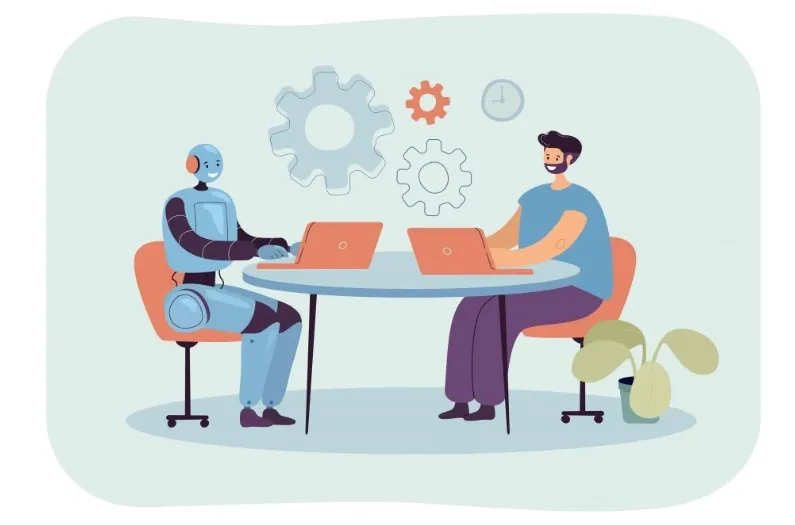
Why PR matters more in the AI search era
AI search tools do not pull from websites the way Google's traditional crawler does. They pull from news coverage, authoritative articles, and expert sources. That means your brand's visibility in AI-generated answers depends directly on where and how you are cited across the web.
Muck Rack’s study of over 1 million AI responses found a striking distribution of citation sources:
- 37% of citations referenced non-brand content
- 27% came from journalistic sources like Reuters and AP
- Just 2% from marketing or social posts
- Only 1% from press releases
The conclusion is clear: earned media drives AI visibility, while paid and owned content is largely invisible to AI citation systems.
What this means in practice
A press release, by itself, does not move the needle on AI discoverability. What does move the needle is being cited in a Reuters article, a TechCrunch feature, an industry analyst report, or a recognized trade publication. The content that AI engines cite is content that has already been validated by third-party editorial judgment.
This makes PR a discoverability strategy, not just a reputation strategy. For B2B brands and tech companies particularly, earned media placements in credible publications are now a core input to organic visibility in AI-generated search responses.
The anatomy of AI-citable content
Not all third-party coverage earns AI citations equally. The content that performs best in AI citation tends to share several characteristics:
- Structured and specific: Clearly labeled facts, definitions, and data points that can be extracted cleanly
- Authoritative sourcing: Content that links to primary research, official data, or named expert perspectives
- Entity-rich: Content that connects your brand to specific categories, use cases, and named topics
- Non-promotional in framing: Journalistic or analytical framing, not marketing language
- Consistent across multiple sources: A claim that appears across several credible outlets carries more weight than a single citation
For content teams, this means that thought leadership articles, expert-driven guides, and data-backed research are not just brand awareness plays. They are infrastructure for AI discoverability.
 Atikah Amalia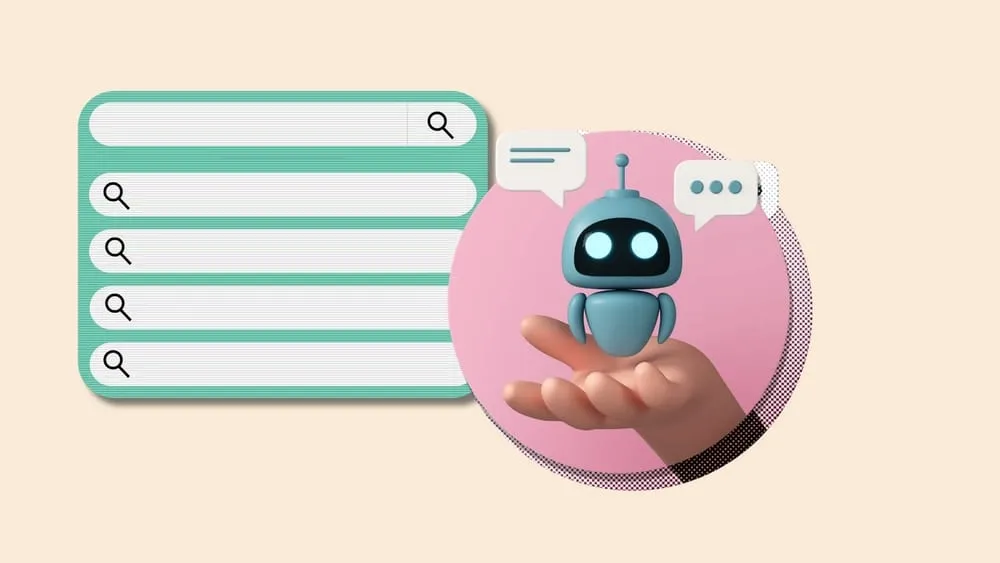
What marketers should know
Adapting to AI-driven marketing requires both investment in tooling and genuine organizational change. The Gartner 2026 CMO Spend Survey found that while 70% of CMOs consider becoming an AI leader a critical goal, 70% also acknowledge their internal processes are not yet mature enough to implement and scale AI effectively. That gap between ambition and readiness is the real challenge for most marketing organizations right now.
The most AI-ready organizations in Gartner's survey share three behaviors: they treat AI budget allocation as a leadership-level strategic decision, they measure ROI per AI investment category rather than as a blended average, and they invest in AI literacy across the entire marketing team.
For teams working toward that level of maturity, the practical priorities are:
- Upskill now across the team
Train on tools like Jasper (content), ClickUp (operations and reporting), and Synthesia (video production). Junior staff need practical AI workflow skills. Senior strategists need to understand how to design systems and evaluate AI output quality.
- Audit your data infrastructure first
AI tools perform poorly without clean, structured first-party data pipelines. Before investing in new AI tooling, assess whether your data is in a state that can support the personalization and analytics use cases you are targeting.
- Build hybrid skill sets
The marketing roles growing fastest in 2026 combine human creativity with AI-driven analysis and automation. Recruiting and developing for hybrid skills is more valuable than recruiting for either pure AI technical expertise or pure creative skill in isolation.
- Consolidate before you add
Before adding new tools, audit for overlap and redundancy. The teams seeing the best ROI are not those spending the most. They are those spending deliberately in categories with clear performance mandates.
- Stay human in your messaging
Even as automation grows, brand communication needs to remain authentic and emotionally relevant. AI generates content. Humans still need to be responsible for what the brand actually says and stand for.
The most successful marketers will not simply adopt AI tools. They will build systems, workflows, and teams designed to work alongside AI technologies.
Top AI tools for marketing teams in 2026
The right AI tools don’t just automate—they enhance creativity, improve precision, and fuel rapid experimentation. Below is a curated list of AI tools categorized by use case, aligned with 2026’s key marketing trends:
 Patrecia Meliana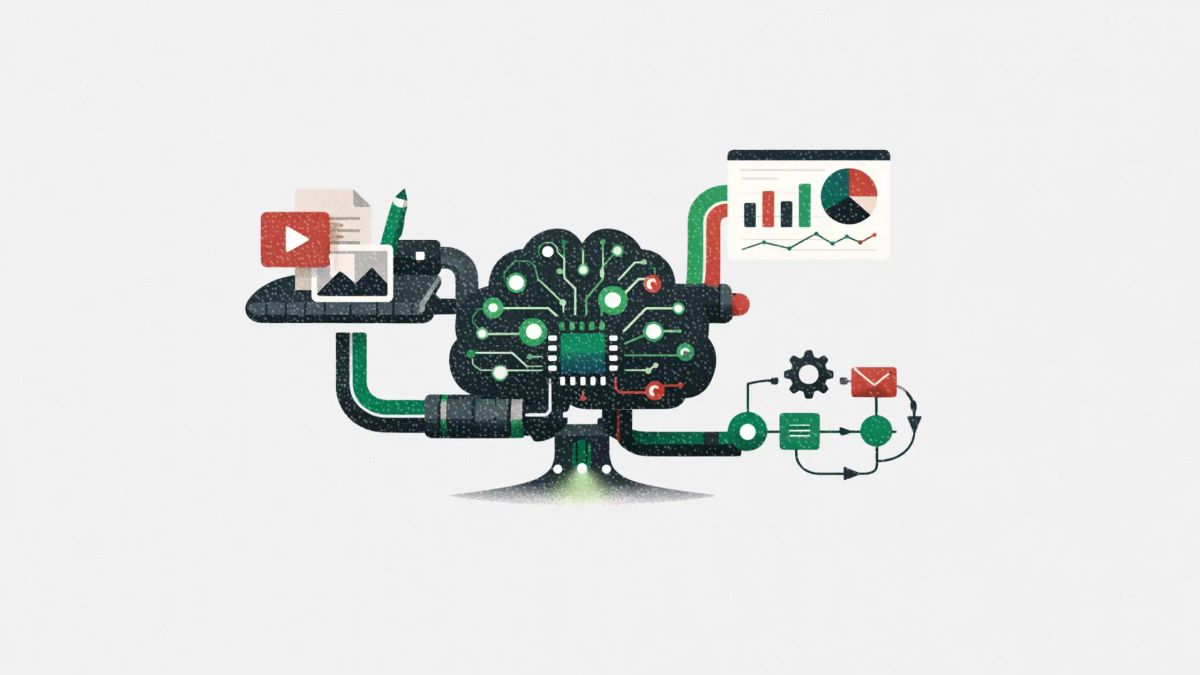
🧠 Content Creation & Generation
- Krater AI – Offers a suite of AI tools for writing, chatting, coding, image generation, and transcription. Ideal for general productivity with an easy-to-use, all-in-one interface.
- Synthesia – Creates AI-generated videos using avatars. Ideal for explainer videos, tutorials, and localization at scale.
- Copy.ai – Strong for short-form content and product descriptions.
- WPP Open – Offers creative prompts like “Shower Thoughts” and ideation tools, aligning with generative AI ideation trends.
🤖 Marketing Automation & Workflow Management
- HubSpot with ChatSpot AI – Combines CRM, email marketing, and AI to deliver personalized automation.
- ClickUp AI – Helps with campaign planning, data visualization, and automated reporting. Useful for cross-team alignment.
- Omneky – Uses AI agents to launch and optimize omnichannel ad campaigns autonomously.
🔍 Data Analytics & Decision Intelligence
- Google Marketing Platform – Unifies media buying, reporting, and attribution with AI-powered insights.
- Salesforce Einstein – Delivers predictive analytics for sales and marketing teams.
- Peec AI – Assists in optimizing content for AI engine visibility (GEO strategy).
🎯 Advertising Optimization
- Optmyzr – Automates PPC bidding and keyword optimization across platforms.The Trade Desk – Leverages AI to personalize programmatic ad placements in real time.
🌐 Personalization & UX Optimization
- Dynamic Yield – Powers hyper-personalization across web, app, and email.
- Persado – Uses AI to craft emotional language that converts, based on real-time feedback loops.
🌍 Localization & Translation
- MachineTranslation.com – Enables AI-driven localization for global campaigns, with post-editing support.
- ChatGPT – Particularly useful for translating press releases with tone and context in mind. Its conversational model helps refine phrasing for specific audiences or publication styles. I personally use this for my press release translations and it has been great!
- Claude by Anthropic – A strong alternative for multilingual translation, Claude excels in maintaining formality, clarity, and logical flow—especially helpful when adapting B2B content or technical PRs across APAC regions. I personally use this for checking!
For best results, combine raw AI translations from ChatGPT or Claude with human QA or light editing to maintain local relevance and avoid cultural missteps.
Ethical considerations in AI marketing
AI is transforming marketing, but its power also creates risks. To stay competitive and trusted, brands need clear ethical practices.
- Data privacy is the top concern
AI marketing systems rely on massive consumer datasets. With 127 countries now having passed AI-related laws, and GDPR enforcement continuing to tighten, transparency about data collection and use is no longer optional — it is a compliance requirement that also shapes consumer trust.
- Bias in AI is a real risk
Algorithms can unintentionally favor or exclude certain groups, leading to unfair targeting or exclusion from offers. Regular audits and diverse training datasets are essential to keep marketing campaigns inclusive. This is particularly relevant in diverse regional markets like Southeast Asia.
- Transparency builds lasting trust
Many AI models operate as black boxes, making decisions that are difficult to explain to customers or regulators. Marketers who clearly communicate how AI influences content, targeting, and customer experiences will differentiate their brands in an environment where AI skepticism is growing alongside AI adoption.
- AI will reshape jobs but reskilling is the response
While automation improves efficiency, it is also changing which roles are needed and in what numbers. The productive response is not resistance to automation. It is investment in reskilling programs that develop marketers who can prompt, evaluate, and collaborate with AI systems effectively.
Ignoring these ethical questions does not just risk fines. It risks being deprioritized by AI search engines that increasingly evaluate brand trustworthiness as a citation signal.

Frequently asked questions (FAQs)
1. What is AI in marketing?
AI in marketing refers to the use of artificial intelligence technologies to enhance marketing processes, strategies, and outcomes. From automating repetitive tasks to providing predictive analytics, AI enables marketers to better understand and engage with their audiences.
Through machine learning and natural language processing, AI tools analyze vast amounts of data to uncover insights, predict customer behavior, and optimize campaigns. These tools are already transforming areas like customer segmentation, content creation, and advertising.
2. How to use AI in marketing
To integrate AI into your marketing strategy, follow these actionable steps:
- Assess your needs: Identify the specific marketing challenges you aim to address, such as improving customer segmentation, creating personalized content, or optimizing ad placements.
- Choose the right tools: Select AI platforms that align with your objectives. Tools like HubSpot for marketing automation, Jasper AI for content creation, and Salesforce Einstein for predictive analytics are excellent options.
- Train your team: Ensure your marketing team understands how to use AI tools effectively. Provide training and resources to enhance their skills.
- Monitor and refine: Continuously evaluate the performance of AI-driven initiatives and adjust strategies as needed for optimal results.
Looking for more insights into the future of AI?
Here are some more articles that explore the future of AI:
- https://www.contentgrip.com/manus-ai-for-marketing/
- https://www.contentgrip.com/ai-agents-for-marketers/
- https://www.contentgrip.com/ai-agents-for-marketing/
- https://www.contentgrip.com/impact-of-ai-on-marketing-careers/
- https://www.contentgrip.com/the-future-of-video-advertising-ai-powered-solutions-explained/