
How Gen Z football fans could reshape World Cup marketing in Singapore
Learn what marketers can take from Gen Z viewing habits ahead of the 2026 FIFA World Cup in Singapore.

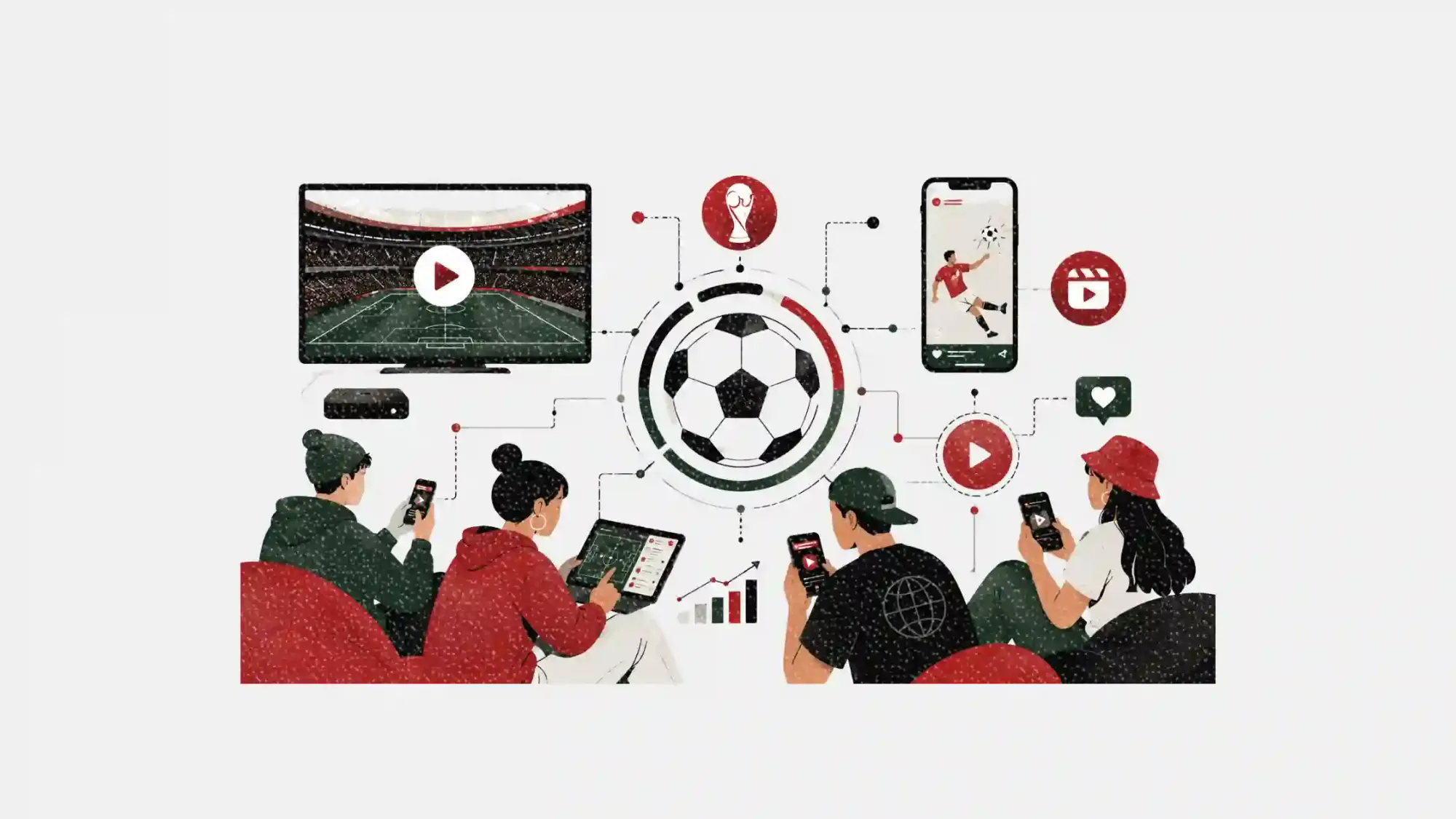
The 2026 FIFA World Cup is still months away, but marketers already have a clear signal about where attention is likely to concentrate: Gen Z.
According to Nexxen’s Singapore outlook report, younger football fans are more engaged with the sport year-round, more likely to consume content across multiple platforms, and more committed to following the tournament even after their preferred team exits.
For brands planning World Cup campaigns, this is less about football itself and more about audience behavior. The report suggests that Gen Z viewers will help drive deeper engagement across TV, streaming, mobile, highlights, and second-screen experiences. That creates new opportunities for marketers looking to reach audiences during one of the world's largest sporting events.
Table of contents
Jump to each section:
- What the Nexxen report reveals about Gen Z football fans
- Why Gen Z matters for World Cup marketing strategies
- What marketers should know about Gen Z engagement patterns
- The broader implications for sports and entertainment brands
 Patrecia Meliana
What the Nexxen report reveals about Gen Z football fans
Nexxen's research highlights Gen Z as a standout audience segment ahead of the 2026 FIFA World Cup in Singapore. Adult Gen Z respondents were found to be 23% more likely than the general population to be passionate, year-round football fans. They also over-indexed across multiple football properties, including the 2022 FIFA World Cup, major European leagues, and the Singapore Premier League.
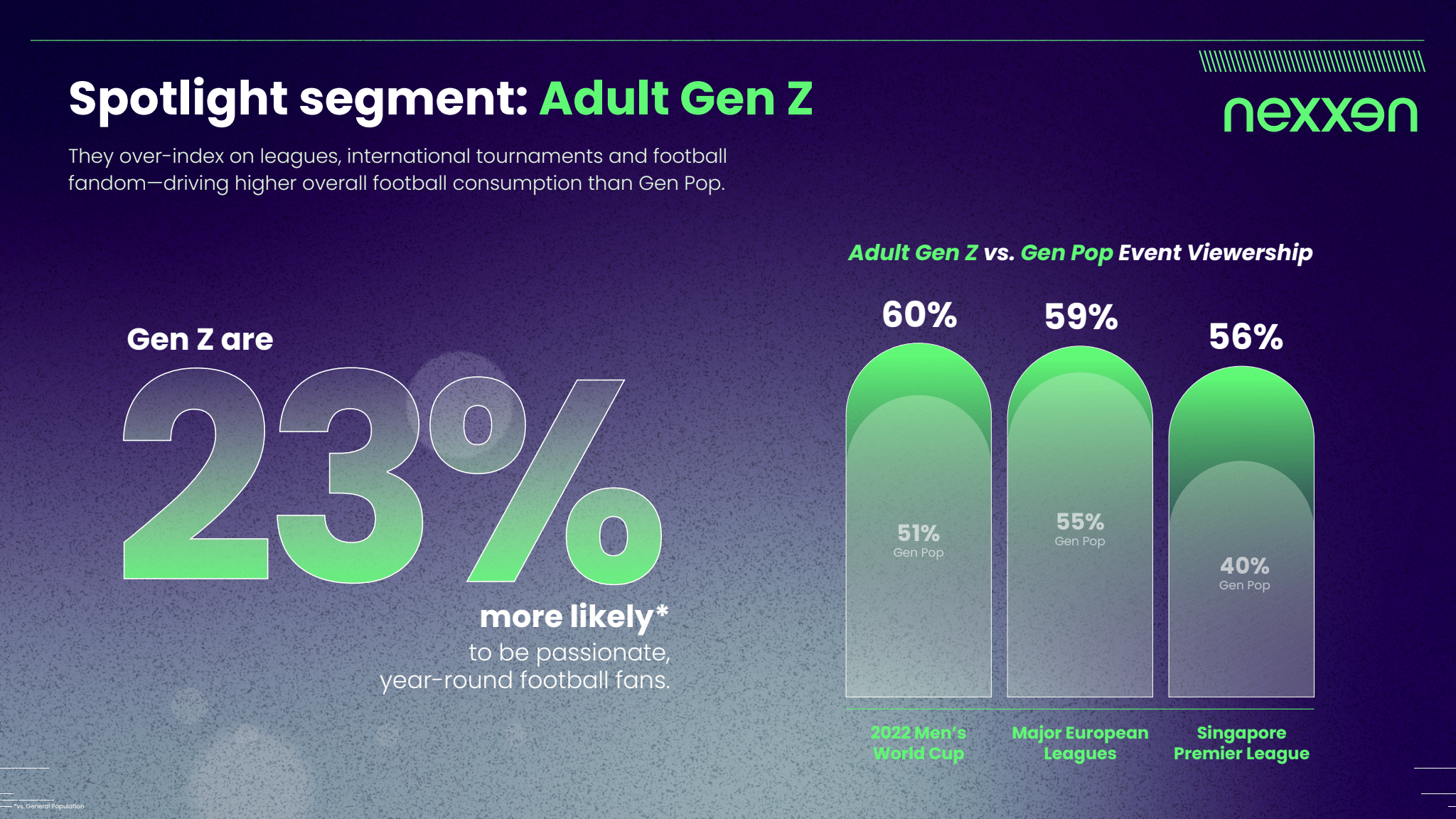
The report found that:
- 60% of adult Gen Z watched the 2022 Men's World Cup versus 51% of the general population.
- 59% followed major European leagues versus 55% of the general population.
- 56% followed the Singapore Premier League versus 40% of the general population.
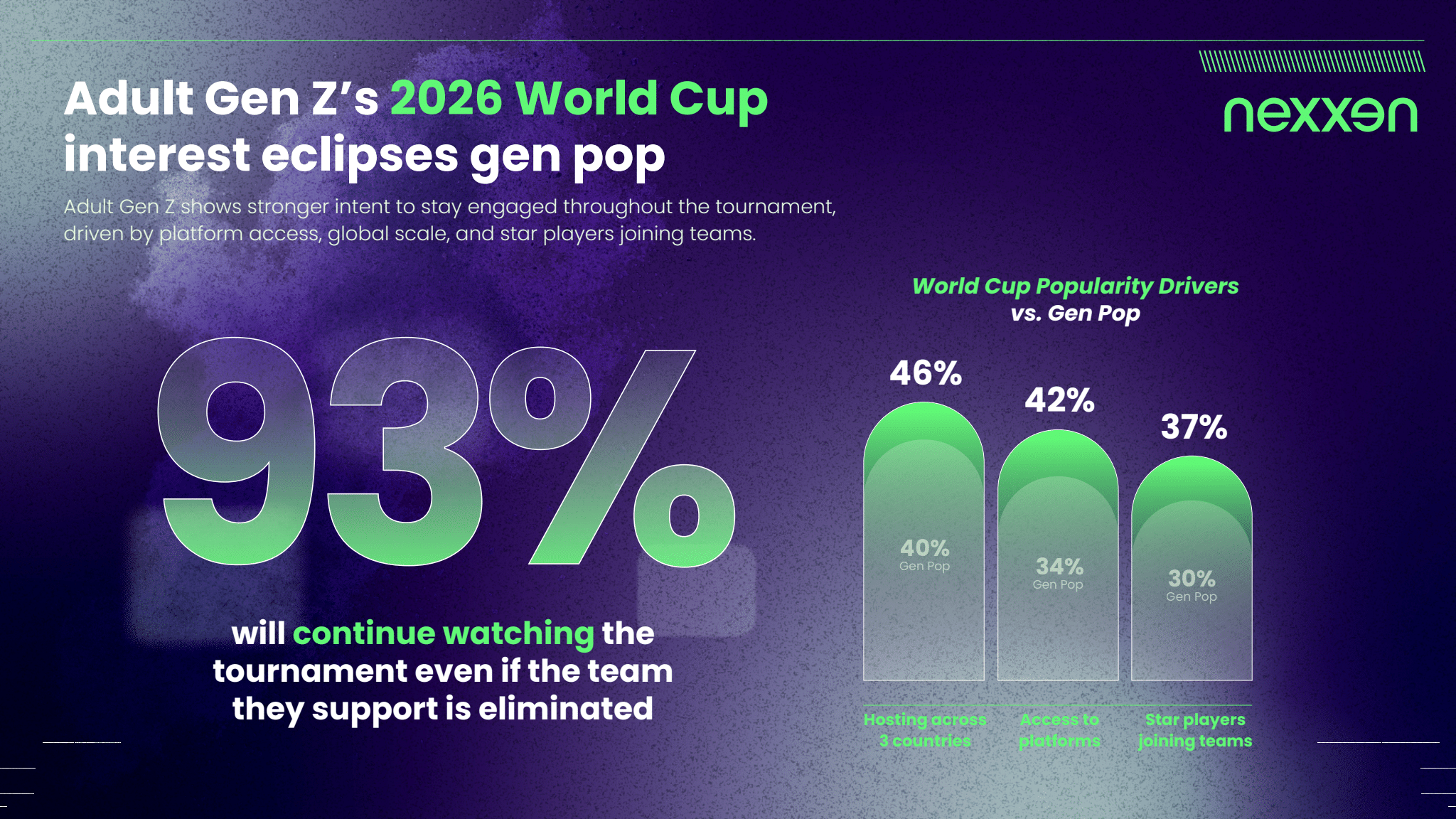
Perhaps more importantly for marketers, 93% of Gen Z respondents said they would continue watching the 2026 World Cup even if the team they support is eliminated. That compares favorably with the broader audience and signals sustained engagement throughout the tournament.
Why Gen Z matters for World Cup marketing strategies
The report suggests that Gen Z interest is driven by factors that differ slightly from the general population.
Among Gen Z respondents:
- 46% cited the tournament's three-country hosting format as a driver of interest.
- 42% pointed to easier platform access.
- 37% were motivated by star players joining teams.
This matters because it reflects a more digitally connected audience. Access, convenience, and personalities are becoming as important as national team loyalty.
Nexxen predicts that Gen Z will "set the intensity curve" for the tournament, driving deeper multi-platform engagement and extending audience attention beyond live matches. The report also notes that Gen Z leads in clips and highlights consumption, making short-form content a critical component of any campaign strategy.
What marketers should know about Gen Z engagement patterns
For marketers building World Cup campaigns, several insights stand out.
1. Build beyond live broadcasts
While TV remains dominant, viewership is becoming increasingly fragmented. Nexxen projects significant growth in OTT and connected TV consumption, with audiences layering platforms rather than choosing a single viewing destination.
2. Prioritize highlights and snackable content
The report estimates that more than 70% of viewers will not follow the tournament live from start to finish. Instead, they will tune in around key moments, replays, and highlights. Gen Z's stronger preference for clips and highlights makes short-form video essential.
3. Plan for second-screen behavior
During matches, viewers are not solely focused on football. The report found that audiences frequently browse entertainment news, general news, shopping content, travel information, and gaming-related content while watching.
This creates opportunities for:
- Social media activation
- Real-time marketing
- Commerce integrations
- Creator partnerships
- Interactive brand experiences
4. Think in moments, not schedules
One of the report's strongest conclusions is that "moments, not schedules" drive tune-in behavior. High-stakes matches consistently trigger audience attention across live and on-demand viewing.
For brands, this means campaign timing should align with key tournament moments rather than relying solely on fixed media plans.
The broader implications for sports and entertainment brands
The findings extend beyond football. Gen Z's behavior reflects a broader shift in media consumption:
- Audiences move fluidly between TV, streaming, mobile, and social platforms.
- Live events remain powerful but increasingly generate value through surrounding content ecosystems.
- Community, creator influence, and shareable moments are becoming primary drivers of engagement.
- Attention is fragmented, but passion remains strong.
Brands that treat major sporting events as cross-platform content opportunities rather than traditional sponsorship exercises are likely to gain a competitive advantage.
 Patrecia Meliana
The Nexxen report points to a clear reality for marketers: Gen Z is not simply another audience segment for the 2026 FIFA World Cup. It is likely to be one of the primary drivers of engagement, content consumption, and cross-platform attention.
As media consumption continues to fragment, successful campaigns will be built around moments, creators, highlights, and multi-screen experiences. For marketers targeting younger audiences, the World Cup may be less about reaching football fans and more about understanding how Gen Z engages with culture itself.