
Google’s VP of Search Liz Reid says AI is changing search behavior, not killing the web
Elizabeth Reid explains why Google believes AI will reshape Search behavior, not replace the open web


Google’s VP of Search Elizabeth Reid says AI Overviews are reshaping how people search, click, and interact with online content. But according to Reid, the shift is more about changing how users interact with informational queries and deeper content.
In a recent Bloomberg Odd Lots podcast interview, Reid outlined how AI Overviews, AI Mode, and Gemini are influencing user behavior, query patterns, monetization, and content visibility. For marketers and publishers, the conversation offers a clearer picture of how Elizabeth Reid sees the future of search and where traffic, discoverability, and advertising are heading next.
The discussion also touches on longer conversational queries, AI-generated spam, evolving ad formats, and why Google believes human perspectives and high-quality web content still matter in an AI-first search environment.
Table of contents
Jump to each section:
- What Liz Reid says about AI Overviews and website clicks
- Why Reid says people still want the web alongside AI
- How AI is changing search queries and user behavior
- What marketers should know about AI search visibility
- Why Reid believes AI slop is still a ranking problem
- What this means for marketers and publishers
What Liz Reid says about AI Overviews and website clicks
One of the biggest concerns around AI search has been whether AI-generated summaries reduce website traffic. Reid suggested AI Overviews may reduce quick informational clicks while still driving what she described as “deep clicks” to richer content experiences.
According to Reid, many users previously clicked on pages just to retrieve a quick fact before immediately returning to Search. AI Overviews can now answer some quick informational queries directly within Search.
At the same time, Reid said users still click through when they want deeper information, perspectives, or richer experiences.
Reid said Google views AI as “augmenting” search rather than replacing it, and argued that users still want to visit websites for deeper information, opinions, and human perspectives.
For marketers, one implication is that traffic quality may matter more than raw click volume. Publishers and brands focused on surface-level informational queries could see weaker performance, while deeper analysis, original reporting, and expert-driven content may retain stronger engagement.
Why Reid says people still want the web alongside AI
Reid pushed back against the idea that users must choose between AI and traditional websites.
She described AI and the web as complementary, with AI helping users get answers faster while websites continue serving deeper content and human perspectives.
That point is especially relevant for marketers investing heavily in thought leadership, creator partnerships, and branded content.
Reid argued that AI systems work best when connected to high-quality web ecosystems. The implication is that brands producing differentiated expertise and recognizable perspectives could remain highly valuable in AI-assisted search environments.
The comments also suggest recognizable expertise and differentiated perspectives may become increasingly important. Reid also said that shallow content offers limited value when AI systems can already summarize basic information, arguing that creators should focus on experiences and insights users genuinely care about.
How AI is changing search queries and user behavior
One of the most important takeaways from the interview was how AI is changing the structure of search queries themselves.
Reid said users are increasingly using longer, more conversational queries with additional context and constraints. Instead of simplifying questions for search engines, people now describe their actual problems in conversational terms.
That shift creates major implications for SEO, paid search, and content strategy.
The shift may push marketers to think beyond isolated keywords and focus more on intent, context, and problem-solving. Brands may need to optimize around broader user intent, conversational phrasing, contextual relevance, and real-world problem solving.
Longer queries also mean search intent becomes more nuanced. AI systems can interpret context more effectively, which may reduce the importance of rigid keyword targeting while increasing the value of semantic relevance and topical depth.
For B2B marketers, this trend aligns closely with how buyers research solutions. Users increasingly expect search engines to understand full business challenges instead of fragmented search terms.
What marketers should know about AI search visibility
Marketers should pay close attention to several strategic signals from Reid’s comments.
1. Build content around expertise, not keyword stuffing
Google’s evolving AI systems appear increasingly focused on understanding real user intent. Brands relying on shallow SEO tactics or mass-produced keyword pages could lose visibility over time.
Instead, marketers should prioritize:
- Original analysis
- Strong brand perspective
- Expert commentary
- High-value educational content
- Problem-solving resources
2. Optimize for conversational discovery
As search queries become longer and more natural, content structures may need to evolve.
That includes:
- Writing in natural language
- Addressing specific user scenarios
- Building FAQ-style sections
- Covering adjacent intent variations
- Creating deeper topical clusters
3. Diversify traffic sources now
Google’s comments reinforce a long-running concern for publishers and brands: search dependency remains risky.
Marketers should continue investing in:
- Email audiences
- Creator collaborations
- Community building
- LinkedIn distribution
- Owned media ecosystems
- Video and podcast discovery
AI-driven search changes could continue changing how informational search traffic is distributed.
4. Prioritize memorable brand positioning
If AI handles more informational summarization, brands may need stronger differentiation to remain discoverable and memorable.
That means investing in:
- Distinctive insights
- Proprietary data
- Recognizable voices
- Unique frameworks
- Strong creator and executive branding
rands with recognizable expertise and differentiated perspectives may be better positioned in AI-assisted search environments.
 Atikah Amalia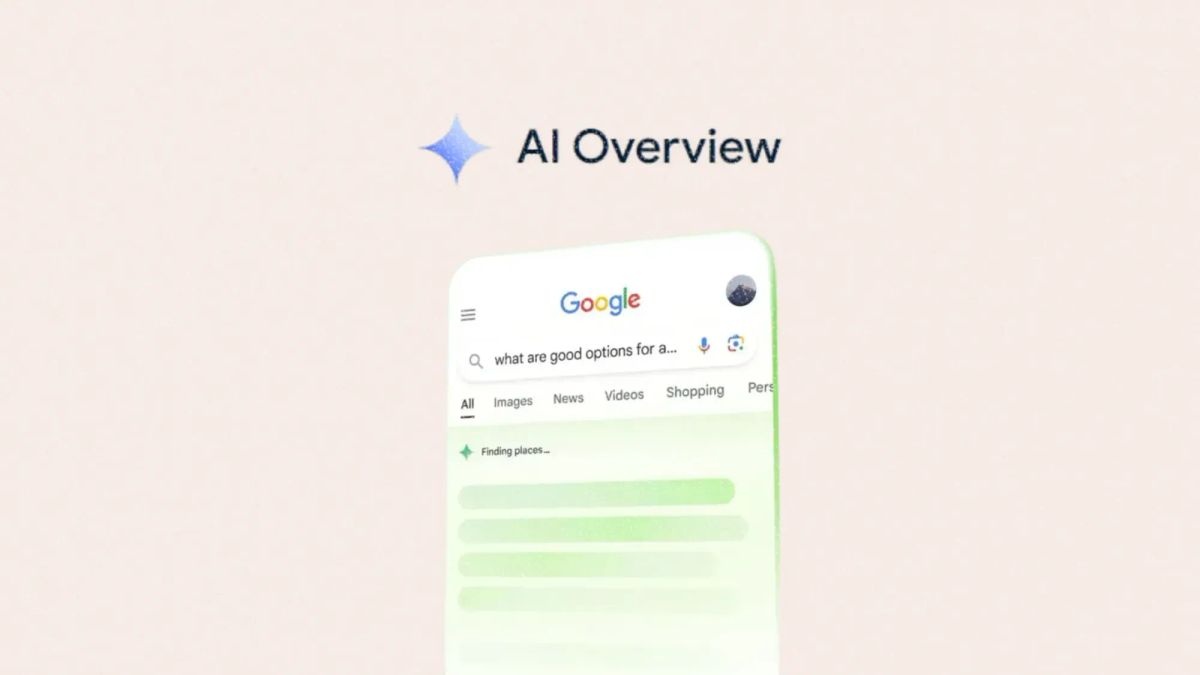
Why Reid believes AI slop is still a ranking problem
Reid acknowledged growing concerns around AI-generated spam and low-quality content, often referred to as “AI slop.”
However, she argued that low-quality content has always existed online and that AI simply increases the volume.
Google’s position is that the core challenge is not eliminating spam entirely but improving ranking systems that surface trustworthy and useful content.
For marketers, this reinforces the ongoing importance of quality signals.
As AI-generated content floods the web, search visibility may increasingly depend on:
- Authority
- Credibility
- Engagement quality
- Brand trust
- Original reporting
- Human expertise
This could also accelerate the separation between commodity AI-generated content and genuinely differentiated thought leadership.
What this means for marketers and publishers
Reid’s comments offer one of the clearest public signals yet about how Google views the future of AI search.
The company does not appear focused on replacing the open web entirely. Instead, Reid described Google’s goal as helping users ask broader questions more effortlessly while still connecting them to creators and web content.
For marketers, the takeaway is less about panic and more about adaptation.
SEO strategies built around keyword density, generic informational content, and traffic volume alone may continue losing effectiveness. Meanwhile, brands that invest in authority, differentiated insights, audience ownership, and high-intent experiences could benefit from the next phase of search evolution.
The biggest shift may not be AI replacing Search. It may be AI changing what kinds of content are still worth clicking.