AI Overviews are changing how search works and marketers need a new playbook
New Semrush data reveals how AI Overviews are shifting search intent, clicks, and visibility for marketers

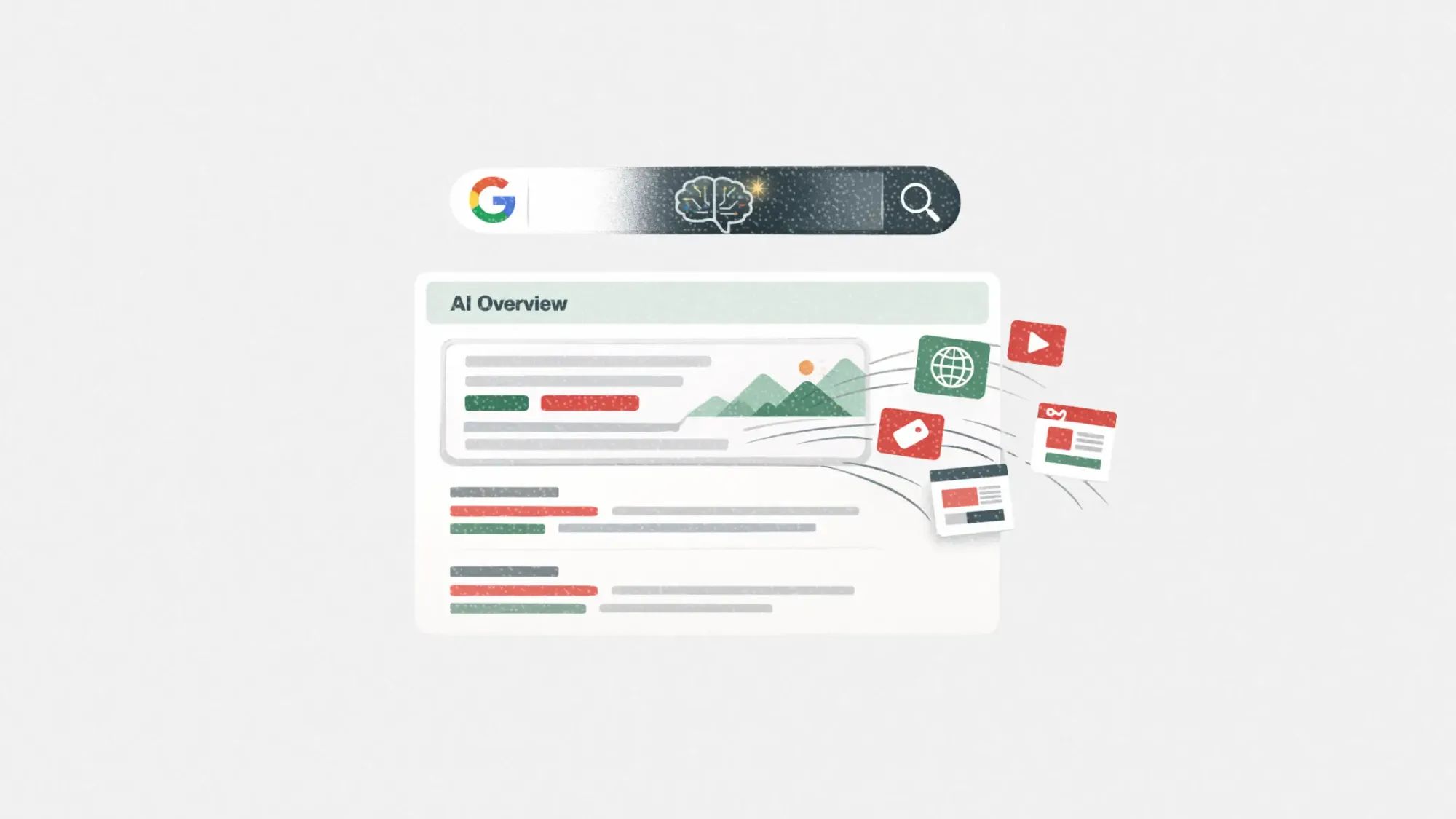
Google’s AI Overviews are no longer an experiment at the edges of search. They are reshaping how visibility, clicks, and intent work across the SERP.
For marketers and SEO leaders, the shift is not subtle. AI Overviews are expanding beyond informational queries, influencing commercial intent, and quietly changing how users interact with search results.
The real question is no longer whether AI will impact SEO, but how fast teams can adapt to a search experience that increasingly answers instead of directs. This article explores Semrush’s latest 2025 data and what it reveals about where AI-powered search is heading.
Short on time?
Here’s a table of contents for quick access:
- How fast AI Overviews are growing and where they peaked
- How search intent is shifting beyond informational queries
- What SERP features reveal about Google’s AI strategy
- Why zero-click behavior is more complex than expected
- Which industries are seeing the biggest impact
- What marketers should know about competing in AI-driven search
 Patrecia Meliana
How fast AI Overviews are growing and where they peaked
Semrush analyzed over 10 million keywords to track how often AI Overviews appear in search results. The growth curve is anything but linear.
AI Overviews showed up for just 6.49% of queries in January 2025. That number surged to nearly 25% by July before stabilizing around 15.69% in November.
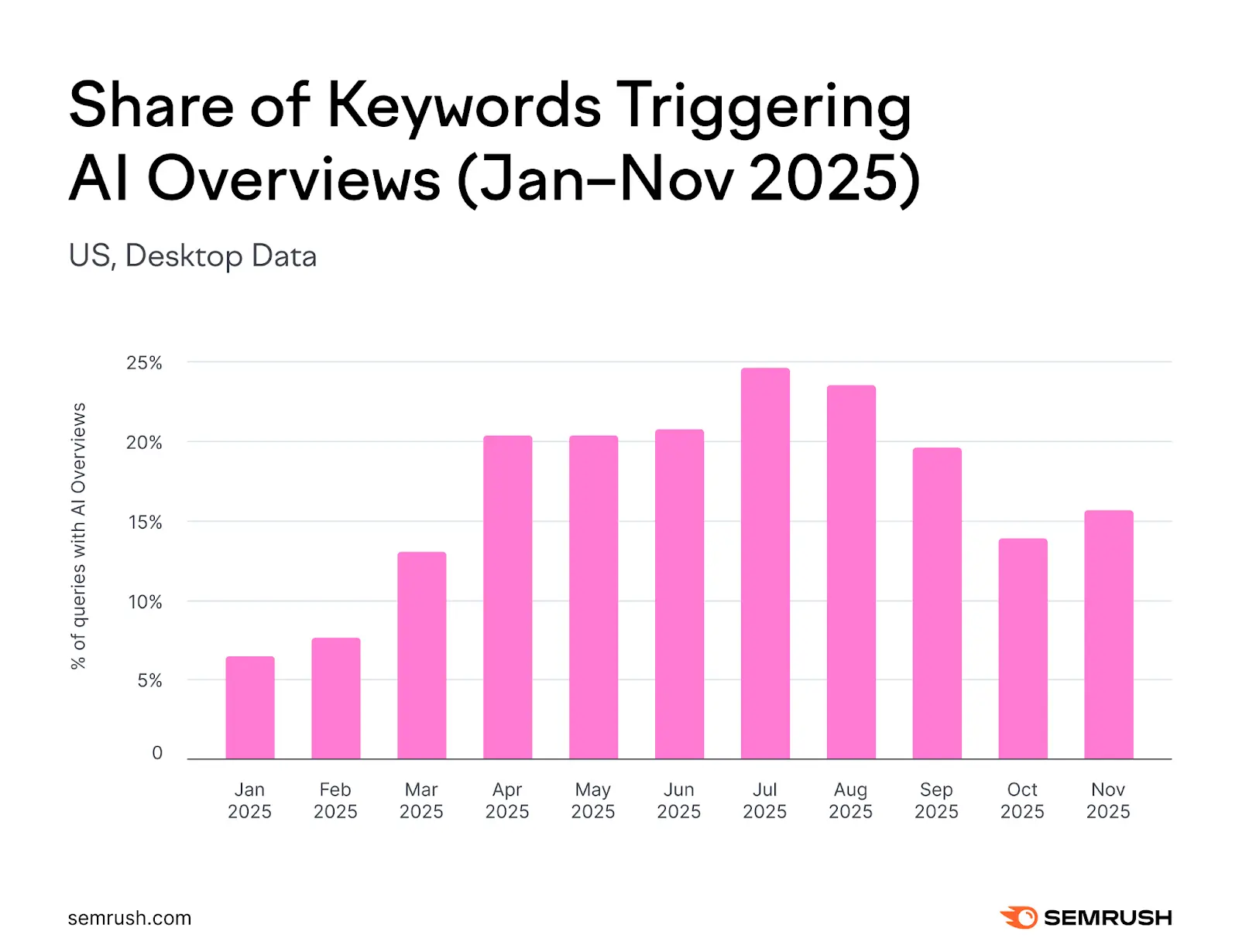
This volatility suggests Google is actively tuning how and where AI answers appear. It is not a full rollout yet, but a controlled expansion across query types and industries.
For marketers, this means visibility is no longer static. SERP features are being tested in real time, and rankings alone are no longer a reliable proxy for traffic.
Patrecia Meliana
How search intent is shifting beyond informational queries
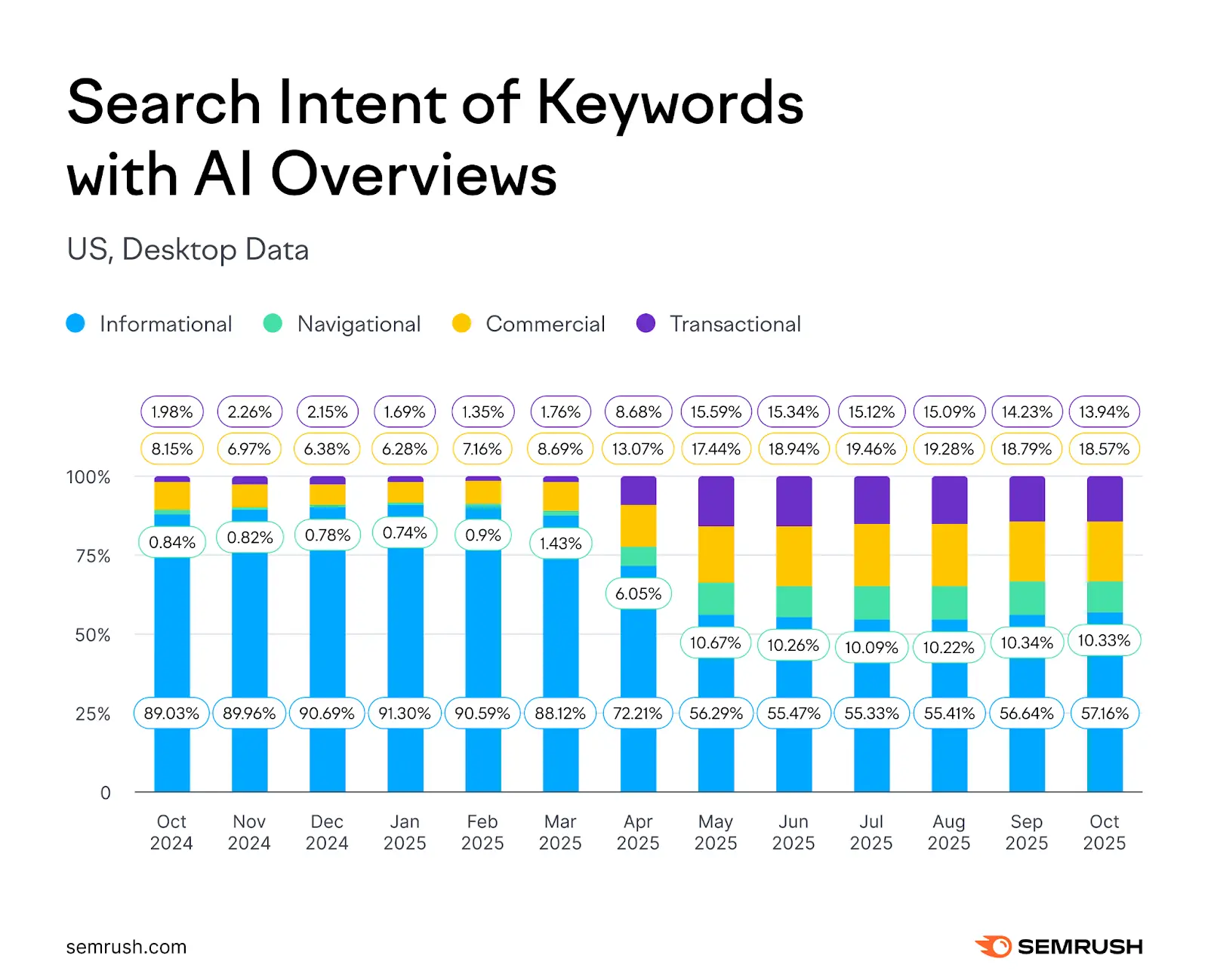
Early in 2025, AI Overviews were heavily skewed toward informational searches. Around 91% of triggered queries fell into that category.
By October, that share dropped to roughly 57%, with commercial, transactional, and navigational queries rising significantly.
This is the real inflection point.
AI Overviews are moving down the funnel. They are no longer just summarizing definitions or explanations. They are starting to influence product research, brand discovery, and even purchase intent.
One of the most notable shifts is navigational queries. These jumped from under 1% to over 10% in less than a year. That signals potential risk to branded search traffic, which has traditionally been one of the most defensible channels.
Patrecia Meliana
What SERP features reveal about Google's AI strategy
AI Overviews are not replacing the SERP. They are layering on top of it.
Semrush data shows that features like People Also Ask and related searches appear alongside AI Overviews in over 90% of cases. Video carousels and discussion forums are also becoming more prominent.
At the same time, Google Ads are increasingly present. Bottom-of-page ads now appear in about 25% of AI Overview SERPs, up from almost zero earlier in the year.
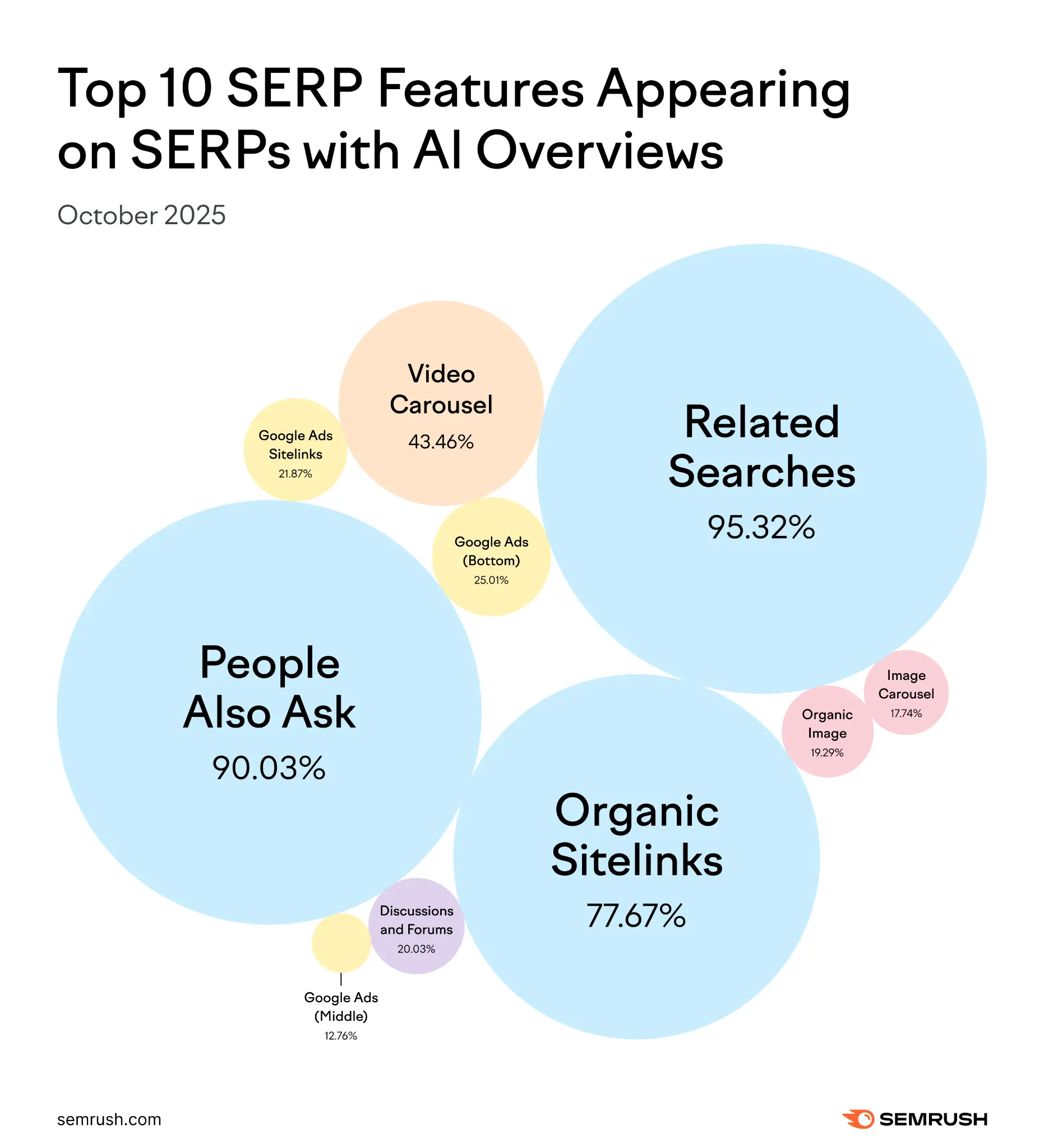
This signals a clear direction. Google is blending AI answers with monetization and discovery features rather than replacing them outright.
For marketers, it reinforces the need for multi-format visibility. Text content alone is not enough. Video, community presence, and structured content all play a role in being surfaced.
Why zero-click behavior is more complex than expected
The assumption has been straightforward: AI answers reduce clicks. The data tells a more nuanced story.
Keywords that trigger AI Overviews do have higher zero-click rates on average. But over time, those rates have actually declined slightly.
Even more interesting, when comparing the same keywords before and after AI Overviews appeared, the zero-click rate dropped from 33.75% to 31.53%.
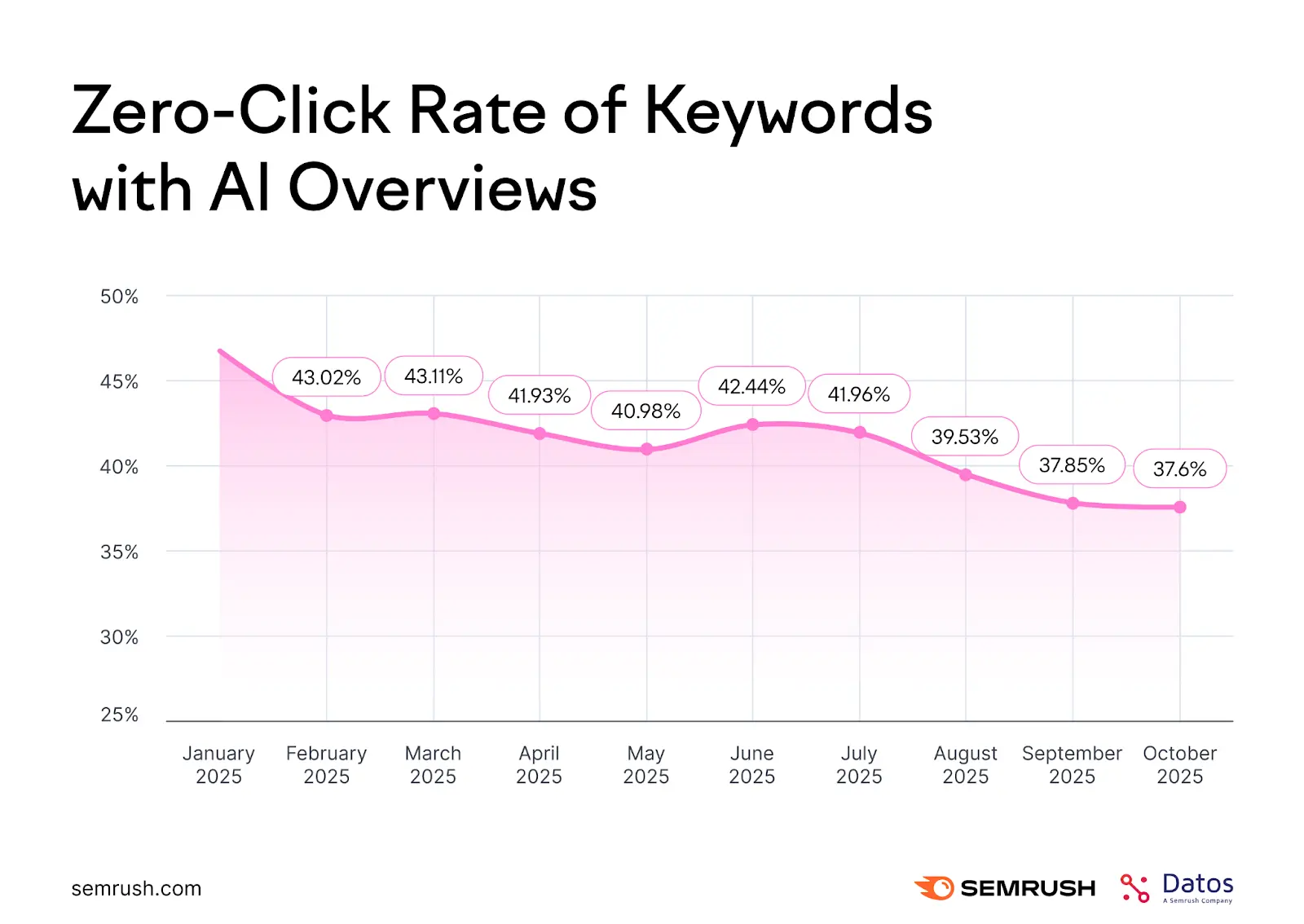
This suggests that AI Overviews do not automatically cannibalize clicks. Instead, they may change user behavior depending on intent.
As AI expands into commercial and navigational queries, users are more likely to continue their journey rather than stop at the summary.
Patrecia Meliana
Which industries are seeing the biggest impact
AI Overviews are not evenly distributed across industries.
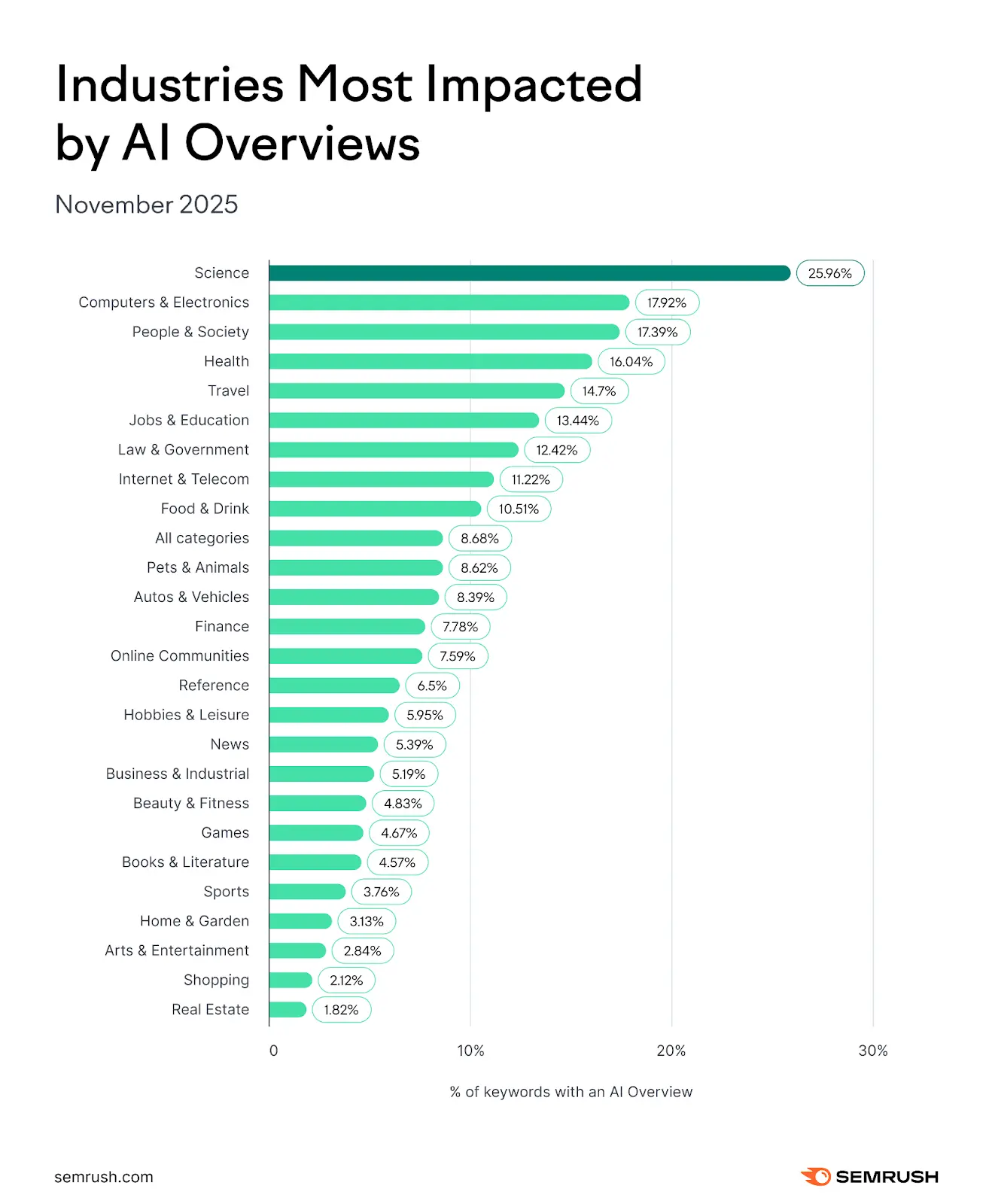
Science leads with nearly 26% of keywords triggering AI summaries, followed by Computers & Electronics and People & Society. These categories share a common trait. They rely on structured, consensus-based information that is easier for AI to synthesize.
On the other end, industries like Real Estate and Shopping see far less impact. These rely heavily on local data, visuals, and transactional context, which AI summaries cannot fully replace.
One standout trend is Food & Drink. This category saw the fastest growth in AI Overview coverage, increasing by over 7% since March.
This creates a direct challenge for publishers in recipe and lifestyle content, where traffic has historically depended on organic rankings.
Atikah Amalia
What marketers should know about competing in AI-driven search
The shift to AI-driven search changes the rules of SEO. Ranking is no longer the only goal. Being cited is just as important.
Here is how marketers should respond:
- Optimize for inclusion, not just position: Structure content so it can be easily summarized and cited by AI systems
- Focus on authority and clarity: AI prefers consensus-driven, fact-based content
- Expand beyond written content: Invest in video, forums, and community platforms where AI pulls supporting signals
- Track AI visibility: Monitor how often your brand appears in AI Overviews, not just traditional rankings
- Reassess keyword strategy: Long-tail queries still matter, but mid- and bottom-funnel terms are now in play
The biggest shift is mindset.
AI Overviews are turning Google into an answer engine, not just a search engine. The data shows clear expansion across query types, industries, and SERP features, with ongoing experimentation shaping how users interact with results.
For marketers, the takeaway is simple. Adapt early or risk losing visibility in a system that increasingly decides the answer before users click. The brands that win will not just rank. They will become the sources AI trusts.