How Punch the macaque turned IKEA’s plush into a viral marketing lesson
A baby macaque, an orangutan plush, and a case study in organic brand virality

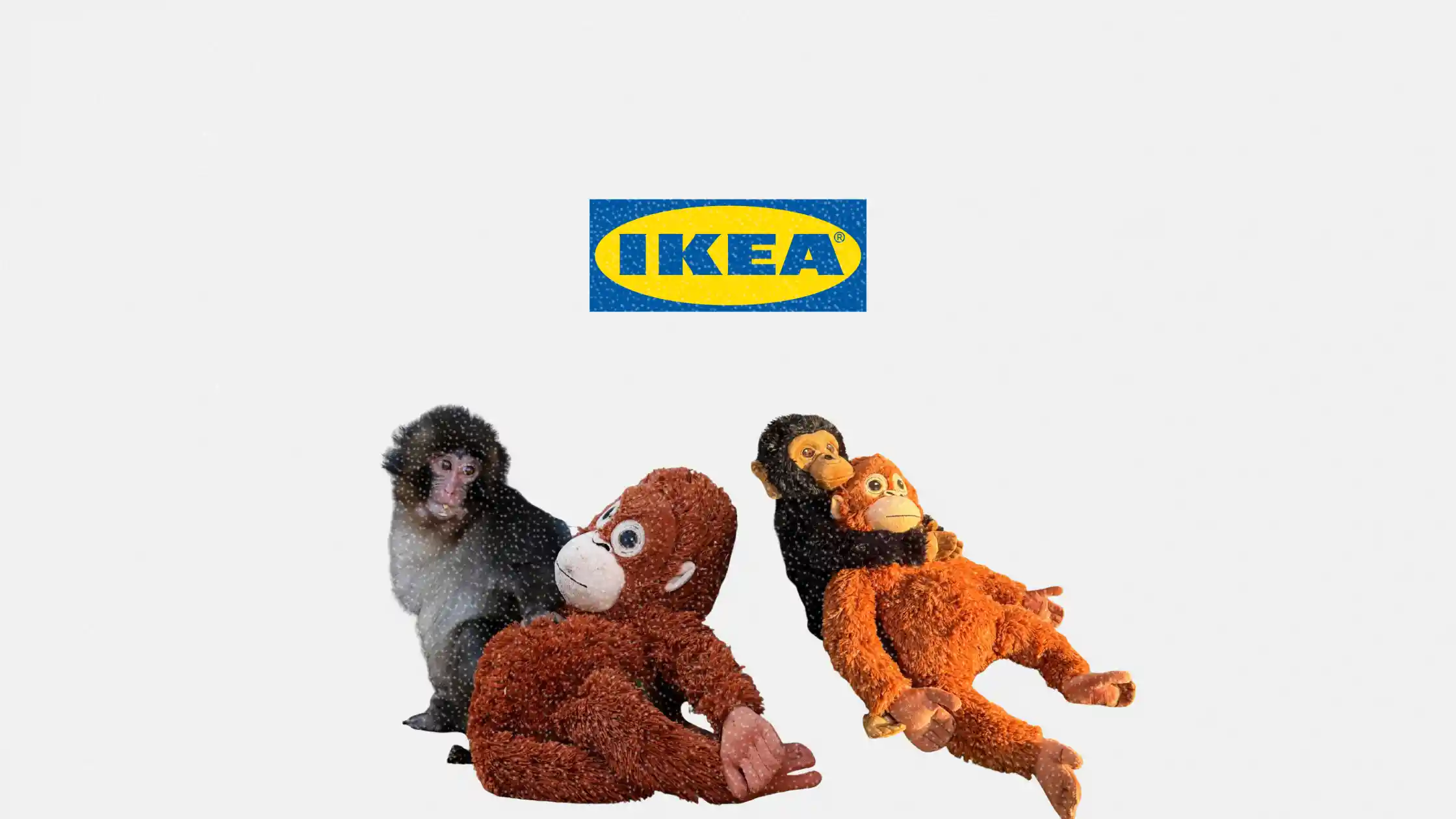
A baby macaque in Japan clinging to an IKEA Djungelskog orangutan plush was never meant to be a marketing campaign. Yet within days, the product sold out across multiple markets, including IKEA Singapore, as consumers rushed to buy the same toy in solidarity with “Punch.”

This article explores what made the IKEA and Punch moment such a powerful example of organic virality, what it reveals about emotional equity in modern branding, and what marketers should learn when culture unexpectedly assigns meaning to a product.
Short on time?
Here’s a table of contents for quick access:
- What happened when Punch went viral?
- Why the IKEA plush became a symbol, not just a product
- How IKEA responded without overplaying its hand
- What marketers should know about engineered serendipity
 Patrecia Meliana
What happened when Punch went viral?
Punch, a seven-month-old macaque at Ichikawa City Zoo, began attracting global attention after videos showed him clinging to an IKEA Djungelskog orangutan plush for comfort. The clips, widely shared on TikTok and Instagram, depicted Punch carrying the toy around his enclosure and seeking it out after struggling to integrate with his troop.
The emotional arc was simple and universally relatable: a young animal rejected by his group finding reassurance in a soft toy.
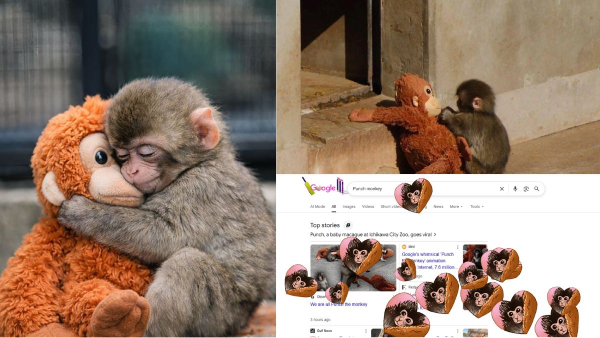
The commercial ripple effect was immediate. IKEA Singapore confirmed it had sold out of the plush both in-store and online. Media intelligence firm CARMA reported 16.5K mentions and 2.2M engagements during the week of 16 to 23 February, with sentiment skewing largely positive.
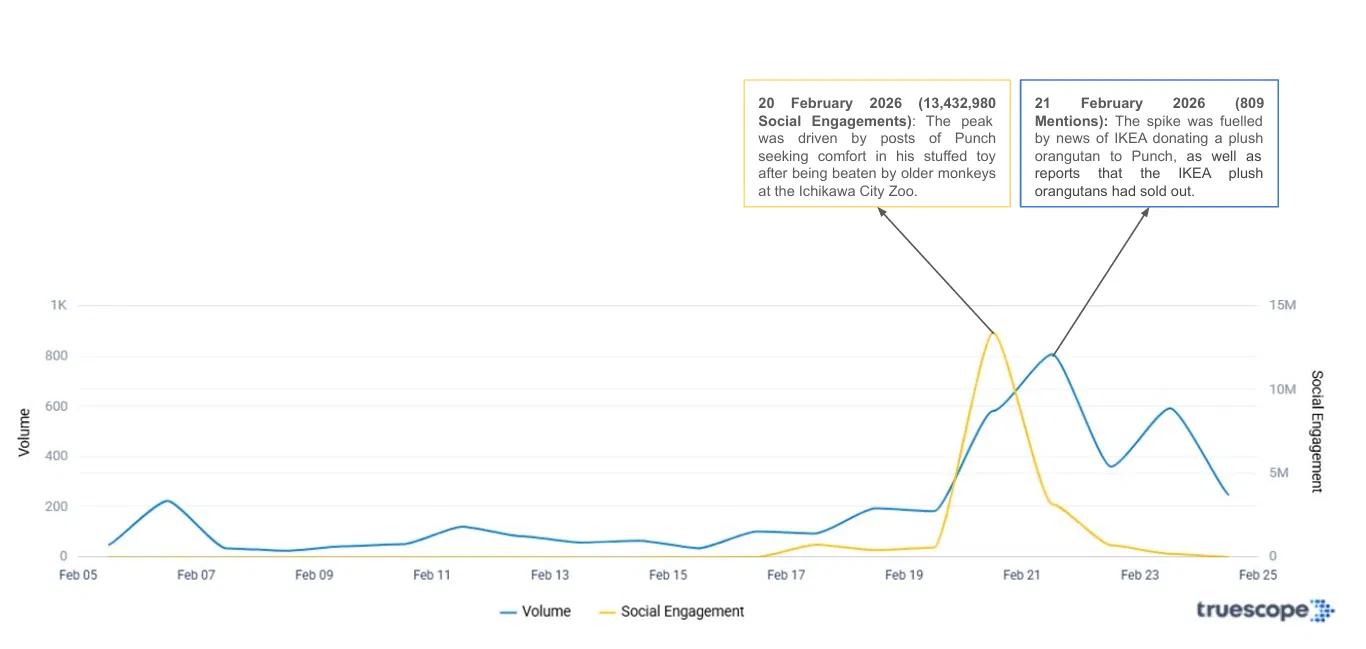
Analysis by Truescope adds a more nuanced layer. Conversations peaked on 20 and 21 February, but for different reasons. The earlier peak was driven by emotionally charged posts of Punch seeking comfort in his stuffed toy. The second peak followed news of IKEA donating an additional plush to the zoo.
IKEA markets across Japan, Spain, the US, and Singapore acknowledged the moment with light-touch posts. Japan donated additional plush toys to the zoo. The US account posted, “Sometimes, family is who we find along the way.”
Singapore followed with “Turns out, we’re all softies.”
No influencer contract. No paid boost. Just culture doing the distribution.
Why the IKEA plush became a symbol, not just a product
The real story is not about a stuffed toy. It is about symbolism.
Industry leaders interviewed by MARKETING-INTERACTIVE repeatedly pointed to the same dynamic: consumers rarely buy products in isolation. They buy identity, reassurance, nostalgia, and belonging.
In a world marked by economic strain, digital fatigue, and geopolitical tension, small moments of warmth cut through. As Lara Hussein, ceo of M+C Saatchi Malaysia, noted, people are yearning for simplicity and sincerity in an increasingly noisy environment.
Behavioral science supports this. During periods of instability, consumers gravitate toward affordable comforts. The plush stopped being a SKU and became a signal. It represented companionship, safety, and acceptance.
This is why the moment translated into sales. Not because of clever merchandising, but because culture reframed the product’s meaning.
How IKEA responded without overplaying its hand
The temptation in viral moments is amplification. Turn it into a campaign. Add a hashtag. Drop a limited edition.
Multiple agency leaders cautioned against that instinct.
Andy Reynolds, Founder and Creative Director of Imagination Riot, warned that leaning too hard into Punch’s story could have made IKEA appear as though it was “milking money from emotion.” The power of the moment lay in its authenticity.
Instead, IKEA opted for calibrated amplification. Posts were empathetic, aligned with its long-standing proposition of democratic comfort and belonging, and avoided heavy branding.
Tengku Wazir Aziz, ceo of Novarch, framed the brand’s role clearly: accelerate momentum, do not eclipse it.
The move echoed Stanley’s 2023 viral moment, when a tumbler survived a car fire. The brand responded with empathy and generosity rather than product pushing. The goodwill far outweighed any paid media value.
In Punch’s case, IKEA’s donation to the zoo and restrained social commentary reinforced its positioning without overshadowing the macaque at the center of the story.
What marketers should know about engineered serendipity
If virality cannot be scripted, can it be prepared for?
Ambrish Chaudhry, head of strategy Asia at MSQ & Elmwood, described the moment as orchestrated serendipity. Most cultural moments are engineered. Occasionally, one is genuinely accidental. The job of the brand is readiness.
Here is what that means in practice:
- Build emotional equity before you need it
IKEA already stands for warmth, home, and accessible comfort. When Punch adopted the plush, the symbolism aligned seamlessly with the brand’s DNA.
- Monitor culture with intent
Brands need an always-on lens on emerging conversations. React too slowly and the window closes. React without alignment and backlash risk increases.
- Apply a pause-assess-align-respond filter
Especially when animals, welfare concerns, or sensitive topics are involved. Emotional equity can erode quickly if brands appear opportunistic.
- Engineer conditions, not outcomes
As Robin Nayak of McCann Singapore noted, some moments cannot be planned, but they can be planned for. Consistency in brand values creates the conditions for culture to project meaning onto your product.
Punch’s story also sparked debate around animal welfare, AI-generated misinformation, and corporate opportunism. Viral warmth rarely arrives without complexity. Brands today are perceived not just as retailers but as values-led actors.
The smartest move is rarely to dominate the narrative. It is to support it, protect the customer experience, and if possible, use the spotlight to do measurable good.
What made IKEA and Punch the perfect viral moment was not strategy in the traditional sense. It was alignment.
A simple product designed for comfort met a cultural moment hungry for reassurance. The symbolism was clear. The brand DNA matched the narrative. And crucially, IKEA resisted the urge to over-engineer what culture had already made meaningful.
For marketers, the lesson is sobering and liberating at the same time. You cannot script virality. But you can build a brand strong enough that when culture chooses you, the meaning holds.