LG’s AI-Dol turns laundry features into a K-pop-style idol group
LG’s AI-Dol maps washer-dryer features to idol “members,” using a song and K-pop visuals to make AI time sensing and capacity easier to recall.


K-pop marketing works because fans do not just listen. They learn names, pick favourites, watch choreography loops, and share the same 15 seconds of audio until it becomes a tiny piece of internet language. LG Electronics is trying to plug a washer-dryer into that behaviour.
LG Electronics created AI-Dol, a five-member virtual K-pop-style girl group designed to promote the 2026 version of its AI WashCombo washer-dryer, and outlined the idea in an official announcement. Each member maps to a product feature, and the group released a song called “I Wash” that repeatedly name-drops the product in the hook.
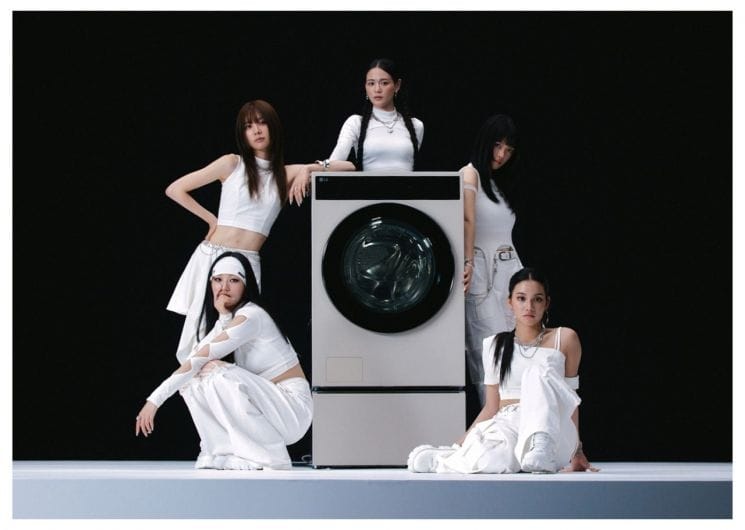
Table of contents
Jump to each section:
- Why a virtual idol group makes sense for a washer-dryer
- What LG is promoting with the 2026 AI WashCombo
- How the campaign borrows K-pop mechanics
- What this means for marketers
Why a virtual idol group makes sense for a washer-dryer
A washer-dryer is the definition of a “low-conversation” product. Most people only think about it when something breaks or when a feature saves time. That is why the AI-Dol concept is the real message: LG is trying to turn an appliance spec sheet into something people can remember, repeat, and share.
AI-Dol also lands because K-pop already teaches audiences to accept “constructed” worlds. Fans are used to lore, concept photos, stage names, and performance roles. LG simply swaps “main dancer” and “main vocal” for “large capacity” and “AI time sensing,” then wraps it in the familiar visual language of a girl group.
 ContentGrip
What LG is promoting with the 2026 AI WashCombo
LG’s 2026 AI WashCombo is positioned as an all-in-one washing and drying appliance. The product details highlighted in the campaign include:
- Capacity: 25kg washing and 21kg drying, described as the largest in South Korea.
- Display: an 18cm-wide display.
- AI features: “AI time sensing,” which calculates cycle times within three seconds of detecting a load, plus AI-powered laundry sensing.
The creative mapping is straightforward: each AI-Dol member represents a core feature, turning functional benefits into characters people can quickly associate with a “signature.”
How the campaign borrows K-pop mechanics
The campaign’s most K-pop-native move is the music. “I Wash” is a funky electronic track designed to evoke the product’s AI positioning, and it bakes the product name directly into the hook alongside laundry-themed lyrics like “wash and spin.” That is not subtle, but K-pop hooks are built for repetition, which is exactly the point.
LG also treats the group like a real release cycle: teasers, concept visuals, choreography, and a planned activity window across digital channels through the end of September. The group has also appeared across digital screens in Seoul, initially creating curiosity before the LG connection became clear.
The broader signal is that virtual personalities are no longer just “brand mascots.” They are being produced with entertainment packaging: a label name (AWC Entertainment), a track, choreography, and an idol-like identity system that invites lightweight fandom.
What this means for marketers
This is a Tier 1 move, but it is a useful case study in how “AI” gets translated into something people actually feel and remember, especially when the product itself is not inherently shareable.
- If the category is boring, borrow a behaviour that isn’t
LG is not trying to make laundry exciting on its own. It is borrowing K-pop’s existing behaviours: favourite-picking, replaying hooks, and sharing choreo clips. - Personification can make feature education faster
Turning features into “members” is a shortcut for recall. People may forget a spec, but they remember a character tied to “all-in-one” or “time sensing.” - Audio is doing the heavy lifting, not copywriting
A hook that repeats the product name works because it rides on the same mechanics that make any pop chorus sticky. It is product placement formatted as culture. - Virtual talent is becoming a flexible brand asset, not a one-off stunt
LG has used virtual personalities before (including virtual influencer Kim Rae-ah). Building a full group suggests a longer-term interest in “always-on” characters that can front different narratives over time. - The “AI” message needs a metaphor, not another claim
“AI-powered laundry sensing” is abstract. A Neo Y2K visual identity and an “AI-coded” track are metaphors that signal “future-facing” without asking audiences to parse technical details.
The bigger takeaway is not that every appliance brand needs idols. It is that culture formats (songs, choreo, concept teasers, character systems) are increasingly being used as packaging for product education. When done carefully, they give people a reason to talk before they have a reason to buy, and that is often the missing step in functional-category marketing.