
LVMH H1 2026 results show jewelry strength as fashion returns to growth
LVMH posted €38.6B H1 revenue as jewelry outpaced handbags. What the mix shift and China IP focus signal for luxury marketers.


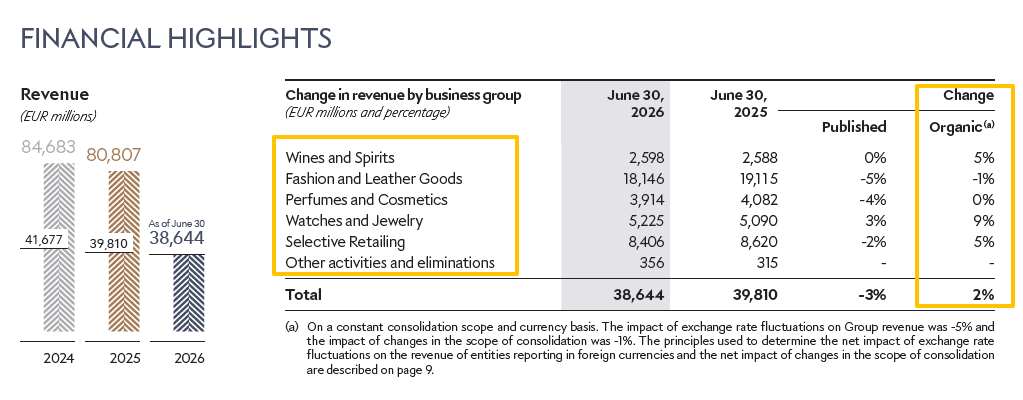
LVMH reported first-half 2026 revenue of €38.6 billion, with organic growth of 2% and a second-quarter acceleration to 3%. The company outlined the update in its newsroom post, framing the period as resilient despite geopolitical and economic disruption.
The headline number matters less than the shape of growth. Fashion and leather goods returned to organic growth in Q2 (up 1%) after seven consecutive quarters of decline, while watches and jewelry led group performance at 9% organic growth in the half, accelerating further in Q2. In luxury, category mix is strategy, not a footnote.
Table of contents
Jump to each section:
- Why LVMH’s growth mix matters more than the headline number
- The “experience flagship” is becoming a performance channel
- IP enforcement in China is now part of brand safety
- What marketers should know about luxury’s category rotation
Why LVMH’s growth mix matters more than the headline number
LVMH’s first-half performance shows a familiar pattern in premium categories: growth is concentrating where the consumer can justify value most easily. In this case, the gap between “soft luxury” (handbags) and “hard luxury” (jewelry and watches) widened, with watches and jewelry outperforming while fashion and leather goods only narrowly returned to growth in Q2.
A useful way to read this is to treat category as a consumer permission structure. Jewelry is often positioned as milestone, permanence, and investment, while handbags are more exposed to trend cycles and substitution. When uncertainty rises, the consumer does not necessarily leave luxury, but they renegotiate what feels worth it.
Two strategic observations follow from the numbers:
- Growth is no longer a single “luxury demand” story. It is a portfolio story, and the portfolio is being repriced by consumer psychology.
- In mature premium markets, “return to growth” can hide a deeper reality: the center of gravity may be shifting to different products, different rituals, and different reasons to buy.
LVMH’s own segment detail reinforces that this is not abstract. Tiffany’s refurbished stores were described as growing faster than parts of the business still in decline, and specific lines like HardWear (up 75%) and Knot (near 50%) were cited as growth drivers. That is product-line storytelling translating directly into financial performance.
 ContentGrip
The “experience flagship” is becoming a performance channel
LVMH highlighted strong performance from Louis Vuitton’s new stores in Beijing and Seoul, emphasizing a format that blends retail with exhibitions and hospitality. This is a reminder that in luxury, distribution is not just where you sell. It is part of what you sell.
The common assumption is that brand experience is hard to measure and therefore separate from performance. The contrasting reality is that luxury flagships are increasingly engineered as high-intent conversion environments, designed to increase dwell time, raise average order value, and create social proof at the point of purchase.
That distinction matters because it changes how marketers should think about “channel.” For a brand like Louis Vuitton, an experience-led store can function like:
- a content studio (exhibitions create shareable narratives),
- a loyalty layer (hospitality builds repeat behavior),
- and a conversion engine (high-touch service reduces purchase friction).
LVMH also pointed to creative renewal as a near-term lever, citing the “excellent start” of Jonathan Anderson’s first designs for Christian Dior and the strong reception for the Cigale bag. In other words, product storytelling and format storytelling are being run as a paired system: new creative plus new retail theater.
IP enforcement in China is now part of brand safety
During Q&A, LVMH CFO Cécile Cabanis publicly addressed a Louis Vuitton trademark dispute involving a Chinese tea beverage brand, emphasizing that the matter remains in the judicial process while calling intellectual property an “absolute core asset.” The case described includes a first-instance finding of infringement and damages of RMB 10.3 million (about $1.4 million), with an appeal planned.
 Zoe Park
For marketers, this is not just legal housekeeping. It is brand safety, because confusion travels through the same pathways as awareness: storefront signage, packaging, social amplification, and offline word-of-mouth. When a mark becomes widely imitated, the brand’s distinctiveness can erode in ways that no media budget can fully repair.
A concise strategic observation: brand equity is increasingly defended in courtrooms and storefronts, not just in campaigns.
This also intersects with retail strategy. As premium brands invest in more immersive, locally visible experiences, they raise the stakes of visual identity. The more a brand’s codes become “public architecture” in a market, the more aggressively those codes need governance.
What marketers should know about luxury’s category rotation
Luxury’s 2026 H1 signals a marketing problem disguised as a finance story: demand is not disappearing evenly, it is relocating to categories and occasions that feel more defensible to the buyer.
- Treat category performance as a messaging diagnostic, not just a sales readout
Watches and jewelry leading growth suggests the consumer is prioritizing permanence and symbolism. Marketing that over-relies on novelty cycles may underperform when the buyer is seeking justification, not surprise. - Experience-led retail is competing with media for attention
When LVMH points to Beijing and Seoul flagships as performance drivers, it implies the store is functioning like a channel. Marketers should plan integrated narratives where product drops, store programming, and social storytelling reinforce each other. - Creative renewal works best when the product becomes an anchor story
Dior’s momentum tied to Jonathan Anderson’s first designs and a specific “hit” bag is a reminder that creative leadership changes are only meaningful when they produce clearly communicable objects, not just aesthetic shifts. - IP defense is part of maintaining distinctiveness in high-visibility markets
The Louis Vuitton trademark dispute shows how quickly brand codes can be tested in-market. Marketing teams should align with legal and retail teams on which visual elements are non-negotiable, especially in packaging and storefront expression. - Global Chinese consumer demand may be stable, but location mix can reshape results
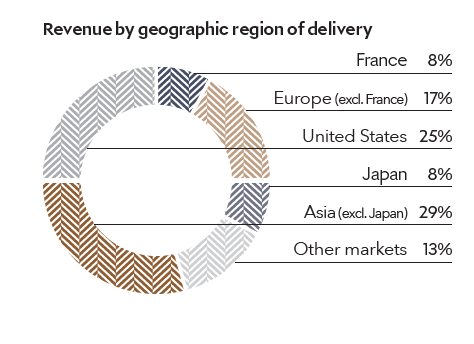
LVMH described Chinese customers’ global spend as stable while shifting where purchases happen, influencing regional performance. Marketers should separate “who is buying” from “where the purchase is credited,” because the two can diverge sharply.
The deeper shift is that luxury marketing is moving from persuasion to proof. Buyers want reasons that travel well: craftsmanship, milestone value, scarcity with credibility, and environments that feel worth the trip.
That pushes brands toward tighter integration of product, place, and protection. The winners will not simply tell better stories. They will build systems where the story is experienced, purchased, and defended as one continuous loop.