Optimizely and Deloitte Digital team up on AI-driven marketing transformation
The partnership targets the gap between AI pilots and measurable marketing performance, combining DXP tooling with operating model redesign.

Optimizely has entered a strategic technology collaboration with Deloitte Digital focused on helping brands operationalize AI-powered marketing, combining personalization, content, and experimentation capabilities with marketing operating model and change support.
The partnership is positioned around a common enterprise constraint: many organizations are investing in AI, but struggle to convert that spend into measurable performance because workflows, skills, governance, and sequencing lag behind the tooling.
Table of contents
Jump to each section:
- What the Optimizely and Deloitte Digital collaboration includes
- Why “AI ambition vs. impact” is showing up in marketing ops
- Competitive context in DXPs and experimentation-led stacks
- What marketers should pressure-test before adopting an “AI blueprint”
- What to watch next
What the Optimizely and Deloitte Digital collaboration includes
At the product level, Optimizely is anchoring the collaboration on its experimentation, personalization, and AI orchestration positioning, with Deloitte Digital supporting the design and delivery work that tends to determine whether AI investments change day-to-day execution.
Operationally, the collaboration emphasizes a “journey” approach rather than a single platform rollout. That includes sequencing and readiness, experience design, content supply chain changes, and marketing operating model redesign, with an explicit focus on measurable outcomes and success metrics.
The practical implication is that the partnership is trying to reduce the gap between “we bought AI features” and “our teams consistently use them inside workflows that ship better experiences faster.”
 ContentGrip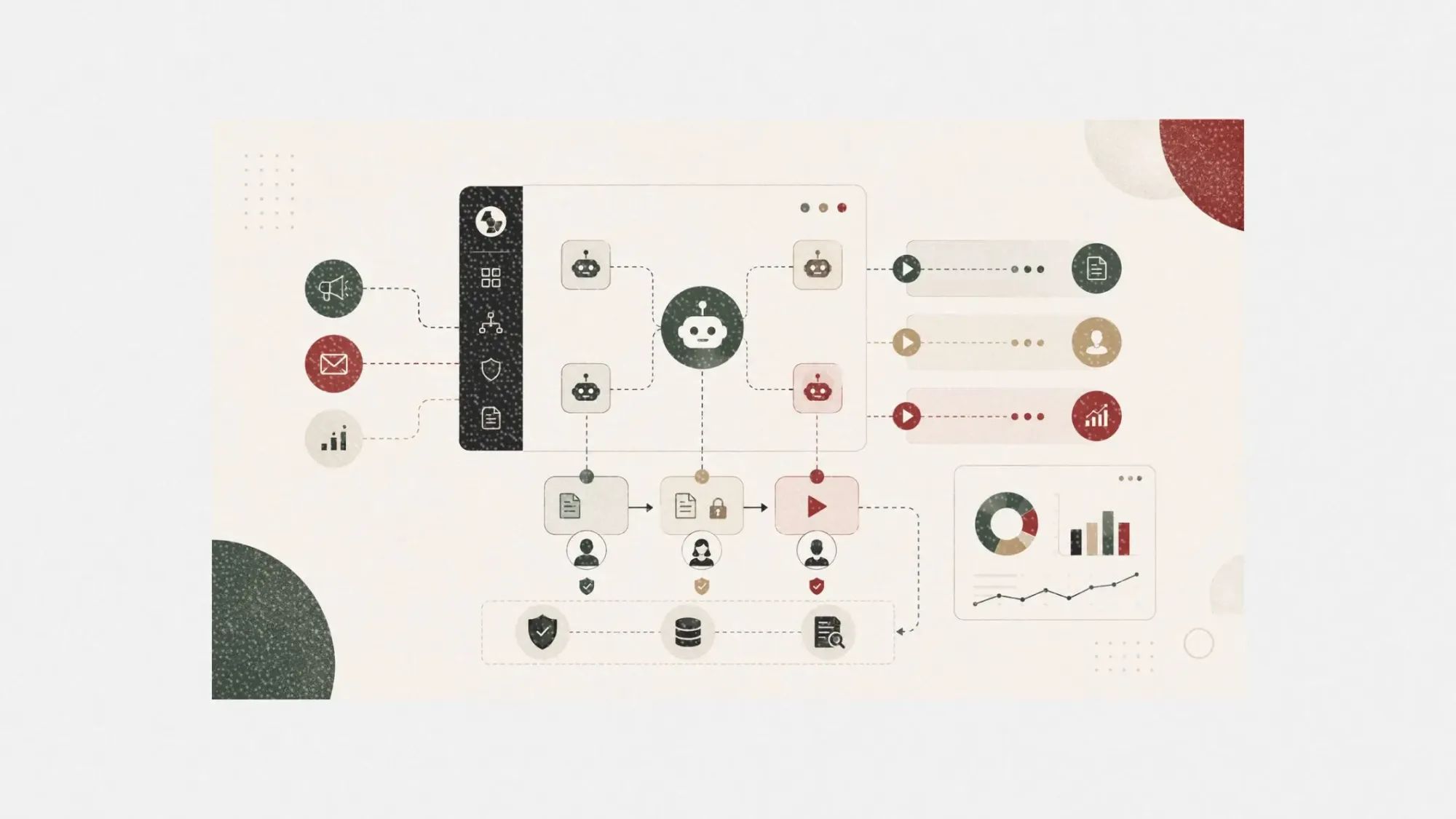
Why “AI ambition vs. impact” is showing up in marketing ops
The announcement aligns with two macro trends shaping enterprise martech decisions: AI marketing automation and the continued shift toward composable martech stacks. As teams assemble modular stacks, the hard part is less the capability list and more the operating model that connects data, content, experimentation, and decision-making across channels.
This is also where many AI deployments stall. Personalization and experimentation require clean inputs (content, audiences, measurement) and a clear cadence for testing and iteration. Without changes to intake processes, governance, and team skills, AI features can become underused add-ons rather than performance levers.
In that sense, the collaboration is as much about organizational change and process design as it is about software, which is increasingly how enterprise buyers evaluate “AI transformation” claims.
Competitive context in DXPs and experimentation-led stacks
Optimizely competes in a crowded DXP and web experience category that overlaps content management, experimentation, personalization, and analytics. That landscape includes large suites and established platforms such as Adobe, Sitecore, and Acquia, as well as experimentation-focused players like VWO. Competitive intensity is high, and differentiation often comes down to time-to-value, governance features, integration flexibility, and services ecosystems rather than isolated product claims.
A Deloitte Digital tie-up can be read as a go-to-market and delivery strategy: make Optimizely easier to adopt in complex enterprise environments where multiple systems already exist and where platform switching is risky. In categories where buyers want proof of adoption and measurable lift, an implementation partner that can redesign workflows and measurement can influence selection and renewal decisions.
Optimizely’s scale signals also matter in this context. The company reported crossing $400 million in annual recurring revenue as of 2024 and serving 10,000+ businesses, which indicates it is competing as an enterprise-grade vendor, not a niche point solution. That maturity raises expectations: enterprise buyers will want repeatable adoption playbooks, not just feature roadmaps.
What marketers should pressure-test before adopting an “AI blueprint”
For marketing leaders evaluating a structured “AI blueprint” approach, the key is to validate that it changes execution, not just strategy decks. Questions to pressure-test include:
- Measurement design: What are the specific success metrics tied to personalization and experimentation, and how quickly can teams see signal versus noise?
- Workflow ownership: Who owns the ongoing operating model once the initial transformation team steps back, marketing ops, product, or a center of excellence?
- Content supply chain constraints: If content velocity is the bottleneck, will the plan address intake, approvals, reuse, and modular content design, or just add AI generation tools?
- Integration and composability: How will orchestration work across existing systems (analytics, CDP, commerce, DAM) without creating duplicated audiences and inconsistent reporting?
- Experimentation discipline: How will teams protect test quality (guardrails, sample sizes, prioritization) as AI increases the number of variants they can produce?
These checks help ensure the “path to value” is real, especially for enterprises where AI adoption can spread unevenly across regions, brands, and business units.
What to watch next
Partnership announcements often succeed or fail on proof points. The near-term indicators to watch are whether the collaboration produces repeatable implementation patterns (timelines, governance templates, KPI baselines) and credible case studies showing measurable performance changes, not just platform deployment completion.
It will also be worth monitoring how the collaboration addresses composable stack realities, including integration depth, data quality, and cross-team accountability. In enterprise martech, those details are usually where transformation timelines extend and where ROI narratives get challenged.