
Samsung Malaysia uses Team Galaxy creators to answer Fold8 doubts
Samsung Malaysia uses Team Galaxy creators to demonstrate Fold8 screens, cameras and everyday practicality in a two-part social series.


For anyone curious about a folding smartphone, the practical questions tend to arrive before the excitement. Can you live with a visible crease? Will the apps you already use behave normally? Is a larger screen worth paying more for? Samsung is asking Malaysian creators to work through those doubts in public.
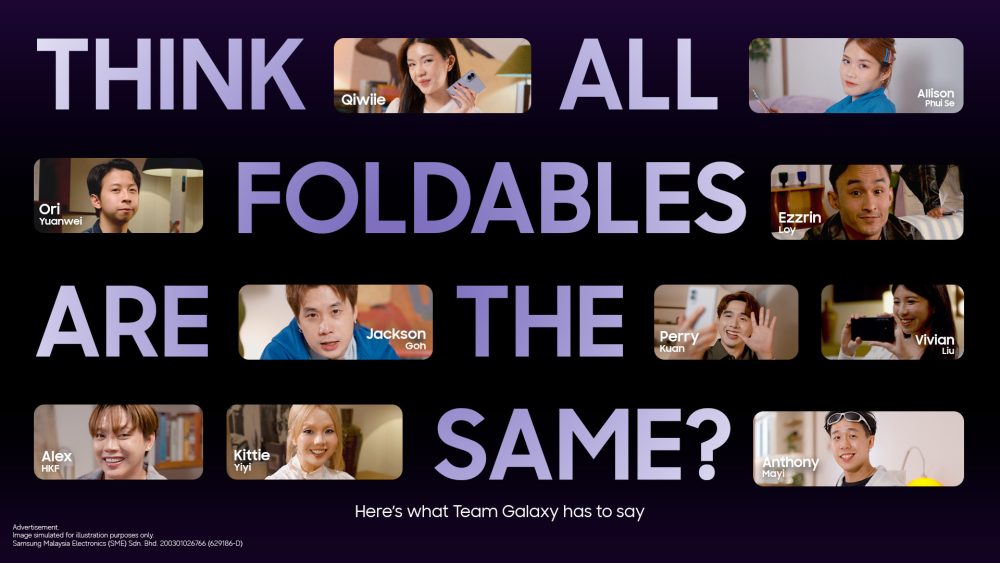
In a two-part Team Galaxy series, the company has recruited locally recognizable creators to demonstrate how the Galaxy Z Fold8 range fits everyday routines. The September 25 and October 1 installments cover questions that can get lost behind a flagship launch: whether the fold is distracting, how much the devices weigh and why a different screen shape might be useful.
Table of contents
Jump to each section:
- The questions come before the upgrade
- Different creators tackle different objections
- The product pitch moves into creator feeds
- How this differs from Samsung Canada's Re-Reviews
The questions come before the upgrade
Smartphone curiosity does not always look like enthusiasm. A foldable can seem interesting while raising a string of small hesitations about durability, price or whether opening a device every day will actually improve anything.
Samsung Malaysia's first installment starts there. Anthony Mayii makes the case for the company's eight generations of foldable development. Monkey Jackson addresses the screen crease. Azizi Musa and Qiwiie focus on whether an unfolding display is a gimmick or a practical way to multitask. Meanwhile, Allison Yee demonstrates the appeal of the Fold8's wider 4:3 viewing area.
The point is less about delivering a single grand slogan than making a series of specific use cases recognizable. Some viewers might care about the space for reading and video; others might be more concerned about the phone fitting in their bag or whether their existing apps will work.

Different creators tackle different objections
The October 1 follow-up turns from the novelty of the folding screen to what happens once a person actually uses the phone. Vivian Liu explores photography, Kittie Yiyi discusses viewing apps on the new shape, and Alex HKF compares a foldable's portability with an everyday notebook.
That same chapter also broadens the choice beyond one handset. Abdul Qawiy Aro speaks to the Fold8's wider-screen experience, while Daryl Tan focuses on multitasking with the Fold8 Ultra. Perry Kuan presents three different foldable shapes as different fits for different routines.
The specifications are Samsung's own claims, not independently tested findings from this campaign. The company describes a 200-megapixel camera on the Fold8 Ultra and lists the Fold8 and Ultra at 201g and 215g respectively. Those numbers matter here as answers to familiar objections, not as evidence that viewers changed their minds.
The product pitch moves into creator feeds
A FAQ is a common marketing format. Putting the answers in different creators' hands changes how the questions are encountered: a camera demonstration can appear alongside a creator's usual photography content, while a multitasking example makes more sense when it resembles someone's actual workflow.
The series also relies on a deliberate division of labor. Instead of asking one celebrity to embody every selling point, Samsung has assigned multiple creators recognizable, narrow questions. That gives the brand more ways to explain one product category without making every video carry the full specification sheet.
This is still brand-led content. The contributors have been selected to illustrate Samsung's arguments. The official posts do not disclose independent reviewer criteria, campaign reach or how many consumers switched phones after watching, so the series should not be mistaken for a measured adoption study.
How this differs from Samsung Canada's Re-Reviews
Samsung has another creator-based argument running in a different market. Its October 22 Canadian Re-Reviews program asks technology reviewers to revisit their old skepticism using original archival clips and newer Fold8 impressions. That is a then-versus-now story, built around how a creator's opinion may have changed.
The Malaysian Team Galaxy series from September 25 instead organizes its content around the consumer's next question. Different creators answer individual objections, from the crease to camera performance to the price of a larger screen.
Together, the two approaches suggest a useful distinction for marketers of unfamiliar products. A familiar reviewer can make technological progress visible by comparing past and present. A diverse local creator roster can make unfamiliar features easier to imagine in daily life. Neither approach, on its own, proves that skepticism has disappeared.
