SEO is shifting to Answer Engine Optimization (AEO)
Search is shifting from ranking pages to generating answers, forcing marketers to rethink visibility.

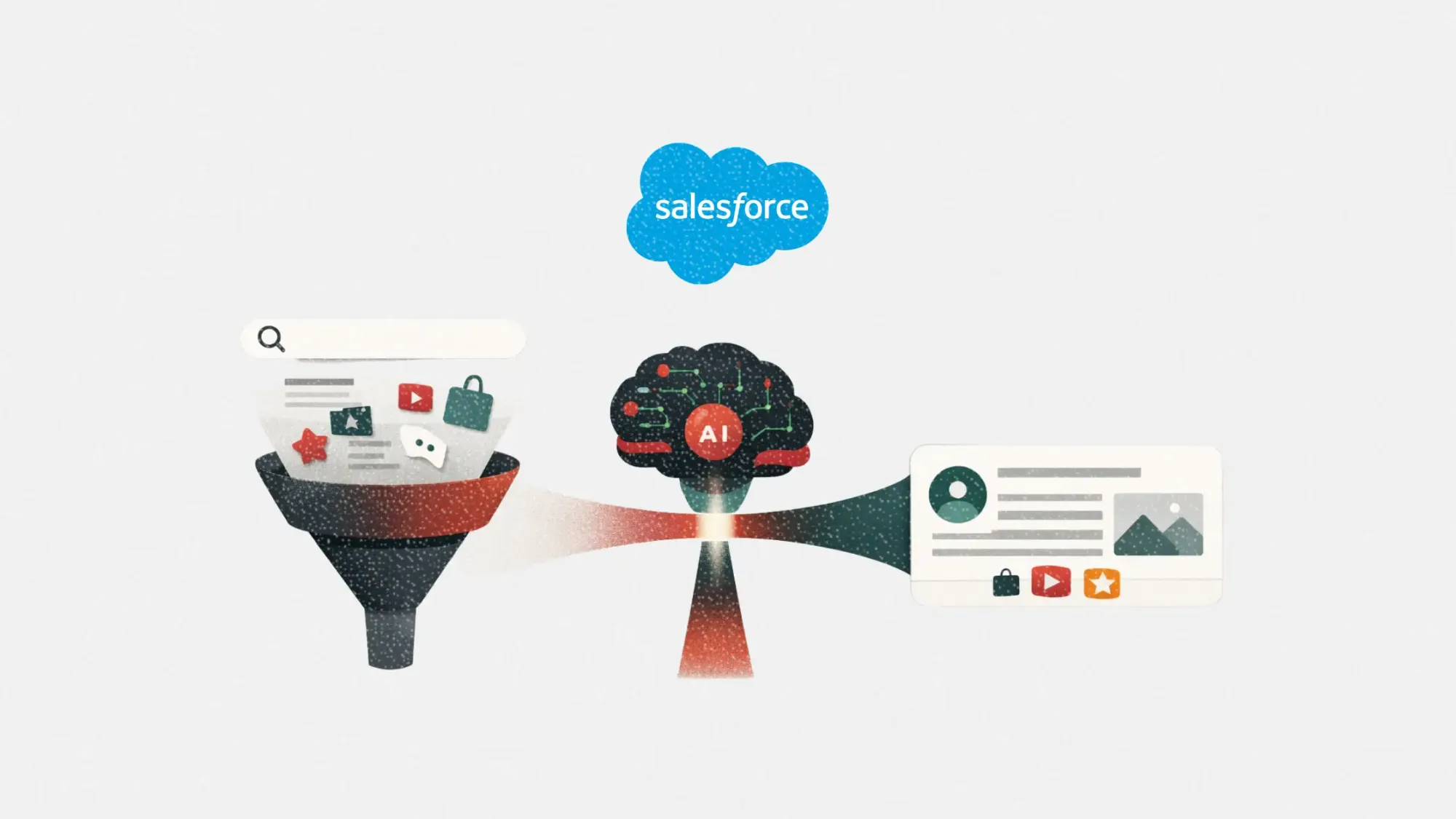
Search is no longer just about rankings. According to Salesforce’s State of Marketing 2026 report, AI is fundamentally changing how customers discover brands, shifting behavior away from traditional search results toward AI-generated answers.
This article explores how AI is reshaping search into Answer Engine Optimization (AEO), what that means for content strategy, and why marketers need to adapt quickly as discovery becomes more compressed and intent-driven.
Short on time?
- AI is changing how customers discover brands
- Answer engine optimization is becoming a priority
- High-performing marketers are adapting faster
- Why traditional SEO strategies are losing ground
 Patrecia Meliana
AI is changing how customers discover brands
Customer behavior is already shifting as AI becomes part of everyday search experiences.
- Half of all Google searches now feature AI-generated summaries
- AI and agents drove 20% of global orders, totaling US$262 billion in sales during a recent holiday period
At the same time 86% of marketers say AI is raising customer expectations.
Customers are no longer browsing through multiple links. They are increasingly relying on AI to synthesize information and deliver direct answers. This compresses the discovery process. Instead of multiple touchpoints, brands now have fewer chances to earn attention.
 Patrecia Meliana
Answer engine optimization is becoming a priority
As AI reshapes how customers discover information, marketers are beginning to adjust their strategies. According to the report, 85% say AI is already changing their approach to SEO, and 88% have started optimizing for AI-generated responses, signaling a clear shift toward answer-driven visibility.
This shift is giving rise to Answer Engine Optimization (AEO). Unlike traditional SEO, which focuses on ranking pages, AEO focuses on:
- Structuring content for AI interpretation
- Providing clear, authoritative answers
- Aligning content with conversational queries
The goal is no longer just to appear in search results. It is to be included in the answer itself.
 Atikah Amalia
High-performing marketers are adapting faster
Not all teams are moving at the same pace. High-performing marketers are 2.2 times more likely to have optimized for AI search.
This reflects a broader pattern. Top-performing teams are quicker to adapt to shifts in customer behavior and platform dynamics.
They are:
- Reworking content for AI-driven discovery
- Focusing on intent rather than keywords alone
- Preparing for environments where visibility is algorithmically curated
This early adaptation gives them an advantage as AI-driven interfaces continue to reduce traditional traffic pathways.
Why traditional SEO strategies are losing ground
The rise of AI-generated answers is starting to challenge the fundamentals of SEO. Marketers are finding it increasingly difficult to keep up with shifting customer behavior, with 64% saying they are struggling to adapt.
At the same time, 48% admit they have not yet adjusted their strategies for AI-driven environments, highlighting how quickly the landscape is evolving compared to how slowly most teams are responding.
Traditional SEO relies on:
- Ranking across multiple links
- Driving traffic through click-through behavior
- Optimizing for search engine algorithms
But AI changes the equation. When answers are generated directly:
- Fewer clicks reach brand websites
- Visibility depends on being selected as a source
- Authority and clarity become more important than volume
This forces marketers to rethink not just tactics, but the role of content itself.
 Atikah Amalia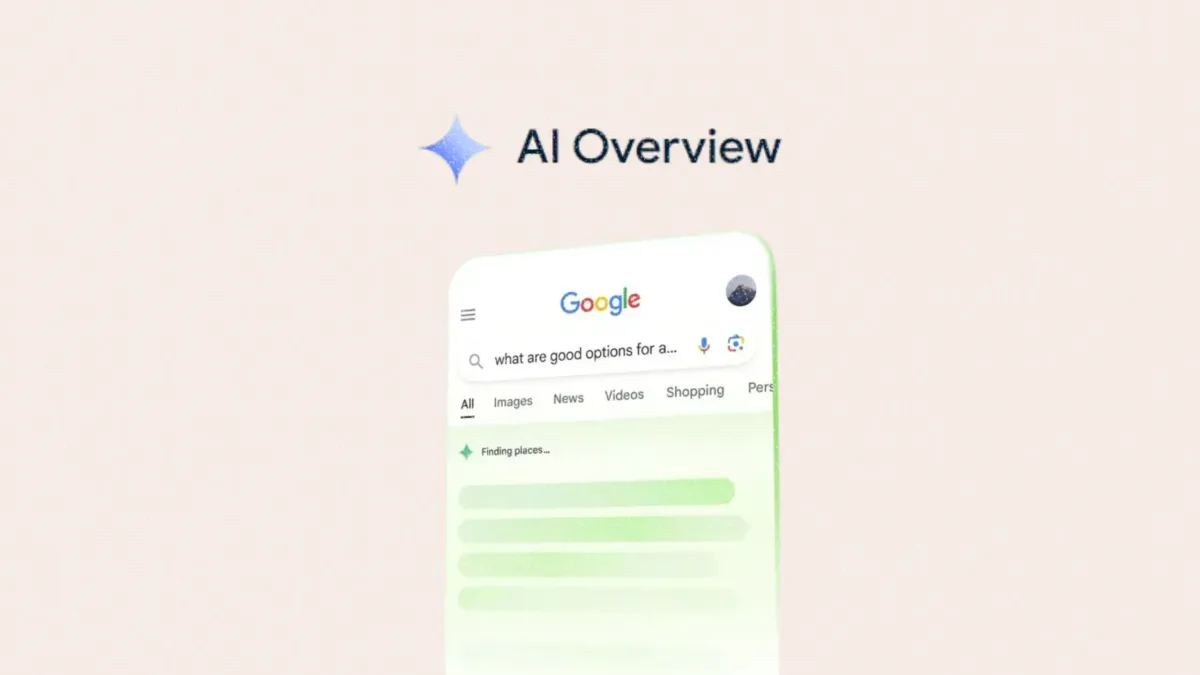
Why this matters for B2B marketers
For B2B marketers and PR professionals, this shift is not just technical. It changes how visibility, authority, and engagement are earned.
1. Search is no longer about rankings, but selection
AI-driven search reduces the number of links users interact with. Instead of browsing multiple results, customers are increasingly relying on a single synthesized answer. This means brands are no longer competing for position on a page, but for inclusion in the answer itself.
 Patrecia Meliana
2. Content needs to be built for interpretation, not just indexing
Traditional SEO focused on keywords and rankings. In an AI-driven environment, content must be structured, clear, and authoritative enough for machines to understand and reuse. If your content cannot be easily interpreted, it is unlikely to be surfaced.
3. Fewer touchpoints mean higher stakes per interaction
As discovery becomes more compressed, marketers have fewer opportunities to engage potential customers. Each interaction carries more weight, making relevance and clarity more critical than ever.
4. Intent is becoming more valuable than traffic volume
AI-generated answers often serve users who are further along in their decision-making process. This shifts the focus from driving large volumes of traffic to capturing high-intent moments where decisions are being shaped.
 Patrecia Meliana
5. Authority is becoming the new visibility metric
Being visible is no longer just about ranking well. It is about being trusted enough for AI systems to cite, summarize, or recommend your content. This puts greater emphasis on credibility, consistency, and depth.
 ContentGrip Staff
The implication is straightforward. SEO is not disappearing, but it is becoming less about visibility at scale and more about being selected as a trusted source.
Marketers that adapt early to this shift will be better positioned to maintain relevance as AI continues to reshape how buyers discover and evaluate brands.