
Shopee lands in ChatGPT as Sea and OpenAI expand AI commerce across Southeast Asia
The ecommerce giant becomes OpenAI's latest commerce partner as conversational shopping moves from experiment to mainstream retail experience.

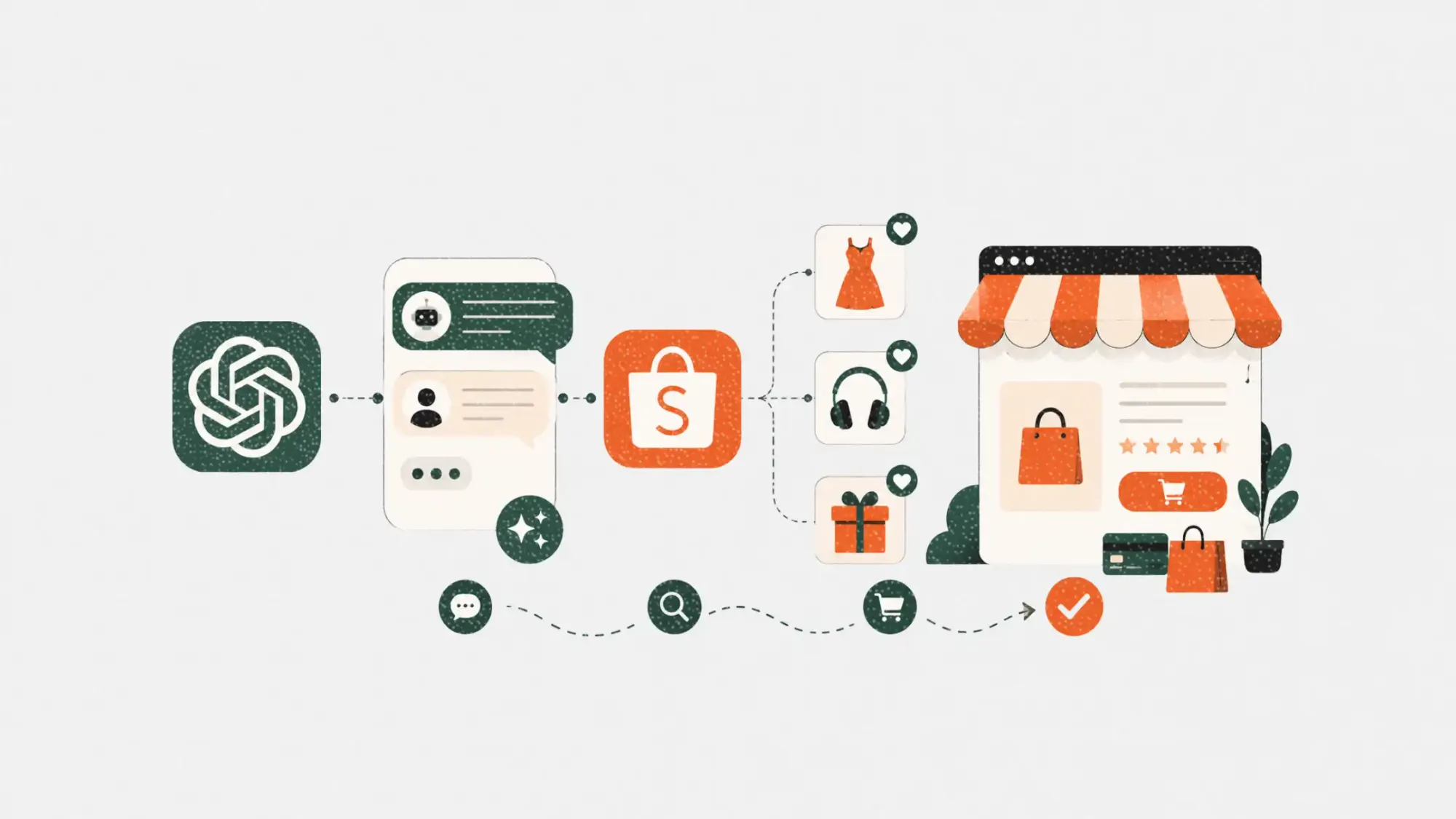
Sea and OpenAI are taking their partnership a step further, bringing ChatGPT-powered shopping experiences directly into Shopee across Southeast Asia, Taiwan, and Brazil. The move gives consumers a new way to discover products through conversational AI before completing purchases on Shopee.
The announcement also extends beyond shoppers. Sea plans to introduce ChatGPT for Business to eligible Shopee sellers, offering AI-powered tools for product listings, marketing, customer service, and operational workflows.
As AI adoption accelerates across ecommerce platforms, the partnership signals a growing shift toward AI-native shopping and merchant experiences.
Table of contents
Jump to each section:
- How Shopee is bringing shopping into ChatGPT
- Why Sea and OpenAI are expanding their partnership now
- What marketers should know about AI-powered commerce
- What this means for ecommerce and retail brands
- The bigger picture for AI-native shopping
 Patrecia Meliana
How Shopee is bringing shopping into ChatGPT
Sea announced that Shopee is now available within ChatGPT for users in Indonesia, Malaysia, the Philippines, Singapore, Thailand, Taiwan, Vietnam, and Brazil.
The integration allows consumers to discover products through natural-language conversations. Rather than searching through categories or entering keywords, users can ask ChatGPT for recommendations, gift ideas, fashion inspiration, travel essentials, or niche products and receive suggestions sourced from Shopee.
After discovering products through ChatGPT, users can continue their purchase journey on Shopee to complete transactions.
According to Sea and OpenAI, Shopee is the first ecommerce platform operating across both Southeast Asia and Latin America to integrate directly with ChatGPT.
 Patrecia Meliana
Why Sea and OpenAI are expanding their partnership now
The latest announcement builds on a relationship that began in 2025 when the two companies worked together to make ChatGPT more accessible through promotions and ShopeeVIP membership benefits.
The expanded partnership introduces several new initiatives:
- ChatGPT-powered product discovery for consumers
- ChatGPT for Business trials for eligible Shopee sellers
- Training resources and onboarding programs for merchants
- Continued promotion of OpenAI tools through Sea's ecosystem
- Expansion of OpenAI's Codex developer initiatives across Asia Pacific
Sea says sellers will be able to use ChatGPT for Business to generate product listings, create marketing content, improve customer service, and automate routine operational tasks.
The partnership also extends into the developer ecosystem. Earlier this year, Sea and OpenAI launched a regional Codex Hackathon series, beginning in Singapore and attracting more than 1,200 applications. Additional events are planned across Vietnam, Taiwan, Indonesia, and Malaysia.
"This development is a preview of where commerce is heading: AI becoming the front door for how people discover and buy. But that raises a harder question than most AI headlines address. Once agents are the interface, brands, marketplaces, and platforms need to collaborate on signals like customer intent and catalog data, often across companies that don't fully trust each other with that information or aren’t legally allowed to share it."
Juan Baron, Head of International and Global Accounts at Decentriq highlights.
What marketers should know about AI-powered commerce
The Shopee-ChatGPT integration highlights several important shifts that marketers should pay attention to.
1. Product discovery is becoming conversational
Traditional ecommerce discovery relies on search bars, filters, and category navigation. AI assistants introduce a more personalized discovery layer where consumers can describe needs, preferences, and contexts naturally.
Brands may need to optimize product information for AI-driven recommendation environments, not just conventional search engines.
2. Merchant AI adoption is moving beyond experimentation
Many sellers already use AI for content generation. ChatGPT for Business pushes AI deeper into daily operations, including:
- Product descriptions
- Customer support responses
- Marketing copy creation
- Workflow automation
- Internal productivity tasks
For smaller businesses, this could reduce the operational burden traditionally associated with scaling ecommerce operations.
3. Platform competition is shifting toward AI capabilities
The announcement arrives as regional ecommerce players continue investing heavily in AI.
Sea noted that competitors are also pursuing AI-powered merchant tools. Lazada recently reported that 67% of sellers expressed satisfaction with its existing AI features.
This suggests AI is rapidly becoming a competitive requirement rather than a differentiator.
4. Conversational commerce may reshape customer journeys
If consumers begin their shopping journeys through AI assistants rather than marketplaces directly, brands may need to rethink visibility strategies.
The battle for discovery could increasingly happen inside AI-powered recommendation systems rather than search results pages.
What this means for ecommerce and retail brands
For marketers and ecommerce teams, several practical considerations emerge:
- Review product catalog quality and metadata accuracy.
- Ensure product descriptions answer customer intent clearly.
- Prepare for conversational discovery alongside traditional SEO.
- Experiment with AI-generated content while maintaining brand consistency.
- Train teams to use AI tools for productivity rather than simple content creation.
Brands that adapt early may gain an advantage as AI-powered commerce experiences become more mainstream across marketplaces.
"The real competitive advantage won't go to whoever deploys AI fastest. Instead, it will belong to whoever can make agent-driven commerce work across these fragmented ecosystems without forcing anyone to hand over their commercial intelligence to get there. And that requires collaboration on data and insights without pooling or exposing the underlying assets themselves."
Juan shares.
The bigger picture for AI-native shopping
Sea and OpenAI's expanded partnership reflects a broader trend toward embedding AI directly into commerce experiences rather than treating AI as a standalone tool.
For consumers, that means more personalized product discovery. For merchants, it means easier access to automation and AI-assisted workflows. For marketers, it signals a future where discovery, recommendations, customer service, and even operations increasingly happen through AI-native interfaces.
As OpenAI reportedly continues expanding ChatGPT into a broader ecosystem of services, integrations like Shopee may offer an early glimpse into how ecommerce and AI could converge over the next several years.
 Patrecia Meliana
The Shopee and OpenAI partnership is more than a feature launch. It represents a meaningful step toward conversational commerce becoming part of the mainstream shopping experience across Southeast Asia and beyond.
Marketers should view this development as another signal that AI is moving closer to the point of transaction. The brands that understand how consumers discover products through AI-powered experiences today will be better positioned as conversational commerce continues to evolve.