
Snapchat brings AI Sponsored Snaps to chat
A closer look at Snapchat’s push into AI-powered chat ads and what it signals for marketers

Snapchat is pushing deeper into conversational AI with a new ad format that lets users chat directly with brands. Instead of static placements, ads are becoming interactive experiences inside the chat feed, where users already spend most of their time.
This article explores Snapchat’s new AI Sponsored Snaps, what they change about user engagement, and why conversational advertising is quickly becoming a serious consideration for performance and brand marketers alike.
Table of contents
Jump to each section:
- What are AI Sponsored Snaps and what did Snapchat announce
- Why Snapchat is betting on conversational advertising
- How AI Sponsored Snaps work for brands and users
- What marketers should know about AI-powered chat ads
 Patrecia Meliana
What are AI Sponsored Snaps and what did Snapchat announce
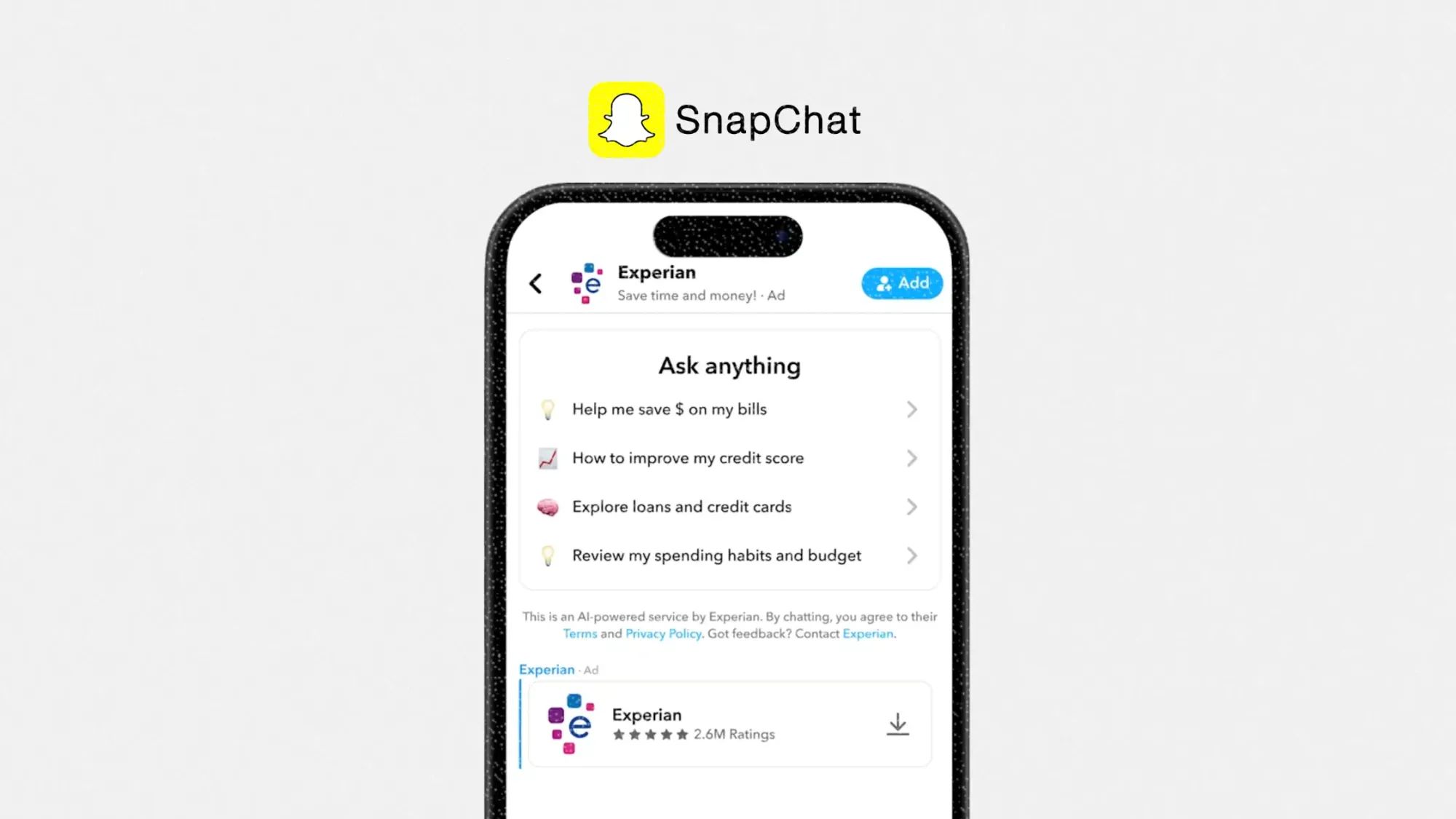
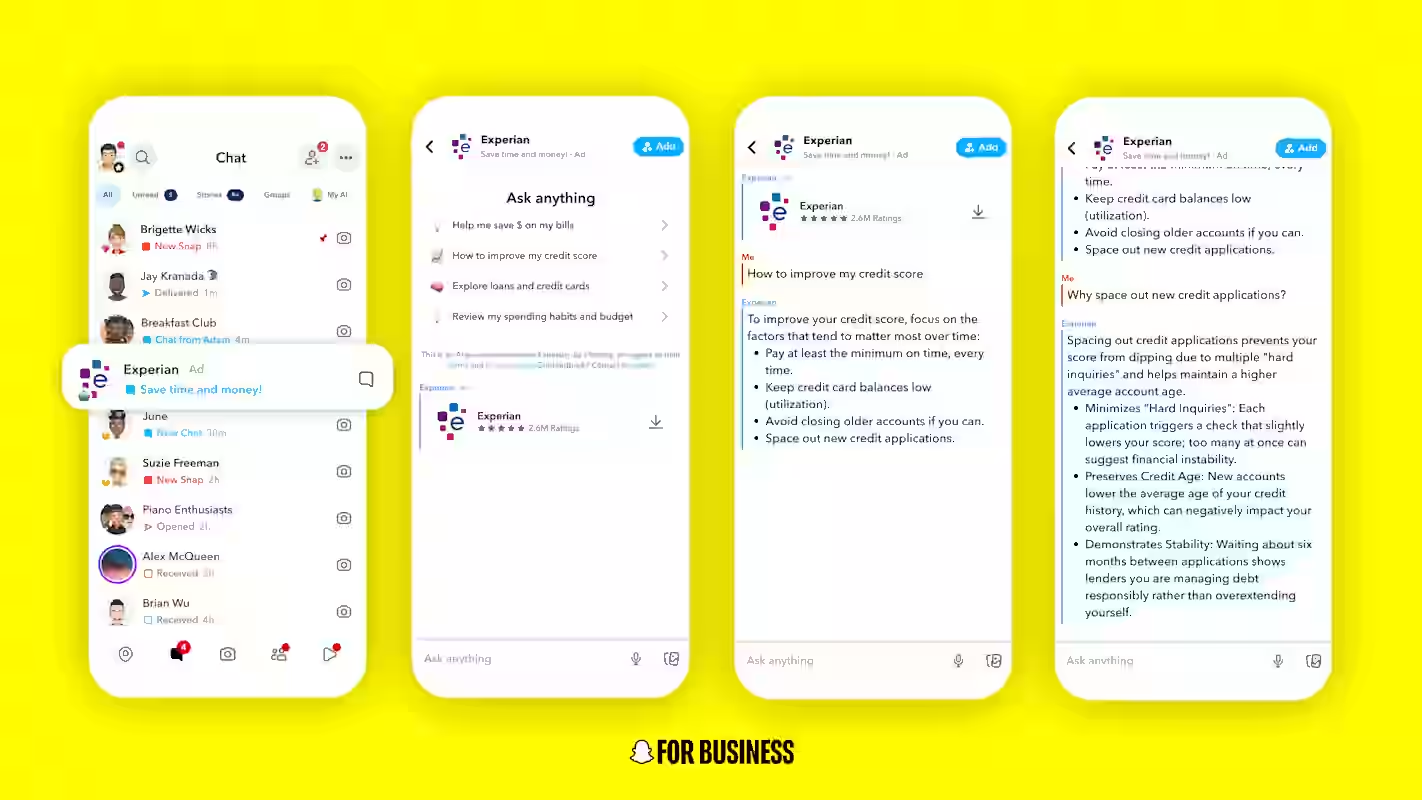
Snapchat has introduced AI Sponsored Snaps, a new ad format that allows users to interact directly with brand AI agents inside the app’s Chat tab. Previously, Sponsored Snaps were static placements. Now, users can ask questions, get recommendations, and engage in real-time conversations with brands.
The move builds on Snapchat’s existing ad performance. Sponsored Snaps already drive 22 percent more conversions and nearly 20 percent lower cost per action compared to other formats.
The scale is significant. Snapchat reports nearly one billion monthly active users, over 950 billion chats sent in Q1 2026, and more than half a billion users who have already interacted with its My AI chatbot.
The company is launching the format in alpha with Experian, positioning it as a way for brands to deliver personalized, conversational experiences directly inside chat.
Patrecia Meliana
Why Snapchat is betting on conversational advertising
Snapchat’s bet is simple: conversation is where attention already lives.
Chat is not just a feature on Snapchat. It is the core behavior. With 85 percent of users engaging in the Chat feed and a high frequency of daily messaging among younger audiences, the platform sees an opportunity to turn conversations into commerce moments.
Ajit Mohan, Chief Business Officer at Snap, frames it as a broader industry shift. Conversation is becoming the most valuable real estate in advertising, with AI accelerating how users discover products, ask questions, and make decisions in real time.
This reflects a wider trend across platforms. Search is becoming conversational. Customer journeys are becoming dynamic. Static ads are starting to feel out of sync with how users actually interact online.
Snapchat is not just inserting ads into chat. It is redesigning the format to match how people already communicate.
How AI Sponsored Snaps work for brands and users
AI Sponsored Snaps allow brands to deploy their own AI agents within Snapchat’s ecosystem. These agents act as conversational interfaces between the brand and the user.
For users, the experience is straightforward:
- Ask questions about products or services
- Get personalized recommendations
- Explore brand offerings without leaving the chat interface
For brands, the implications are broader:
- Full-funnel engagement from discovery to purchase
- Real-time interaction instead of delayed conversion paths
- Personalized responses at scale without human intervention
Experian’s early partnership highlights a key use case. The company plans to use AI Sponsored Snaps to provide financial education and credit insights directly within conversations, making traditionally complex topics more accessible in a familiar format.
This turns ads into utilities. Instead of interrupting the user, the ad becomes part of the interaction.
Patrecia Meliana
What marketers should know about AI-powered chat ads
Conversational ads are not just a new format. They require a different approach to strategy, creative, and measurement.
Here are the key shifts marketers should pay attention to:
- Creative becomes conversational design
You are no longer writing headlines. You are designing dialogue flows. The quality of responses, tone, and relevance will directly impact engagement.
- AI agents become brand touchpoints
Your AI is now representing your brand in real time. This raises the bar for accuracy, compliance, and brand voice consistency.
- Engagement replaces impressions as the key metric
Clicks and views matter less when users are actively interacting. Expect new KPIs such as conversation depth, intent signals, and assisted conversions.
- Personalization moves from segmentation to interaction
Instead of pre-defined audience segments, personalization happens dynamically within the conversation based on user inputs.
- Brand safety and trust become more complex
Introducing AI into ads raises questions around data usage, misinformation, and user trust. Brands need clear guardrails and transparency.
- Early adoption could offer a competitive edge
As with most new ad formats, early adopters often benefit from lower costs and higher engagement before saturation kicks in.
Patrecia Meliana
Snapchat’s AI Sponsored Snaps signal a shift from passive advertising to interactive brand experiences. The move aligns with a broader industry trend where AI and messaging converge to reshape how users discover and engage with products.
For marketers, the opportunity is clear but not simple. Success will depend on how well brands can design useful, trustworthy, and genuinely engaging conversations, not just deploy AI for the sake of novelty.
Conversational advertising is no longer experimental. It is quickly becoming part of the core digital playbook.