
Snickers Ice Cream wants a “chief online chill officer” to calm tense posts
Snickers Ice Cream is hiring a “chief online chill officer” to drop witty replies and coupons on tense posts, spotlighting its Minis line.


If you have spent any time in comment sections lately, you know the vibe can flip from harmless debate to full-on heat in seconds. Sports takes, fandom arguments, and random discourse spirals are basically a daily genre of entertainment now, but it also leaves people feeling more irritable than amused.
Snickers Ice Cream is leaning into that reality with a short-term role meant to bring the brand’s “chill out” energy directly into the places where tempers run hottest. The details were outlined in the company’s official announcement.
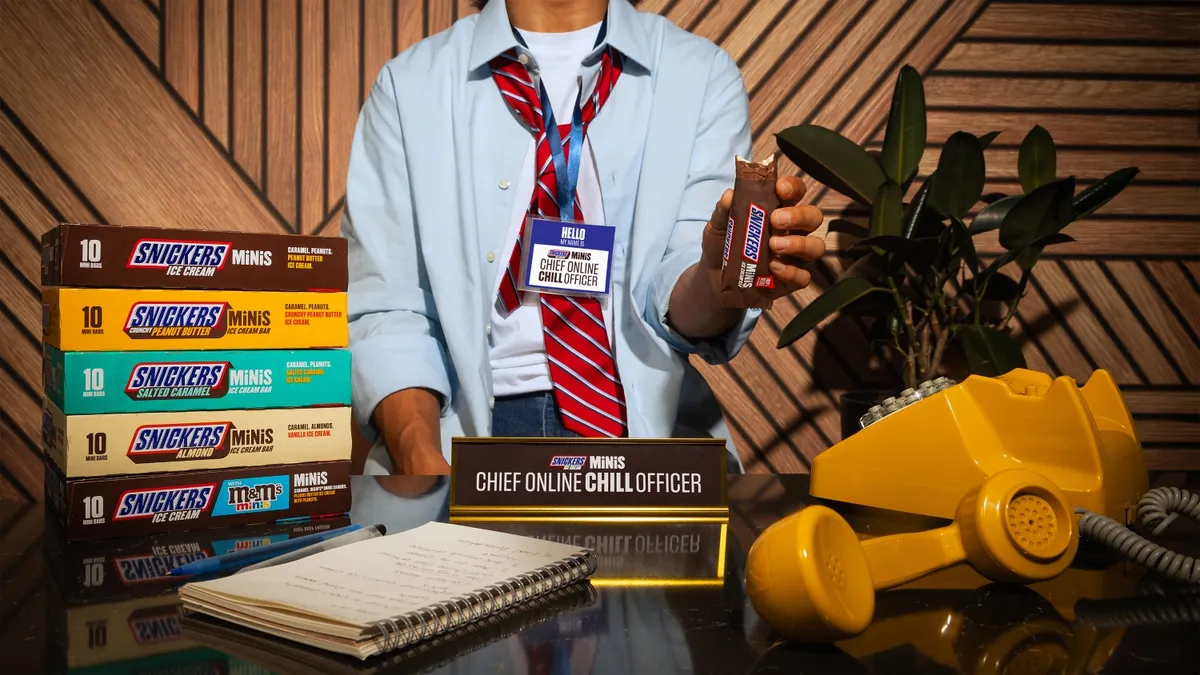
Table of contents
Jump to each section:
- What Snickers Ice Cream is doing, and how the role works
- Why “bite-sized treats” are part of the internet mood conversation
- What this means for marketers
What Snickers Ice Cream is doing, and how the role works
The brand is looking to temporarily hire one fan as a “chief online chill officer” for a two-week window. The job is to spot heated internet moments (sports debates are one example) and respond with witty comments plus coupons for Snickers Ice Cream.
The push spotlights Snickers Ice Cream Minis, which launched in January, and highlights five available flavors. The concept also fits the broader Snickers brand idea of easing crankiness tied to hunger and irritation, just translated into a social-first format.
The role is scheduled to run from Aug. 24 to Sept. 3, is hybrid, and is based in the Chicago area. Applicants are asked to submit an application and short video via a dedicated link through Aug. 4.
 undefined
Why bite-sized treats are part of the internet mood conversation
Snickers is attaching “chill” to a real-world feeling: social media use has been linked to higher rates of irritability among U.S. adults. Instead of trying to “fix” the internet, the campaign acts more like a mood interrupt. It is a small, playful intervention that can diffuse a moment and give people a reason to pause.
There is also a product truth behind the idea. Minis are built for portion control and casual snacking, which aligns with growing demand for smaller versions of familiar treats, especially among Gen Z consumers who still want a reward moment but are mindful about portion size and price.
That cultural framing connects to the “little treat” economy: people spending on smaller, comparatively inexpensive indulgences (like coffee or ice cream) while larger purchases feel less attainable. In that context, a coupon dropped into a tense thread is not just a discount, it is a nudge toward a tiny reset.
What this means for marketers
This campaign works best when you view it as comment-section culture, not a traditional ad. It is built around the way people actually experience social media: fast emotional swings, public performance, and the need for quick off-ramps.
- Meet people in the moment they are feeling it
The “chief online chill officer” concept targets the exact emotional peak: when people are irritated and ready to keep arguing. Brands that can credibly show up in those moments can earn attention without needing to outspend everyone in the feed. - Treat community tone as a real brand surface area
Comment sections are part of the brand experience now. Snickers is essentially saying, “We will show up where the vibe is bad and try to make it lighter,” which is closer to community management than classic campaign media. - Use incentives as social objects, not just conversion tools
A coupon in a heated thread is designed to be noticed, referenced, and possibly shared. The discount is doing double duty: it is a peace offering and a product trial driver. - Make the product format do narrative work
“Minis” is not just packaging. It supports the whole idea of small interventions and small resets. When the product attribute naturally matches the cultural behavior, the campaign reads less like a brand forcing itself into discourse.
Snickers is not trying to win the internet or claim it can “solve” toxicity. It is aiming for something more believable: adding a little levity to tense moments, in a way that points back to its core promise around satisfaction and mood.
For brand teams, the larger signal is that online mood is becoming a marketing variable. People are not only choosing brands for identity or price, they are choosing them for emotional utility: does this brand help me feel better, even briefly?
When that is the bar, the best social ideas are often the ones that feel like human behavior first and brand messaging second.