
Starbucks and Peanuts drop a fall merch collection inspired by Great Pumpkin
Starbucks and Peanuts roll out a Great Pumpkin-inspired merch set Sept. 15. A look at scarcity rules, collectibles, and seasonal habit marketing.


Fall fandom is basically a ritual at this point: people mark the season with the same comfort cues every year, from rewatching old specials to grabbing the “it’s finally back” drink that makes it feel official. That is why a Peanuts fall tie-in lands, because It’s the Great Pumpkin, Charlie Brown is one of those annual resets that still carries emotional weight across generations.
For Starbucks, that seasonal energy now shows up in merch. Starbucks is teaming up with Peanuts for a limited-edition collection inspired by the Halloween special, and the company shared the details in an official announcement. The collection launches Sept. 15 in participating Starbucks coffeehouses globally, while supplies last.
Table of contents
Jump to each section:
- Why this collaboration works as a fall ritual, not just a collab
- What’s in the Peanuts + Starbucks collection
- How scarcity and “collector logic” are built into the drop
- What this means for marketers watching seasonal fandom
Why this collaboration works as a fall ritual, not just a collab
Peanuts is not just a set of characters people recognize. It is a seasonal tradition with a specific emotional tone: cozy, a little nostalgic, and built around repeat viewing. That matters because seasonal collaborations perform best when they feel like they belong to an existing habit, not when they ask people to learn a new one.
Starbucks is tapping into that same rhythm. The company explicitly positions Pumpkin Spice Latte season as a “start of fall” signal, and then ties that moment to the Great Pumpkin special’s 60th anniversary. It is less about explaining the partnership and more about giving customers a physical way to “keep” the feeling of fall, which is exactly how limited merch becomes part of people’s annual routines.
 ContentGrip
What’s in the Peanuts + Starbucks collection
The collection includes 10 items across drinkware, accessories, and a plush, designed to be “collected, gifted and enjoyed,” per Starbucks.
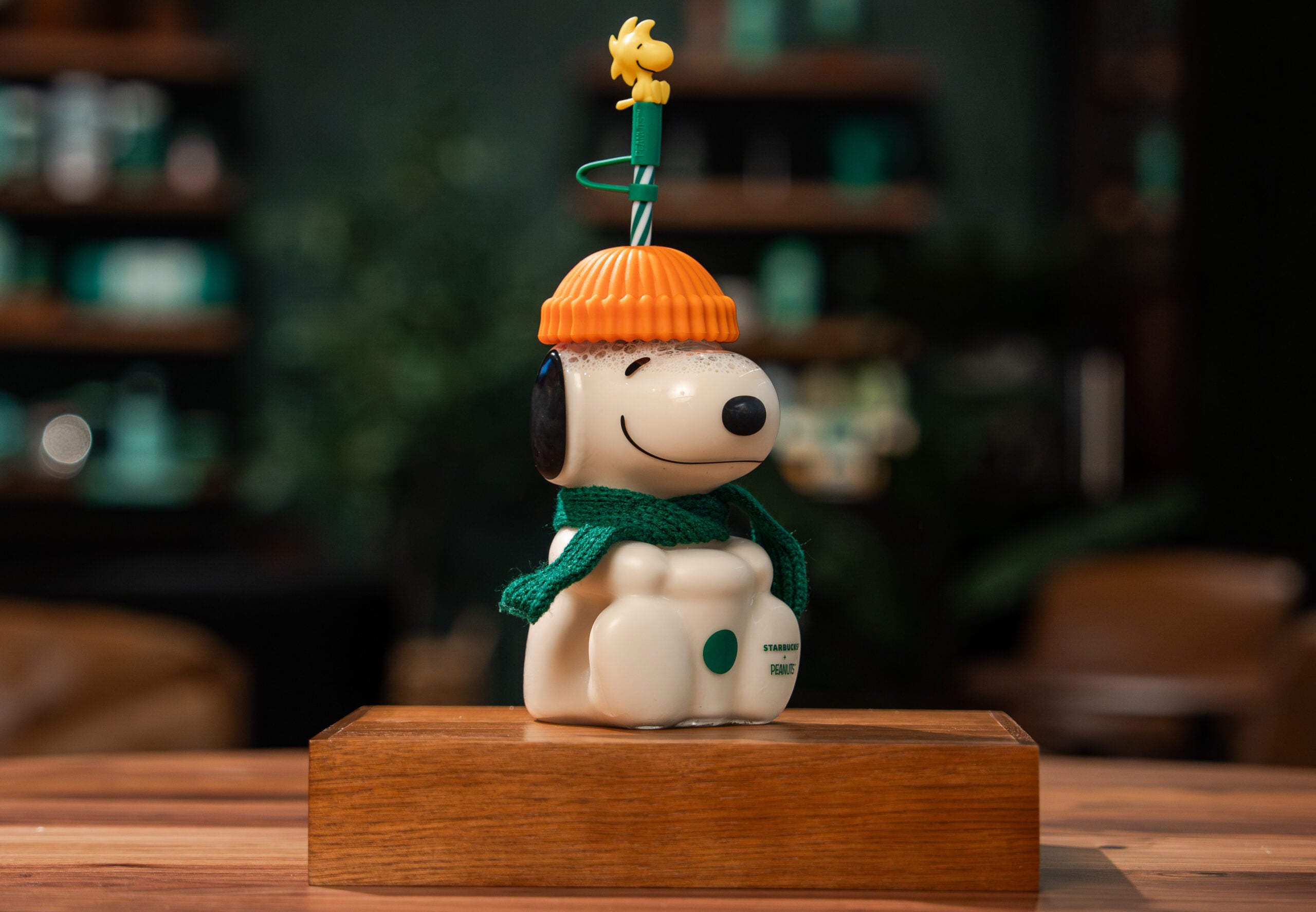
A centerpiece product is the Snoopy Glass Cold Cup, which includes a Woodstock straw topper, a pumpkin-colored hat, and a seasonal green scarf, priced at $39.95.
The drinkware lineup also includes:
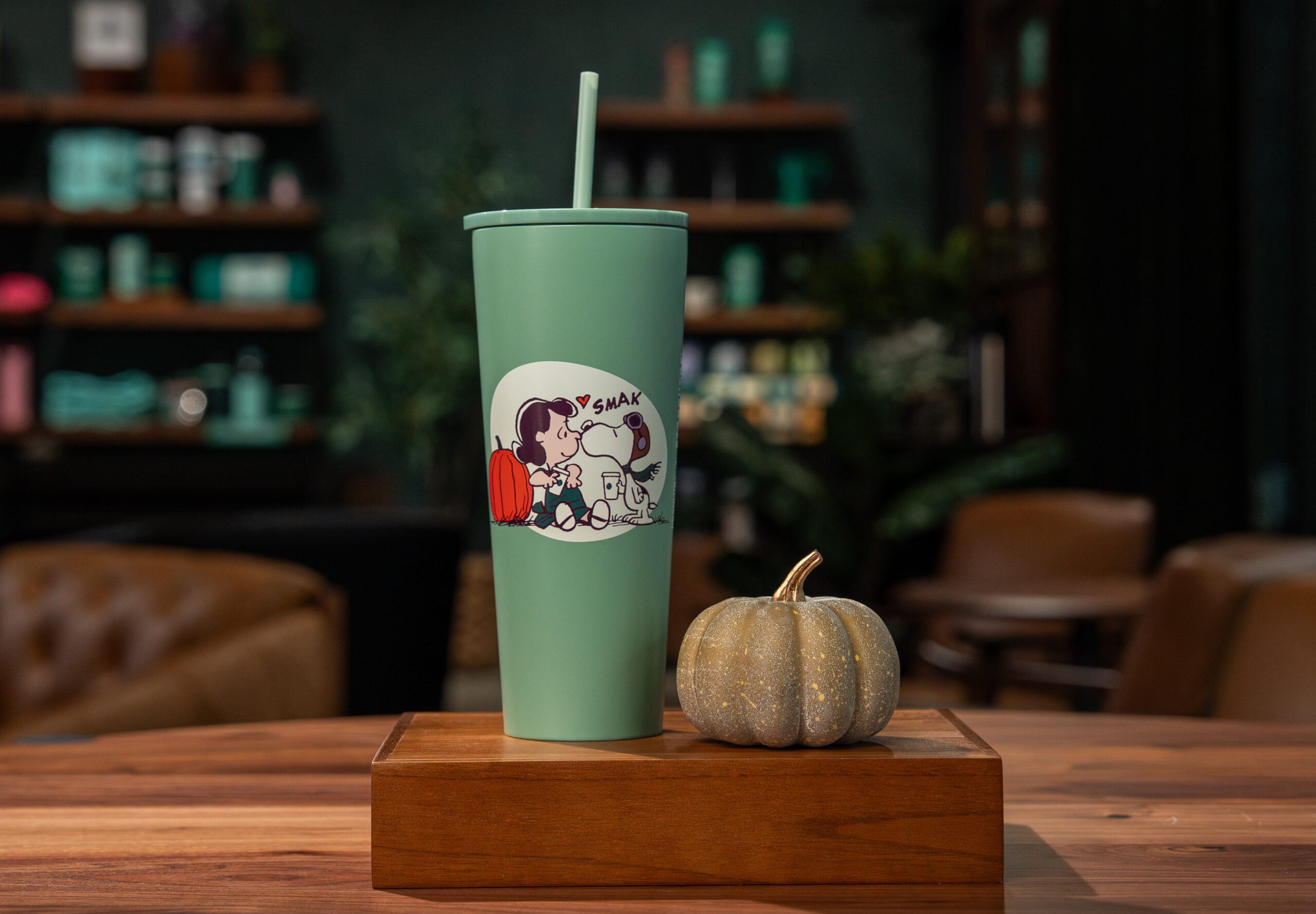
- Stainless Steel Cold Cup featuring Lucy and Snoopy sharing a coffee moment ($32.95)
- Great Pumpkin Tumbler with Snoopy and Woodstock artwork ($32.95)
- 24-ounce Cold Cup with Snoopy, The Great Pumpkin, and fall imagery ($27.95)
- 14-ounce Ceramic Mug featuring the Peanuts gang, with a surprise Snoopy at the bottom ($29.95)
- 16-ounce Stainless Steel Tumbler with a Woodstock charm and dancing Snoopy ($32.95)
And beyond drinkware, Starbucks lists:
- Snoopy Plush ($34.95)
- Bag Charm ($16.95)
- Mini Tote ($29.95)
- Enamel Pin Set ($14.95)
How scarcity and “collector logic” are built into the drop
Limited seasonal merch has its own unspoken rules online: people plan, queue, compare what markets got which items, and try to grab the piece that feels most “signature.” Starbucks leans into that behavior directly with a two-item per customer purchase limit on the Snoopy Glass Cold Cup, essentially acknowledging that this is not just a utility purchase. It is a collectible.
That purchase limit also functions like a brand safety measure for hype. It signals that Starbucks expects demand, and it attempts to spread availability across more customers rather than letting a small number of buyers clear inventory quickly.
At the same time, the “while supplies last” framing and global rollout reinforces a familiar drop dynamic: it creates urgency without needing heavy-handed language, because the product category already teaches shoppers what to do next.
What this means for marketers watching seasonal fandom
Seasonal fandom is one of the cleanest examples of repeatable cultural demand. People do not need to be convinced fall is coming, they just need a reason to participate in the ritual.
1) Make the product a “memory object,” not a logo swap
Details like the Woodstock straw topper and the “hidden Snoopy” mug reveal are designed for the moment of use, not just the shelf photo. That is how merch becomes a keepsake instead of branded merchandise.
2) Build around existing rituals that already reset every year
Pumpkin Spice season and the Great Pumpkin special both function as annual tradition markers. Pairing two rituals reduces the work required to explain why the collab exists.
3) Use scarcity as governance, not just hype
The two-item purchase limit is a practical constraint that shapes consumer behavior. It communicates expected demand and attempts to keep the drop feeling fair.
4) Design for gifting and collecting as core behaviors
Starbucks frames the assortment as collectible and giftable, and then backs it up with product variety (drinkware plus accessories and a plush). That supports multiple motivations: personal use, gifting, and completionist collecting.
The bigger signal here is that “seasonal” is no longer just a calendar-based promotion. It is a community behavior pattern that repeats across platforms and households, and merch gives brands a way to participate in that pattern without needing a new storyline every year.
When brands treat fandom as a lived ritual, they can create products that people use to mark time, share tradition, and feel connected. The marketing works because the behavior already exists. The brand just shows up with something that feels worth keeping.