TikTok locks in naming rights for Sydney venue in a global first
TikTok’s venue takeover in Sydney isn’t just branding. It’s a content and creator strategy in motion

TikTok just claimed a new kind of stage — literally. In a global first for the short-form video giant, the platform has secured naming rights to one of Sydney’s largest live event venues.
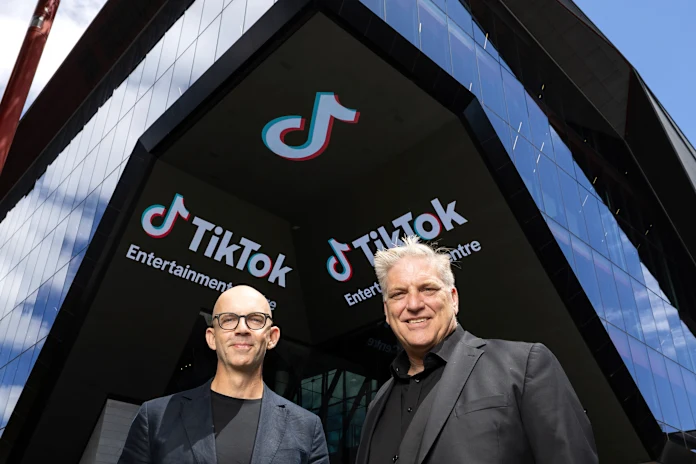
The newly named TikTok Entertainment Centre, formerly known as the Aware Super Theatre, will now host everything from concerts to creator-driven shows under the brand’s name.
For marketers eyeing the evolving relationship between digital platforms and physical entertainment, this is a case study worth watching. This article explores why this move is more than just a flashy rebrand, and how it connects to TikTok’s deeper ambitions in live events, creator monetization, and cultural relevance.
Short on time?
Here’s a table of contents for quick access:
 Falencia Naoenz
What happened
The 9,000-seat venue at Sydney’s Darling Harbour, part of the US$1.5 billion International Convention Centre complex, has a new name: TikTok Entertainment Centre (also branded as TikTok EntCent).
In a multi-year deal — terms undisclosed but described as “substantial” — TikTok becomes the first-ever social media platform to acquire naming rights for a major global venue.
The timing isn’t accidental. The rebranding was announced days before TikTok’s annual TikTok Awards, which will now be hosted at the venue in 2025, 2026, and 2027. Permanent venue signage and a dedicated TikTok lounge are part of the package, signaling a long-term physical presence.
TikTok’s ANZ Head of Content, Simon Bates, described the move as an extension of what the platform already offers digitally: “Whether you love music, comedy, podcasts, or dance, there’s something for everyone at TikTok Entertainment Centre.”
Why this is a smart brand play
The move represents a significant evolution in how social platforms interact with real-world experiences. It checks multiple strategic boxes for TikTok:
1. From screen to stage
TikTok’s influence on music charts and creator careers is already well documented. By planting its brand inside a real-world entertainment venue, the platform is now giving creators — and itself — a tangible space to build culture beyond the feed.
The venue’s mirrored "Dancers Alley," already popular with performers, has its own TikTok account, hinting at cross-channel opportunities.
2. Creator economy infrastructure
By securing a multi-year home for its awards and creator events, TikTok is building the infrastructure to support more professionalized content creation. This move signals that the platform is no longer just a launchpad. It wants to be the entire runway.
3. Local traction, global optics
There are 9.5 million Australians on TikTok, making it one of the country’s most engaged platforms. Locking down a venue in Australia gives TikTok a strong local brand anchor while also projecting global clout. It sends a signal to creators and advertisers that the app isn’t just virtual.
What marketers should know
For B2B marketers, event organizers, and brand strategists, this venue deal highlights a few emerging shifts worth planning for:
1. Platform-branded events are the new arena
If you’re planning branded activations or consumer-facing experiences, expect more platforms to start carving out their own real-world stages. TikTok now controls a physical venue that can prioritize creator content, branded performances, and monetized fan events.
2. Audience crossover is the new growth lever
TikTok’s own executive called this moment a “digital Woodstock.” For brands, this suggests that audiences now flow between digital platforms and live events more fluidly than ever. Marketers need to think about how their campaigns translate into both digital performance and on-site engagement.
3. Physical presence is a trust signal
As governments introduce tighter age and content restrictions — with Australia recently raising the minimum age for social media accounts to 16 — TikTok’s move into a high-visibility, adult-targeted venue could help reinforce its role as a cultural mainstay. For advertisers concerned about brand safety, this could offer new confidence.
TikTok’s naming rights deal isn’t just about signage. It’s about signaling power, permanence, and cross-channel ambition. As digital-native platforms go deeper into physical brand territory, marketers will need to follow suit — not just to stay visible, but to stay relevant.
Real-world infrastructure is becoming part of the creator economy’s next chapter. Smart brands should already be sketching out how they’ll show up when platforms like TikTok step off the screen and into the crowd.