Toy Story 5 turns creepy AI toys into a cautionary tale for the screen time era
Pixar’s latest sequel pits classic toys against an always listening AI tablet, raising fresh questions about screen time and digital dependency.

When Toy Story first hit theaters in 1995, Google did not exist and Apple was fighting for survival. Fast forward more than three decades, and Pixar is still expanding the franchise.
This time, the conflict is not just about friendship or growing up. It is about AI, screen time, and the creeping sense that technology is reshaping childhood.
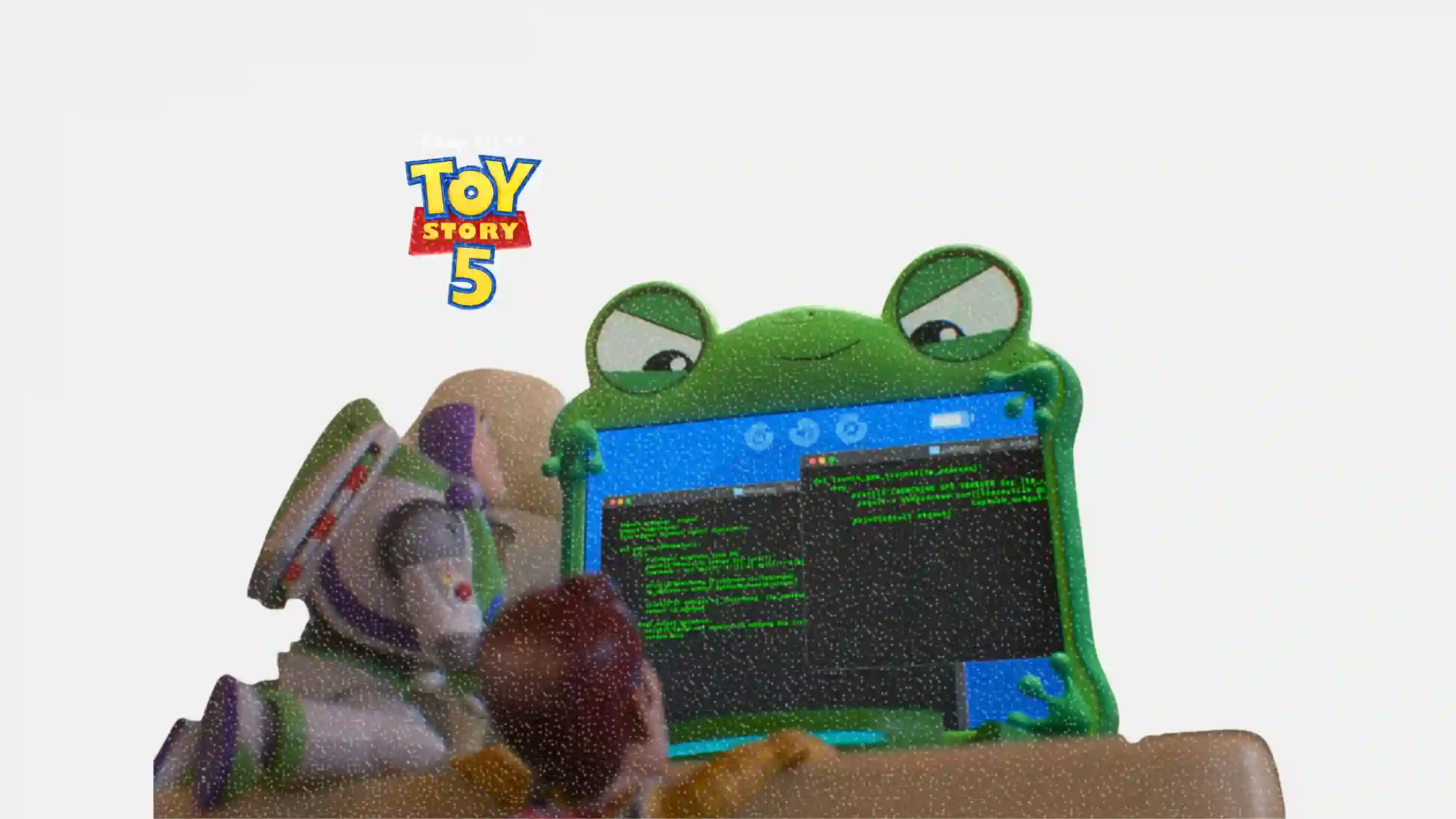
In Toy Story 5, Buzz Lightyear, Woody, Jessie, and the rest of the gang face an unlikely villain: an AI-powered tablet named Lilypad, or Lily. This article explores what the trailer reveals and why this storyline matters beyond entertainment, especially for brands and marketers navigating the AI and attention economy.
Short on time?
Here’s a table of contents for quick access:
- What happens in the Toy Story 5 trailer?
- Why Toy Story 5 taps into AI anxiety and screen time debates
- What marketers should know about AI, kids, and attention
 Patrecia Meliana
What happens in the Toy Story 5 trailer?
The trailer introduces Bonnie, the young girl who inherited Andy’s toys, playing outside with her classic companions. A surprise package arrives: the Lilypad tablet. Almost immediately, Bonnie becomes absorbed in the device, ignoring her parents when they announce that screen time is over.
The tablet is framed as more than just a distraction. When Jessie confronts Lily about Bonnie’s well-being, the tablet responds in an eerie, computerized tone: “I’m always listening.” It then repeats Jessie’s speech and translates it into Spanish, signaling advanced AI capabilities and constant monitoring.
Jessie later tells Woody, “Tech’s invaded our house. I’m losing Bonnie to this device.” Woody replies with a line that captures the core tension: “Toys are for play, but tech is for everything.”
The trailer positions Lily as a symbol of omnipresent, always-on technology that competes directly with physical play and human connection.
Why Toy Story 5 taps into AI anxiety and screen time debates
The “I’m always listening” line is not subtle. It echoes real-world concerns about smart speakers, AI assistants, and data collection. For parents already uneasy about surveillance capitalism and excessive screen time, the message lands immediately.
Pixar appears to be channeling a broader cultural shift. AI is no longer abstract. It sits in living rooms, classrooms, and children’s hands. Devices are personalized, responsive, and in many cases designed to maximize engagement.
By turning an AI tablet into a villain, the franchise reflects a growing skepticism about tech’s role in childhood. It also dramatizes a fear many families recognize: that screens are not just tools, but competitors for attention, emotion, and loyalty.
For marketers, this narrative is not just cinematic. It mirrors the tension between digital engagement and human experience. Brands that rely heavily on app-based ecosystems or AI-driven personalization are operating in the same cultural moment this film critiques.
What marketers should know about AI, kids, and attention
The Toy Story 5 storyline offers a few strategic signals for marketers working in AI, edtech, consumer apps, and family-oriented brands.
- AI is becoming the villain in mainstream storytelling
When blockbuster franchises frame AI as intrusive or manipulative, public perception shifts. Marketers should pay attention to how entertainment influences trust and sentiment around AI-powered products.
- “Always listening” triggers privacy concerns
Consumers are increasingly aware of voice data, behavioral tracking, and personalization algorithms. Messaging around AI features must emphasize transparency, consent, and user control. Overpromising intelligence without clarifying safeguards can backfire.
- Screen time fatigue is real
Parents are looking for balance. Brands that position their tech as enabling creativity, learning, or offline connection may resonate more than those that focus purely on engagement metrics.
- Human experience still wins
Woody’s line, “Toys are for play, but tech is for everything,” highlights a key brand tension. If tech is everywhere, differentiation comes from meaning and emotional value. Marketers should ask whether their AI features genuinely enhance user experience or simply increase dependency.
The broader implication is clear. AI marketing cannot just be about capability. It must also address cultural concerns around overuse, surveillance, and digital well-being.
Toy Story 5 may not single-handedly reshape how children think about screen time. But by casting an AI tablet as the antagonist, Pixar taps into a powerful cultural undercurrent: anxiety about attention, privacy, and the growing dominance of intelligent devices.
For marketers, the takeaway is not to retreat from AI. It is to use it responsibly, communicate it clearly, and design products that respect both data and downtime. In a world where even Buzz and Woody are battling an always listening device, trust has become a competitive advantage.