Virtual and AI influencers: should B2B brands use them?
Virtual and AI influencers: should B2B brands use them?


Virtual and AI influencers are having a moment. Lil Miquela has nearly 2.5 million Instagram followers. Lu do Magalu has partnered with hundreds of brands. Imma appeared in a campaign for IKEA. The category has generated enough buzz that some marketing teams are quietly asking: should we be doing this too?
For B2B brands, the short answer is no. Not yet. Probably not soon. Here is why the data supports that position, where the narrow edge cases exist, and what B2B marketers should track before this conversation comes around again.
Table of contents
Jump to each section:
- What virtual and AI influencers actually are
- The data: brand adoption is falling, not rising
- Why B2B is particularly hostile territory for virtual influencers
- The narrow cases where B2B brands might experiment
- What to do instead: the operator-creator advantage
- The verdict: watch, don't lead
 Ariana Sorensen
What virtual and AI influencers actually are
Virtual influencers are fully AI-generated or CGI-created digital personas. They are not faceless creators who use AI to produce content faster. They are not human creators using AI tools. They are characters: designed appearances, scripted personalities, and brand-controlled voices with no human behind the profile.
The category splits into two types. Brand-owned virtual influencers are proprietary characters created and controlled entirely by one company, such as Lu do Magalu (Magazine Luiza's mascot-turned-influencer). Independent virtual influencers like Lil Miquela or Imma are operated by studios and licensed to brands for campaigns, similar to how a human influencer would be contracted.
Both types offer something consumer marketers find appealing: no scandals, no off-brief content, no renegotiation, and the ability to appear anywhere at any time. On paper, the pitch is compelling. The data tells a different story.
The data: brand adoption is falling, not rising
The most relevant signal is not a forward projection. It is a directional shift that happened over 12 months.
According to analysis by influencer marketing platform Collabstr, as reported by Digiday, in October 2024, 86% of brands were open to including AI creators in their influencer marketing campaigns. By August 2025, that figure had dropped to 60%. Collabstr's co-founder attributed the decline to brands becoming increasingly cautious about potential backlash against AI-generated content.
The holdout camp is equally telling. An April 2025 study by the World Federation of Advertisers, which surveyed 33 advertising executives from 27 multinational brands representing an estimated US$65 billion in total global ad spend, found that 60% of respondents had no plans to adopt virtual influencers at all. Only 15% had tested them. And among the non-adopters, 96% cited consumer trust issues as the reason for staying out.
This is not a niche concern. It is the dominant reason senior brand marketers at the world's largest advertisers are sitting this out.
Looking into 2026, Linqia's 2026 State of Influencer Marketing report found only 9% of marketers are planning to partner with virtual influencers in 2026, and just 2% intend to create their own brand avatar. Separately, consumer sentiment data compiled by Billion Dollar Boy and cited in Digiday shows that the proportion of consumers who prefer AI creator content fell to 26% in 2025, down from 60% when the same question was asked in 2023.
At the same time, 32% of consumers now believe AI has negatively disrupted the creator economy, compared to 18% who felt that way in 2023. Brand marketers are watching these numbers. They are not moving faster on virtual influencers as a result.
Why B2B is particularly hostile territory for virtual influencers
The consumer brand argument for virtual influencers rests on reach, brand safety, and novelty appeal. None of those three advantages translate cleanly to B2B, and the main disadvantage, the trust deficit, is significantly more damaging in a B2B context.
B2B influence operates on a different currency than consumer influence. The operator-creator model that drives results in B2B, the SaaS founder with 8,000 LinkedIn followers who posts weekly about product-led growth, works because buyers trust the person's lived experience.
 Ariana Sorensen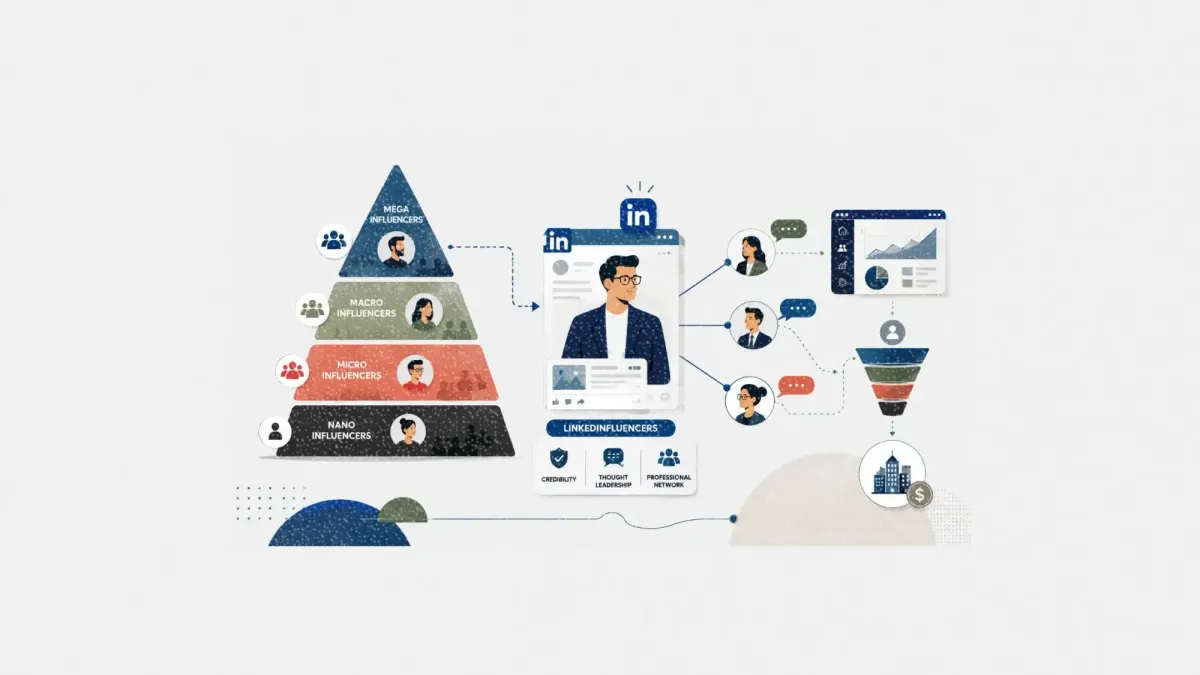
A virtual influencer, by design, has no lived experience. It has never run a go-to-market strategy, closed a deal, or made a bad product decision and written about what it learned. B2B buyers, who are professionally trained to evaluate vendor claims and distinguish genuine expertise from scripted messaging, will identify that absence quickly.
The trust problem compounds at the buying committee level. Consumer purchase decisions are often made by individuals acting on instinct or preference. B2B buying committees, particularly those evaluating six-figure software contracts, conduct reference checks, read peer reviews, watch for expert consensus across industry voices, and apply active skepticism to anything that looks like brand-controlled messaging.
A virtual influencer is entirely brand-controlled by construction. There is no way to make it otherwise, and sophisticated B2B buyers are equipped to recognize it.
There is also a signal-quality problem specific to B2B content. When a real practitioner posts about a tool or vendor on LinkedIn, some of the trust signal comes from the implied trade-off: they chose to spend their credibility on this recommendation.
A virtual influencer has no credibility to trade. Every post is equally scripted, which means no single piece of content carries the weight of a genuine practitioner endorsement. For B2B programs trying to influence procurement decisions across a 90-day buying cycle, that limitation is not a minor friction. It is a structural flaw.
Then there is the reputational dimension. The brands currently pulling back from virtual influencers are the world's largest consumer advertisers, whose audiences are far more forgiving than B2B procurement teams. If these organizations find the trust math unfavorable, B2B brands, where credibility is the entire premise of influence, face a steeper risk curve still.
"The reason B2B influencer marketing works is that the creator's credibility and independence are exactly what brands cannot manufacture themselves," says Dinda Anandita, Account Director at content-led comms agency Content Collision. "A virtual influencer eliminates both of those things by definition. B2B buyers asking whether a creator actually believes what they are saying will have a very short conversation with a digital avatar."
The narrow cases where B2B brands might experiment
There are edge cases, and intellectual honesty requires naming them. None of them are arguments for mainstream B2B adoption, but they are worth understanding.
Internal training and enablement content
A company could create a virtual presenter for onboarding content, product tutorials, or internal knowledge transfer. This is not influencer marketing. It is closer to animated documentation. The virtual persona carries no audience credibility because it is not published to an external audience. If the use case is internal content production at scale, that has merit on its own terms, but it should not be filed under influencer strategy.
Event and product demonstration at scale
A virtual character could appear at trade shows, in interactive product demos, or across multilingual markets simultaneously. Again, this is closer to branded character design than influencer strategy. The value being generated is availability and consistency, not audience trust or third-party credibility, which are the things B2B influencer budgets are supposed to buy.
Niche B2B2C-adjacent categories
A SaaS company selling to the gaming industry, a platform serving the creator economy itself, or a technology brand whose buyers overlap significantly with a younger consumer demographic might find the novelty of virtual influencers more relevant to their audience's sensibilities. These are narrow exceptions, not a category argument.
In all three cases, the execution carries meaningful disclosure obligations. The FTC's updated Endorsement Guides require clear disclosure of AI-generated personas in commercial contexts. Brands that test this territory without transparent labeling face compliance risk on top of reputational risk.
What to do instead: the operator-creator advantage
The more relevant question for B2B marketers is not whether to use virtual influencers. It is how to deploy the budget being spent evaluating them.
The operator-creator, a working B2B practitioner who documents their professional thinking on LinkedIn, in newsletters, or on YouTube, represents the most defensible influencer investment a B2B brand can make. These creators are credible because their expertise is real, their audiences are dense with ICP-matching buyers, and their independence is genuine. That combination is exactly what virtual influencers cannot replicate.
According to influencer marketing statistics for B2B, 79% of B2B buyers engage with creator content monthly and 82% say it influences their purchasing decisions. These returns are driven by human creators whose audiences trust them, not brand-controlled digital avatars.
For a practical starting point, most B2B programs benefit from identifying five to ten operator-creators whose audiences match the ICP, establishing long-term relationships rather than one-off activations, and building attribution infrastructure from day one, including UTM parameters and CRM tagging, before a single post goes live.
The research consistently shows that always-on programs, where creator relationships are maintained continuously rather than activated campaign by campaign, outperform episodic approaches on every B2B metric that matters. Choosing the right tools for discovery, campaign management, and attribution is also a foundational decision.
 Ariana Sorensen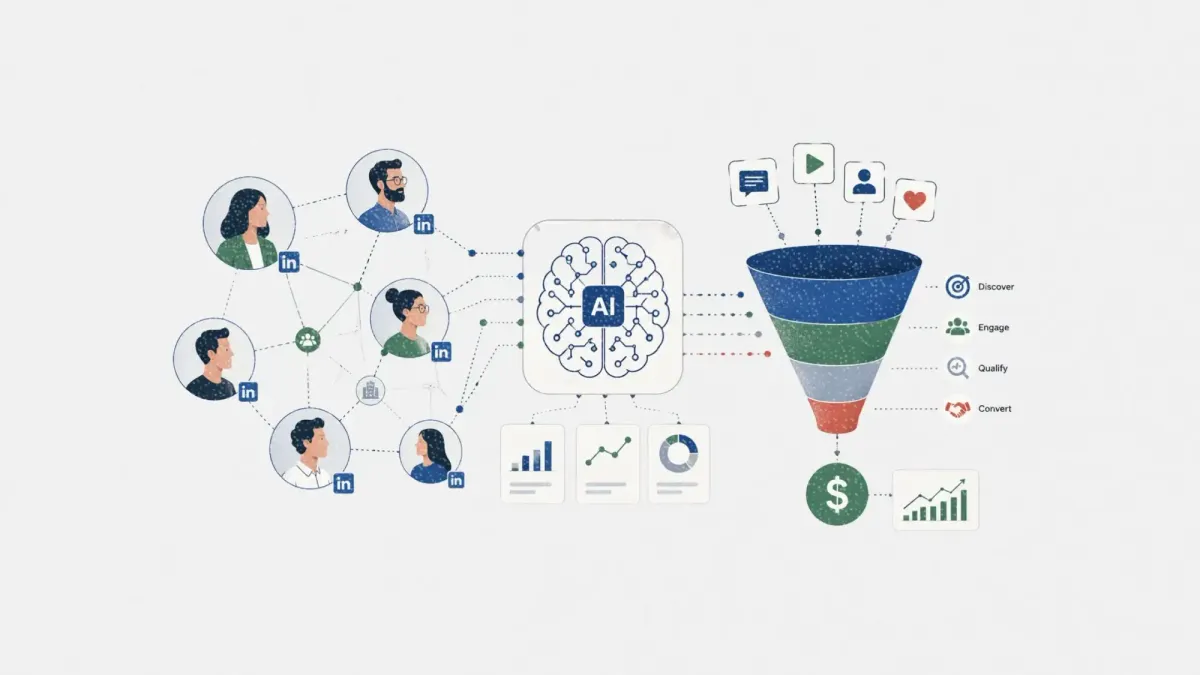
The verdict: watch, don't lead
Virtual and AI influencers are a real market segment with real traction in specific consumer categories. The technology will improve. The trust gap may narrow in some demographics and sectors over time. B2B marketers should not write off the category permanently, because that kind of certainty tends to age poorly.
But the current data does not support B2B brand adoption. Enterprise-level marketers at the world's largest advertisers are actively pulling back, not leaning in. Consumer trust concerns, the dominant barrier to adoption cited by 96% of non-adopters in the WFA study, are more acute in B2B buying contexts than anywhere else.
And the core mechanism through which B2B influence works, the credibility of a real practitioner with real experience and genuine independence, is structurally unavailable to a virtual persona.
The right posture is to monitor, not to lead. Track where virtual influencers appear in your industry's media mix. Understand how platforms are evolving disclosure and transparency standards around AI-generated personas.
Follow how consumer sentiment toward AI content continues to shift, since the drop from 60% to 26% consumer preference in two years is a directional signal worth watching. If a genuinely relevant use case emerges that is distinct from mainstream influencer strategy, evaluate it with fresh data. For now, the B2B influencer budget is better deployed on the operator-creators whose credibility is the whole reason the channel works.