
Brand ambassador vs influencer: which model fits your campaign?
A practical guide to choosing influencers for reach and ambassadors for lasting trust, with a B2B framework for structure, measurement, and risk.


Choosing between a brand ambassador and an influencer is not a vocabulary exercise. It is a decision about whether the brand needs a fast injection of attention or a relationship that can compound trust over time. The wrong choice usually creates one of two problems: an expensive creator campaign asked to behave like a community program, or an ambassador program launched without the people, incentives, and patience needed to run it.
For B2B teams, the brand ambassador vs influencer decision carries extra weight. Buyers may watch a creator for months before entering a sales conversation, while the person endorsing a product can also be a customer, practitioner, consultant, or operator whose credibility depends on being selective. The useful question is not which label sounds more strategic. It is what job the relationship must do, for how long, and with what level of mutual commitment.
Table of contents
Jump to each section:
- What changes when a creator becomes an ambassador
- The decision matrix: choose by job, not label
- What Adobe Express gets right about ambassador design
- How to build the path from influencer to ambassador
- Measure the two models differently
- The trust risks teams underestimate
- Use both, but give each a different job
What changes when a creator becomes an ambassador
An influencer partnership is usually organized around a defined campaign. The creator receives a brief, produces agreed content, publishes within a set window, and is paid for the deliverables, distribution, or performance. The relationship can be warm and collaborative, but the commercial unit is still the campaign.
A brand ambassador relationship is organized around continuity. The person represents the brand repeatedly, gains deeper product access, and often participates in feedback, events, education, or community activity. The commercial unit is not one post. It is sustained association.
That distinction changes the operating model:
- Duration: Influencer engagements can run for days or weeks. Ambassador agreements often run for a quarter, a year, or longer.
- Selection: Influencers are chosen for audience access and creative fit. Ambassadors also need credible product affinity and the willingness to stay associated.
- Compensation: Influencers commonly price deliverables. Ambassadors may combine retainers, paid challenges, commissions, access, education, and product benefits.
- Access: Influencers need enough product knowledge to make accurate content. Ambassadors should have recurring contact with product and community teams.
- Risk: A weak influencer post is a campaign problem. A poorly matched ambassador can become a brand identity problem.
The labels still overlap. A paid creator can become an ambassador, and an ambassador can have a large influencer audience. What matters is whether the contract, cadence, and expectations match the relationship the brand is actually buying.
 Ariana Sorensen
The decision matrix: choose by job, not label
Start with the business problem. Influencers are typically stronger when a brand needs to enter a conversation, reach a new audience, test a message, launch a product, or create a burst of attention around an event. Ambassadors are stronger when repeated exposure, product fluency, community presence, and long-term credibility matter more than a single spike.
Use five questions to make the choice.
- How quickly must the program create reach? A campaign with a launch date favors influencers because the team can buy access to established audiences on a fixed schedule. An ambassador network takes time to recruit, onboard, and activate.
- How complex is the product story? A B2B tool that requires demonstrations, use cases, and objections to be explained benefits from repeat voices who become more fluent over time. A simple announcement may need only one clear piece of creator content.
- Does the audience need repetition before acting? A professional buyer rarely changes software because of one LinkedIn post. When the sales cycle is long, an ambassador can build recognition across several moments without making every appearance feel like a new paid introduction.
- Can the team manage an ongoing community? Ambassador programs need onboarding, regular communication, reward administration, content review, and feedback loops. If nobody owns those tasks, the program becomes a neglected creator list.
- How much flexibility does the brand need? Influencer campaigns make it easier to rotate voices, platforms, and creative formats. Ambassador relationships trade some of that flexibility for continuity and deeper association.
The sharpest answer is often a portfolio. Use influencers to discover which creators, messages, and audiences respond. Then move the strongest relationships into an ambassador layer once both sides have evidence that the fit is real.
What Adobe Express gets right about ambassador design
Adobe Express offers a current example of how an ambassador program differs from a campaign roster. In February 2025, the company relaunched the Adobe Express Ambassador Program around creators, marketers, and entrepreneurs who already use the product. Members create tutorials, webinars, articles, and videos, but the exchange extends beyond content delivery.
The program includes paid challenges, a private community, product access, rewards, and a Creative Cloud membership. Ambassadors also provide product feedback. That combination matters because it gives participants a reason to remain close to the product even between public posts.
The practical lesson is not to copy Adobe’s perks. It is to design reciprocal value at three levels:
- Economic value: Clear payment for content, speaking, events, or performance.
- Professional value: Education, access, visibility, networking, or opportunities that help the creator’s business.
- Relational value: Direct contact with the team, useful feedback loops, and evidence that ambassador input changes something.
This is where many brand programs lag audience behavior. They want creators to display durable loyalty while offering only campaign-level compensation and campaign-level access. Audiences can feel that mismatch. Repetition builds trust only when the creator’s growing familiarity with the product is visible in the substance of the content.
Dinda Anandita, Account Director at content-led comms agency Content Collision: “The moment an ambassador sounds like they are reading the same launch brief for the fourth time, continuity stops building trust and starts exposing the contract. The brand has to give the creator new access, new proof, and enough freedom for the relationship to develop in public.”
 Ariana Sorensen
How to build the path from influencer to ambassador
Do not make ambassador status a reward for the creator with the highest impression count. The best candidate is the person who can sustain credible product use, audience relevance, and productive collaboration after the launch excitement fades.
A practical conversion path has four stages.
- Run a paid pilot. Commission a real campaign with clear deliverables and measurable outcomes. Watch how the creator handles the product, feedback, disclosure, comments, and factual accuracy.
- Review fit on both sides. Ask whether the audience engaged with the subject, not just the personality. Give the creator space to say what slowed production, what their audience questioned, and where the brand’s brief felt unnatural.
- Test a recurring series. Before signing a year-long deal, plan two or three connected pieces over a quarter. The goal is to see whether the creator can deepen the story rather than repeat the same endorsement.
- Formalize the ambassador layer. Define cadence, access, compensation, feedback responsibilities, category conflicts, usage rights, review timelines, and an exit process. Name an internal owner who can keep the relationship useful.
Set promotion criteria before the pilot begins. Audience fit, comment quality, conversion behavior, product fluency, reliability, and willingness to challenge the brief are stronger signals than raw reach. An ambassador who quietly prevents a weak claim or identifies a product objection can create value that never appears in a social dashboard.
Measure the two models differently
Influencer campaigns should be measured against the job they were hired to do. For a launch or event, that might include qualified reach, content completion, landing-page visits, registrations, creator-sourced leads, or cost per influenced opportunity. The reporting window can be defined around the campaign, even when B2B attribution continues afterward.
Ambassador reporting needs a longer lens. Track performance across multiple activations and look for evidence that familiarity is improving outcomes. Useful measures include:
- Cost per qualified engagement across the full relationship
- Repeat exposure among target accounts
- Creator-sourced trials, demos, or registrations over time
- Content production efficiency and reuse value
- Product feedback accepted or acted upon
- Retention of high-performing ambassadors
- Change in comment quality and audience questions across the series
Do not compare a six-month ambassador relationship with a single influencer post using total impressions. A fair comparison normalizes cost, time, content volume, audience quality, and downstream action. The ambassador should prove compounding value, not merely repeated activity.
 Ariana Sorensen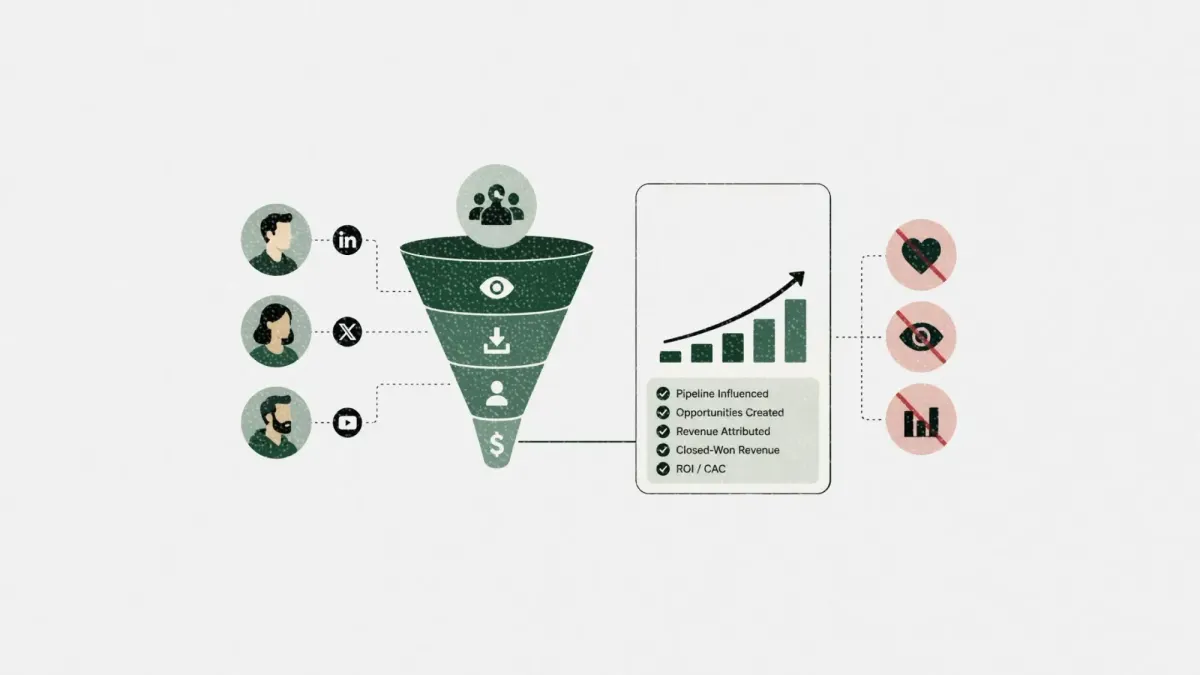
The trust risks teams underestimate
Longer relationships do not automatically look more authentic. They create more opportunities for an audience to notice weak product fit, repetitive talking points, undisclosed incentives, or a creator who promotes competing products without a coherent explanation.
Three safeguards matter most. First, write exclusivity by category and time window, not as a sweeping ban that prevents the creator from earning a living. Second, define content rights and paid amplification separately, since an ambassador agreement does not automatically give the brand unlimited rights to every post. Third, make disclosures visible on every relevant activation.
The FTC’s disclosure guidance treats free products, discounts, employment, and payment as material connections that may require disclosure. The word “ambassador” alone can also be too vague when audiences do not understand the commercial relationship. Global teams should map local requirements as well as US rules before content goes live.
Trust also depends on an exit path. Contracts should cover what happens if the product changes, the creator’s views shift, either side faces a brand safety issue, or the relationship simply stops performing. A respectful end is better than forcing months of visibly unconvincing content because the agreement has no workable release valve.
Use both, but give each a different job
The strongest creator programs do not treat ambassadors as a superior tier of influencer. They use the two models for different kinds of work. Influencers bring new voices, audience access, creative variety, and testing speed. Ambassadors bring continuity, product depth, feedback, and a recognizable human thread across the buyer journey.
Start with the job, select the relationship, and fund the operating model behind it. When a creator consistently proves audience fit, product fluency, and mutual trust, extend the relationship with better access and clearer shared value. Do not promise ambassadorship before the partnership has earned it.