Brand-as-creator strategy: what B2B marketers can learn from Ryanair, Wendy's, and Duolingo
The brand-as-creator playbook, translated for B2B marketers

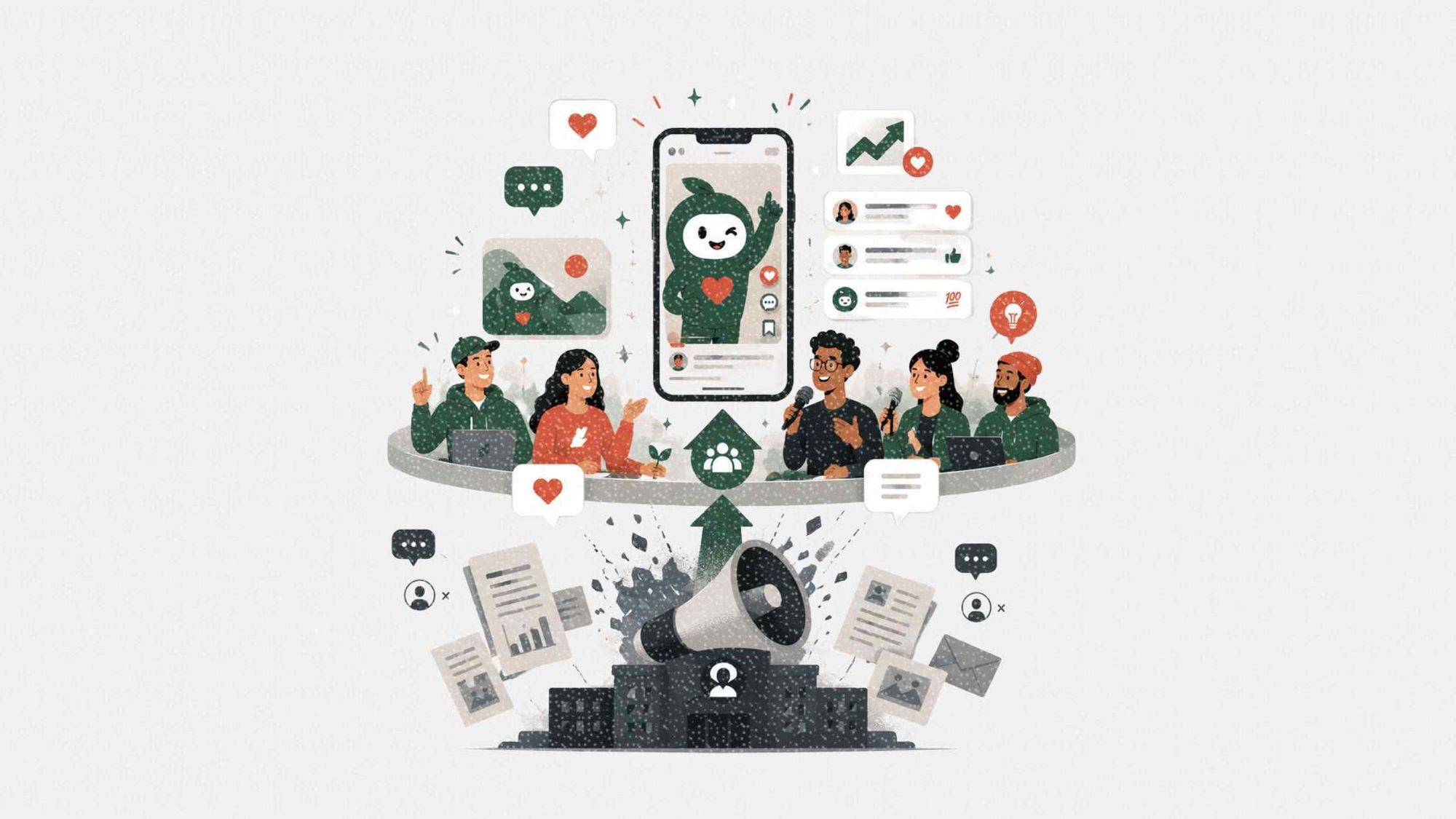
Ryanair roasts its own passengers on TikTok. Wendy's has spent a decade building a reputation for insulting people on purpose. Duolingo's owl mascot has faked its own death, twerked on a desk, and appeared in a Severance parody, all in the name of getting people to finish a language lesson. None of this looks like marketing in the traditional sense. It looks like the internet talking to itself, and that is exactly the point.
This is brand-as-creator strategy: treating a brand's social account like an individual creator's page rather than a broadcast channel, with the same posting cadence, the same willingness to be silly or self-deprecating, and the same instinct to react to a trend within hours instead of weeks.
It started in B2C, where the stakes of embarrassing a company are lower and the audience is already primed for entertainment. Increasingly, B2B marketers are asking whether the same instincts can work for a brand that sells accounting software or revenue intelligence.
Table of contents
Jump to each section:
- What is brand-as-creator strategy
- How three B2C brands built their creator personas
- Why B2B marketers are borrowing the playbook
- What brand-as-creator strategy looks like in B2B
- How to translate the strategy for a B2B brand
- Risks and guardrails to keep in mind
What is brand-as-creator strategy
Most corporate accounts are still run like press release feeds: an announcement, a product shot, a quote from an executive, posted on a schedule set weeks in advance. Brand-as-creator flips that model. The team behind the account treats the platform the way an individual creator would, watching the comment section for cues, riding a trending sound within a day of it appearing, and giving the brand a consistent, recognizable personality rather than a rotating cast of campaign taglines.
 Patrecia Meliana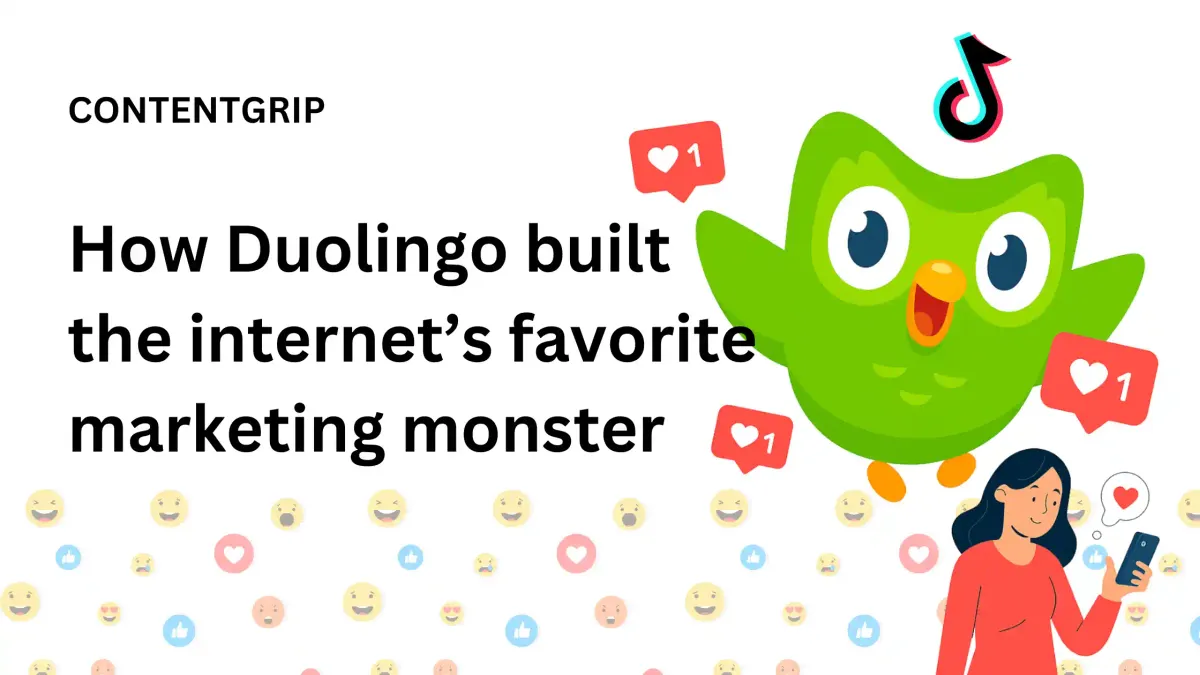
The approach depends on three things that traditional brand marketing usually restricts: speed, creative latitude, and a willingness to look unpolished. The account stops behaving like a company and starts behaving like a person with opinions, humor, and a memory of what happened in the replies yesterday.
How three B2C brands built their creator personas
Ryanair built its voice long before social media existed. Dara Brady, the airline's chief marketing officer, told Skift the tone has been consistently direct, cheeky, and self-deprecating for more than three decades, a personality that simply found a new outlet when TikTok arrived.
The airline leans into passenger complaints (cramped seats, the notorious windowless seat 11A, add-on fees) and turns them into memes instead of burying them in a statement, which is precisely why the tone reads as authentic rather than defensive.
Wendy's took a similar bet on Twitter in 2017, when the brand replied to a customer's jab about frozen beef with a line sharp enough to get screenshotted thousands of times. According to a case study on the strategy's development, that single exchange kicked off a deliberate roast persona that grew the account from under a million followers to one of the most-discussed fast-food brands online, eventually spawning an annual "National Roast Day" and a wave of imitators at other chains.
The lesson B2B marketers tend to skip is the one buried in that same case study: the voice only worked because Wendy's had a real product truth (fresh, never-frozen beef) to back up the confidence.
Duolingo is the clearest case of a brand that stopped talking about its product altogether. Chief marketing officer Manu Orssaud told Adweek that Duolingo's TikTok account "is not really a brand channel, it's Duo's channel," and that the team deliberately avoids discussing the app itself on social. Global senior social media manager Zaria Parvez, who revived the account as a 23-year-old new hire in 2021, has said the comment section functions as the team's creative brief.
The result: Duolingo's monthly active users grew from roughly 40.5 million in 2021 to 116.7 million by early 2025, alongside a 40% year-over-year jump in quarterly billings, a business outcome the company's own leadership credits in part to the mascot's cultural presence rather than any single paid campaign.
 Enricko Lukman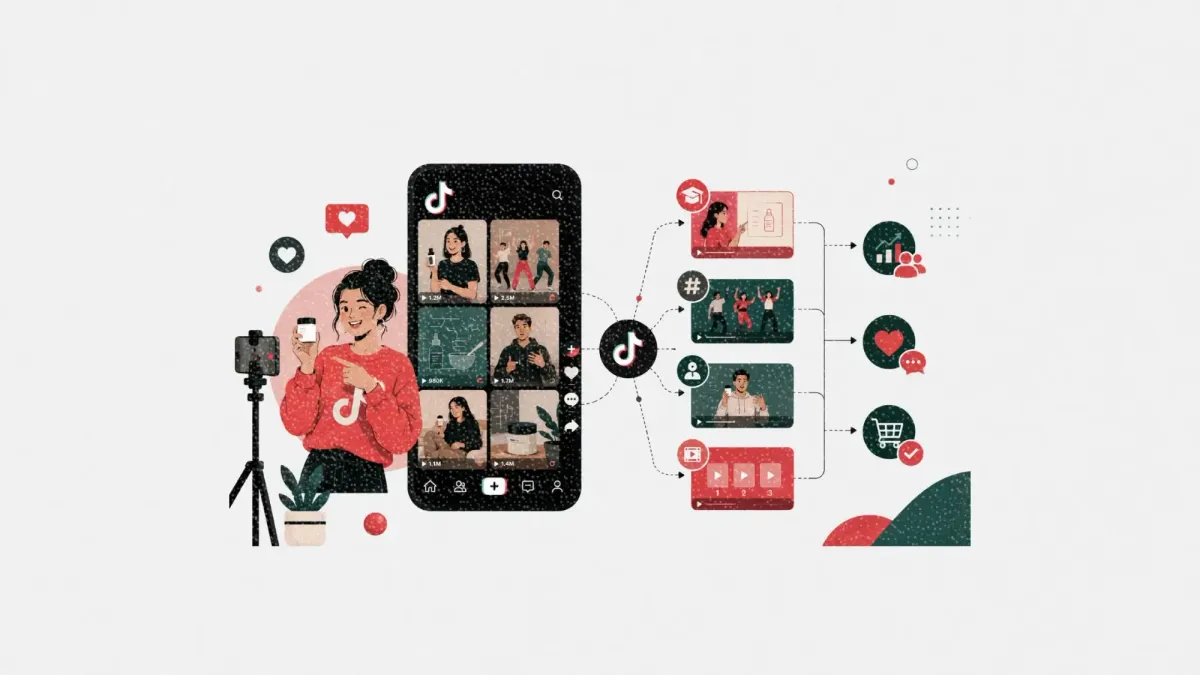
None of these three brands are B2B, and none of them are trying to close a six-figure software deal. But the underlying mechanic, an in-house team with the authority to post like a person rather than a press office, is exactly what B2B creator-style accounts are now attempting to copy.
Why B2B marketers are borrowing the playbook
B2B marketers have historically treated creator-style content as something other people do. That is changing quickly, and the shift shows up in the numbers. HubSpot's 2026 Social Media Marketing Report, based on a survey of more than 1,100 marketers, found that 77% say authenticity now beats production value for their brand on social, and B2B marketers who had previously dismissed creator partnerships as a B2C tactic are increasingly finding that subject-matter experts and industry voices on LinkedIn deliver a kind of trusted, category-specific reach that traditional B2B marketing struggles to produce. Influencer and creator use among B2B marketers has grown by roughly 21% year over year, according to the same report.
The reasoning tracks with what buyers say they want. B2B audiences on LinkedIn are increasingly rewarding personal profiles and subject-matter voices over polished company-page content, a dynamic that mirrors the B2C shift toward creators over traditional advertising.
Company page organic reach on LinkedIn has fallen sharply since 2024, part of a broader platform shift toward relevance-based delivery that rewards sustained engagement and perceived authenticity over raw follower count. For B2B marketers watching organic reach on branded pages decline, the appeal of a brand account that behaves like a person, rather than a logo, is less about chasing a trend and more about survival.
There is also a budget signal behind the shift. The same HubSpot survey found 60% of marketers plan to increase influencer investment in 2026, with mid-tier creators between 100,000 and 500,000 followers delivering the strongest results, a pattern that favors category-specific voices over mega-influencers with broad but shallow reach.
That maps closely onto how a B2B audience actually behaves online: narrower, more skeptical of polish, and more responsive to someone who sounds like they genuinely work in the category rather than a marketing department speaking on its behalf.
What brand-as-creator strategy looks like in B2B
A handful of B2B brands have already found their own version of the creator playbook, and it rarely means copying Duolingo's chaos wholesale.
Gong, the revenue intelligence platform, has built its LinkedIn presence around a steady stream of high-frequency, data-packed posts, publishing far more often than the typical B2B account and pairing that volume with tactical tips sales teams can use immediately.
Notion has taken a community-first approach, spotlighting user-generated content and giving its most engaged fans early access to new features, which turns the audience into active participants rather than passive followers. Even in paid video, the same instinct shows up: a breakdown of B2B LinkedIn video ads notes that Gong's advertising leans into consumer-grade production and a literal audio payoff on its own name, refusing to look like typical enterprise software marketing, while Notion's brand campaigns tell character-driven stories about the person using the tool rather than demoing the product itself.
What these examples share with Ryanair and Duolingo is not tone (Gong is not roasting its customers) but posture. The account behaves like it has a point of view and a personality that exists independently of the next feature release, and it shows up consistently enough that an audience starts to recognize it before they recognize the logo.
How to translate the strategy for a B2B brand
The translation from B2C to B2B is not a matter of making jokes about accounting software. It is a structural and organizational shift, and most B2B teams underestimate how much internal change it requires before the first post goes out.
- Give the social team creator-level autonomy. Duolingo's team approves its own content within a two-day cycle without waiting on senior leadership sign-off. A B2B equivalent does not need to move that fast, but it does need an approval process shorter than the multi-department review most enterprise marketing content goes through.
- Pick a voice tied to something true about the business, not a trend. Wendy's roast persona worked because it was backed by a real product claim. A B2B brand's creator voice should be anchored to something equally real: a genuine point of view on the category, a founder's personality, or an internal expert's actual way of talking.
- Let subject-matter experts be the face, not the logo. The LinkedIn data above points toward personal, expert-led content outperforming company-page posts. A creator-style B2B account often means turning engineers, salespeople, or the founder into the recurring "characters" the way Duo the owl became Duolingo's.
- Treat the comment section as research, not overhead. Every brand referenced in this piece uses replies and comments to decide what to post next, rather than sticking rigidly to a content calendar drafted a month out.
Dinda Anandita, Account Director at Content Collision, a content-led comms agency, says the biggest gap she sees is not creative confidence but structural readiness. "Most B2B brands ask for the funny TikTok without first building the fast approval process, the subject-matter expert who's willing to be on camera, or the tolerance for a post that doesn't perform," she says. "Brand-as-creator only works when the operating model changes, not just the content."
 Ariana Sorensen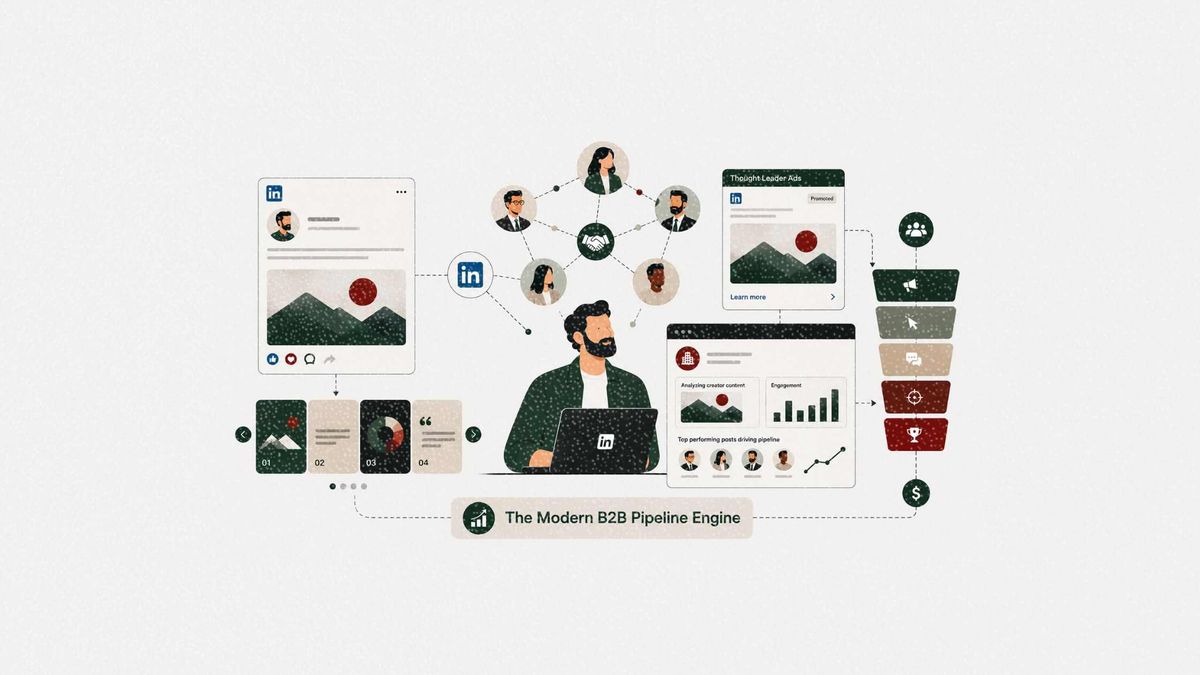
Risks and guardrails to keep in mind
Brand-as-creator strategy is not risk-free, and every brand in this piece has had a post land badly at some point. Ryanair's own marketing team has acknowledged that the tone is deliberately "not the norm" and that brands copying the approach without the same appetite for controversy often see it backfire. Duolingo builds in a Slack escalation path with legal and PR for anything flagged as high risk, with a same-day response commitment, which is a useful model for any B2B team nervous about handing creative control to a small group.
The more B2B-specific risk is credibility. A creator-style account that ignores the substance of what the company sells, or one that tries to force humor into a category where the audience genuinely wants technical depth, will read as try-hard rather than authentic. The brands that have made this transition work in B2B, Gong and Notion among them, kept the entertainment layered on top of a real product story instead of replacing it.
There is also an attribution problem worth planning for before launch. B2B marketers already report more difficulty tying social activity to pipeline than their B2C counterparts, and a creator-style account built purely for reach can make that harder still if the team has no plan for connecting engagement to actual buying signals.
Before greenlighting a brand-as-creator push, it is worth deciding upfront what a win looks like beyond views: branded search volume, inbound DM quality, or share of voice within the category are all more useful early signals than follower count alone. Getting the posture right matters more than getting the jokes right, and for most B2B teams, that starts with rethinking who gets to hit publish.