
Chelsea FC and Nike turn a kit launch into a global fan culture movement
The club's "Can't tame us" campaign shows how fan communities, culture, and anticipation are becoming the new playbook for sports marketing.

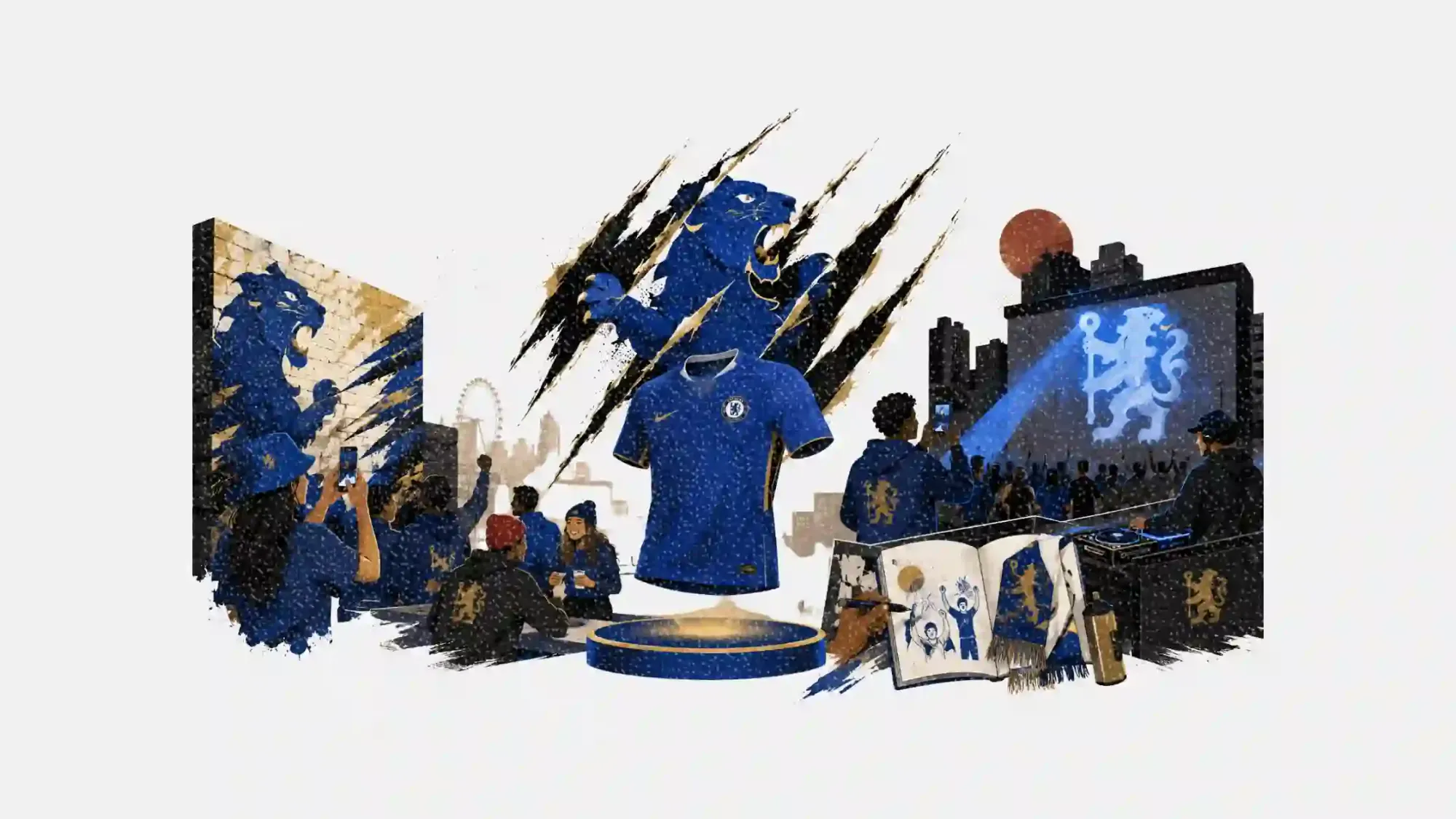
Chelsea FC's latest home kit launch is less about unveiling a football shirt and more about demonstrating how modern sports brands can build anticipation through culture, community, and fandom. Partnering with Nike, creative agency TILL DAWN, and strategy partner ICONIC, the club introduced its 2026/27 home kit through a campaign titled "Can't tame us."
The launch avoided many of the predictable tactics that dominate sports marketing. Instead of relying on celebrity influencers, polished reveal films, or controlled product drops, Chelsea embraced fan communities, leak culture, and real-world activations to create momentum across multiple markets.
For marketers, the campaign offers a compelling example of how brands can generate attention by participating in culture rather than interrupting it. Here's what happened, why it matters, and what brands can learn from it.
Table of contents
Jump to each section:
- How Chelsea FC launched its 2026/27 home kit differently
- Why fan culture became the centre of the campaign
- What marketers should know about community-led launches
- Why sports marketing is increasingly blending with entertainment
 Patrecia Meliana
How Chelsea FC launched its 2026/27 home kit differently
Chelsea FC and Nike unveiled the club's new home shirt through the global "Can't tame us" campaign, developed by TILL DAWN and built from a strategy created by ICONIC.
Rather than releasing a traditional launch film, the campaign focused on creating intrigue within fan communities both online and offline. Inspired by luxury fashion marketing, the launch included teaser activations, street-level executions, outdoor projections, murals, and "spotted in the wild" moments across London, Los Angeles, São Paulo, Sydney, and Hong Kong.
At the heart of the campaign was Chelsea's iconic rampant lion. Ahead of the official reveal, claw marks began appearing on posters, projections, and public installations, creating speculation among supporters. The lion symbol also served as an introduction to the club's refreshed badge following fan consultation.
The new kit features Chelsea's signature bright blue colourway, alongside Midwest gold detailing woven into the shirt through both the Nike Swoosh and rampant lion design.
Why fan culture became the centre of the campaign
One of the campaign's most notable decisions was Chelsea's refusal to follow the increasingly common influencer-first playbook.
Instead of seeding kits to paid ambassadors before launch, the club hand-delivered shirts to carefully selected supporters and cultural figures connected to football, music, and entertainment.
Examples included golfer Justin Rose wearing the kit during the PGA Championship, Brazilian musician Hariel performing in the shirt during a sold-out event in Rio de Janeiro, and appearances during content streams featuring Madonna.
The strategy intentionally embraced online speculation and kit leak culture. Rather than fighting unofficial conversations, Chelsea and its agency partners used them to build anticipation and encourage organic discussion.
According to ICONIC founder James Kirkhamm, the objective was to place the same product across multiple cultural touchpoints, platforms, and communities to sustain conversation throughout the launch period.
What marketers should know about community-led launches
Chelsea's campaign highlights several lessons that extend well beyond football marketing.
1. Community can outperform reach
Many brands still prioritise reach metrics over engagement quality. Chelsea focused on the places where fans naturally gather and interact rather than relying solely on large-scale media exposure.
This approach often creates stronger advocacy and longer-lasting conversation.
 Patrecia Meliana
2. Embrace cultural participation
The campaign demonstrates how brands can participate in existing cultural behaviours instead of trying to control them.
Rather than suppressing leaks and speculation, Chelsea incorporated those behaviours into the launch narrative.
3. Create anticipation before product availability
The most effective launches often begin long before the product becomes available.
The lion teaser campaign generated curiosity, discussion, and fan-generated content weeks before the official reveal.
4. Blend physical and digital experiences
Street activations, outdoor installations, livestream appearances, and social content worked together as a connected ecosystem.
For marketers, this reinforces the importance of integrated campaign planning across channels rather than treating each platform as a standalone activation.
 Patrecia Meliana
Why sports marketing is increasingly blending with entertainment
Chelsea's launch reflects a broader shift happening across sports marketing.
Football clubs are increasingly positioning themselves as cultural brands rather than purely sporting organisations. Partnerships with music artists, fashion labels, gaming companies, and entertainment properties are becoming central to audience growth strategies.
Chelsea brand director Scott Fenton noted that the club has spent recent seasons building cultural relevance through collaborations with organisations such as Roc Nation and WWE while strengthening ties with music and fashion communities.
The strategy mirrors wider industry trends. Earlier this year, Coca-Cola introduced a FIFA World Cup 2026 anthem featuring J Balvin, Amber Mark, Steve Vai, and Travis Barker, blending football and music to generate excitement around the tournament.
 Patrecia Meliana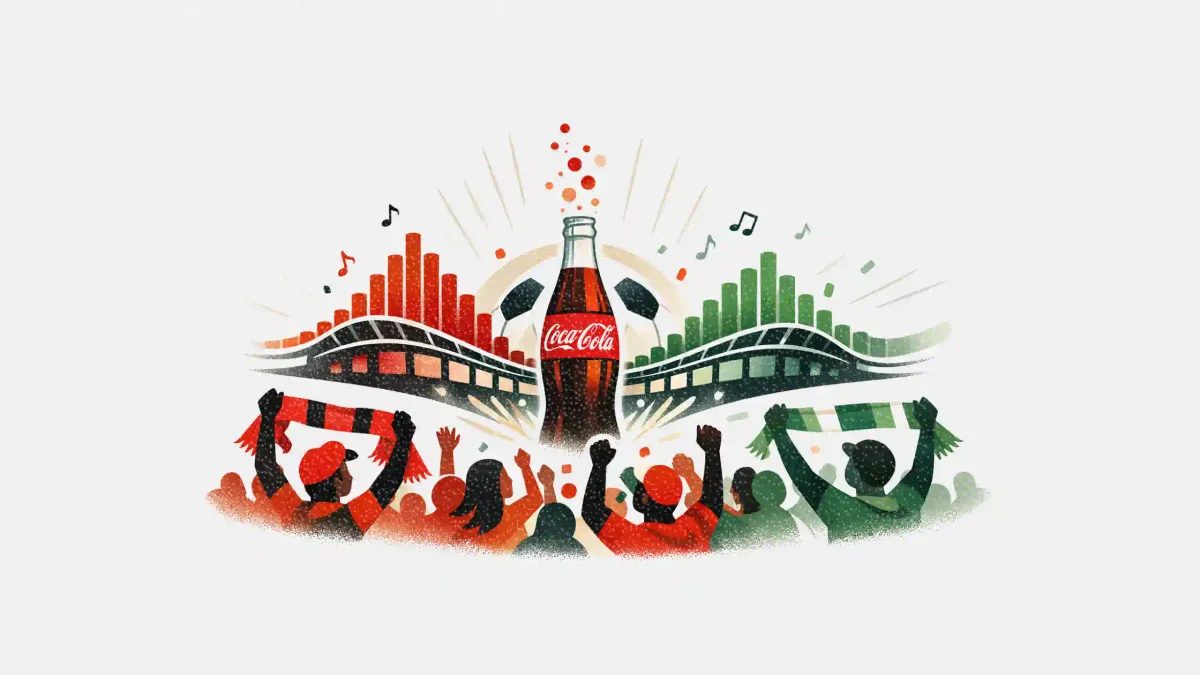
As younger audiences consume sport through social media, creators, music, fashion, and entertainment channels, marketers are increasingly finding value in connecting multiple cultural ecosystems rather than relying on traditional sponsorship models alone.
By leaning into fan culture, embracing community participation, and borrowing tactics from luxury fashion and entertainment marketing, Chelsea and Nike transformed a routine kit release into a global cultural moment.
For marketers, the lesson is clear: the most effective campaigns are often the ones that give communities something to talk about long before there is anything to buy.