
Stray Kids’ I.N returns for a second Damiani “Icons” campaign
Damiani’s “Icons” campaign returns with I.N and Mariacarla Boscono, leaning on heritage settings and collection-led styling to build continuity.

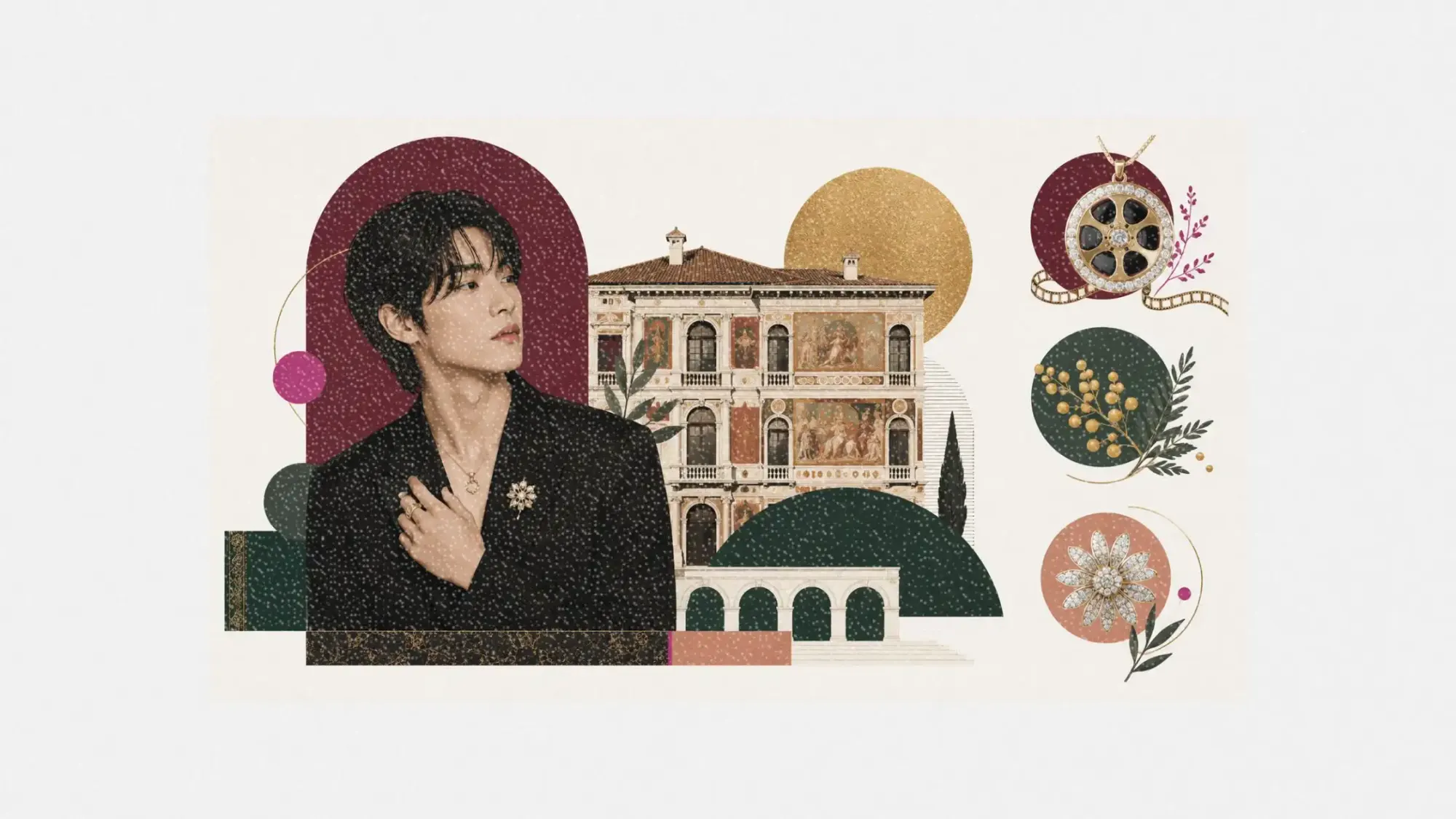
Damiani has put Stray Kids’ I.N (Yang Jeong-in) front and center again for a second ad campaign with the Italian jeweler, this time alongside supermodel Mariacarla Boscono.
The work continues the “Damiani Icons” concept introduced in prior ads, with portraits shot by photographer Larissa Hofmann and art direction by Christopher Simmonds.

Table of contents
Jump to each section:
- What Damiani’s new “Icons” campaign is emphasizing
- Why the creative choices matter for luxury brand building
- What this means for marketers
What Damiani’s new “Icons” campaign is emphasizing
The campaign positions I.N and Boscono in sophisticated portrait settings designed to cue “Italian timeless elegance,” using richly decorated Italian palazzos, visible frescoed walls, molding, antique furniture, and floral arrangements.
Wardrobe and product styling appear designed to balance modern celebrity cues with heritage luxury signals. I.N is photographed in daywear, including a quarter-zip knit and tailored pants, while wearing jewelry from Damiani’s Belle Époque Reel collections. Boscono is shown in two looks: a magenta sheer dress paired with pieces from Damiani’s Mimosa collection, and a rusty orange dress paired with earrings and a necklace from the Margherita Bloom range.

 ContentGrip
Why the creative choices matter for luxury brand building
Running a second campaign with the same ambassador and a consistent visual concept is a brand decision as much as a media one. Repetition can help luxury marketers reduce ambiguity around what the brand stands for, especially when product lines and categories expand.
Several strategic signals stand out:
- Ambassador continuity as a memory strategy. Damiani named I.N a global brand ambassador about a year ago, and putting him back into the campaign reinforces recognition rather than resetting the story each season.
- Category storytelling through styling and collections. The campaign anchors specific collections (Belle Époque Reel, Mimosa, Margherita Bloom) within a cohesive world. For luxury, that matters because many purchase decisions are made with partial product knowledge but strong brand associations.
- “Place” as a brand asset. The Italian palazzo settings do more than decorate the portraits. They function as shorthand for heritage and craftsmanship, helping translate legacy into something legible on fast-scrolling channels.
- Celebrity adjacency and positioning. Damiani has historically used high-profile celebrities in campaigns, and the brand’s ambassador roster includes both women and men (including South Korean actor Son Suk-Ku, named an ambassador in 2022). This type of positioning can widen the brand’s addressable audience while keeping the creative language consistent.
Separately, Damiani is also signaling interest in watchmaking by joining the Watches and Wonders exhibitors’ lineup in 2027. For marketers, that adds context: campaigns that build “icons” and timelessness can support credibility when a brand leans into adjacent categories.
What this means for marketers
Luxury campaigns often look like pure image work, but there are practical lessons in how brands use continuity, setting, and product storytelling to build preference over time.
- Treat ambassador renewals as brand architecture, not just talent rebooking
A second campaign run can work as an asset compounding strategy: it strengthens brand recall and reduces the need to re-explain the brand world in every flight. - Use setting to compress a lot of meaning into one frame
The Italian palazzo backdrops do narrative work quickly. That matters in environments where the first impression often determines whether audiences keep watching. - Connect campaign visuals to specific product lines, not just “the brand”
Naming and featuring distinct collections gives the creative a merchandising backbone. It also makes it easier to extend the campaign into retail, e-commerce, and content modules without losing consistency. - Keep the concept stable while varying execution details
The “Icons” idea stays consistent while the styling and collections rotate. That is a useful model for teams that need scale without creative fatigue.
Brands that rely on heritage cues still need modern distribution and modern talent strategies. This campaign shows one way to do that without shifting the brand voice: keep the world consistent, let the ambassador deliver reach, and let the product lines carry specificity.
It also highlights a broader point: when a brand has ambitions beyond its core category, “timelessness” messaging can act as connective tissue, making expansions feel like a continuation rather than a pivot.