Ecommerce influencer marketing: how brands turn creator attention into attributable sales
A practical ecommerce influencer marketing playbook for creator fit, shoppable content, attribution, conversion, and repeatable sales.


Ecommerce influencer marketing works best when creator attention can be connected to a buying action. That sounds obvious, but many campaigns still stop at views, engagement, and screenshots from a creator dashboard. In commerce, the more useful question is what happened after someone watched, clicked, saved, searched, added to cart, or bought.
The shift toward shoppable video, livestream commerce, affiliate links, and platform-native checkout makes that connection easier to see, but it also raises the standard for campaign design. Brands need creators who fit the product, content formats that answer real purchase questions, and a measurement plan that is built before the first post goes live.
Table of contents
Jump to each section:
- Start with the buying behavior, not the platform
- Choose creators for conversion context
- Brief for proof, not polish
- Make the path to purchase visible
- Separate platform sales from true incremental lift
- Build a roster that improves over time
- What good ecommerce influencer marketing looks like
Start with the buying behavior, not the platform
Ecommerce teams often begin by asking whether a campaign should run on TikTok, Instagram, YouTube, or an affiliate network. A better first question is what kind of buying behavior the product requires. A low-consideration beauty item can work with fast demonstrations and creator codes. A higher-priced product may need comparison, objection handling, repeat exposure, and a longer route from creator content to checkout.
The creator's job changes with that behavior. One creator may be strong at discovery, another at explaining how a product fits into a routine, and another at closing demand through livestreams or affiliate content. Treating all three as interchangeable usually produces weak briefs and messy reporting.
Map the purchase journey before you map the creator list. Decide whether the campaign is supposed to create discovery, consideration, conversion, or repeat purchase. Then choose formats and creators that can realistically move that stage.

Choose creators for conversion context
Follower count does not tell you whether a creator can sell a specific product. The useful signals are closer to the purchase itself: comment quality, repeated product use, category fluency, audience questions, previous affiliate behavior, and whether followers already treat the creator as a source of recommendations.
For ecommerce, brand fit should include product-use credibility. A creator who can show texture, sizing, setup, durability, ingredients, workflow, or before-and-after context gives the audience more decision support than a generic endorsement. That does not mean every campaign needs a tutorial, but it does mean the content should reduce some form of uncertainty.
Look at how people respond to the creator's unsponsored content before approving a paid partnership. Do followers ask where something came from, request links, compare alternatives, or return with follow-up questions? Those behaviors can be more useful than a large but passive audience.
Brands should also distinguish between creators who are good at making content and creators who are good at moving product. The same person can do both, but the evidence is different. A polished feed proves production quality. It does not prove conversion ability.
Brief for proof, not polish
Ecommerce creator briefs should protect the facts while leaving room for the creator to demonstrate the product in a believable way. Over-scripted content often strips out the details that help people decide whether to buy. The result may be visually perfect and commercially weak.
Build the brief around the purchase questions the audience is likely to have. For apparel, that might include fit, fabric, movement, and sizing. For beauty, it may be application, texture, routine fit, and visible results. For electronics, setup, compatibility, speed, battery, or workflow may matter more than a broad lifestyle message.
Dinda Anandita, Account Director at content-led comms agency Content Collision: "In ecommerce campaigns, creators are most useful when they answer the questions a buyer would normally ask before checkout. The brand should be strict on factual claims, disclosure, and the offer, but flexible enough to let the creator show the product in the way their audience already trusts."
Disclosure still needs to be obvious. The FTC's guidance for social media influencers says material connections between a brand and an endorser should be made clear to the audience. For brands operating across markets, local rules may add further requirements, so disclosure should be treated as part of campaign operations rather than a caption detail.

Make the path to purchase visible
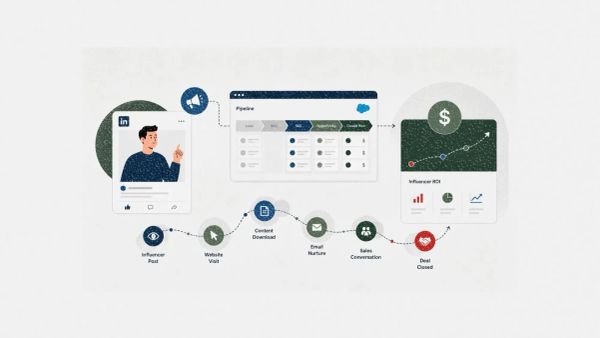
Attribution gets much easier when every creator has a defined path to purchase. That can include creator-specific links, UTM parameters, affiliate IDs, promo codes, platform-native product tags, dedicated landing pages, or a combination of those tools. The important part is consistency.
Do not wait until reporting week to decide how the campaign will be tracked. Tracking belongs in the brief, creator onboarding, landing-page setup, and ecommerce analytics plan. If the same generic link is handed to every creator, the brand has already given up useful information before the campaign starts.
TikTok Shop is a useful example of how commerce and creator activity are getting closer together. At its Singapore Summit, TikTok Shop said it aims to support more than 3,000 creators in Singapore by the end of 2026. The company also highlighted a local coffee business that reported 42% month-on-month GMV growth in June 2026 after working with TikTok Shop's onboarding and Growth Accelerator program. Those figures are company-reported, so they should be read as platform case evidence rather than an independent benchmark.
The practical lesson is not that every brand should move checkout into a social platform. It is that the distance between content and transaction is shrinking. Brands need to know which part of that path they control, which part the platform controls, and what data remains available after the sale.
Separate platform sales from true incremental lift
A creator dashboard can show attributed orders without proving that every order was incremental. Some buyers may already know the brand, have seen paid media, received an email, or visited the site before the creator touchpoint. That does not make creator attribution useless, but it changes how the number should be interpreted.
Use at least two layers of measurement. The first is direct performance: creator-attributed clicks, add-to-carts, conversion rate, revenue, average order value, and new-customer share. The second is broader lift: branded search, assisted conversions, repeat purchase, customer acquisition cost by creator cohort, and whether exposed audiences buy differently from non-exposed audiences.
Direct attribution is useful, but it is not the same as causality. The closer the campaign gets to revenue, the more useful it becomes to compare creator performance with other acquisition channels and with a baseline period.
For repeatable programs, cohort analysis matters. A creator who drives fewer first orders but stronger repeat purchase may be more valuable than a creator who produces a large one-day spike. Ecommerce teams should look beyond launch-day revenue when the product category naturally supports retention.
Build a roster that improves over time
The biggest advantage of performance data is not the final report. It is better creator selection in the next campaign. Keep a simple record of who drove qualified traffic, who converted, who brought in new customers, which formats worked, what objections appeared in comments, and which creators were easy to work with operationally.
That record helps brands separate one-off spikes from reliable partners. A creator who consistently produces modest but profitable sales may deserve a deeper relationship. Another creator may be better used for awareness because their content travels widely but converts poorly through direct links.
Compensation can evolve with the evidence. Some creators fit a flat-fee model, some work well with affiliate commission, and others may suit a hybrid structure with guaranteed compensation plus performance upside. The right model depends on creator leverage, production effort, brand risk, and how directly sales can be attributed.
Long-term partnerships can also improve creative quality because the creator learns the product and the brand learns how that creator's audience behaves. The goal is not to lock every creator into an ambassador contract. It is to stop rebuilding the campaign from zero every time.
What good ecommerce influencer marketing looks like
Good ecommerce influencer marketing connects the creator's credibility to a real buying decision. The creator has a clear role, the content answers useful purchase questions, the path to checkout is trackable, and the reporting distinguishes platform-attributed sales from broader business impact.
For ecommerce teams, the operating test is simple: can you explain why this creator should influence this purchase, what evidence the content gives the buyer, and how the brand will know what happened after the content goes live? If those answers are clear before launch, creator marketing becomes easier to optimize and much harder to dismiss as an awareness-only channel. That discipline matters in practice.