The real marketing lesson behind the “Millennial vs Gen Z” trend
Brands are turning generational copy jokes into a lesson on attention, context and cultural fluency.

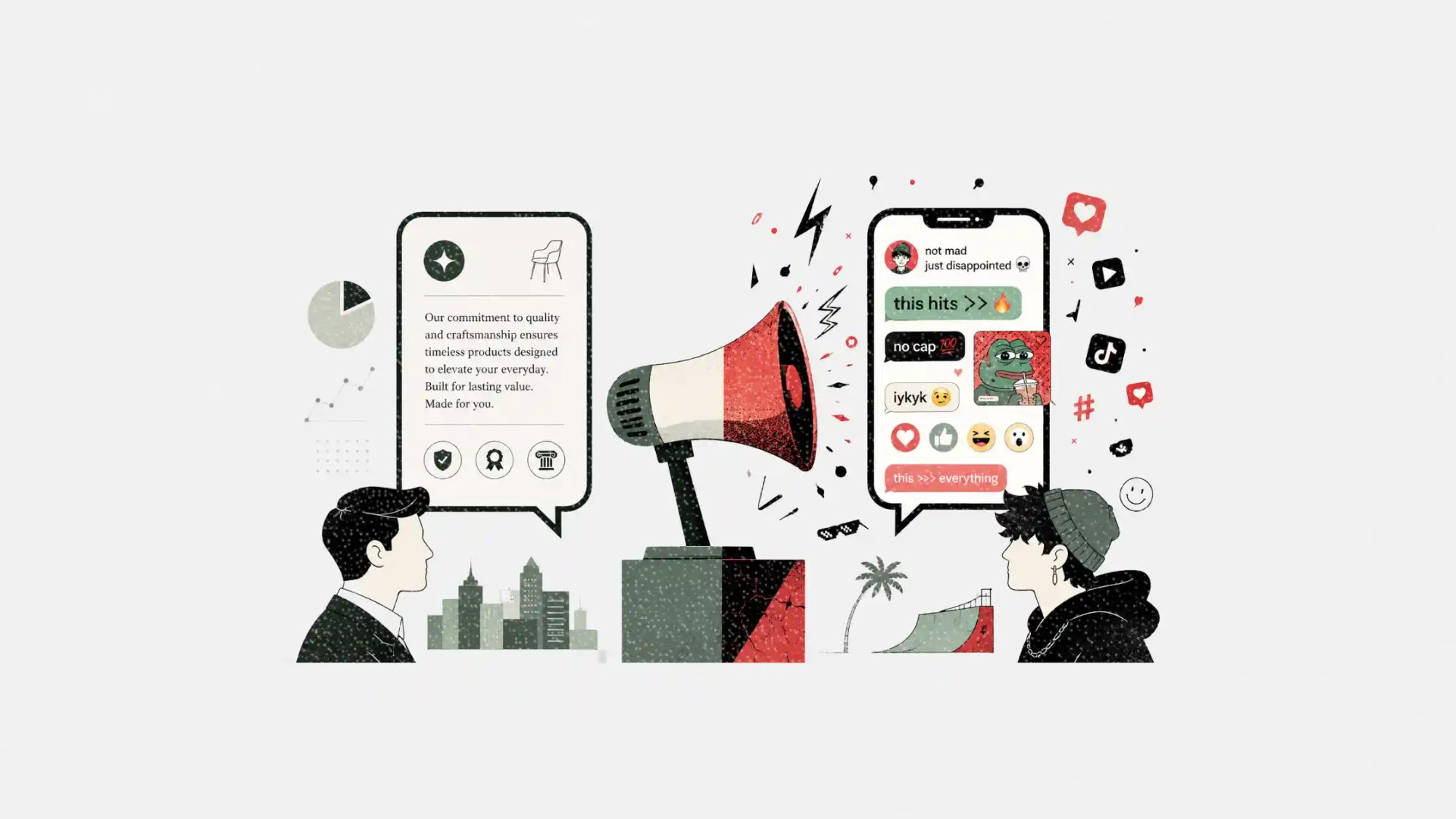
A growing social media trend is turning generational copywriting into brand entertainment. Companies are rewriting the same message for millennials and Gen Z, using the contrast to show how differently each audience processes brand communication online.
For marketers, the joke lands because it exposes a real strategic tension. Millennials are often associated with fuller explanations, polished storytelling and structured copy. Gen Z is being framed as faster, sharper and more fluent in memes, creators, sounds, emojis and cultural shorthand.
This article explores how the “Millennial vs Gen Z” copy trend became a brand moment, why context now carries more persuasive weight, and how marketers can stay culturally relevant without sounding painfully forced.
Table of contents
Jump to each section:
- How brands joined the millennial vs Gen Z copy trend
- Why Gen Z copy relies on recognition, not explanation
- Context is doing the heavy lifting for marketers
- The cringe risk brands cannot ignore
- What marketers should take from the trend
How brands joined the millennial vs Gen Z copy trend
The internet has found another way to pit millennials against Gen Z, and brands have wasted no time joining the group chat.
The trend is simple: brands rewrite their marketing messages for both generations. The millennial version tends to explain the product, build the story and land the message with a clear structure. The Gen Z version cuts the copy down, leans into emojis, lowercase captions and “iykyk” energy.
Here are some of the brands that jumped on the trend:
- Wendy’s compared a longer PR-style explanation of its square patties with the Gen Z line: “made right, not round.”
- American Express turned a detailed Gold Card pitch into: “It’s giving ... your hobbies are eating and traveling.”
- Care Bears moved from a full product description to: “it’s giving ✨ luck ✨.”
- Stanley1913 turned a leakproof bottle pitch into: “leakproof lid = hallelujah fits in your cupholder - hallelujah.”
- Chagee shortened its BO-YA Jasmine Green Milk Tea description to: “jasmine milk tea final boss.”
- Crocs reduced a product and comfort pitch to: “shoes with holes.”
- DBS Bank reframed a savings campaign as: “it’s giving... savings.”
- CeraVe swapped ingredient-led skincare copy for: “Flake free era 💙.”
- Listerine moved from benefit-led mouthwash copy to: “This one doesn’t burn, bestie. Period.”
- Nespresso and other lifestyle brands also used the split-screen format to show how the same product can be sold through detailed explanation or cultural shorthand.
What started as a social media joke about side parts, skinny jeans and crying-laughing emojis has become a commentary on modern marketing. Same product. Same Gen Z campaign objective. Completely different language instincts.
Why Gen Z copy relies on recognition, not explanation
The real shift is not that Gen Z refuses to read. It is that Gen Z expects brands to get to the point faster.
As Peilin Lee, former head of marketing at Nespresso Singapore and now communications and leadership coach, put it: “Millennial marketing was built on aspiration and validation. Gen Z communication is built on recognition and cultural shorthand.”
She added: “Brands used to say, ‘Here’s why you should join us.’ Now they’re saying, ‘If you get this, you’re one of us.’”
That is the core of the trend. Gen Z messaging often works by giving audiences just enough to recognize the moment, then letting them complete the meaning themselves.
“From a millennial lens, the instinct is to explain because we were trained to earn trust through context,” said Enricko Lukman, CEO at C2 Media. “But Gen Z already assumes brands are selling. They do not need the full argument upfront. They need a signal that the brand understands the moment, then a clear reason to care once they lean in.”
Joanne Lim, head of marketing at Virgin Active, SEA, framed it as a shift in media behavior, not intelligence. “Gen Z has grown up in a faster, more visual and context-driven environment, where meaning is carried not just by copy, but by format, timing, memes, creators, sounds and comments.”
In other words, the caption is no longer the whole message. It is one piece of the system.
 Patrecia Meliana
Context is doing the heavy lifting for marketers
For brands, shorter copy does not mean simpler strategy. It means the rest of the content has to work harder.
Visuals, audio, platform-native formats, creators, comments and timing now carry more of the persuasive load. A short caption works only when the audience already understands the cultural cue.
Lim summed it up neatly: “The copy is no longer doing the heavy lifting. Context is.”
That does not give brands permission to be vague. Linda Hassan, former group chief marketing officer of Domino’s Pizza Malaysia and Singapore, warned that “brands still need to ensure that the product value is clear enough for consumers to understand why it matters.”
This is where many brands get it wrong. They confuse brevity with ambiguity. The best Gen Z-facing content may be short, but it still has a job to do.
The cringe risk brands cannot ignore
Cultural fluency is a high-risk game. When a brand gets the tone right, it feels native. When it gets the tone wrong, it feels like a corporate Slack channel discovered TikTok three weeks late.
Pat Law, founder of GOODSTUPH, said the expectation has changed: “Millennials tolerated brands trying to be cool. Gen Z expects brands to already understand the room before speaking.”
Lee also warned that casual language requires more precision, not less. “If one element feels slightly off, brands risk being immediately labelled ‘cringe’ and having a generation write you off as being dated.”
The lesson for marketers is not to chase every trend. It is to know which rooms the brand has permission to enter.
 Patrecia Meliana
What marketers should take from the trend
Here’s what marketers should take from the trend: the issue is not whether Gen Z reads less, but whether brands are making the right parts of the message do the right jobs. Brevity can work, but only when the strategy behind it is sharp.
- Stop treating brevity as laziness
Lim said Gen Z consumers are “constantly deciding what deserves their attention, what feels useful, and what feels like a brand trying too hard.” That is not laziness. That is filtering.
- Build a clear message hierarchy
The hook can be cultural, but the product truth still needs to be obvious. A meme may earn the pause, but the offer has to survive the joke.
- Match the message to the medium
A TikTok caption, Instagram carousel, digital billboard and email sequence should not carry the same copy load. Each format has a different job, pace and level of context.
- Do not confuse slang with strategy
A lowercase caption and three emojis will not save a weak idea. As Lim put it: “The best brands will not choose between cultural relevance and clarity. They will use culture as the doorway, then make sure the product, benefit and call to action are still unmistakable.”
The “Millennial vs Gen Z” copy trend is funny because it is exaggerated. It matters because it is true enough. For marketers, the assignment is not to write less. It is to make every word, visual and cultural cue earn its place.