
Hyundai backs CNN’s ‘K-Everything’ series as brands lean harder into culture-led marketing
Hyundai and CNN are betting that Korean culture, not traditional advertising, is the future of global brand relevance.

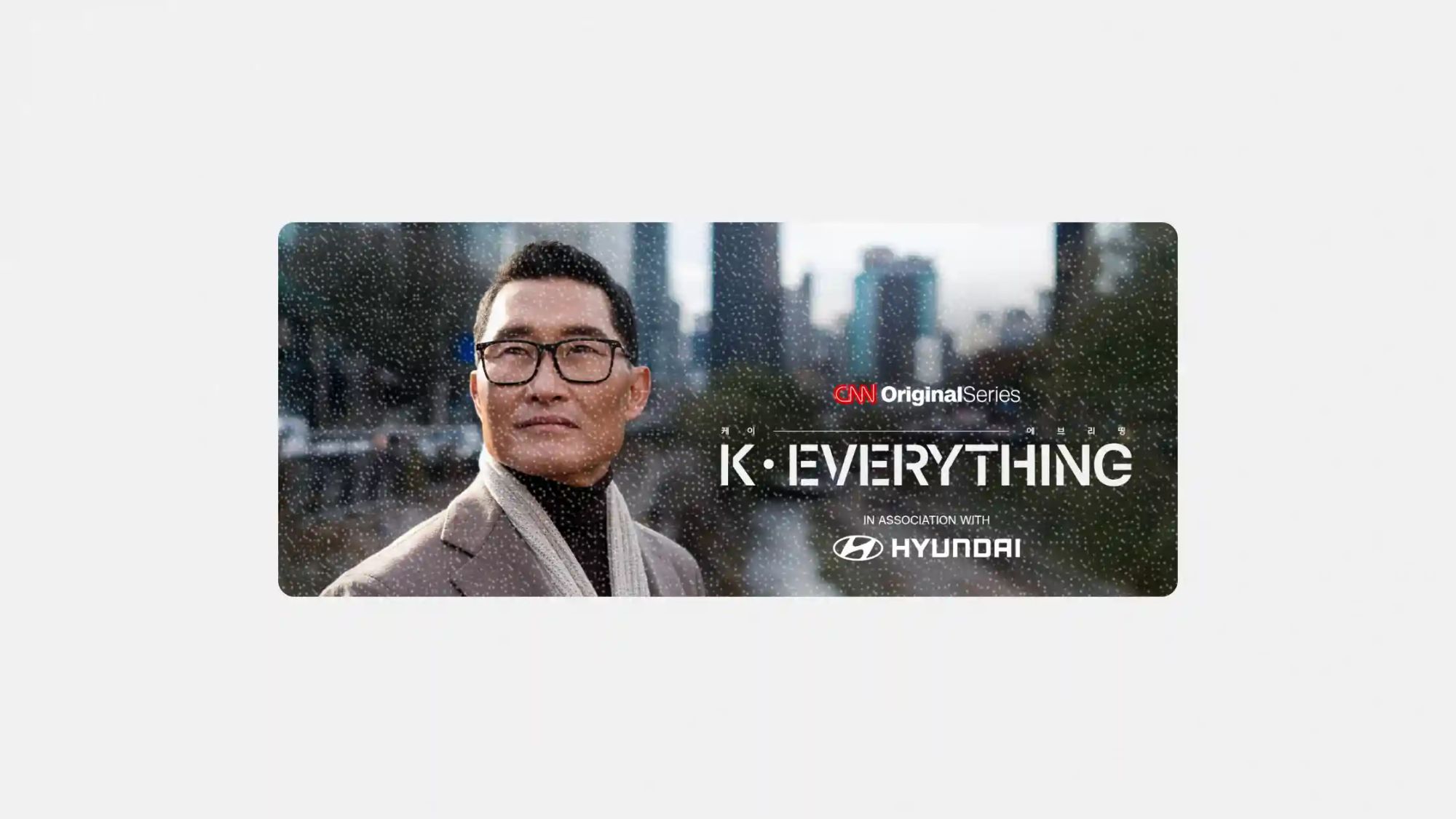
Hyundai Motor is expanding its long-running partnership with CNN International Commercial (CNNIC) with a new branded content campaign built around Korean culture, not cars. The centerpiece is ‘K-Everything’, a four-part CNN Original Series hosted and executive produced by actor Daniel Dae Kim, exploring the global rise of Korean music, film, food, and beauty.
The move reflects a wider shift in brand marketing. Instead of pushing product-first messaging, global brands are increasingly using entertainment, cultural storytelling, and creator ecosystems to build long-term audience relevance. For Hyundai, the campaign also ties directly into its “Progress for Humanity” positioning while reinforcing its Korean identity at a moment when Korean culture continues to dominate global entertainment and consumer trends.
For marketers and PR teams, the campaign is another sign that branded media partnerships are evolving beyond sponsorship logos and pre-roll ads. Brands want deeper integration into premium storytelling environments that carry cultural credibility and emotional resonance.
Table of contents
Jump to each section:
- Why Hyundai is sponsoring CNN’s ‘K-Everything’ series
- What ‘K-Everything’ covers and who appears in the series
- Why culture-led marketing is becoming more valuable for global brands
- What marketers should know about branded entertainment partnerships
- What this campaign says about the future of global brand storytelling
Why Hyundai is sponsoring CNN's 'K-Everything' series
Hyundai Motor and CNN International Commercial announced an expanded global partnership centered around ‘K-Everything’, a CNN Original Series exploring the global influence of Korean culture. The series is hosted by Daniel Dae Kim and spans four episodes focused on music, film, food, and beauty.
The partnership builds on a 22-year relationship between Hyundai and CNNIC, which previously included campaigns tied to series like ‘Visionaries’ and ‘Saved by the Future’. According to CNNIC senior vice president Cathy Ibal, the project also represents the first time CNN has collaborated with a brand partner on a CNN Originals Series for global distribution.
The campaign extends beyond television. In addition to airing on CNN International and streaming on HBO Max, the initiative includes a dedicated digital hub and supporting social content designed to amplify Korean creativity and cultural influence across platforms.
Hyundai framed the campaign as an extension of its “Progress for Humanity” vision, positioning Korean cultural influence alongside innovation and global impact. The company also linked the project to its own transformation from a domestic automaker into a global mobility brand.
What 'K-Everything' covers and who appears in the series
The series explores the industries and personalities driving the Korean Wave, or Hallyu, which has become one of the most influential cultural exports in the world.
Featured personalities include:
- Music: Psy, Taeyang, Jeon Somi, Allday Project, and Meovv
- Film: Lee Byung-hun, Yeon Sang-ho, Kim Eun-sook, and Miky Lee
- Food: Corey Lee, Mingoo Kang, and Cho Hee Sook
- Beauty: Irene Kim and Leo J
Rather than focusing on celebrity culture alone, the series positions Korean creativity as an interconnected ecosystem spanning entertainment, lifestyle, cuisine, fashion, and digital influence.
That framing matters for marketers. Korean culture has become deeply embedded in global consumer behavior, especially among younger audiences who increasingly discover trends through fandoms, creators, streaming platforms, and social communities instead of traditional advertising.
The series premiered globally on May 9, 2026, airing weekly on CNN International while also streaming on HBO Max.
Why culture-led marketing is becoming more valuable for global brands
Hyundai’s partnership reflects a broader marketing shift already reshaping global campaigns.
Brands are moving away from transactional messaging and toward cultural alignment. Instead of simply advertising products, companies increasingly want to participate in the stories, communities, and trends audiences already care about.
This strategy offers several advantages:
- Cultural storytelling typically generates longer engagement cycles than campaign-based advertising
- Entertainment partnerships can create stronger emotional association than product-centric ads
- Streaming and digital distribution extend global reach beyond traditional TV audiences
- Creator-driven ecosystems offer stronger social amplification opportunities
K-culture is especially attractive because it already operates as a global engagement engine. K-pop fandoms, Korean beauty communities, streaming audiences, and food creators collectively drive billions of interactions across TikTok, YouTube, Instagram, and streaming platforms.
For brands, attaching themselves to those ecosystems creates cultural proximity that traditional sponsorships often fail to achieve.
The campaign also highlights how entertainment media companies are evolving branded content strategies. Instead of selling advertising inventory alone, publishers increasingly offer integrated storytelling partnerships where brands become part of the content environment itself.
 Patrecia Meliana
What marketers should know about branded entertainment partnerships
For marketers considering similar partnerships, Hyundai’s campaign offers several important lessons.
1. Cultural relevance now matters more than product visibility
Audiences increasingly ignore overt promotional messaging. Campaigns tied to culture, identity, and entertainment can often create stronger long-term brand affinity than traditional product marketing.
2. Premium media partnerships still carry credibility
Even in the creator economy era, partnerships with trusted media brands like CNN can provide legitimacy, production quality, and global distribution that social-first campaigns may lack.
3. Multi-platform distribution is now essential
The campaign combines television, streaming, digital hubs, and social media amplification. That integrated structure is becoming standard for large-scale brand storytelling campaigns.
Marketers should think beyond single-platform activations and build campaigns that travel naturally across streaming, social, creator, and owned media environments.
Patrecia Meliana
4. Cultural storytelling creates stronger PR angles
Campaigns tied to larger cultural movements often generate more organic press coverage than traditional brand campaigns because they connect to broader audience conversations.
This is particularly useful for global brands looking to maintain relevance without relying entirely on paid advertising.
5. Long-term partnerships create stronger narrative consistency
Hyundai’s 22-year relationship with CNNIC adds continuity and trust to the collaboration. Long-term media relationships can help brands build recognizable storytelling ecosystems instead of constantly reinventing campaign structures.
What this campaign says about the future of global brand storytelling
The Hyundai-CNN partnership signals where global brand marketing is heading next.
Brands increasingly want to behave more like media companies, investing in storytelling ecosystems instead of isolated ad campaigns. At the same time, publishers and streaming platforms are becoming more open to integrated sponsorship models that blur the line between entertainment, documentary content, and brand positioning.
The rise of K-culture also reinforces how global influence is becoming more decentralized. Brands no longer need to rely solely on Western entertainment ecosystems to drive cultural relevance. Korean entertainment, creators, and lifestyle trends now shape mainstream consumer behavior across regions.
For marketers, the bigger takeaway is clear: culture is no longer a side element of marketing strategy. It is becoming the strategy itself.
Brands that understand how to authentically connect with cultural movements, creator ecosystems, and entertainment communities will likely have a major advantage as audiences continue moving away from traditional advertising experiences.