
IKEA turns football’s “lying behind the wall” moment into sofa discounts
IKEA Saudi Arabia offers sofa discounts when a player lies behind the free-kick wall, with savings tied to shirt numbers and DM redemption.

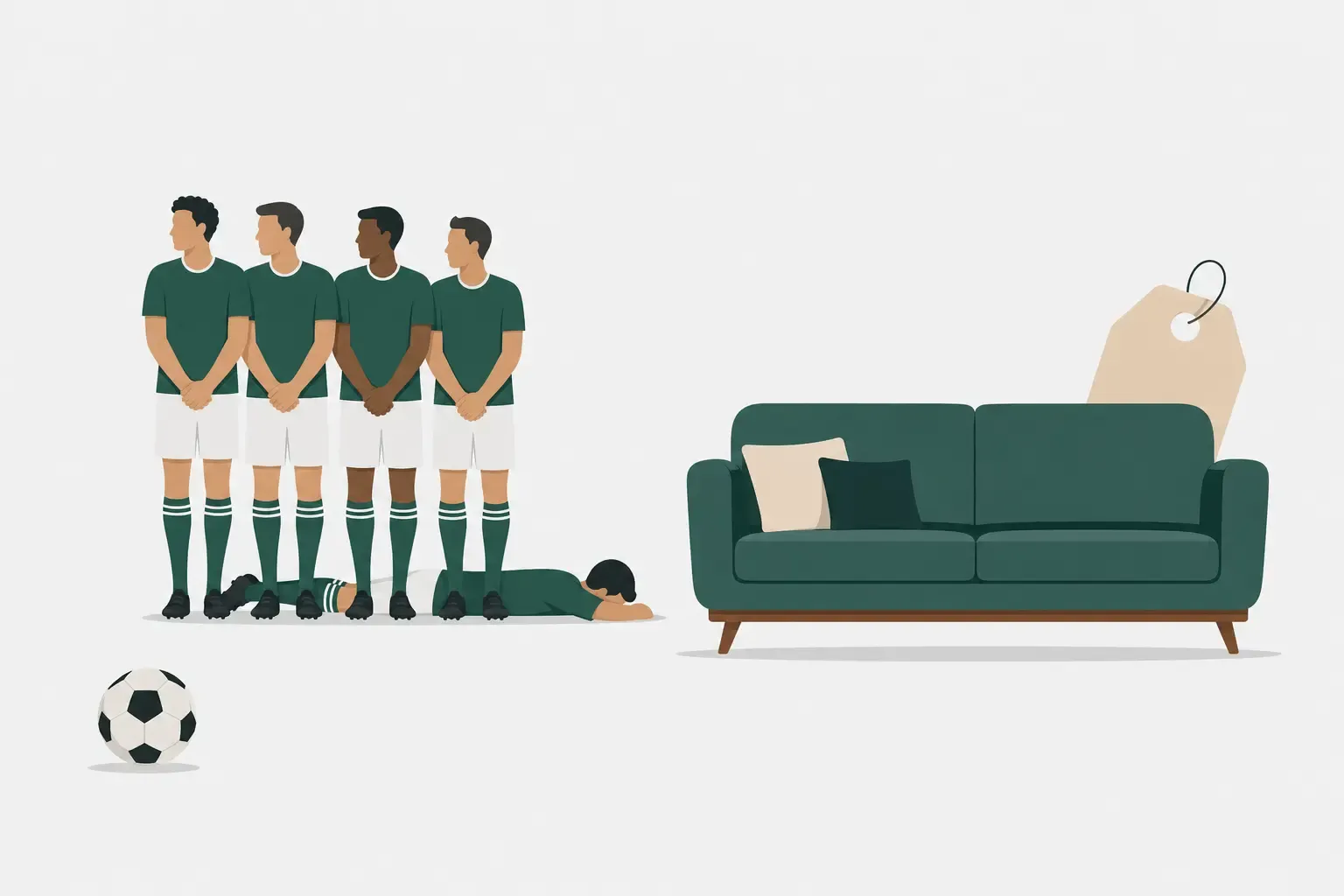
There’s a very specific kind of football chaos that fans have gotten used to: the free-kick wall goes up, the camera cuts, and someone randomly drops flat on the grass behind the wall like they’re about to start a floor workout mid-match.
That “human speed bump” move is meant to block low free kicks, but it also looks a lot like how plenty of people watch late-night matches at home: stretched out and trying to get comfortable. IKEA Saudi Arabia leaned into that visual with a reactive offer it described in an official announcement.
Table of contents
Jump to each section:
How “Flat Out” works
IKEA launched “Flat Out” in Saudi Arabia: every time a player lies flat behind the free-kick wall, fans can earn a discount on sofas.
The mechanic is intentionally simple and second-screen friendly. Viewers watch for the free kick, capture the moment when the player lies down, then DM IKEA Saudi Arabia with their email and phone number to receive a discount.
The discount value is tied to the player’s shirt number. If player number 25 is the one lying behind the wall, the discount is 25% off. The campaign has already generated multiple sofa discounts, with more matches still to play.
 Editorial Team
Why this tactic was the right cultural hook
This defensive move is already a mini talking point in football culture because it is practical, slightly funny, and instantly recognizable even if you only watch casually. It is the kind of on-field detail that makes people nudge a friend and go, “There he is again.”
That recognition matters. IKEA is not asking people to learn a new behavior from scratch. It is rewarding something fans are already doing: watching closely, noticing the weird little patterns of modern football, and reacting in real time.
The comfort parallel also lands because it is literal, not forced. The player is physically “flat out” on the pitch. Fans are physically flat out on the sofa. The brand connection is built from a shared visual moment rather than a slogan.
Alsulaiman group chief marketing and communications officer Rami Rihani framed it as creating brand interactions that do not interrupt the match experience, but instead add a “game within the game” for viewers who are already locked in.
What this means for marketers
Reactive discounts are easy to copy. Building a mechanic that feels native to how people watch and talk about a sport is harder. This idea shows how a brand can enter a live cultural moment without dragging attention away from it.
- Treat the broadcast like a shared language, not just media inventory
The campaign is built on a visual that fans understand instantly. When the “trigger” is already part of the audience’s vocabulary, the brand does not need heavy explanation or repeated reminders. - Make the reward feel proportional to the moment
Tying the discount to the player number is a clean piece of logic fans can grasp in one second. That kind of simple math helps a reactive offer spread because people can retell it easily. - Design for second-screen behavior, not perfect attention
Asking people to screenshot and DM matches how many viewers already behave during late-night games: phone in hand, messaging, sharing, clipping moments. The flow matches reality. - Let participation feel like “spotting it first,” not filling in a form
The fun is in catching the exact moment, not in navigating a complex redemption journey. The brand is rewarding observation, which makes the interaction feel more like a fan flex than a transaction. - Use commerce as the punchline, not the opening line
The emotional hook comes first: the absurdity of the tactic and the comfort comparison. The sofa discount lands as a natural extension of the joke, which helps it feel less like an ad and more like part of the match-night experience.
Zooming out, “Flat Out” is a reminder that the most effective sports-adjacent marketing is often about micro-moments, not mega sponsorships. Fans build rituals around tiny recurring details, and brands can earn attention by understanding those rituals well enough to play along.
It also shows a shift toward “live-trigger” commerce that does not demand new content production every week. If the trigger is embedded in the sport itself, the brand’s job becomes setting clear rules, making redemption easy, and letting fans do the spotting and sharing.