Types of influencer marketing campaigns: the B2B format guide
The useful way to choose an influencer campaign is by the job it must do for the buyer, the creator role, and the metric that proves it worked.


Most teams do not fail because they picked the wrong creator. They fail because they picked the wrong campaign structure. The useful way to compare the types of influencer marketing campaigns is not by asking which format looks most creative. It is by asking what job the creator must do for the buyer, what proof the content needs to carry, and what the business can measure afterward.
That distinction matters more in B2B, where a creator may need to explain a category, demonstrate a product, strengthen an event, or give a buying committee confidence to act. Sponsored posts, demos, affiliate programs, and long-term expert partnerships create trust in different ways.
Table of contents
Jump to each section:
- Choose the campaign job before the format
- Eight types of influencer marketing campaigns
- How LinkedIn BrandLink turns one format into a system
- Match each campaign type to the right metric
- Build a mixed campaign without blurring accountability
- Choose the format that protects trust
Choose the campaign job before the format
Before writing a brief, define the change you need the creator to produce. "Awareness" is too broad to be useful. Do you need buyers to understand a new problem, trust a claim, see the product work, register for an event, or enter a measurable conversion path?
The answer determines the right campaign type. It also determines what evidence the creator needs. Category education may require original data and a credible expert point of view. A product demo requires real access and room to show limitations. A lead-generation campaign needs a clear next step, creator-specific tracking, and an attribution window that reflects the sales cycle.
Dinda Anandita, Account Director at content-led comms agency Content Collision: "The format is not a creative afterthought. It is the agreement between the brand, the creator, and the audience about what kind of trust is being asked for. If you need a creator to teach, prove, and convert in one post, the campaign design is already broken."
Use three filters before selecting a format:
- Buyer job: What should the audience understand, believe, or do next?
- Creator advantage: What can this person deliver that the brand cannot credibly deliver alone?
- Measurement path: Which observable signal would show that the campaign worked?

Eight types of influencer marketing campaigns
These categories describe the work a campaign performs. Programs can combine several, but every component needs one primary job.
1. Sponsored thought leadership
A brand pays an expert creator to publish an original point of view on a market problem. The strongest version provides useful data, executive access, or a timely question and lets the creator develop a position in their own voice.
Best for: category education, executive credibility, and reaching buyers before they are actively evaluating vendors. Measure qualified audience engagement, branded search lift, and visits to related high-intent pages.
2. Product education and demonstration
The creator shows how a product works inside a real workflow. This might be a LinkedIn video, YouTube walkthrough, live tutorial, newsletter teardown, or a series documenting several weeks of use. It works when the creator has enough domain knowledge to test the product meaningfully.
Best for: products with a learning curve or claims that become more credible when shown. Measure demo or trial starts, feature-page visits, completion rate, and questions from target accounts. Do not brief away every criticism. A demonstration that feels frictionless beyond belief also feels staged.
3. Research and insight co-creation
The brand and creator build a survey, benchmark, report, or expert roundtable together. The creator shapes the questions, interprets the findings, and brings a professional community into the discussion.
Best for: category creation and long B2B buying cycles where evidence travels across a committee. Measure report engagement, citations, event registrations, sales use, and influenced opportunities. Rights should cover how both parties can reuse the asset without making the creator look like a brand spokesperson.
4. Event and live-experience campaigns
Creators host sessions, interview speakers, publish live analysis, or turn an event into useful posts. A credible creator helps remote audiences understand why the event matters and gives the brand content that keeps working afterward.
Best for: conferences, product launches, customer summits, and regional market entry. Measure registrations, attended sessions, content completion, follow-up engagement, and pipeline from event-tagged contacts. Plan the post-event content before the creator arrives.
5. Access and product-seeding campaigns
The brand gives relevant creators beta access, an extended trial, a research briefing, a conference pass, or expert time. Any resulting content must remain optional unless a posting agreement is added.
Best for: building relationships and earning credible early feedback. Measure creator participation, qualitative product insight, organic mentions, and the number of relationships that progress to formal partnerships. Access is not a loophole around disclosure rules when compensation or material benefit is involved.
6. Affiliate and performance campaigns
Creators receive compensation tied to a tracked action, often alongside a base fee. In B2B, that may be a qualified trial, event registration, or accepted lead. The model works only when the creator can influence the action within a reasonable window.
Best for: products with self-serve conversion paths and clear unit economics. Measure qualified conversions, cost per accepted lead, downstream pipeline quality, and creator earnings. A pure commission model often shifts too much risk onto creators, especially when the brand controls the landing page and sales process.
7. Paid amplification and creator ads
The brand adds paid distribution to a strong creator post through formats such as LinkedIn Thought Leader Ads or Meta Partnership Ads. The creator supplies credibility; paid media supplies targeting. Agree on usage rights, approval windows, audiences, and comment management before launch.
Best for: scaling proven content to named accounts or high-value segments. Measure lift against brand-led creative, video completion, target-account exposure, conversion rate, and cost per influenced opportunity.
8. Always-on expert partnerships
The creator works with the brand across several months and formats, publishing commentary, joining events, advising on research, or testing products. Repeated exposure builds familiarity only if the creator retains an independent voice.
Best for: categories where buyers need repeated proof before acting. Measure relationship-level performance across the whole period, including audience quality, content reuse, influenced pipeline, and whether the creator becomes more or less credible while working with the brand.
How LinkedIn BrandLink turns one format into a system
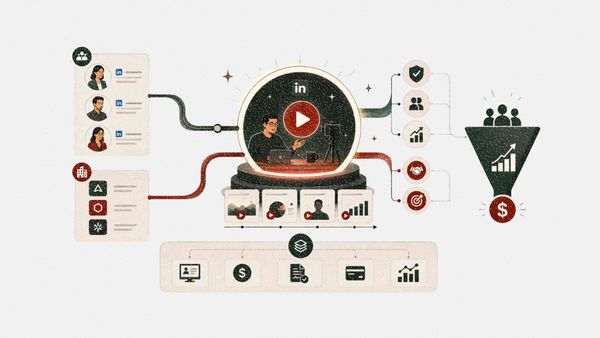
LinkedIn's BrandLink expansion shows what happens when a sponsored creator series becomes infrastructure rather than a one-off post. In 2025, LinkedIn announced creator- and publisher-produced shows built around themes such as AI, small business, and female leadership. Its platform data said BrandLink advertisers saw a 130% higher video completion rate, a 23% higher view rate, and viewers were up to 18% more likely to become a lead than viewers of standard video ads, according to LinkedIn's product announcement.
The format became more concrete later that year. AT&T Business presented Small Business Builders, IBM presented Founder's Blueprint, SAP presented AI in Action, and ServiceNow presented The CEO Playbook. LinkedIn described each as a collection of creator and publisher content designed to place a brand inside a trusted professional conversation, not simply beside an individual sponsored post, in its BrandLink expansion announcement.
The lesson is bigger than LinkedIn. A sponsored expert series can combine thought leadership, education, paid amplification, and an always-on relationship. Buyers should still know who shaped the idea, where the sponsorship begins, and why the creator is qualified.
The same pattern works at a smaller scale. Dreamdata built an employee-led video program, amplified strong organic posts with Thought Leader Ads, retargeted viewers, and connected exposure to conversion data. LinkedIn's Dreamdata case study reports more than 300,000 impressions in one quarter, engagement rates three to four times higher for employee-led ads than brand-led ads, and 83% of closed-won deals influenced by Thought Leader Ads.
Match each campaign type to the right metric
Campaign design gets muddy when every format is judged by impressions and engagement. Choose one primary metric tied to the format's job, then add supporting diagnostics.
- Sponsored thought leadership: qualified comments, target-account engagement, and branded search lift.
- Product education: completion rate, high-intent page visits, trials, demos, and technical questions.
- Research co-creation: asset engagement, citations, sales use, and influenced opportunities.
- Event campaigns: registrations, attendance, content reuse, and post-event pipeline.
- Access or seeding: useful creator feedback, organic advocacy, and relationships advanced.
- Affiliate programs: accepted leads, qualified trials, pipeline quality, and cost per outcome.
- Paid amplification: lift against brand creative, target-account reach, and conversion efficiency.
- Always-on partnerships: cumulative influenced pipeline, audience quality, and relationship retention.
One metric cannot carry every stage. An event creator may generate registrations now and sales influence months later. A product educator may drive fewer clicks than a general business creator but produce far more qualified demos. Use a measurement window that matches the buyer action, and preserve creator-specific UTM and CRM tags from the start.

Build a mixed campaign without blurring accountability
Most mature programs combine formats. A software launch might pair early access with creator demos, a live briefing, sponsored thought leadership, and paid amplification. That mix is useful only when each component has a clear owner and purpose.
Build the campaign in sequence:
- Start with the buyer barrier. Decide whether the audience lacks awareness, understanding, proof, or urgency.
- Assign one primary job to each format. A webinar can educate, while a follow-up demo converts. Do not force both into the same success definition.
- Write rights and disclosure rules per asset. Organic creator posts, brand-owned edits, and paid ads need different permissions.
- Give creators the evidence they need. Product access, customer context, original data, and executive time are often more valuable than extra talking points.
- Connect the measurement path before publishing. Use creator-specific links, campaign IDs, CRM fields, and a documented attribution window.
- Review the system, not just the post. Ask which format moved the buyer forward and which created noise.
The operational danger is format creep. A creator agrees to a webinar, then the recording becomes paid social creative, sales enablement, and a landing-page testimonial without a new rights discussion. That may look efficient to the brand, but it teaches the creator that scope is elastic and weakens the relationship you need for the next campaign.
Choose the format that protects trust
The best campaign type is not the one producing the most assets. It is the one that gives the creator a credible role, gives the audience a clear reason to pay attention, and gives the brand a result it can evaluate honestly.
For most B2B teams, that means starting with one buyer problem and one strong format, then adding distribution or conversion layers only when the first layer works. Treat the format as part of the trust design. When the creator's role, the sponsorship, and the next step are all clear, the campaign can scale without turning expertise into another ad unit.