Influencer whitelisting and dark posting: a practical guide for B2B marketers
Whitelisting and dark posting explained: the B2B paid media playbook

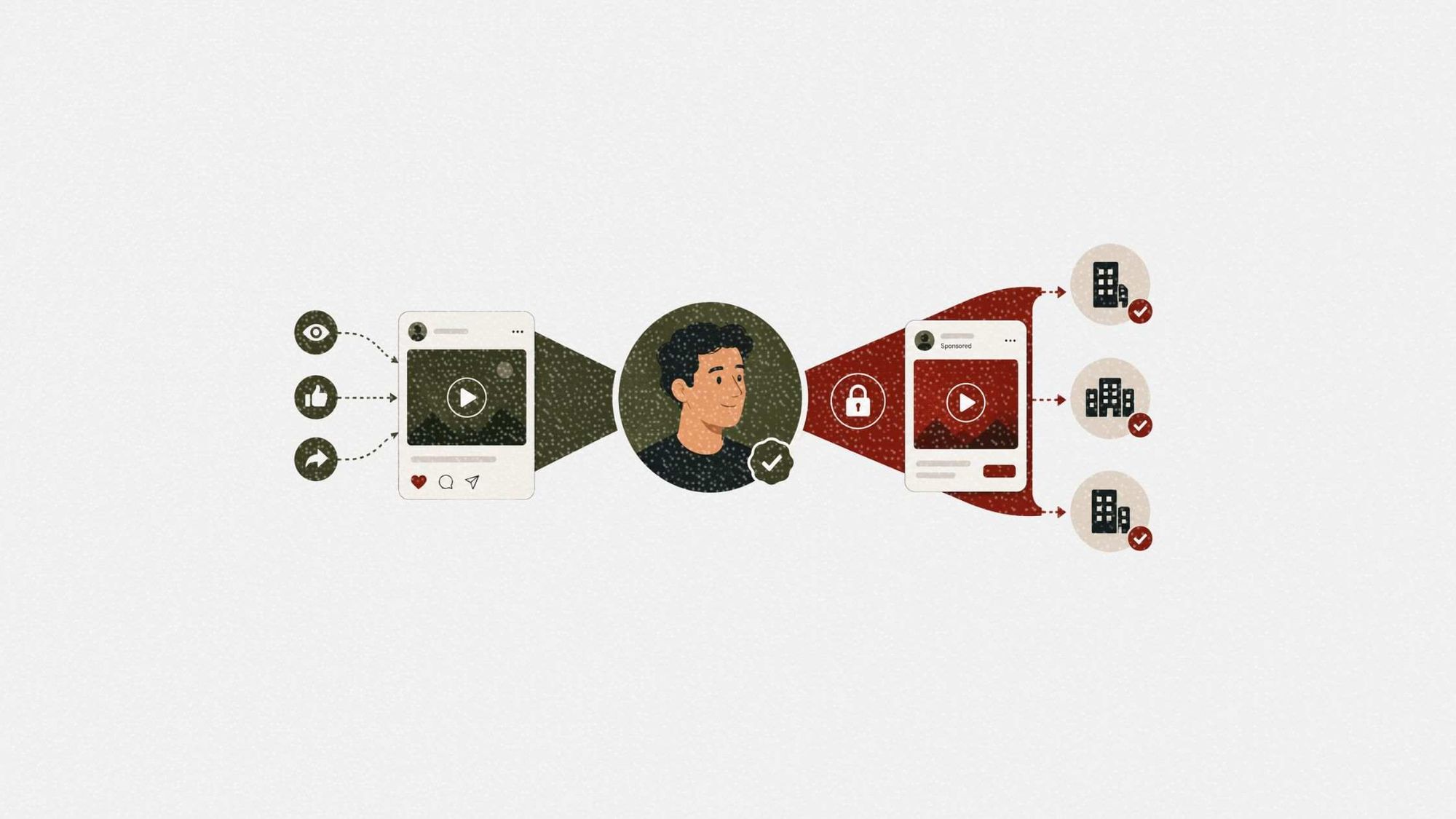
If you are running influencer campaigns and relying only on organic posts, you are leaving performance on the table. Whitelisting and dark posting transform creator content into precision-targeted paid ads, without the polished, corporate look that B2B buyers scroll straight past.
This guide covers exactly how both tactics work, how to set them up on Meta and LinkedIn, what to include in your contracts before handing over access, and how to measure what is actually working.
Table of contents
Jump to each section:
- What is influencer whitelisting, and how does it differ from dark posting?
- Why B2B marketers should care: the performance case for whitelisting
- How to set up whitelisting on Meta Partnership Ads
- How to run LinkedIn Thought Leader Ads for B2B brands
- When to use dark posting in B2B influencer campaigns
- Whitelisting contracts: what to lock down before granting access
- Measuring whitelisting campaign performance
What is influencer whitelisting, and how does it differ from dark posting?
Influencer whitelisting is when a creator grants your brand advertising access to their social media account. Instead of running paid campaigns from your company page, you run them under the creator's name and profile picture. Your target audience sees a recommendation from a person they follow, not a banner from a brand they do not yet trust.
Dark posting is a related but distinct concept. A dark post is a paid ad that runs from a creator's account but does not appear on their public profile or organic feed. It is served only to the specific audience segments you target, and it is invisible to anyone who simply visits the creator's page.
The practical distinction matters for B2B planning. Whitelisting is best suited to amplifying a thought leader's existing content (an industry take, a LinkedIn how-to, a case study post) with paid budget behind it. Dark posting gives you creative control to build net-new ad variations that never disturb the creator's organic feed. You can test multiple headlines, CTAs, and audience segments without the creator's followers ever seeing the ads.
Both tactics carry the creator's identity. Neither requires them to post anything new.
Why B2B marketers should care: the performance case for whitelisting
The performance gap between whitelisted influencer ads and standard brand ads is well-documented. According to Adligator, whitelisted influencer ads consistently outperform brand-account ads on click-through rate and conversion rate, often by 20 to 50 percent, because audiences are significantly more receptive to recommendations from a real person than to polished brand creative.
On cost efficiency, the gains are equally compelling. The Cirqle reports that whitelisting reduces CPMs by an average of 30 to 50 percent compared to brand page ads, because platform algorithms assign higher relevance scores to creator accounts than to brand pages. For every US$10 you would have spent reaching an audience from your company page, whitelisting can get you there for US$5 to US$7.
For B2B specifically, the trust dynamic amplifies these returns even further. The 2024 Edelman-LinkedIn B2B Thought Leadership Impact Study found that 73 percent of B2B decision-makers consider thought leadership a more trustworthy basis for assessing a company's capabilities than traditional marketing materials or product sheets. An ad running from a respected subject-matter expert's account enters the conversation with that same trust baseline intact.
Dinda Anandita, Account Director at Content Collision, puts it directly: "In B2B, the moment a buyer sees your company logo in a paid ad, they immediately apply a credibility discount to everything they read. Whitelisting replaces the logo with a person. That single change shifts the trust baseline entirely, and we've consistently seen it reduce the budget needed to generate the same number of qualified clicks."
How to set up whitelisting on Meta Partnership Ads
Meta now refers to influencer whitelisting as Partnership Ads, replacing the older Branded Content Ads framework. A 2025 update streamlined the setup by removing the need for full Business Manager account sharing, replacing it with a more accessible Partnership Hub flow.
Here is how to set it up:
- Open Partnership Hub. In Meta Ads Manager, navigate to Partnership Hub via the left column. Click the "Partners" tab, then select "Add partnership."
- Enter the creator's Instagram handle. Type in the creator's handle, confirm the correct brand account pairing on the right side of the screen, and send the connection request.
- Wait for the creator to accept. The creator receives a notification and accepts through Instagram. Once they do, you gain account-level advertising access to both their Instagram and Facebook accounts if they are linked.
- Build the campaign in Ads Manager. When setting up a new campaign, toggle on "Partnership ad" at the ad level. Select the creator's account as the second identity, apply your audience targeting, and set your budget.
- Choose your creative approach. If the creator has published an organic post you want to amplify with paid spend, select it via the "Partnership ad" toggle and enter the post URL or ad code they provide. If you are building a dark post (a net-new ad that will not appear on their organic feed), use the creative builder to produce the ad variant without publishing it to their profile.
One significant operational advantage of this setup is that you can run multiple creative variations and audience segments under the creator's identity simultaneously, all without affecting what appears on their public page.
How to run LinkedIn Thought Leader Ads for B2B brands
LinkedIn's equivalent of whitelisting is called Thought Leader Ads. They allow you to sponsor organic posts from individual LinkedIn profiles, whether from an external industry creator, an internal subject-matter expert, or a partner executive.
The performance data is strong. An analysis of 119 Thought Leader Ad campaigns by ZenABM found they deliver landing page traffic at US$3.06 per click, which is 77 percent cheaper than standard single-image ads on LinkedIn. The same analysis recorded an average click-through rate of 8.32 percent across top-performing campaigns, well above benchmarks for other LinkedIn ad formats.
The setup process:
- Check access prerequisites. You need Creative Manager access or higher on the ad account. The thought leader must be either a current employee of your company (with the role listed on their LinkedIn profile) or a first or second-degree connection of your Company Page. Their profile must be set to public.
- Create a new campaign in Campaign Manager. Select Brand Awareness or Engagement as your objective. These are the only two objectives currently supported for Thought Leader Ads.
- Select the content to sponsor. At the ad setup step, click "Browse existing content," navigate to "LinkedIn members," and search by the thought leader's name or post URL. Eligible formats include single-image posts, video posts, text-only posts, and document posts. Polls, reshares, articles, and posts with external links in the body are not eligible.
- Request approval. Select the post you want to promote and click "Request approval." The thought leader receives a notification and must accept before the ad goes live. Once granted, permission is persistent for future posts unless revoked.
- Target and launch. Define your audience by job title, industry, company size, or uploaded CRM lists. Set your budget and bid strategy, then launch once the sponsorship request is approved.
A useful operational note: run four to six post variants simultaneously within a single campaign. LinkedIn auto-optimises delivery toward the best-performing post. Rotating content every two to four weeks helps prevent audience fatigue across longer B2B campaigns.
When to use dark posting in B2B influencer campaigns
Dark posting earns its place in B2B when you need creative flexibility without the constraints of organic publishing. The most effective use cases are:
- Audience segment testing. You want to serve the same creator content to a CTO audience and a VP of Marketing audience, each with different headlines or CTAs. A dark post lets you run both simultaneously under the creator's identity without contradictory messaging appearing on their public feed.
- Bottom-of-funnel retargeting. A B2B prospect who visited your pricing page or watched more than 50 percent of a demo video can be retargeted with a dark post pairing the creator's endorsement with a direct call to book a demo. The familiar face combined with intent-based targeting converts at a substantially higher rate than a generic brand retargeting ad.
- Creative iteration without commitment. Rather than agreeing on a single final creative direction and running it until it fatigues, you can produce several variations under the creator's identity and let performance data determine the winner. This is especially valuable in longer B2B sales cycles where audiences accumulate multiple exposures over weeks.
- Account-based marketing (ABM) targeting. Dark posts can be targeted precisely at named account lists uploaded to Meta or LinkedIn. You can serve a creator's content exclusively to the 300 companies in your ICP without the post existing anywhere on the creator's public profile.
One compliance note: dark posts are still paid promotions and require the appropriate disclosure, regardless of whether they appear on the creator's organic feed. On Meta, the "Paid partnership" label is applied automatically through the Partnership Ads framework. On LinkedIn, the "Promoted by [Company]" note appears beneath the sponsored post. Neither label can be removed without creating an FTC compliance risk.
Whitelisting contracts: what to lock down before granting access
Whitelisting agreements require a different clause structure than standard sponsored post contracts. Several terms need to be made explicit before access changes hands.
- Access duration. Define the specific period during which you can run paid ads from the creator's account. Open-ended access creates friction if the relationship ends. A typical B2B whitelisting window runs 30 to 90 days per campaign cycle, with renewal requiring written confirmation from both parties.
- Ad content scope. Specify whether you can build net-new ad variations (dark posts) under their identity, or whether you can only amplify existing organic posts they have published. This is the single most consequential creative rights clause in a whitelisting agreement and is frequently omitted from first-draft contracts.
- Exclusivity window. In B2B contexts, you may want to prevent the creator from simultaneously whitelisting competing brands in your category during the campaign period. Define the category narrowly and time-bound the exclusivity clause to avoid over-restricting a creator's income.
- FTC compliance responsibility. Specify which party is responsible for ensuring disclosure labels are applied correctly and remain visible. In most cases, the brand carries compliance liability, but the contract should make the creator's obligations explicit, particularly around not removing or interfering with platform-applied disclosure markers.
- Usage rights beyond the platform. Whitelisted ad content is the creator's intellectual property. If you want to repurpose a top-performing dark post for email campaigns, website testimonial sections, or event materials, you need a separate rights clause granting this use explicitly, along with any applicable additional compensation terms.
- Performance data access. Confirm which party can view campaign analytics and at what level of granularity. Brands should retain the right to access performance data for every ad running under the whitelisting agreement, regardless of which account the campaign was built from.
 Ariana Sorensen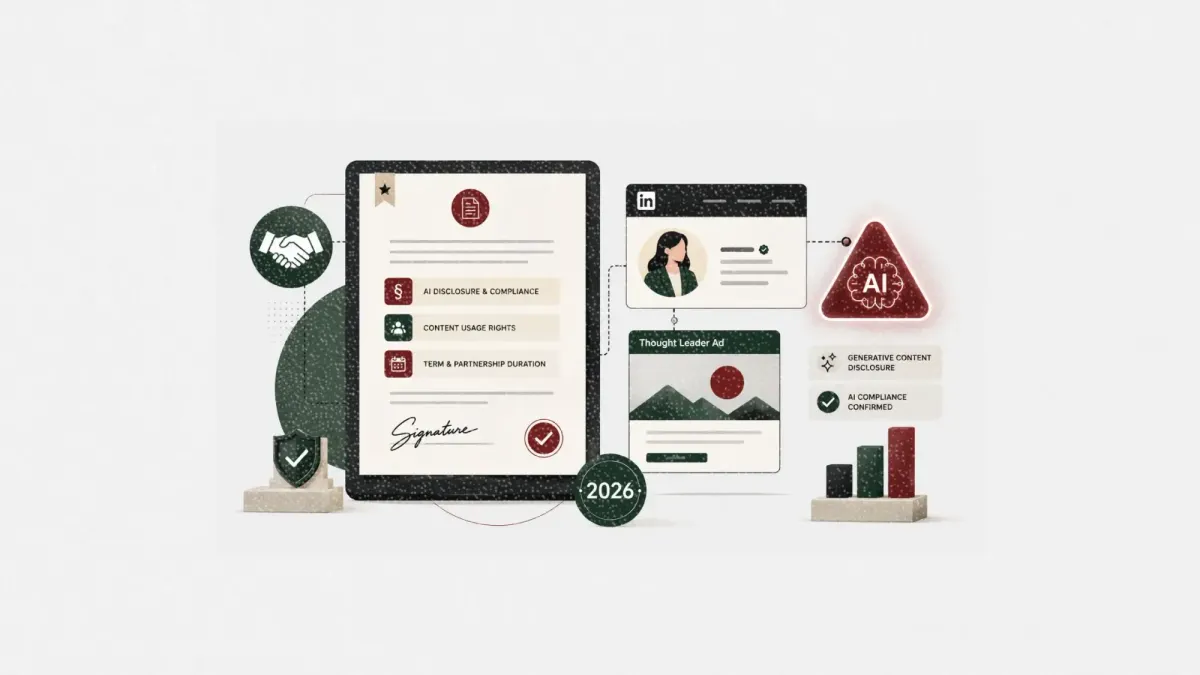
Measuring whitelisting campaign performance
When the ad runs from a creator's account, attribution requires more deliberate setup than a standard brand campaign. Here is what to track and how to structure it.
UTM parameters on every placement. Even when the ad runs from a creator's handle, you control the destination URL. Add UTM parameters with distinct campaign names for each creator, audience segment, and creative variant. This lets you attribute leads, pipeline, and conversions in your CRM directly to specific whitelisting placements rather than to a generic influencer campaign bucket.
Direct comparison against brand ads. The efficiency argument for whitelisting is only provable if you run a controlled comparison. Use the same audience, the same creative theme, and the same budget window, one ad from your brand page and one as a whitelisted creator post. The delta in CPM, CTR, and cost-per-lead is your clearest case for continued investment.
Company-level engagement on LinkedIn. For Thought Leader Ads, monitor the "Companies" tab in Campaign Manager. This reveals which organizations are clicking and engaging, not just which individuals. For ABM teams, this is a pipeline-grade signal: you can identify which target accounts are showing active interest and trigger sales outreach accordingly.
Post-click conversion rate. If whitelisted ads generate cheaper clicks but lower-quality leads, the economics shift. Tie click data back to lead quality scores and opportunity stage in your CRM. The attribution methodology below covers how to structure this for longer sales cycles where a single touchpoint rarely closes a deal.
 Ariana Sorensen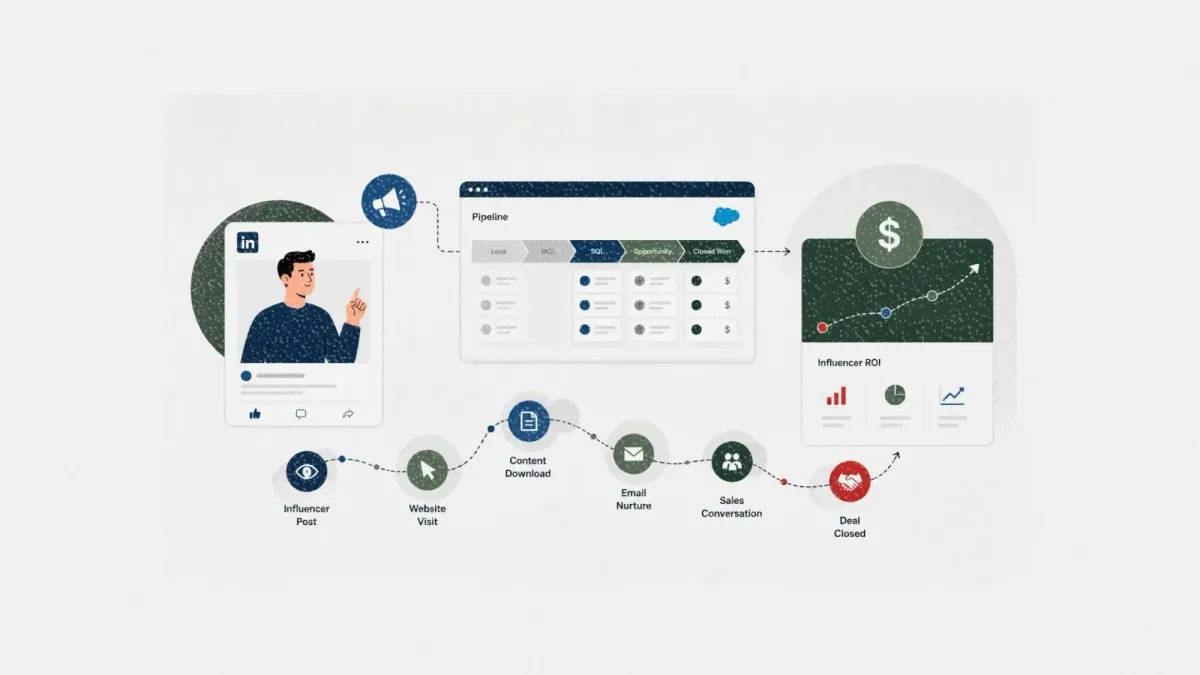
Creator-level performance segmentation. In campaigns running multiple creators, segment all metrics by creator handle. Which voices generate the best cost-per-lead with your specific audience? Which drive higher post-click conversion? This data shapes both future creator selection and how you structure compensation for whitelisting rights.
Where organic trust meets paid precision
Whitelisting and dark posting close the gap between two things B2B marketers have traditionally had to choose between: the trust that comes with creator-led content and the precision that comes with paid media. When a thought leader's content runs with your targeting behind it, you are no longer broadcasting and hoping. You are placing a credible, recognized voice directly in front of the accounts that matter most.
The operational overhead is real. Permissions need managing, contracts need updating, and measurement needs deliberate UTM architecture. But for B2B brands running campaigns against tight ICPs and long sales cycles, the combination of lower CPMs, higher CTRs, and trust-native creative is difficult to replicate with any other paid format.