KOL vs influencer: how brands should choose the right voice
A practical framework for choosing a KOL, an influencer, or both based on trust, campaign roles, risk, briefing, and measurement.


KOL vs influencer sounds like a vocabulary question. For marketers, it is a budget and trust question. A key opinion leader earns attention through recognized expertise in a field, while an influencer usually earns it through consistent content and an audience relationship. One person can be both, but the reason people listen to them still determines what a brand should ask them to do.
That distinction matters most when the product is complex, regulated, expensive, or unfamiliar. A creator can make the message travel. A KOL can make the claim feel credible enough to consider. The wrong choice creates a mismatch between the campaign job and the source of the person's authority.
Table of contents
Jump to each section:
- The difference is authority versus audience practice
- Use five questions to choose the right voice
- Cetaphil shows why the strongest campaign may use both
- Brief KOLs and influencers for different work
- Measure the job each partner was hired to do
- Build a portfolio of trust and distribution
The difference is authority versus audience practice
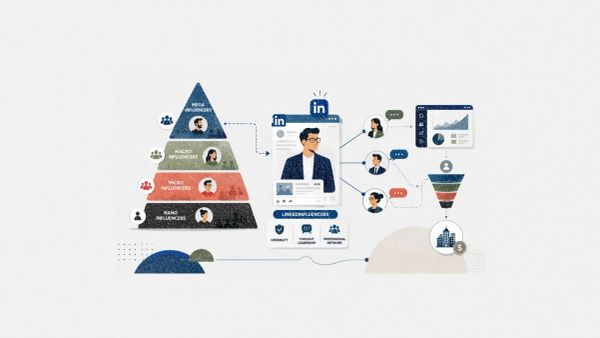
A KOL is a person whose opinion carries weight because of demonstrated expertise, professional standing, lived experience, or a recognized role inside a specific community. Think of a dermatologist discussing skin-barrier science, a procurement leader explaining enterprise buying, or a cybersecurity researcher assessing a new threat. Their influence can exist on social media, but it does not depend on being a polished, high-frequency creator.
An influencer earns attention by repeatedly making content people choose to watch, read, or share. Their authority often comes from taste, relatability, access, storytelling, or platform fluency. Some influencers have deep subject knowledge. Others are valuable precisely because they translate a category into language and formats that ordinary audiences enjoy.
The cleanest distinction is why the audience grants permission to influence them:
- A KOL is trusted to interpret evidence, reduce uncertainty, or validate a decision.
- An influencer is trusted to filter choices, demonstrate relevance, or make an idea culturally legible.
- A hybrid does both, combining real expertise with a practiced ability to hold attention.
This is also why the term shifts by market. KOL is common across Asia-Pacific marketing teams, while US and European B2B teams may say subject-matter expert, industry analyst, operator-creator, or thought leader. Do not let the label do the vetting. Authority must be verified, and audience influence must be observed.
Use five questions to choose the right voice
Start with the campaign job, not the person's title. A popular expert is not automatically the right KOL, and a skilled creator is not automatically a shallow choice. Run each candidate through five questions.
1. How much proof does the audience need?
If the message asks people to accept a technical, medical, financial, or high-risk claim, prioritize independently verifiable expertise. Credentials are not decoration here. They are part of the content's evidence chain.
If the product is easy to understand but hard to notice, platform-native creativity may matter more. An influencer who can turn an ordinary feature into an arresting demonstration may outperform a credentialed expert who cannot hold attention.
2. Is the campaign trying to validate or distribute?
KOLs are strongest when the audience needs confidence: expert education, category framing, technical validation, or objection handling. Influencers are strongest when the brand needs discovery, repeated exposure, product demonstration, or participation in a cultural format.
Those jobs can happen in sequence. Let the influencer create the invitation and the KOL supply the reason to stay. For a B2B launch, that might mean a broad creator introduces the workflow problem, then an operator or analyst explains the tradeoffs in a webinar or long-form post.
3. Where does the audience already trust this person?
Trust is contextual. A physician with institutional authority may be persuasive in an educational video but awkward in a trend-led skit. A TikTok creator may command enormous trust around product routines but have little permission to make a clinical claim.
Review how the audience responds when the person covers the exact subject, not merely how it responds overall. Comments that ask follow-up questions, challenge details, or cite personal experience are stronger evidence of topical trust than a high average engagement rate.
4. What must remain independent?
The more authority a KOL brings, the more damaging a scripted endorsement can be. Brands should expect negotiation around claims, evidence, phrasing, and the right to decline conclusions. That friction is not a production problem. It is evidence that the authority being hired has boundaries.
Influencers also need creative room, but the tension is different. Their value depends on recognizable voice and format. Over-control makes the post look like an ad wearing the creator's face.
5. What happens if the partnership is challenged?
Ask what a skeptical buyer, journalist, regulator, or community member would find. Verify credentials, conflicts, prior claims, disclosure habits, audience composition, and brand fit. A KOL can carry more reputational downside because the campaign explicitly trades on expertise.
Dinda Anandita, Account Director at content-led comms agency Content Collision:
“A KOL partnership works only when the brand respects the source of that person's authority. If legal turns an expert's view into a scripted endorsement, the campaign may keep the credentials but lose the trust those credentials were meant to transfer.”

Cetaphil shows why the strongest campaign may use both
Cetaphil's “3-Layer Moisture Coat” campaign in Vietnam is a useful example because it did not force one partner type to carry every message. The campaign needed to turn skin-barrier science into a culturally memorable winter routine for Gen Z and young millennials.
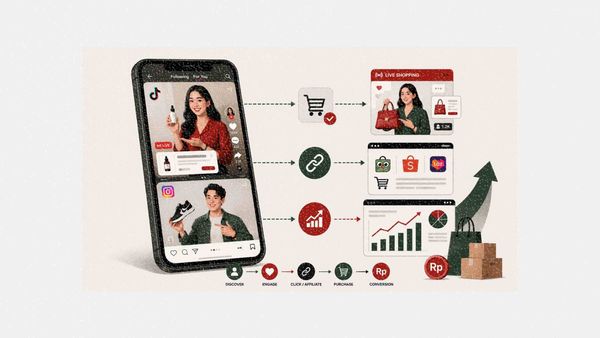
According to AnyMind Group's campaign case study, healthcare professionals explained why sensitive skin needed protection and how the three-step system worked. KOLs and creators placed the routine inside fashion, travel, office, and lifestyle content. The campaign assigned expertise and cultural translation to the people best equipped to deliver each.
The reported results included a 159% sales uplift in the fourth quarter of 2024 compared with the same period in 2023, more than 8 million views, and over 250,000 engagements. Those figures belong to one brand case and should not be treated as a universal benchmark. The more transferable lesson is the architecture: clinical credibility and creator relatability were complementary inputs, not competing choices.
LinkedIn is pushing a similar structure into B2B media. In 2025, the platform expanded BrandLink with shows presented by AT&T Business, IBM, SAP, and ServiceNow, combining brands with trusted creators and publishers around subjects such as AI, small business, and executive leadership. LinkedIn's announcement also said 80% of surveyed marketers were increasing investment in community-driven content involving creators, employees, and subject-matter experts.
The practical implication is that a campaign does not need to pick one universal face. It needs a role system in which each voice has a defensible job.
Brief KOLs and influencers for different work
A single campaign brief often creates the very confusion this distinction is meant to solve. Separate the shared campaign truth from the role-specific assignment.
Every partner should receive the same core information:
- The audience problem and campaign objective
- The product facts and evidence that can be supported
- Required disclosures and prohibited claims
- Deliverables, timelines, usage rights, and review process
- The action the audience should take next
Then change the creative task. For a KOL, ask which misconception needs correcting, what evidence matters, what caveats the audience deserves, and which format supports a credible explanation. Review for factual accuracy, but do not demand a predetermined verdict.
For an influencer, define the behavior or moment the product belongs inside, the audience tension to dramatize, and the format most natural to the creator. Review for compliance and brand safety, while protecting the voice and pacing their audience recognizes.
Hybrid partners need both sets of guardrails. They may have subject authority and platform fluency, but that does not mean every claim fits every format. A 20-second video can introduce a technical question; it may not be the place to resolve it.
Measure the job each partner was hired to do
Using the same scorecard for KOLs and influencers makes one side look weak for doing a different job. Match measurement to the role.
For KOL-led work, useful indicators include:
- Qualified audience composition and seniority
- Saves, substantive comments, citations, and shares into professional networks
- Webinar attendance, report downloads, demo quality, or influenced opportunities
- Changes in brand association, consideration, or trust
- Reuse by sales, comms, training, or customer-success teams
For influencer-led work, prioritize:
- Qualified reach, watch time, completion rate, and share rate
- Click-through, product-page behavior, sign-ups, or attributed conversions
- Cost per qualified engagement or acquisition
- Volume and performance of reusable creator assets
- Incremental reach beyond the brand's existing audience
When both appear in one campaign, report the handoff. Show how creator content generated attention, how expert content deepened consideration, and where those audiences moved next. A blended total-engagement figure hides the mechanism leadership needs to understand.
Build a portfolio of trust and distribution
The KOL vs influencer decision is rarely a permanent either-or choice. It is a question of what kind of trust the campaign needs at each stage.
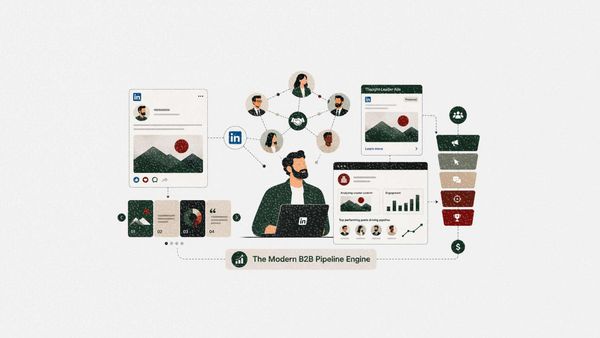
Use a KOL when the audience needs evidence, interpretation, or confidence around a consequential decision. Use an influencer when the campaign needs attention, cultural fluency, demonstration, and repeated exposure. Use a hybrid when one person genuinely holds both permissions, and use a portfolio when no single voice should carry the full journey.
The strongest plans make those roles explicit before names enter the spreadsheet. That prevents follower count from standing in for influence, credentials from standing in for communication skill, and a single generic brief from flattening the very trust the brand is trying to borrow.